
A Canadian transgender woman previously known for her involvement in a widely publicized human-rights tribunal case has once again entered public discussion due to a new legal matter. According to a report from the Western Standard, police in Calgary have issued a warrant relating to an allegation of criminal harassment. At this stage, however, public details remain limited, and the nature of the allegation has not been confirmed by law enforcement officials. With no court documents released and no formal statement from the Calgary Police Service, the situation remains in its early stages.
While the case has drawn immediate online attention due to the individual’s history in the public eye, it is important to distinguish between confirmed information and the speculation that often accompanies developing legal matters. What is known is minimal: a warrant exists, an investigation is underway, and further updates will depend on the progress of the legal process.
To understand why this development has reignited public interest, it is useful to review the background of the person involved, the earlier human rights case that brought widespread attention, and the broader questions these events raised about rights, responsibilities, and due process.
The 2019 Human Rights Tribunal Case That Sparked National Debate

The individual first came to national and international attention in 2019 after filing multiple human rights complaints in British Columbia. These complaints were lodged against several independent salon workers who declined to provide certain waxing services. The complainant argued that refusal constituted discrimination. The salon workers responded that they were not trained, comfortable, or prepared to perform those specific services for any client—regardless of gender identity.
The case drew intense public scrutiny, not only because of the parties involved but because it touched on several intersecting issues:
-
personal rights and bodily autonomy
-
obligations of service providers
-
the limits of human rights legislation
-
the need for training and comfort in intimate services
-
how anti-discrimination law should be interpreted in complex situations
The British Columbia Human Rights Tribunal ultimately dismissed the complaints. In its decision, the tribunal stated that while human rights protections must be respected, service providers are not required to perform specialized or intimate procedures they are untrained for or uncomfortable performing. The tribunal also recognized that estheticians must maintain professional boundaries, that waxing services involve sensitive areas of the body, and that no worker should be compelled to offer a service for which they are not properly trained.
This ruling became widely referenced in later discussions about how human rights laws apply in fields involving personal services. It also highlighted the need for clearer guidelines around training, consent, and the expectations placed on small business owners who work in close physical contact with clients.
Subsequent Public Attention and Media Complexity
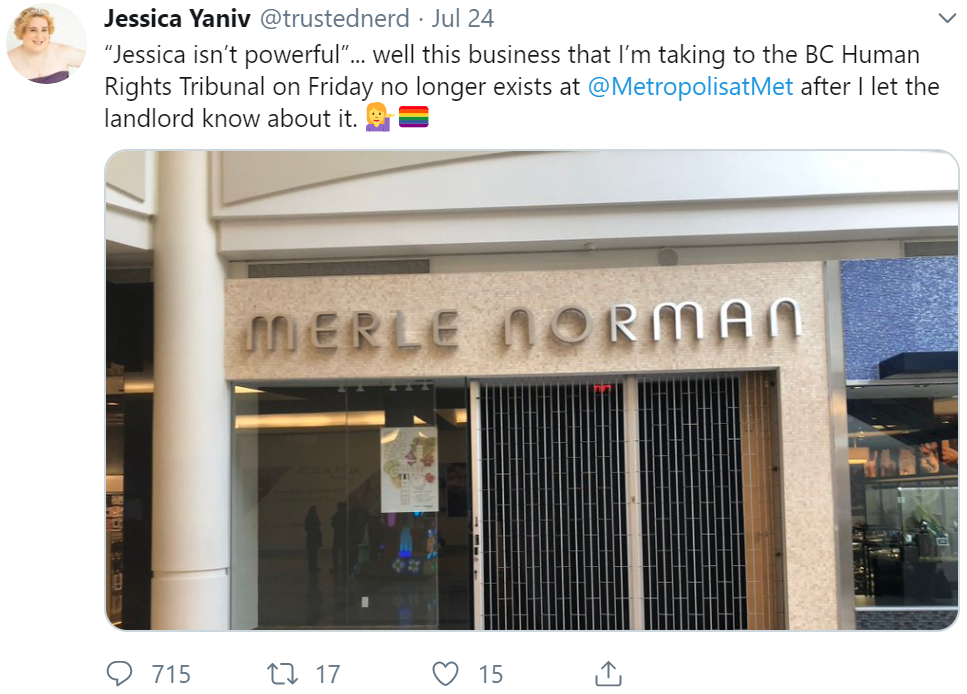
Following the tribunal’s decision, the individual remained occasionally visible in the media due to a range of public interactions, online disputes, and legal matters. Some incidents involved disagreements with reporters or critics, while other situations resulted in police involvement.
Because the events took place over several years and were often amplified on social media, commentary about the individual became polarized. Different groups interpreted the incidents through differing ideological perspectives—some viewing them in the context of gender rights and discrimination, others focusing on legal obligations and community safety. The result was an online environment where public discourse often blended verified facts with commentary and speculation.
This type of polarization is not unique to this case. Increasingly, individuals involved in public legal or social controversies find themselves at the center of intense online attention, sometimes disconnected from the official facts of their cases. This dynamic underscores the importance of relying on confirmed information and avoiding premature judgments, especially when law enforcement has not yet released full details.
The New Allegation: What Has Been Confirmed?

As of now, the only verified information is that a warrant related to a criminal harassment allegation has been issued in Calgary, according to the Western Standard, which stated that they spoke with the complainant. However:
-
no official police statement has been released
-
no court documents have been made public
-
the precise nature of the allegation has not been confirmed
-
details about the parties involved remain undisclosed
Without official documentation, it is not appropriate to draw conclusions about the case or speculate on its outcome. Criminal harassment can refer to a broad range of behaviors under Canadian law, and the issuance of a warrant does not imply guilt. It simply indicates that authorities seek to speak with the individual as part of the ongoing process.
Legal experts emphasize that early reporting on developing legal cases often lacks full context. In many situations, details become clearer only when charges are formalized or when court records are available for public review.
Why This Story Is Receiving Attention Again

Much of the renewed public interest stems from the individual’s earlier human rights case, which remains one of the most widely discussed tribunal decisions in recent Canadian history. The case involved sensitive topics, complex intersections of rights, and a great deal of media coverage. As a result, any subsequent legal development involving the same individual tends to attract attention—even when details remain limited.
In addition, the earlier case led to broader national conversations about:
-
the responsibilities of service providers
-
the boundaries of human rights protections
-
the training required for personal-care services
-
how tribunals interpret discrimination claims
-
the importance of fair treatment for all parties
Because of that, the individual’s name became associated with ongoing public dialogue about rights-based legislation in Canada. This context forms the backdrop against which the current situation is being discussed.
Public Reaction and Social Media Dynamics
As has been the case in the past, online reactions to this new development have varied widely. Some individuals have expressed concern, others have shared commentary based on previous news reports, and some have called for patience until verified information becomes available. Because social media platforms reward rapid responses, discussions often unfold faster than official facts emerge.
Experts in digital communication note that public figures involved in earlier controversies tend to experience heightened scrutiny. This can result in narratives that become disconnected from the specifics of the current situation. Analysts therefore encourage readers to look for:
-
official statements rather than secondhand claims
-
court-confirmed information instead of speculation
-
context about past cases and legal frameworks
-
balanced reporting that respects due process
Why Accurate Reporting Matters

Cases involving sensitive topics—such as gender identity, human rights legislation, or disputes between individuals—can easily become distorted when discussed widely online. Ensuring accuracy protects not only the individuals involved but also the integrity of the legal process.
Reliable reporting requires:
-
distinguishing between allegations and confirmed facts
-
avoiding defamatory statements
-
acknowledging when information remains incomplete
-
focusing on legal frameworks rather than personal speculation
-
recognizing the human impact behind public controversies
In this case, all confirmed details remain limited. As such, the responsible approach is to report only what is known and observe the legal process as it develops.
What Happens Next?
If the case proceeds further, additional information would likely become available through:
-
official statements from the Calgary Police Service
-
public court filings
-
scheduled hearings or legal motions
-
updates from involved legal representatives
Until then, the situation remains open-ended. The issuance of a warrant is a procedural step, and the next stages depend entirely on the handling of the case through official channels.
A Developing Story With Important Context
This situation highlights how past public controversies can influence the way new legal matters are discussed. It also underscores the importance of separating personal views from verified information. Human rights cases are often complex, involving multiple stakeholders and competing rights claims. Likewise, criminal investigations require careful consideration and respect for due process.
As more details emerge, clarity will replace speculation. For now, only one thing is certain: the current legal matter remains under investigation, and further information will come not from online commentary but from official legal proceedings.