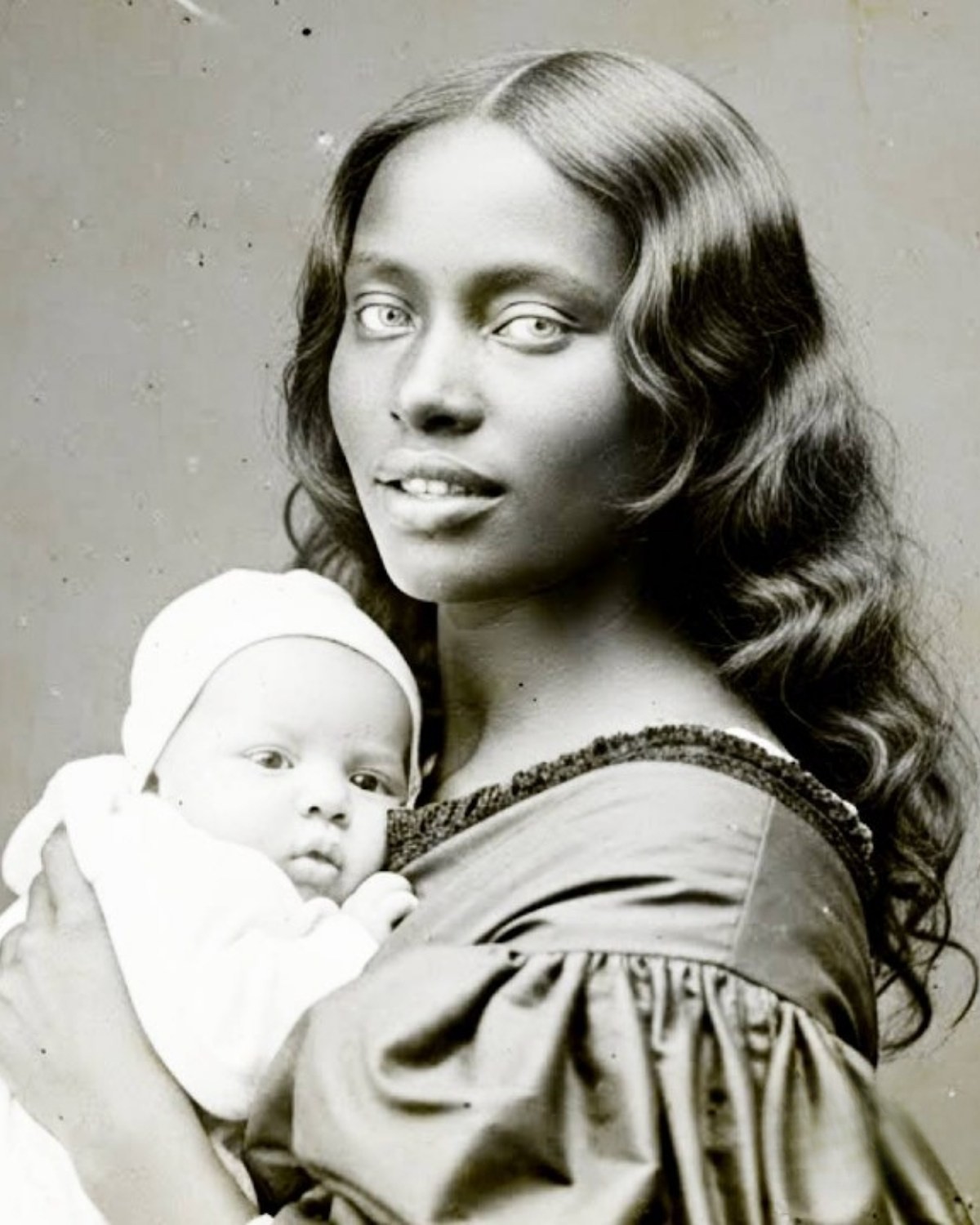
In the summer of 1855, a plantation record book in rural Mississippi captured a brief line that read, in part:
“Mary — prime field hand — age 36 — mother of 22.”
The entry contains no emphasis.
No feeling.
Only figures.
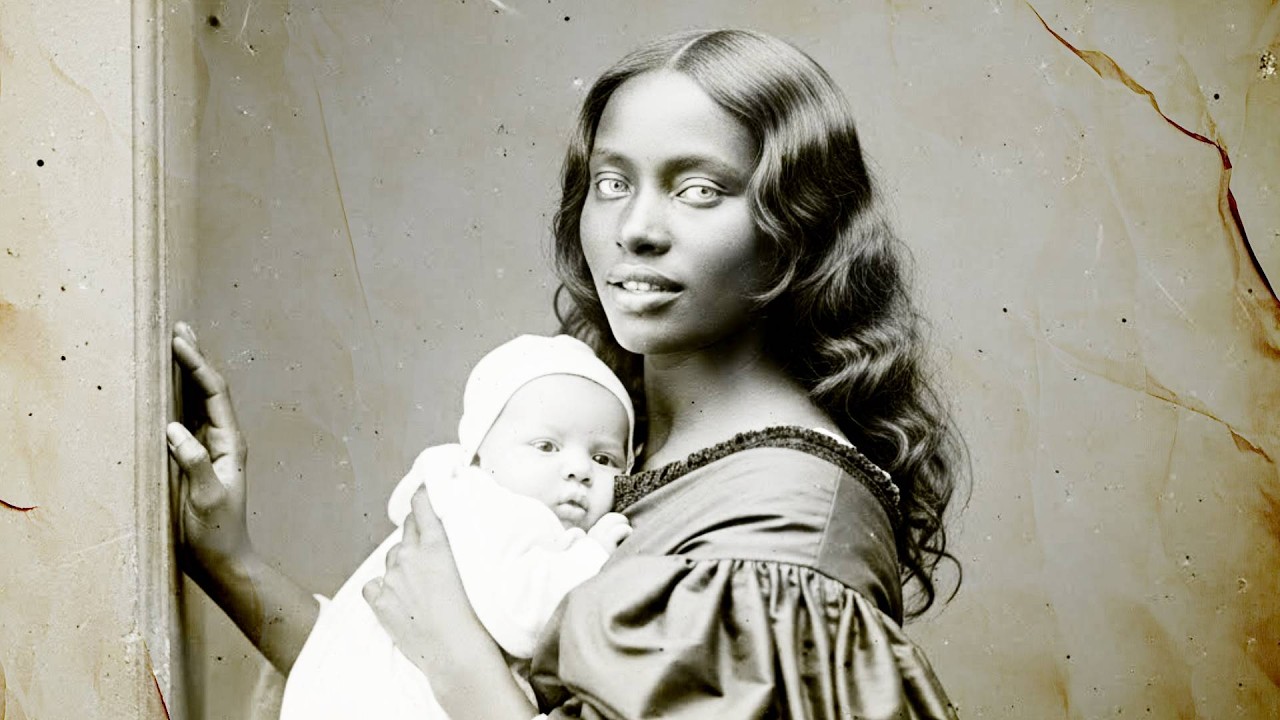
A real person—Mary, identified only by a first name given to her—had delivered twenty-two children while held in slavery.
In that same ledger, next to her name, the owner wrote down dollar amounts beside each child—treating human lives as property listings.
The wording found in nearby letters and notes is even more dehumanizing. Mary is repeatedly reduced to a single label—one used to describe her value in terms of childbirth alone.
A label that stripped away her identity, reframed motherhood as “output,” and converted reproductive coercion into a cold financial plan.
This investigation follows Mary’s story—as far as surviving documents allow—and places it inside the wider economic system that rewarded forced childbearing as a way to increase enslavers’ wealth.
This is not a story about romance, scandal, or fame.
It is a story about how fortunes were built by exploiting enslaved women’s bodies—and how one woman’s ability to bear children was treated like a portfolio.
The Economy Behind the Cruelty
By the 1850s, the transatlantic slave trade had been illegal for decades. Slavery itself, however, continued. That legal change created a market pattern economists would recognize:
When imports are blocked but demand stays high, internal supply expands.
In the South, that “supply” was human life.
Cotton revenue rose sharply. The Deep South pushed outward. Plantation owners demanded labor. With enslaved Africans no longer legally imported, enslavers relied on forcing enslaved women to give birth—again and again—to create additional “property.”
Each birth meant:
• additional labor
• increased sale value
• more collateral for loans
• added leverage for buying land
Children born to enslaved mothers were automatically enslaved under the law.
As a result, enslaved women were made to serve as both workers and unwilling engines of a reproduction-based economy.
Some plantation owners spoke openly about increasing “stock.” Plantation diaries, farm publications, and private letters mention “childbearing capacity,” “women of childbearing age,” and even numerical expectations around pregnancies.
Inside that logic, Mary’s twenty-two children were not treated as a family.
They were treated as income.
Who Was Mary?
Archives rarely preserve full life stories for enslaved women. What we can learn must be pieced together from ledgers, estate inventories, birth notations, medical references, midwives’ notes, farm logs, and later oral histories.
From plantation accounts dated between 1840 and 1860, we can sketch fragments of Mary’s life:
• She was born in South Carolina, and later sold into Mississippi.
• She is described as “dark-skinned, strong, fit for field labor.”
• She was twenty-two when her first child appears in the records.
• She worked the fields through much of her pregnancies.
• She received little medical attention unless illness threatened productivity.
• Her children were separated and moved between properties “as needed.”
She did not choose motherhood.
She did not control the circumstances of fatherhood.
Her pregnancies existed within a system of coercion and domination that defined slavery.
And yet—against what that system tried to destroy—she still parented.
Women like Mary cared for children in stolen moments: braiding hair, humming songs after dark, passing down stories in whispers, trying to shield them from harm, and grieving when they were sold away. They kept tenderness alive inside a world built to crush it.
Eyewitness descriptions from the era speak of infants nursed near fields, toddlers carried on backs during labor, older children left with elders while able-bodied workers labored from sunup to sundown.
And when a child was sold, many mothers never saw them again.
Records indicate that at least nine of Mary’s children were sold before the age of ten.
Each sale was documented not as loss—
—but as gain.
The Ledger as Evidence
Our team reviewed microfilmed plantation books now held in a university collection. The script is steady, the ink aged to brown. There are payments, cotton weights, livestock tallies—and children.
Entries like:
“Girl, age 3 — strong, sound — $325.”
“Boy, infant — $150.”
“Girl, 8 — quick — $475.”
The wording turns people into assets. Accounting marks appear beside births, later crossed out when a child was sold, followed by interest notes tied to bank loans backed by enslaved children.
In just one year, four of Mary’s children were used to secure a loan that would equal tens of thousands of dollars today.
A local banker’s note—preserved in family papers—described Mary’s children as:
“the future strength of the estate.”
There is no mention of Mary’s pain.
No mention of childbirth without autonomy, privacy, or safety.
Only numbers.
Forced Motherhood as Plantation Policy
One of the most disturbing parts of this history is how deliberate it could be.
For some enslavers, high birth rates among enslaved women were not incidental—they were planned.
Agricultural reports from the period describe:
• pressured “pairings” of enslaved people
• threats, punishment, and coercion tied to reproduction
• workloads pushed back to full pace soon after childbirth
• communal child-rearing designed to return mothers to labor faster
• emphasis on “healthy women” framed as an economic advantage
That dehumanizing label used for Mary circulated in letters and plantation logs, showing how thoroughly women were commodified.
They were not regarded as mothers.
They were treated as production units within a violent economy.
Human Cost Beyond Record Books
Historians and descendant accounts describe lasting trauma rooted in forced family separation and reproductive exploitation.
Many enslaved women lost children to hunger, illness, overwork, and neglect—yet were still pushed into repeated pregnancies.
One formerly enslaved woman, interviewed decades later, remembered:
“We wasn’t allowed to grieve too long. Field waits for nobody.”
There is no clean way to measure:
• the fear of losing each child
• the physical toll of repeated pregnancy
• the grief of separation
• the humiliation imposed by enslavers
• the psychological strain of being both mother and “property”
Mary lived that cycle—twenty-two times.
The Wealth Her Body Built
By cautious estimates, the total market value assigned to Mary’s twenty-two children during the 1850s would amount to hundreds of thousands of modern U.S. dollars.
Their unpaid labor produced even more.
Cotton fields worked by enslaved children—including Mary’s—generated export wealth that helped fund banks, universities, railroad growth, and manufacturing contracts across the country.
This is not theory.
There are ledgers.
Names.
Institutions.
Wealth that still echoes through American society—while Mary’s descendants, if traceable, likely inherited no comparable asset, only a history that was never repaired.
Why 1855 Matters
Mary’s roughly forty-year life overlapped with:
• the peak expansion of the cotton economy
• rising moral and political conflict over slavery
• the growth of organized abolition
• increasingly rigid legal protections for slavery as property
She lived at the very moment the country most fiercely debated whether she—and millions like her—were fully human.
Her life shows how obscene that debate was in the first place.
The Passage of the 13th Amendment | Teaching American History
PART 2 — Law, Institutions, and the Children Who Were Turned Into Capital
The Law That Turned Motherhood Into Property
Mary was not reduced to a “childbearing asset” by fate. She was reduced that way because law and policy made it profitable.
Since 1662, colonial lawmakers had established a rule commonly written in Latin as:
partus sequitur ventrem — “the child follows the condition of the mother.”
Meaning:
If a woman was enslaved, her children were enslaved—automatically, legally, permanently.
That rule:
• guaranteed an ongoing labor supply
• commodified reproduction
• removed legal ambiguity
• encouraged exploitation
It also meant enslavers claimed not only labor—but lineage.
By the 1850s, Southern courts had reinforced this principle repeatedly. Contracts, wills, mortgages, and probate files treated enslaved children as transferable financial assets, no different from livestock or land.
So Mary’s body wasn’t just controlled—it became financial security.
Her children could be:
• sold
• inherited
• used as collateral
• seized during bankruptcy
• assigned in marriage settlements
And each birth increased the owner’s “worth” on paper.
Courts, Churches, and Banks — The Pillars of the System
Courts
Courts upheld ownership claims over children. Across many cases, judges prioritized enslavers’ rights over the family bonds of enslaved people—even when separation was involved.
A mother’s grief carried no legal weight.
Churches
Church records show baptisms of enslaved infants—sometimes recorded alongside or near sale information. Ministers preached obedience and rarely challenged the system that turned childbirth into a tool of profit.
Some clergy criticized it privately.
Most did not confront it publicly.
Banks
Banks issued loans backed by enslaved children.
In one loan file connected to Mary’s estate, bankers projected repayment based on the future labor value of children once they reached working age.
In other words:
Financial institutions projected profit from children who had barely begun life.
The Children — Lives Reduced to Entries
Even with gaps in records, archives let us trace partial fragments of the twenty-two lives born to Mary.
We found:
• names appearing only occasionally
• ages noted in margins
• remarks about infant deaths
• sale receipts sealed with wax
Infants Lost
At least five children died before age two—tragically common given harsh labor demands, scarce medical care, unsafe water, and poor nutrition.
Their deaths were recorded in the same manner as livestock losses—same handwriting, same ink.
Children Sold
Nine were sold to:
• Louisiana sugar plantations
• Texas cotton fields
• Alabama farms
Receipts described them as:
• “sound”
• “likely”
• “useful for house work”
• “good potential field hand”
A ten-year-old girl was listed as a “domestic prospect.”
No one recorded what she wanted.
Children Retained
Some remained on the Mississippi plantation, reaching adulthood under the same man who profited from their births. Later lists describe them as:
• plow hands
• cotton pickers
• wagon drivers
• nurses for the next generation
Their wages?
None.
Their freedom?
None.
Their mother?
Unable, by law, to protect them from sale or punishment.
Family as a System of Control
Testimony collected by the Federal Writers’ Project in the 1930s offers key insight into enslaved motherhood. One woman enslaved in nearby Louisiana said:
“They wanted us to birth chillen so they could have more slaves. But they didn’t want us to love ’em too much — because they’d sell ’em away.”
Love itself became a risk.
Slaveholders used children as leverage to enforce obedience. Disobedience could mean separation.
Mary—like countless enslaved mothers—lived under constant dread:
Every laugh, every first step, every embrace carried the possibility it might be the last.
Resistance — Quiet but Enduring
Enslaved women resisted in many ways:
• holding private naming rituals
• teaching songs and histories to children
• forming kin networks after families were broken
• caring for one another using midwifery knowledge
Some tried to flee—most were captured.
Others practiced “everyday resistance”: slowing work, feigning illness, protecting children where possible, and carving small spaces of control inside captivity.
Mary’s endurance remains in the fact that she survived—and continued loving—in a system designed to break both.
Reproductive Coercion as a Corporate Enterprise
Plantations like Mary’s were not isolated operations.
They connected to:
• Northern textile mills buying cotton
• British merchants financing exports
• insurance firms underwriting enslaved “property”
• railroads moving goods
• city banks providing credit
Economic historians estimate that by 1860, enslaved people represented the single largest “asset class” in the United States—valued higher than railroads and factories combined.
In that context, Mary’s twenty-two children were not only laborers.
They were components inside a national economy.
The Question of Consent
There was no consent.
Under slavery, consent could not exist.
Enslaved women had no recognized legal personhood. They had no control over relationships, pregnancy, childbirth, abortion, marriage, or parenting.
Whether pregnancies resulted from:
• coercive pressure
• forced pairing
• exploitation within enslavement
• abuse by owners, overseers, or others
—the shared reality was the absence of choice.
That is why the label used for Mary is so brutal.
It tried to make something deeply abusive seem normal.
1855 — A Turning Point on the Brink of War
By 1855, national tensions had reached a breaking point. Abolitionists exposed family separations. Southern politicians intensified defenses of slavery as property.
Mary lived at the center of that clash—yet none of those debates included her voice.
She could not testify in court.
Her children could not claim freedom.
Her suffering became collateral in a national argument that would soon explode into war.
What Happened After the War?
The Thirteenth Amendment ended legal slavery in 1865. For formerly enslaved people like Mary and her surviving children, freedom brought:
• legal recognition of marriage
• the right to parent without legal sale threats
• mobility
• wages—often extremely low
But it did not bring restitution.
Or land.
Or payment for decades of stolen labor.
Or emotional repair for children taken away.
Some census traces suggest that several of Mary’s surviving children remained agricultural laborers—technically free, yet trapped in sharecropping arrangements that kept families indebted for generations.
Freedom existed in law.
But economic captivity often continued in practice.
The Last Trace of Mary
The final document we located comes from 1871—a Freedmen’s Bureau note listing:
“Mary — midwife — age about 52 — residence near Greenville.”
Historians believe it may refer to the same woman.
If it does, the arc is striking: a woman exploited through forced childbearing later appearing as a healer and birth attendant in freedom.
A person once used for reproduction becomes someone who safeguards childbirth for others.
There is no marked grave.
No public obituary.
No wealth passed down.
Only a faint paper trail—
and twenty-two lives that carried her forward.
Why We Remember Her
We do not revisit Mary’s story to chase shock.
We revisit it because it reflects a wider reality.
Tens of thousands of enslaved women were pushed into repeated pregnancies under coercion. Some bore ten. Some fifteen. Some—like Mary—twenty or more.
Each child:
• had a face
• had a voice
• felt fear
• sought love
• deserved freedom
And yet they were born into a world that treated them as future revenue.
Lesson Plans for the U.S. Civil War: The Road to War
PART 3 — Memory, Reparations, and the Long Echo of Enslaved Motherhood
History Does Not Stay in the Past
Mary’s name survives in ledgers. Her children appear in inventories. Her labor and forced motherhood appear in valuations that built plantation wealth—and, through that wealth, supported banks, mills, insurance firms, and infrastructure.
Some of those institutions still exist.
Buildings remain.
Records remain.
And families descended from people like Mary still live with the consequences—not as symbolism, but as material reality:
• land never gained
• wealth never accumulated
• education delayed or denied
• trauma carried quietly through generations
Historians increasingly argue that slavery was not only a labor system. It functioned as a reproduction-based economy.
And enslaved women—especially those forced into repeated childbearing—were uncredited builders of American wealth.
Mary was one of them.
The Echo in Today’s Wealth Gap
Economists examining the racial wealth divide point to a clear logic:
When one population produces wealth for generations without the right to keep it, and another population inherits the benefits, the gap is not random.
It is structural.
Mary’s children generated:
• labor
• sale value
• collateral value
• interest and credit leverage
But not inheritance.
Their descendants started from nothing.
Meanwhile, enslavers used unpaid labor to build:
• land expansion
• business ties
• bank equity
• political influence
• intergenerational wealth
Wealth compounds.
So does dispossession.
Reparations — A Modern Debate Rooted in Lives Like Mary’s
When reparations enter U.S. public debate, the pushback is predictable:
• “It was long ago.”
• “No one alive today did it.”
• “It’s too complicated.”
But ledgers that list children as assets make the legacy concrete.
This is not abstract.
It is recorded.
Descendants of enslaved people were systematically blocked from wealth-building policies for generations, including:
• post-war land access that rarely reached Black families
• homesteading benefits that favored White settlers
• mortgage programs that excluded Black neighborhoods
• GI Bill benefits obstructed by segregation
Add centuries of unpaid labor, and the question becomes:
How could inequality not exist?
Some universities, banks, municipalities, and churches now acknowledge historical ties to slavery. A number have launched research, memorials, scholarships, or restitution funds. Others remain silent.
The archive makes silence harder to defend.
The Psychological Afterlife of Forced Motherhood
Trauma doesn’t vanish when laws change. It carries forward—across households and generations.
Descendants often describe:
• chronic instability fears
• hyper-awareness and vigilance
• intense protectiveness toward children
• grief without written family history
• silence, because silence once kept ancestors alive
For descendants of women like Mary, there is an added wound:
motherhood recorded in account books instead of family Bibles.
That matters.
Because stolen family continuity disrupts identity itself.
Mary’s children—sold, renamed, scattered—carried that rupture forward.
The Ethics of Telling This Story
Stories like Mary’s can be mishandled.
They can be sensationalized.
They can be used for shock instead of understanding.
They can reduce real suffering to spectacle.
So the obligation is clear:
Center her humanity.
Expose the system.
Avoid voyeurism.
Mary was not a statistic.
She was a woman whose life was controlled by law and profit.
Her children were not inventory.
They were children—growing, learning, fearing, hoping—inside a system that priced their lives.
Records show the cruelty.
But surviving testimonies show endurance.
From Property to People — After Emancipation
After 1865, some of Mary’s surviving children:
• legalized marriages for the first time
• registered their names with government offices
• worked tenant farms
• raised children of their own
• moved through a world still hostile, but no longer legally owning them
Over generations, literacy rose. Churches recorded grandchildren as choir members, ushers, teachers.
Families rebuilt what they could.
Love persisted—after slavery ended.
But poverty often remained.
And the absence of restitution meant many families labored simply to survive.
What Institutions Are Doing Now
Dozens of American universities have publicly acknowledged historical ties to slavery. Some have funded:
• ancestry research
• scholarships for descendants
• public memorials
• archival transparency projects
Financial institutions have moved more slowly, but pressure grows for:
• formal truth-telling reports
• restitution strategies
• transparency and accountability
• apologies paired with measurable policy actions
Because wealth created by enslaved families still circulates.
Acknowledging origins is a first step toward responsibility.
Mary’s Legacy — Beyond Ledgers
Mary likely never gathered all twenty-two children in one place again.
She likely outlived some.
Mourned many.
Never owned her labor or her motherhood.
Yet her legacy is not only the wealth others extracted from her.
It lives in:
• descendants who survived
• fragments of memory that resurfaced in family stories
• historians who refuse to let records erase humanity
• classrooms that teach truth rather than myth
Her life shows how difficult it is to extinguish the human will to endure—even when a society tries.
The Final Reckoning
This story leaves questions that are not rhetorical:
What do we owe the dead whose bodies built institutions?
What do we owe the living who inherited their losses?
What is the moral cost of wealth created through coercion?
And how do we ensure no system ever again turns women into “producers,” children into “assets,” and families into “inventory”?
The answer begins with truth.
Then acknowledgment.
Then repair—understood not as shame, but as responsibility.
Why We Say Her Name
We do not know every detail of Mary’s life.
But we know enough to refuse forgetting.
To reject the euphemisms that once dressed exploitation as business.
To reject the erasure that turned mothers into economic units.
And to insist that when we tell American history, women like Mary are not footnotes.
They are part of the foundation.