
Edgar Cayce (1877–1945), often referred to as the “Sleeping Prophet,” remains one of the most widely discussed figures in twentieth-century spiritual literature. During his lifetime, Cayce delivered thousands of documented readings while in a trance-like state. According to records preserved by the Association for Research and Enlightenment (A.R.E.), these readings covered topics ranging from health and spirituality to philosophy, personal development, and historical themes.
Today, Cayce’s work continues to attract attention from researchers, historians, and spiritual thinkers. In recent years, some commentators have attempted to connect Cayce’s ideas with contemporary social and political developments. However, reputable organizations that maintain Cayce’s archives emphasize that his readings should be studied in their historical and philosophical context rather than treated as direct predictions of modern events.
This article examines Edgar Cayce’s core philosophy, the historical documentation of his readings, and how modern readers interpret his ideas today. It also clarifies which aspects are supported by documented sources and which should be understood as interpretation rather than verified fact.
Who Was Edgar Cayce?
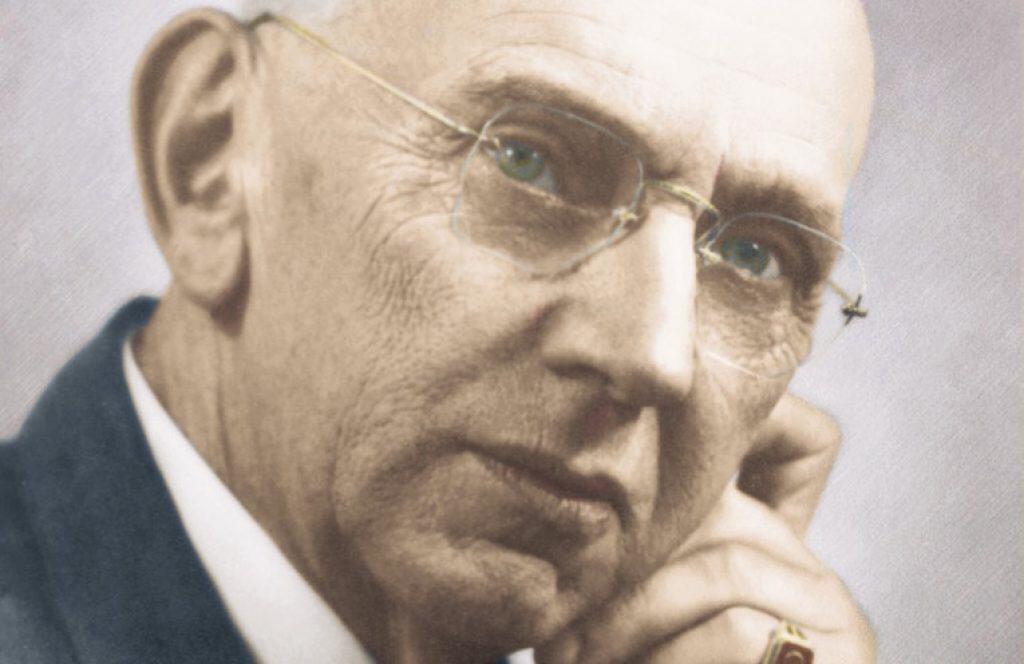
Edgar Cayce was an American clairvoyant who became known for delivering readings while in a sleep-like trance state. Born in Hopkinsville, Kentucky, Cayce initially gained attention for health readings that described possible treatments for various illnesses.
According to the Association for Research and Enlightenment, Cayce delivered approximately 14,000 documented readings between 1901 and 1945. These records were transcribed by stenographers and preserved for research. Many of them focus on holistic health practices, spiritual philosophy, and personal development.
While Cayce’s supporters view his readings as spiritually inspired guidance, historians and scholars generally categorize them as part of early twentieth-century American spiritual movements. His work developed during a period when interest in metaphysical ideas, alternative healing, and spiritual philosophy was expanding across the United States.
Cayce’s Core Philosophy: Free Will and Human Responsibility
One of the most widely cited themes in Cayce’s readings is the idea that human beings possess significant influence over their own future. In many documented readings, Cayce emphasized personal responsibility, ethical decision-making, and spiritual development.
Rather than presenting the future as a predetermined sequence of events, the Cayce material often discusses “tendencies” or potential outcomes shaped by human choices. According to archived transcripts, Cayce frequently suggested that societies and individuals can influence their circumstances through their actions and values.
This perspective aligns with a broader philosophical tradition found in many religious and ethical teachings: the belief that collective behavior influences social outcomes. Cayce’s work framed these ideas in terms of spiritual growth, suggesting that individuals contribute to societal change through daily decisions and attitudes.
Importantly, these concepts should be understood as philosophical viewpoints rather than scientifically verified predictions. The Association for Research and Enlightenment itself notes that Cayce’s readings are intended for reflection and study, not as guaranteed forecasts of future events.
The Historical Context of Cayce’s Readings

Understanding the historical environment in which Cayce worked is essential for interpreting his material responsibly.
Cayce lived during a period marked by significant global change, including:
-
The First World War
-
The Great Depression
-
Rapid industrialization
-
The early development of modern psychology
-
Growing interest in alternative spirituality
Many thinkers of the time were exploring questions about humanity’s future, social stability, and ethical development. Cayce’s readings often addressed these themes in spiritual language.
For example, some readings discussed the idea that societies may experience instability when ethical principles are neglected. Such observations were common among philosophers and religious leaders during the early twentieth century, when economic crises and political upheaval were widely debated topics.
Therefore, modern interpretations that connect Cayce’s words to current global issues should be treated as interpretations of historical material, not direct predictions about present-day events.
Modern Interpretations of Cayce’s Ideas
In recent decades, some writers and commentators have attempted to link Cayce’s readings with current social or political developments. These interpretations often suggest that Cayce anticipated major global transitions in the twenty-first century.
However, reputable organizations that preserve Cayce’s records caution against presenting such interpretations as factual predictions. The Association for Research and Enlightenment states that Cayce’s readings should be studied in context and that modern applications require careful interpretation.
Many scholars instead focus on the broader themes within Cayce’s philosophy, including:
-
Personal responsibility
-
Ethical leadership
-
Spiritual development
-
Community cooperation
-
Respect for nature
These themes are consistent with widely recognized values in ethical philosophy and social thought.
Social Change and Ethical Balance

One recurring concept in the Cayce readings is the idea that societies function best when material progress is balanced with ethical responsibility. Cayce often emphasized the importance of compassion, cooperation, and respect for others.
Although these ideas appear in spiritual language within the readings, they reflect principles that are also discussed in fields such as sociology, philosophy, and ethics.
For example, modern research in social science frequently explores the role of trust, cooperation, and institutional stability in maintaining healthy societies. When trust declines or institutions face widespread skepticism, social tension can increase.
Cayce’s discussions of balance between material priorities and ethical values can therefore be understood as part of a long tradition of philosophical reflection about societal health.
The Concept of Community and Cooperation
Another theme present in many Cayce readings is the importance of community support and cooperation. Cayce frequently described the value of building relationships based on empathy, honesty, and mutual respect.
These ideas are consistent with modern research in psychology and community development, which highlights the importance of social connection for mental well-being and resilience.
Healthy communities typically share several characteristics:
-
Strong social networks
-
Mutual trust
-
Shared ethical values
-
Collaborative problem-solving
While Cayce framed these ideas within a spiritual worldview, they align with practical principles that many researchers and policymakers recognize today.
Personal Growth and Inner Resilience

Cayce’s readings often focused on individual development as the foundation for broader social progress. According to archived transcripts, he encouraged individuals to cultivate self-awareness, compassion, and integrity.
Modern psychology similarly emphasizes the role of personal habits and attitudes in shaping well-being. Practices such as mindfulness, emotional regulation, and ethical reflection are widely studied for their positive impact on mental health.
In this sense, Cayce’s emphasis on personal responsibility can be understood as part of a broader tradition that links personal growth with social improvement.
Responsible Study of Cayce’s Work
Because Cayce’s readings were recorded in a specific historical context, responsible interpretation requires careful consideration of credible sources.
Organizations such as the Association for Research and Enlightenment maintain archives that allow researchers to examine the original transcripts. Scholars studying Cayce’s work typically emphasize several important points:
-
The readings reflect spiritual perspectives rather than scientific findings.
-
Interpretations of future events should be approached cautiously.
-
Many readings focus on ethical guidance rather than prediction.
By examining the original materials and their context, researchers can better understand the philosophical themes present in Cayce’s work.
Why Cayce’s Ideas Continue to Interest Readers

Nearly a century after many of his readings were delivered, Edgar Cayce’s work still attracts attention around the world. Several factors contribute to this continued interest:
1. Holistic Health Perspectives
Cayce’s early health readings encouraged attention to diet, lifestyle, and natural remedies. While not all suggestions align with modern medical science, his emphasis on preventive health resonates with contemporary interest in wellness.
2. Spiritual Exploration
Many readers view Cayce’s work as part of a broader tradition of spiritual philosophy that explores questions about meaning, purpose, and human development.
3. Ethical Reflection
The readings frequently emphasize compassion, honesty, and responsibility. These values remain widely discussed in both religious and secular contexts.
4. Historical Curiosity
Cayce’s extensive archive provides historians with a unique look at early twentieth-century spiritual movements in the United States.
Evaluating Claims About Predictions
One area that requires particular caution is the claim that Cayce predicted specific modern events. Many such claims circulate online, but they are often based on reinterpretations of general statements rather than direct documented predictions.
Academic researchers generally recommend reviewing the original transcripts before drawing conclusions about what Cayce did or did not say. In many cases, statements attributed to him online are simplified summaries rather than exact quotations.
Reliable research therefore involves:
-
Consulting original archives
-
Comparing multiple sources
-
Avoiding sensational interpretations
This approach helps ensure that discussions of Cayce’s work remain accurate and responsible.
Ethical Themes That Remain Relevant
Although interpretations of Cayce’s readings vary widely, several ethical principles consistently appear throughout the documented material.
These include:
-
Treating others with fairness and compassion
-
Developing self-discipline and integrity
-
Supporting community cooperation
-
Maintaining respect for the natural environment
These principles are not unique to Cayce’s philosophy. They appear in many religious traditions, ethical frameworks, and cultural teachings worldwide.
Their continued relevance may explain why Cayce’s work remains part of ongoing conversations about spirituality and personal growth.
Conclusion
Edgar Cayce occupies a unique place in the history of twentieth-century spiritual thought. His thousands of documented readings continue to be studied by researchers, spiritual practitioners, and historians alike.
While some modern commentators attempt to connect Cayce’s ideas to current events, reputable sources emphasize that his readings should not be interpreted as precise predictions about the future. Instead, they provide insight into philosophical themes such as personal responsibility, ethical balance, and community cooperation.
Approached thoughtfully, Cayce’s work offers an opportunity to reflect on enduring questions about human behavior, social values, and personal growth. Whether one views his readings as spiritual guidance, historical material, or cultural artifacts, they remain part of a broader conversation about how individuals and societies shape their future through everyday choices.
By examining these ideas within their proper context and relying on credible sources, readers can explore Cayce’s legacy while maintaining a responsible and evidence-based perspective.