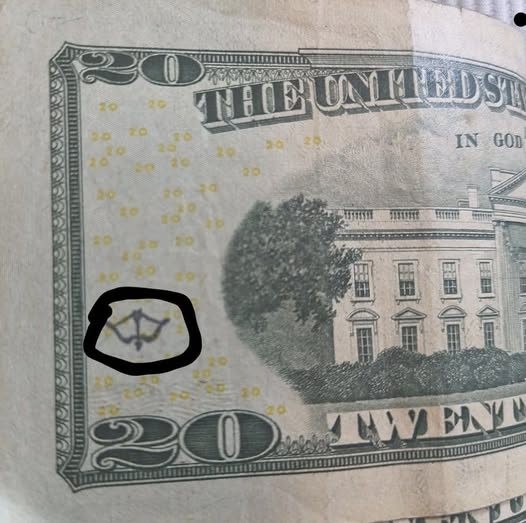
Chop Marks: The Quiet Global Journey of U.S. Dollar Bills
U.S. dollar bills are among the most recognizable and widely circulated forms of paper currency in the world. While these bills are carefully designed with advanced security features to deter counterfeiting, some dollar bills seen in circulation—especially outside the United States—display mysterious marks, stamps, or symbols that are not part of their official design. These small, often colorful markings are known as chop marks, and they provide fascinating insights into the international life of a dollar bill. This article explores the history, purpose, and global significance of chop marks, analyzing their role in the movement and authentication of U.S. dollars around the world.
Understanding Chop Marks: What Are They?
Chop marks are small, deliberate imprints or stamps placed on paper currency by various money handlers. These marks can take the form of symbols, initials, images, numbers, or even company logos. Chop marks are most frequently found on U.S. dollar bills circulating through regions such as Southeast Asia, Africa, and Latin America—areas where cash transactions are common and the risk of counterfeit currency is elevated. Currency exchangers, banks, and other financial agents apply these marks as a way to verify a bill’s authenticity and reassure subsequent recipients about the legitimacy of the note.
Historical Origins: From Silver Coins to Modern Dollars
The tradition of marking currency to indicate authentication is centuries old. The term “chop” finds its roots in 18th and 19th-century China, where the country served as a major crossroads for international trade. During this era, silver coins—including the Spanish dollar—were used in circulation, but the global trade environment meant that coins were often minted in distant lands. To assure each other of a coin’s weight and purity, Chinese bankers and merchants would stamp their personal or organizational chop—a unique insignia—on the coin’s surface. Over time, coins that moved through many hands accumulated multiple stamps, each one representing a stop along the trading route and a point of local verification.
This practice gradually evolved as paper currency, especially the U.S. dollar, became a preferred medium for international transactions in the 20th century. In regions without centralized, high-tech banking infrastructure, paper dollars acquired new lives as marked notes, bearing stamps from one exchanger, institution, or country to the next as they journeyed across borders.
Why Are Chop Marks Used?
The use of chop marks was, and still is, driven by the need for trust in situations where counterfeiting is a significant threat. In many countries, local currencies may be less stable or prone to depreciation, making the U.S. dollar a popular alternative. Consequently, there is often a flourishing market for both real and counterfeit bills.
Chop marks serve multiple key purposes:
- Authenticity Confirmation: After performing their own security checks, money changers and exchangers add their chop marks to a bill to indicate that, to the best of their knowledge, it is genuine. The mark becomes a visible guarantee for future traders or individuals.
- Mistrust Mitigation: In regions without strong, centralized systems for tracking currency authenticity, chop marks act as grassroots endorsements. Each mark signals that the note was verified and considered trustworthy by a reputable source.
- Traceability: For some institutions, chop marks are a way to track the journey of a bill as it moves through various exchange systems and financial networks. Accumulated marks can hint at the “biography” of a bill—how far it has traveled and whose scrutiny it has survived.
What Do Chop Marks Look Like?
Chop marks showcase a broad range of designs, and their appearance often reflects the local culture or the identity of the marking institution. Common features include:
- Symbols: Arrows, birds, stars, flowers, or other simple shapes signifying the identity of the marker.
- Stylized Initials: Many marks include letters representing either the person or organization that issued the stamp.
- Unique Signs: Some marks are more elaborate, even depicting items like a bow and arrow, anchors, or company logos. These can sometimes help trace the region or the exchanger responsible for the chop.
- Colors: Chop marks are usually stamped using vibrant blue, black, or red ink, but other shades are also seen periodically.
Importantly, those applying chop marks usually do so carefully so as not to compromise any of the bill’s official security features—such as watermarks, security threads, or serial numbers—ensuring that the note remains recognizable and acceptable for transactions.
Are Chop Marks Legal?
The legality of chop marks on U.S. currency is a topic of periodic debate and confusion. According to the United States Department of the Treasury and the Bureau of Engraving and Printing, laws prohibiting the mutilation or defacement of currency focus on alterations that render bills unusable as legitimate money or fraudulently change their value. Because chop marks are typically small, do not obscure vital details, and are placed to confirm authenticity rather than to deceive, they are generally not considered illegal under U.S. law.
However, issuers and users of currency must remain cautious. Excessively marked or damaged bills may be declined by Automated Teller Machines (ATMs), cash-counting machines, or conservative financial institutions that require pristine notes. In some cases, especially with a high number of marks or with marks over sensitive security features, bills can be rejected or require extra scrutiny. The Federal Reserve, when redeeming worn or defaced currency, evaluates bills on a case-by-case basis.
The U.S. Dollar’s Unique Global Role
The widespread appearance of chop marks on U.S. dollar bills highlights the status of the dollar as the world’s de facto reserve currency. It is estimated that more U.S. dollars circulate outside the United States than within its borders, with the currency commonly accepted—and sometimes preferred—in countries facing high inflation, political instability, or a lack of access to strong local currency.
The journey of a dollar bill, from Federal Reserve printing facilities to the hands of individuals in remote markets, can involve countless exchanges, with chop marks acting as a silent record of the trust each bill has earned and the geographies it has traversed. U.S. dollars marked with chop marks are often found in global hot spots for tourism, commerce, or remittance, supporting economic activities that rely on reliable, portable stores of value. In some nations, a bill with a well-known foreign chop mark might even be more trusted than a pristine, unmarked note.
Expert Perspectives on Chop Marks and Global Currency Flows
Currency experts recognize chop marks as a practical adaptation to the realities of global finance, particularly in emerging markets. According to economists and currency specialists, chop marks can be seen as a grassroots solution filling gaps left by inconsistent banking systems, highlighting the adaptability and resilience of informal money networks.
While modern anti-counterfeiting technology has made significant advances—such as microprinting, holographic threads, and color-shifting ink—not all locations possess the technology or expertise to quickly verify these features. For that reason, local marks of approval, like chop marks, remain a valuable supplement for traders and regular citizens alike. At the same time, efforts by the U.S. government to educate global publics about security features aim to reduce overreliance on informal verification methods.
Chop Marks in Collecting and Cultural Memory
Chop marks have also become objects of fascination for collectors and historians. Paper money collectors (known as notaphilists) sometimes seek out bills with prominent or unusual chop marks, viewing them as unique evidence of the note’s international journey or as artifacts of historical moments, such as periods of high inflation or regional crisis. Occasionally, entire subfields within numismatics are devoted to tracing and cataloging chop marks, especially those from key financial centers in Asia, the Middle East, or Africa.
Societal and International Reactions to Marked Bills
Reactions to chop-marked bills can vary widely. In some countries, deeply marked bills may face suspicion, while in others, certain marks are seen as badges of authenticity. International banks and large institutions tend to prefer unmarked bills for clarity and standardization, yet the continued prevalence of marked notes reflects the enduring importance of trust-based exchange networks.
Globally, the U.S. dollar remains a favored currency for its reliability and international acceptance. The presence of chop marks adds an extra dimension, illustrating not only economic flows but also the interplay between local practices and global infrastructure in the everyday use of money. As cross-border trade, migration, and remittance expand, chop marks will likely remain a feature of the world’s currency landscape, symbolizing the informal systems that help underpin modern commerce.
Conclusion
The story of chop marks on U.S. dollar bills is a testament to human ingenuity and the complex paths currency takes in a globalized world. These small, colorful imprints embody the effort to guarantee trust, protect value, and ensure smooth transactions across continents and cultures. Whether appreciated for their historical significance, viewed with curiosity by currency collectors, or used pragmatically in daily exchanges, chop marks offer a unique window into the silent journeys of the dollar and the interconnected nature of international finance.
Sources
Disclaimer: This content is intended for entertainment purposes only and is not based on real events.