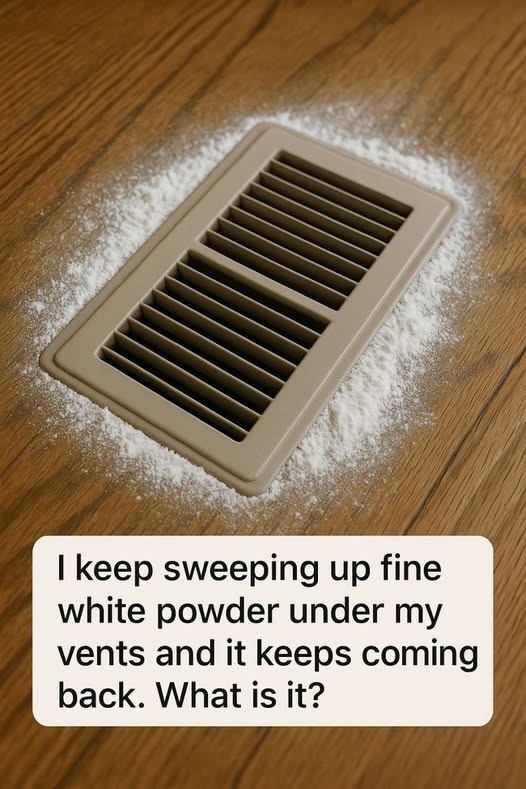
White Dust Around Your Air Vents? Common Causes and How to Address the Problem
Finding a fine white powder around the air vents in your home can be unsettling. You wipe the surfaces clean, only to notice the same residue returning a few days later. Before long, you may begin wondering whether the dust is coming from your heating and cooling system, whether your air filters are working properly, or whether the particles could affect your indoor air quality.
The good news is that white dust around air vents can have several explanations, and many are relatively straightforward to investigate. However, the color and appearance of the residue alone cannot identify its source. Household dust, mineral deposits, construction debris, and particles associated with deteriorating duct materials can sometimes look similar.
Understanding where the dust appears, how quickly it returns, and whether it is being blown directly from the vents can help you decide what to check next.
Why Is White Dust Appearing Around Air Vents?
Heating, ventilation, and air conditioning systems, commonly known as HVAC systems, circulate air throughout a home. During that process, airborne particles may collect on vent covers, nearby walls, furniture, and other surfaces.
Indoor particles can come from many sources. Outdoor dust may enter through doors and windows, while cooking, cleaning, household fabrics, pets, and renovation work can contribute additional material. HVAC filters capture some airborne particles, but they cannot remove everything.
The location of the residue can offer useful clues.
If the white dust appears mainly on the edges of a vent cover, it may be settling from the surrounding air or collecting where airflow changes direction. If it repeatedly appears directly beneath a supply vent, especially while the system is running, the HVAC system deserves closer inspection.
A similar pattern throughout several rooms may suggest a shared source, such as a filter issue or a problem affecting the ductwork. Residue limited to one room could have a more localized explanation.
These patterns are clues, not definitive diagnoses. A visual inspection by a qualified HVAC technician may be necessary if the problem persists.
1. Deteriorating Duct Liner or Insulation
One possible cause of recurring dust is damaged material inside the HVAC system.
Some air ducts contain fiberglass insulation or internal liners designed to reduce heat transfer and control noise. These materials are used in certain duct systems because their structure helps provide thermal and acoustic insulation.
When fiberglass duct liner is properly installed, maintained, and kept dry, it can function as intended. Its presence alone does not mean a system is unsafe.
Problems can arise if the material becomes damaged, tears, loosens, or deteriorates. In those circumstances, fibers or other debris may be released into the airflow.
However, it is important not to assume that white powder is fiberglass simply because it appears near an air vent. The residue could have another source, and identifying the material may require professional assessment.
If you notice damaged insulation, recurring particles being blown from a register, or visible deterioration inside accessible ductwork, arrange an inspection rather than attempting to clean the material yourself.
The U.S. Environmental Protection Agency advises that wet or visibly moldy fiberglass duct material should be removed and replaced by a qualified contractor. The underlying moisture problem should also be corrected to prevent further contamination. citeturn261806search0
2. A Dirty, Damaged, or Poorly Fitted Air Filter
The air filter is another important part of the investigation.
HVAC filters capture airborne particles before they can circulate through the system. When a filter becomes clogged, damaged, incorrectly installed, or too small for its housing, air may not pass through it as intended. Gaps around the filter can also allow some air to bypass the filtering material.
Depending on the system and the source of the particles, this may contribute to dust accumulating around vents and throughout the home.
Start by checking the filter according to the manufacturer’s instructions. Look for visible dirt buildup, damage, an incorrect size, or gaps around the edges.
If the filter needs replacement, use the size and type recommended for your HVAC equipment. A higher-rated filter is not automatically the right choice for every system; some equipment cannot accommodate increased airflow resistance without adjustments.
The EPA recommends using the highest-efficiency filter that the system can accommodate, ensuring that it fits snugly, and replacing it according to the manufacturer’s guidance. citeturn261806search2
A clean filter will not solve every possible cause of white dust, but checking it is a practical first step.
3. Mineral Deposits From Water or Humidification Equipment
Not all white residue comes from ductwork.
Mineral-rich water can leave a pale, powdery or chalky deposit when water droplets evaporate. In homes that use ultrasonic humidifiers, minerals in the water may become airborne with the mist and settle on nearby surfaces.
This type of residue may appear on furniture, dark countertops, electronics, or other objects—not just around air vents.
If the dust is widespread and the home uses a humidifier, consider whether the residue became noticeable after the appliance was introduced or after a change in its water supply.
Follow the humidifier manufacturer’s cleaning and maintenance instructions. Where permitted by the manufacturer, using distilled or demineralized water may help reduce mineral residue from ultrasonic units.
Avoid pouring water or cleaning solutions into HVAC vents, and do not assume that mineral deposits are the cause without considering other possibilities.
If the white material appears only when the heating or cooling system runs, an HVAC inspection may still be appropriate.
4. Construction Dust or Recent Renovation Work
Home improvements can create fine dust that remains in a building long after the visible work has ended.
Sanding drywall, cutting plaster, drilling, removing old materials, or making changes to ceilings and walls can release particles into the indoor environment. These particles may settle on vent covers and enter duct openings if the system is operating while work is underway.
Dust can also remain in furniture, carpets, curtains, and other soft surfaces, gradually becoming airborne again as people move around the home.
If the residue first appeared after renovation, consider whether supply and return registers were adequately protected during the work and whether the surrounding areas were thoroughly cleaned.
Use appropriate cleaning methods for the materials involved, and avoid disturbing unidentified dust unnecessarily. If renovation involved older materials that may contain hazardous substances, seek professional guidance before sanding, scraping, or vacuuming them.
The EPA recommends keeping construction dust out of HVAC systems during renovation and cleaning affected areas before returning the system to normal operation. citeturn261806search0
5. Dust Collecting Around the Vent Cover
Sometimes, the vent itself is not the source of the material.
Air moving through a register can create localized airflow patterns that encourage airborne particles to settle around its edges. Ordinary household dust may contain textile fibers, skin flakes, outdoor particles, and other materials that appear pale when collected together.
If the residue is concentrated on the grille and nearby wall, rather than visibly emerging from the duct opening, surface accumulation is one possibility.
Turn off the HVAC system before removing an accessible vent cover for cleaning, and follow any relevant manufacturer or building guidance. Clean the cover with a suitable method for its material, and avoid pushing dust into the duct.
After cleaning, observe whether the residue returns and whether it appears while the system is operating.
If the dust quickly reappears, particularly as a visible stream from the vent, do not rely on repeated surface cleaning alone. The source should be investigated.
6. Moisture, Condensation, or Mold-Related Problems
Moisture inside an HVAC system deserves particular attention.
Water can enter ductwork through leaks, poor installation, condensation, or drainage problems. If duct materials remain damp, the conditions may support microbial growth.
Mold is not always white or powdery, and appearance alone cannot establish whether a substance is mold. Likewise, a white deposit does not automatically indicate a moisture problem.
Look for other signs, including persistent dampness, water stains, musty odors, visible growth, or recurring condensation near vents and air-conditioning components.
If you find evidence of moisture, address the source rather than simply cleaning the visible residue. A qualified technician can inspect the condensate drain, cooling coils, duct connections, and other relevant components.
The EPA identifies moisture control as a key way to prevent biological contamination in air ducts. Wet or moldy porous duct insulation may need replacement because surface cleaning alone may not adequately address the problem. citeturn261806search0turn261806search1
If occupants experience persistent respiratory irritation or other symptoms that appear to be associated with the indoor environment, consider consulting a healthcare professional while arranging an appropriate inspection of the home.
How to Investigate White Dust Safely
Before paying for duct cleaning or replacing HVAC components, gather a few basic observations.
Step 1: Note where the dust appears.
Check whether it is limited to one vent, occurs around several supply registers, or appears on surfaces throughout the house.
Step 2: Observe when it returns.
After cleaning an accessible vent cover, note whether the residue returns quickly and whether the HVAC system was operating. Do not deliberately run a system that appears to be releasing damaged insulation or other suspicious debris.
Step 3: Check the air filter.
Make sure it is correctly sized, undamaged, and seated properly. Replace it if necessary, following the equipment manufacturer’s instructions.
Step 4: Consider recent changes.
Think about recent renovations, the use of a humidifier, new building materials, changes in the filter, or maintenance work on the heating and cooling system.
Step 5: Arrange a professional inspection if the issue persists.
A technician can examine the filter housing, accessible ductwork, insulation, coils, drain pans, and other components to look for a likely source.
If you suspect the residue may be fiberglass, avoid brushing, blowing, or vacuuming the suspected material in a way that could spread particles. Keep children and pets away from the affected area until the source has been assessed.
Should You Have Your Air Ducts Cleaned?
Recurring white dust can make professional duct cleaning seem like the obvious solution. However, cleaning the entire duct system is not always necessary.
The EPA does not recommend routine duct cleaning as a standard annual maintenance task. It advises considering cleaning when there is a specific reason, such as substantial visible contamination, debris being released into living spaces, a pest infestation, or certain moisture-related problems.
More importantly, the cause should be corrected before cleaning begins. If damaged duct insulation continues releasing particles, or moisture continues entering the system, the problem may return after the cleaning service has finished.
When hiring a contractor, ask for a clear explanation of what was found, where the contamination is located, and why the proposed work is necessary. Request a visual inspection and a written estimate before authorizing extensive services.
Be cautious about claims that duct cleaning will automatically prevent illness or solve every indoor-air-quality concern. The EPA notes that research has not established that routine duct cleaning prevents health problems. citeturn261806search0
Avoid unnecessary chemical treatments or sealants unless the contractor explains the specific problem, the proposed product, and the relevant safety considerations. These treatments are not substitutes for correcting moisture, repairing damaged materials, or removing the actual source of contamination.
How to Reduce Dust Around Air Vents
Once the cause has been identified, a few maintenance habits can help reduce future buildup.
-
Replace HVAC filters on the schedule recommended by the manufacturer, checking them more often when household conditions require it.
-
Make sure filters fit correctly and that air cannot easily bypass them.
-
Keep accessible vent covers clean without pushing debris into the ductwork.
-
Use appropriate dust-control measures during renovations and avoid operating the HVAC system while large amounts of construction dust are being generated.
-
Arrange routine HVAC maintenance, including inspection of cooling coils and condensate drainage.
-
Correct water leaks and condensation problems promptly.
-
Consider a portable air cleaner if additional particle filtration is needed in a particular room.
The EPA emphasizes source control, clean ventilation, and suitable filtration as complementary approaches to improving indoor air quality. No single filter or cleaning method removes every indoor pollutant. citeturn261806search4turn261806search6
When Should You Take the Problem More Seriously?
A small amount of dust around an air vent does not automatically mean the HVAC system is dangerous. However, certain patterns warrant more prompt attention.
Arrange a professional inspection if you notice:
-
White or fibrous material visibly blowing out of supply vents.
-
Dust returning rapidly after cleaning, especially at several registers.
-
Torn, loose, or deteriorating duct insulation.
-
Persistent moisture, musty odors, or visible suspected mold.
-
Water leaking from air-conditioning equipment or collecting near ducts.
-
Dust buildup that began after construction or HVAC repair and continues despite filter replacement.
If the material is unknown, avoid touching or disturbing it unnecessarily. A technician can help determine whether it is ordinary household dust, damaged building material, mineral residue, or another substance.
Conclusion: Find the Source Before Treating the Symptom
White dust around air vents can have several causes, including ordinary airborne particles, a poorly fitted filter, renovation debris, mineral residue, or problems involving duct materials and moisture.
The most useful clue is not the color alone, but the pattern: where the residue appears, when it returns, and whether it seems to come directly from the HVAC system.
Start with simple checks, including the filter and recent household activities. If the dust persists, is visibly blown into the room, or appears alongside damaged insulation or moisture, arrange a qualified inspection before attempting more extensive cleaning.
A careful diagnosis can help you avoid unnecessary expenses while ensuring that a genuine maintenance issue is not overlooked. The goal is not simply to remove the white residue from the vent cover. It is to understand why it keeps appearing and address the underlying cause.
Sources
-
U.S. Environmental Protection Agency. Should You Have the Air Ducts in Your Home Cleaned? https://www.epa.gov/indoor-air-quality-iaq/should-you-have-air-ducts-your-home-cleaned
-
U.S. Environmental Protection Agency. Heating, Ventilation, and Air-Conditioning Systems. https://www.epa.gov/iaq-schools/heating-ventilation-and-air-conditioning-systems-part-indoor-air-quality-design-tools
-
U.S. Environmental Protection Agency. Do Ducted Air Source Heat Pumps Filter Fine Particles Out of Indoor Air? https://www.epa.gov/indoor-air-quality-iaq/do-ducted-air-source-heat-pumps-filter-fine-particles-out-indoor-air
-
U.S. Environmental Protection Agency. Air Cleaners and Air Filters in the Home. https://www.epa.gov/indoor-air-quality-iaq/air-cleaners-and-air-filters-home
Editorial note: White dust cannot be reliably identified by appearance alone. This article provides general home-maintenance information and is not a substitute for an on-site inspection by a qualified HVAC professional.