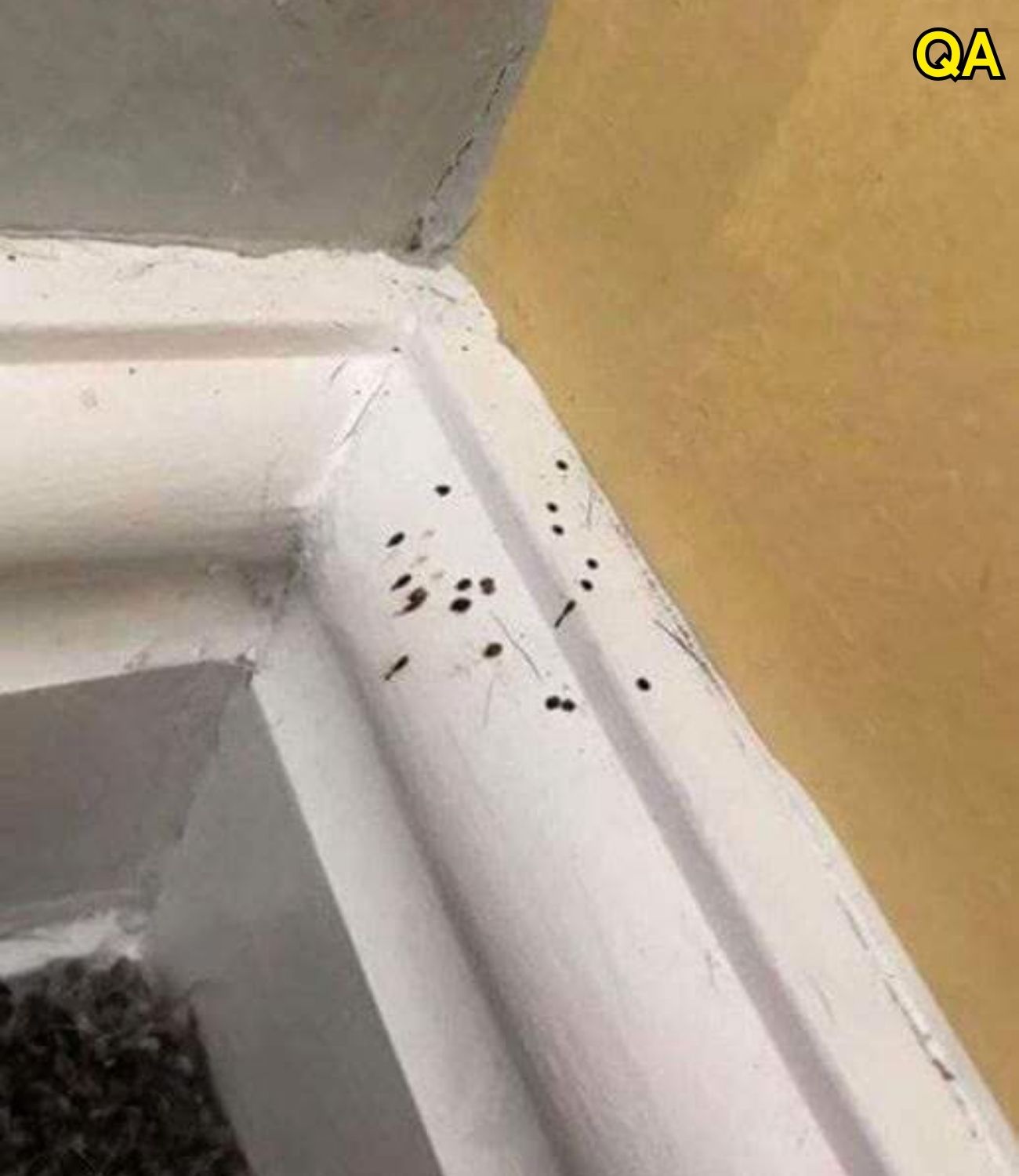
You wipe down your kitchen counters, mop the floor, and tidy every corner, only to notice tiny black spots appearing again a few days later. At first, it’s easy to assume they’re crumbs, dirt, or stains left behind during cooking.
But if the marks continue to reappear in the same places, you may begin to wonder whether they are connected to household pests.
While several insects and rodents can leave droppings indoors, another possible explanation is often overlooked: spiders. Understanding how to recognize these marks can help you determine the most appropriate next steps for keeping your home clean and comfortable.

Could the Black Dots Be Spider Droppings?
Spider droppings are different from the solid pellets produced by many other household pests.
Instead of being dry and firm, spider droppings often appear as tiny liquid-like splatters that resemble drops of black, brown, gray, or white paint or ink.
Because spiders feed on liquid nutrients extracted from their prey, their waste tends to have a softer consistency than that of insects or rodents.
The stains are usually very small—often no larger than the head of a pin—but they can become noticeable when several appear in one area.
Where Are Spider Droppings Commonly Found?
If spiders are responsible, the marks are most likely to appear near places where spiders rest or build webs.
Common locations include:
-
Corners where walls meet ceilings
-
Window frames and window sills
-
Baseboards
-
Behind furniture
-
Inside cabinets that are rarely opened
-
Beneath shelves
-
Around light fixtures
-
Under visible cobwebs
Because spiders generally prefer quiet, undisturbed spaces, these locations often provide ideal hiding places.
How Can You Tell the Difference?
Many household pests leave droppings, so appearance and location can offer useful clues.
Spider droppings often:
-
Look like tiny splashes rather than pellets.
-
Smear when wiped instead of remaining solid.
-
Vary in color from black and brown to gray or white.
-
Appear beneath webs or in areas where spiders are frequently seen.
By comparison, rodent droppings are typically firm, elongated pellets, while cockroach droppings may resemble coffee grounds or tiny dark grains, depending on the species.
If you’re unsure about the source, a licensed pest management professional can help identify the cause.

Are Spider Droppings Harmful?
Current evidence suggests that spider droppings are not generally considered a significant source of disease transmission for people.
Even so, it is good practice to avoid direct contact with any animal waste.
When cleaning, consider the following precautions:
-
Wear disposable gloves if possible.
-
Use paper towels or a disposable cloth.
-
Clean the surface with a household cleaner suitable for the material.
-
Wash your hands thoroughly afterward.
Fresh stains usually wipe away without much effort, while older stains may require a little more cleaning to remove discoloration.
Why Do the Spots Keep Coming Back?
If you repeatedly notice new stains after cleaning, it may indicate that spiders are continuing to occupy the area.
Cleaning removes existing marks but does not eliminate the conditions that attract or shelter spiders.
Addressing the underlying cause is often more effective than repeatedly cleaning the same spots.
How to Make Your Home Less Attractive to Spiders
Reducing spider activity often involves a combination of simple household maintenance practices.
Helpful steps include:
-
Regularly remove cobwebs.
-
Vacuum corners, ceilings, and hidden spaces.
-
Seal cracks and gaps around doors, windows, and foundations.
-
Reduce clutter that provides hiding places.
-
Store cardboard boxes off the floor when possible.
-
Keep outdoor vegetation trimmed away from exterior walls.
-
Reduce insects indoors, as they are an important food source for spiders.
These measures can help discourage spiders from settling inside your home.

When Should You Contact a Professional?
Occasional spiders are common in many homes and are often harmless.
However, professional inspection may be worthwhile if:
-
Large numbers of spiders appear regularly.
-
New droppings continue despite cleaning and prevention efforts.
-
You discover extensive webs throughout the home.
-
You are unable to identify the source of the stains.
A licensed pest management professional can inspect your home, identify the cause, and recommend appropriate solutions.
Remember That Many Spiders Are Beneficial
Although many people prefer not to have spiders indoors, they play an important role in nature.
Spiders help control populations of flies, mosquitoes, moths, and other insects by feeding on them.
For this reason, seeing an occasional spider indoors does not necessarily indicate a serious pest problem.
The goal is usually to reduce unwanted indoor activity while recognizing their ecological role outdoors.
Final Thoughts
Tiny black dots in your kitchen or around your home can have several possible causes, and spider droppings are one explanation that many people overlook. Unlike the dry pellets left by rodents or some insects, spider droppings often resemble tiny splashes of dark liquid and are commonly found beneath webs or in quiet corners where spiders rest.
While these stains are not generally considered a major health concern, cleaning them carefully and taking steps to reduce spider activity can help keep your home cleaner and more comfortable. If the problem persists despite regular maintenance, consulting a licensed pest control professional can help identify the source and provide effective, long-term solutions.
Sources
-
Clemson University – Educational resources on spiders and household pest identification.
-
University of California Integrated Pest Management Program – Guidance on spider behavior and home pest prevention.
-
National Pest Management Association – Information on common household pests and prevention strategies.