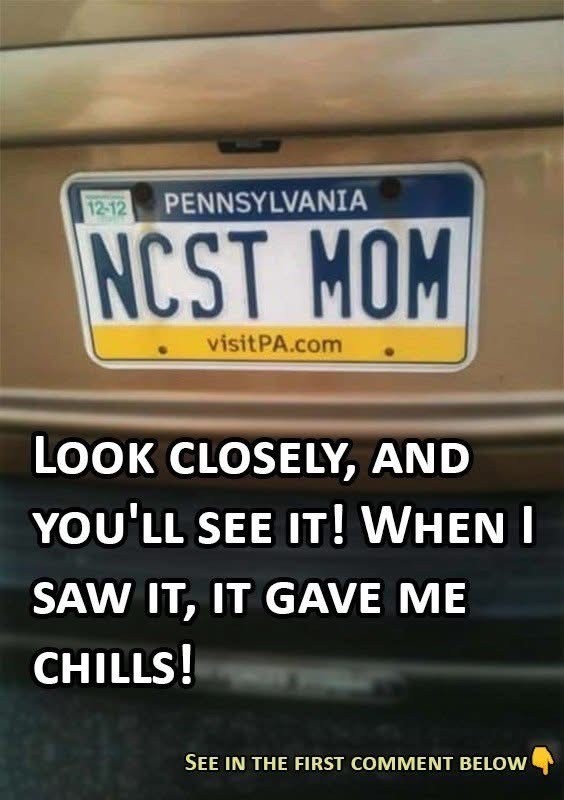
Perth License Plate Goes Viral After Social Media Users Spot Hidden Message
A vehicle registration plate photographed in a Perth shopping-centre car park has become an example of how quickly an everyday image can become a major talking point online. The plate, displayed on a Kia Sportage, appeared unremarkable at first: a combination of letters and numbers reading “370HSSV.” However, social media users soon pointed out that, when viewed upside down, the characters could be interpreted as a crude English phrase.
The image was shared on the Facebook page of The Bell Tower Times 2.0, a Perth-focused satire and community page. It prompted thousands of reactions, comments and shares as users discussed both the visual trick and the process used to approve personalised registration plates in Western Australia.
While the post was primarily treated as light-hearted online entertainment, it also raised broader questions about personalised plate rules, moderation standards and the difficulty of identifying every possible hidden meaning in combinations of letters and numbers.
Why the Perth Number Plate Attracted Attention
Personalised number plates are designed to stand out. Motorists may choose combinations that refer to names, businesses, hobbies, favourite vehicles or inside jokes. In this case, the apparent joke depended on rotating the plate rather than reading it in its normal position.
At a glance, “370HSSV” resembles a typical alphanumeric sequence. When inverted, however, people online interpreted the shapes of the characters as spelling a rude phrase. The effect relies on a familiar style of visual wordplay, sometimes called upside-down or calculator-style lettering, in which numbers and capital letters are used to resemble other characters.
Such visual puzzles have circulated for decades, from calculators and novelty signs to social-media memes. Their appeal lies in the delayed recognition: a sequence that seems ordinary can take on a different meaning when rotated, viewed from another angle or read in a particular context.
The Perth image gained traction because it combined that kind of wordplay with a highly visible public object. Registration plates are regulated by government authorities, so many commenters were curious about whether the message had been intentional and, if so, how it had passed the approval process.
Social Media Turns a Local Photograph Into a Wider Conversation
The reaction illustrates the speed at which social-media platforms can turn a local sighting into a widely shared story. A photograph taken in a car park can travel beyond its original audience within hours, particularly when it contains a puzzle, joke or detail that invites people to comment.
Posts involving unusual vehicle plates are especially shareable because they are easy to understand without extensive context. Viewers can look at the image, test the claim for themselves and respond with their own interpretation. In this case, commenters praised the apparent ingenuity of the combination, while others questioned whether the similarity was deliberate or simply a coincidence.
That uncertainty is part of the reason such posts draw attention. The public generally cannot know why a particular applicant selected a plate unless the owner chooses to explain it. A combination may have a personal meaning unrelated to the interpretation found online. It may also produce an unintended visual effect that becomes obvious only after someone shares it publicly.
For online audiences, however, intent is often less important than the discovery itself. The image became a small cultural moment because it demonstrated how digital communities collectively notice, decode and amplify details that might otherwise go unnoticed.
How Personalised Plates Are Approved in Western Australia
In Western Australia, vehicle licensing and registration matters are administered by the Department of Transport. The state offers a range of optional plate products, including personalised plates and custom designs. Applicants can request particular letter and number combinations, but those requests are subject to approval requirements.
Authorities reserve the right to reject combinations that may be considered offensive, inappropriate, misleading or otherwise unsuitable for public display. This is not unique to Western Australia. Registration authorities in Australia and internationally commonly impose restrictions because number plates are visible in public spaces and are used by people of all ages.
Reviewing applications can be complicated. Moderators need to consider obvious offensive terms, abbreviations, slang, coded language, references to criminal activity, discriminatory statements and combinations that could be mistaken for official or emergency-service vehicles. They may also need to account for changing meanings in popular culture and online communication.
The Perth plate demonstrates another challenge: visual interpretation. A sequence may appear harmless when read normally but resemble a different word when reversed, rotated, spaced differently or viewed alongside a particular image. It is not always possible for a review process to anticipate every alternate reading that internet users may later identify.
Government approval of a plate does not necessarily mean officials have endorsed every interpretation that might be made of it. Instead, it generally means the combination met the criteria applied at the time of review. If authorities later receive complaints or determine that a plate does not comply with policy, they may have powers to reconsider its use under relevant terms and conditions.
Why Moderating Personalised Registration Plates Is Difficult
Personalised plates sit at the intersection of individual expression and public standards. Drivers often see them as a way to make a vehicle distinctive, while governments must ensure that plates remain appropriate for public roads and practical for identification purposes.
The task is made more difficult by the flexibility of modern language. A short sequence of characters can carry several meanings depending on pronunciation, cultural background, regional slang or the way it is displayed. Digital culture has also created a constantly changing vocabulary of abbreviations and coded references.
Visual tricks add another layer of complexity. Some combinations use letters that resemble numbers, numbers that resemble letters, or characters that take on new meanings when rotated. A reviewer may identify the most obvious reading but not every possible interpretation. This does not necessarily indicate a failure of the system; it reflects the practical limits of screening large numbers of creative requests.
Similar issues have arisen in other jurisdictions. Transport agencies in Australia, the United States, the United Kingdom and elsewhere regularly publish examples of rejected plate requests. These examples often show attempts to use alternative spellings, phonetic substitutions or number-letter combinations to bypass restrictions on offensive wording.
Transparency can help the public understand why plate requests are rejected. When agencies explain their policies and publish general criteria, applicants have a clearer sense of what is unlikely to be approved. At the same time, authorities must avoid providing an instruction manual for circumventing those rules.
Personalised Plates and Public Expression
Custom registration plates have long been popular with motorists who want to express identity, humour or enthusiasm for a particular interest. They can reference a person’s initials, a family name, a profession, a sporting interest or a type of vehicle. For some owners, they are a collectible item; for others, they are part of a business or personal brand.
In Australia, plate designs also vary significantly between states and territories. Different colour schemes, slogans and formats have made registration plates a recognisable part of regional identity. Optional personalised products add another dimension, giving motorists more freedom while retaining official requirements for size, legibility and identification.
That visibility is also why authorities apply restrictions. A plate can be seen by pedestrians, other drivers, children and members of the public in many settings. Standards for personalised messages are therefore often more conservative than the standards applied to private conversations or online profiles.
The viral Perth example captures this tension in a relatively low-stakes form. The message identified by social-media users was based on a visual reversal rather than a plainly displayed word. The incident nevertheless encouraged discussion about where authorities should draw the line between harmless humour, ambiguous wordplay and material that may be unsuitable for public display.
The Role of Context in Viral Online Stories
Viral posts can be entertaining, but they also benefit from careful interpretation. A photograph may not reveal whether the plate owner intended the meaning attributed to it, whether the image has been altered, or whether the post accurately describes the circumstances in which it was taken.
In this case, the image appears to show a real vehicle plate in a public setting, but the owner’s motivation is not publicly established by the photograph alone. It is therefore more accurate to say that online users interpreted the plate as containing a hidden message than to state as fact that the driver deliberately chose it to evade approval rules.
This distinction matters because social-media content often moves faster than verification. A clever caption can become attached to an image and be repeated widely, even when some details remain uncertain. Responsible reporting should separate what is visible in the image from what has been claimed or inferred by commenters.
The wider lesson is not that viral posts are unreliable by default. Rather, audiences should recognise that humour, speculation and reporting can blend together online. Looking for information from official agencies and established news organisations can provide useful context, particularly when a story involves government policy, public safety or an individual who has not commented publicly.
What the Viral Plate Story Says About Internet Culture
The Perth plate story is a reminder that internet culture often finds significance in ordinary places. A car park, a parked SUV and a registration plate would normally attract little attention. Once the image was shared online, however, viewers transformed it into a collective puzzle and a discussion about regulation.
It also shows how humour spreads through participation. People did not simply consume the original post; they rotated the image, tested the visual interpretation, added jokes and debated whether the plate should have been approved. The conversation itself became part of the content.
For public authorities, these moments can bring unexpected scrutiny to administrative processes. For motorists, they can be a reminder that a personalised plate may be interpreted in ways that extend beyond its original purpose. And for social-media users, the story demonstrates the enduring popularity of simple visual wordplay in an increasingly fast-moving online environment.
Ultimately, the attention surrounding the Perth registration plate is less about one vehicle than about the relationship between creativity, public rules and digital sharing. Whether intentional or accidental, the plate became memorable because thousands of people saw something unexpected in a familiar object.
Sources
- Western Australia Department of Transport — Vehicle plates and licensing information
- Government of Western Australia — Department of Transport
- ABC News — Australian news and public-interest reporting
- BBC News — Media, technology and society coverage
- Reuters — Independent international news reporting
Disclaimer: This content is intended for entertainment purposes only and is not based on real events.