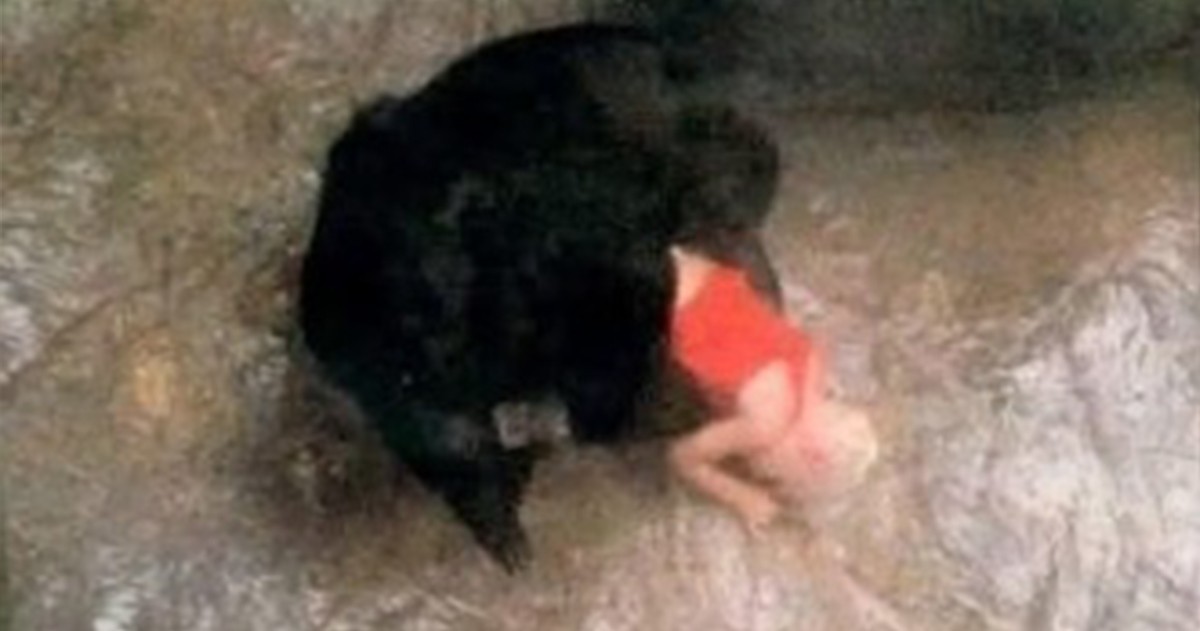
On a summer afternoon in 1996, an unexpected scene unfolded at Brookfield Zoo in Illinois. Visitors suddenly found themselves watching something few could have imagined: a young boy had fallen into a gorilla enclosure, and one of the animals approached him.
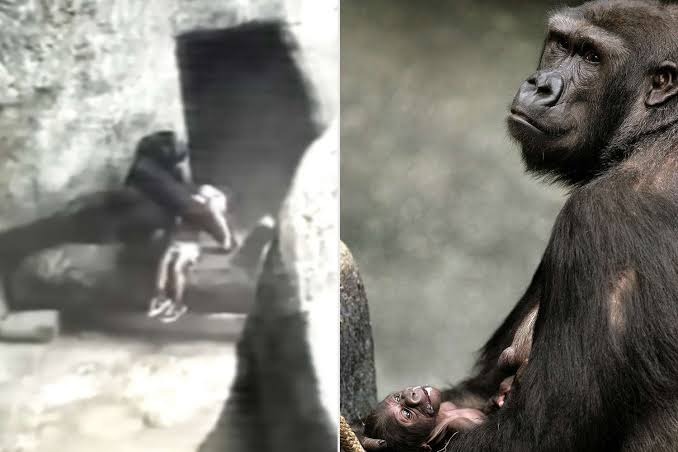
Her name was Binti Jua, a western lowland gorilla. Rather than simply moving away from the commotion, she picked up the child and carried him toward the area where zoo staff could reach him.
The extraordinary image quickly traveled around the world. For many people, it seemed to tell a simple story about compassion: a gorilla had protected a vulnerable child.
But what was Binti Jua actually thinking? Did she understand that the child was in trouble? Was she responding through maternal instincts, previous experiences with humans, or something more difficult for science to explain?
More than two decades later, the incident remains fascinating precisely because it sits at the intersection of observation, animal behavior and human interpretation.
Who Was Binti Jua?
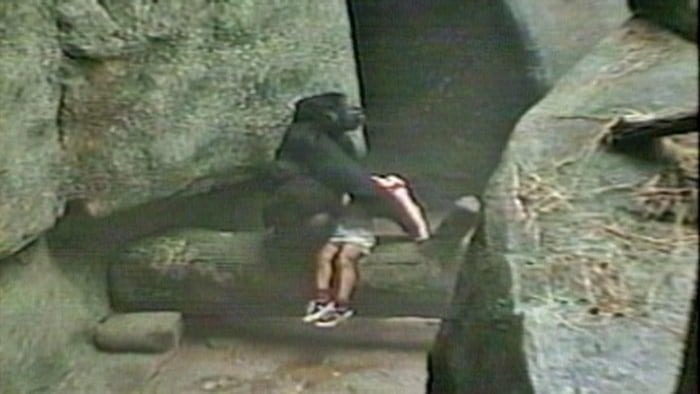
Binti Jua was a female western lowland gorilla living at Brookfield Zoo near Chicago. At the time of the incident, she was an adult female and mother to an infant named Koola, who was positioned on her back during the event.
Her background is particularly important when considering what happened.
Binti had been hand raised by humans after being rejected by her mother. Zoo staff subsequently worked with her so she could learn appropriate behaviors around infant gorillas and participate in routine care involving her own young.
That experience meant Binti was unusually familiar with humans.
On August 16, 1996, a three-year-old boy climbed over a barrier surrounding the gorilla habitat and fell into the enclosure. According to contemporary reports, the child was injured and became unresponsive.
The situation immediately became chaotic as visitors called for assistance and zoo personnel prepared to intervene.
Then Binti approached.
The Moment That Captured the World’s Attention
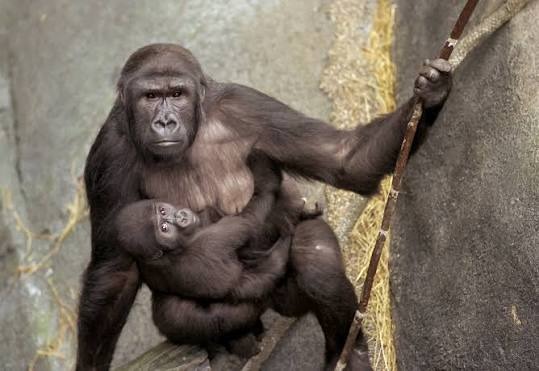
Witnesses described Binti carrying the child carefully in her arms.
She eventually brought him toward the entrance of the enclosure, where zoo personnel could safely retrieve him. Her own infant remained on her back throughout much of the episode.
The scene was recorded on camera, allowing people around the world to see what had happened rather than relying entirely on secondhand descriptions.
The child was subsequently taken for medical attention and was reported to have recovered from his injuries.
For visitors who witnessed the event, however, the most remarkable part was not simply that Binti had approached the boy.
It was the apparent gentleness of her behavior.
The gorilla could have responded to an unfamiliar situation in many different ways. Instead, she carried the child and moved him toward the area where people were waiting.
That observation became the foundation for a much larger discussion.
Could animals understand when another individual needs assistance?
Was Binti Jua Showing Empathy?
This is where the story becomes more complicated.
It is tempting to describe Binti’s behavior as proof that she understood the child’s situation in exactly the same way a human adult would.
Science cannot establish that from a single event.
Animal behavior researchers generally distinguish between what can be directly observed and what humans infer from an animal’s actions.
We can observe that Binti picked up the child, carried him and eventually placed him near the enclosure entrance.
We cannot directly observe the thoughts behind those actions.
That does not make the behavior meaningless. In fact, it makes the event more interesting.
Researchers studying primates have documented many forms of social behavior that suggest sophisticated emotional and cognitive abilities. Great apes can recognize individuals, develop social relationships, respond to distress and demonstrate behaviors that appear cooperative or protective.
The question is whether those behaviors should be described using human concepts such as empathy or compassion.
Some researchers argue that carefully defined forms of empathy can be studied in animals. Others caution against automatically assigning human motivations to animal behavior.
Binti Jua’s story therefore offers an excellent example of why scientific observation and cultural interpretation should remain separate, even when they complement each other.
The Importance of Binti’s Maternal Experience
One possible explanation for Binti’s behavior involves her experience as a mother.
Binti was carrying her own infant when she encountered the child.
Gorillas are highly social animals, and caring for young is an important part of their behavioral repertoire. Binti had also received experience handling infants through her upbringing at the zoo.
This raises an intriguing possibility.
The child may have triggered behaviors associated with infant care.
From that perspective, Binti did not necessarily need to understand the situation as a human would. She may simply have recognized a small, vulnerable individual and responded with familiar caregiving behavior.
That interpretation is considerably more cautious than saying she consciously decided to rescue the boy.
Yet it does not make the event any less remarkable.
In fact, it highlights how complex animal behavior can be without requiring supernatural explanations.
Training May Have Played a Role
Another important part of Binti Jua’s story is her unusual upbringing.
Because she had been raised by humans, she was accustomed to interacting with people in ways that a wild gorilla normally would not.
She had also received training related to infant care.
That background may have influenced her response.
Perhaps Binti had learned that small infants should be handled carefully and brought toward human caregivers. Perhaps her previous experiences made humans less unfamiliar to her than they might have been to another gorilla.
Scientists therefore have to consider several possibilities simultaneously.
Her response could have involved maternal instincts, learned behavior, familiarity with humans, individual temperament or some combination of these factors.
There is no need to choose a single explanation when the evidence does not allow one.
The Cultural Meaning of the Story
Even though scientific explanations remain cautious, the cultural significance of Binti Jua’s story is undeniable.
People naturally respond to stories in which an unexpected individual appears to show care toward someone vulnerable.
The image of a powerful gorilla gently carrying a small child creates a striking contrast between appearance and behavior.
It also challenges familiar stereotypes about gorillas.
Popular culture has often portrayed gorillas as frightening or unpredictable creatures. Fictional characters have contributed greatly to that image.
Real gorilla behavior, however, is far more nuanced.
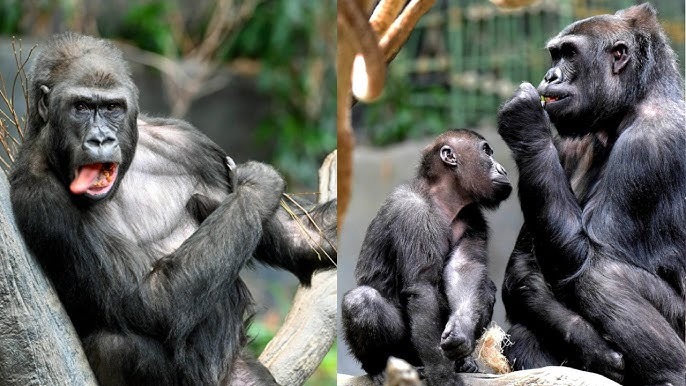
Gorillas are intelligent, social animals with complex relationships and recognizable individual personalities. Their behavior can include play, communication, caregiving, cooperation and conflict.
Binti Jua’s story became memorable partly because it offered the public a different image of a gorilla: not a frightening creature, but a mother carrying a vulnerable child.
Why the Story Still Fascinates People
The incident happened decades ago, yet people continue to revisit it.
Why?
Perhaps because it raises a question that humans have asked for centuries: how different are we from other animals?
Humans often define compassion, cooperation and caregiving as characteristics that distinguish our species.
But observations from primatology and animal behavior suggest that the foundations of some social behaviors are much older.
Our closest living relatives provide particularly interesting evidence. Chimpanzees and bonobos demonstrate sophisticated social interactions, while gorillas form close family relationships and invest considerable effort in raising young.
Other species also display behaviors that appear cooperative or protective.
None of this means animals think exactly like humans.
Instead, it suggests that evolution can produce overlapping behavioral patterns in very different species.
A Careful Look at the “Hero” Label
Binti Jua was widely celebrated as a hero following the incident.
That description is understandable from a human perspective.
However, scientists would probably phrase the conclusion differently.
Calling Binti a hero implies intention, moral judgment and conscious understanding of the situation. Those are difficult things to establish scientifically from one behavioral episode.
A more evidence-based description would be that Binti displayed an unusual and protective response toward a vulnerable child.
That wording may sound less dramatic, but it allows the event to remain extraordinary without turning speculation into fact.
And perhaps that is the most fascinating aspect of the story.
We do not need to know exactly what Binti was thinking to appreciate what happened.
What Happened to Binti Jua?
Binti continued living at Brookfield Zoo for many years after the incident.
Her story became part of the zoo’s history and contributed to broader public discussions about gorilla intelligence and behavior.
She was also recognized by major media organizations following the incident, becoming one of the best-known gorillas in the world.
Her story has remained especially powerful because it was captured through photographs and video.
Without those records, the account might sound almost unbelievable.
Instead, viewers can observe the behavior and form their own interpretations.
Binti Jua and the Broader Study of Animal Intelligence
Modern animal behavior research has increasingly demonstrated that intelligence cannot be measured using only human abilities.
Different species have evolved different ways of navigating their environments.
A gorilla does not need to read a book, build a computer or speak a human language to possess sophisticated cognitive abilities.
Its intelligence is expressed through social relationships, communication, memory, problem-solving and adaptation.
This broader understanding of intelligence helps explain why stories such as Binti Jua’s remain important.
They encourage people to reconsider assumptions about what animals can perceive and understand.
At the same time, they remind us that extraordinary behavior should be studied carefully rather than exaggerated.
A Story That Leaves Room for Mystery
There is still something wonderfully mysterious about Binti Jua’s decision.
Was she protecting the child?
Was she responding to an infant-like appearance?
Did her training influence her actions?
Did she recognize that something was wrong?
Or did several factors come together in a way that researchers cannot fully reconstruct decades later?
We may never know.
And that uncertainty does not weaken the story.
Instead, it demonstrates one of the most important principles of studying animal behavior: sometimes the most responsible answer is simply that we need more evidence.
Binti Jua’s actions can be appreciated without claiming that she possessed human reasoning.
The Enduring Lesson of Binti Jua
The 1996 incident at Brookfield Zoo remains one of the most memorable examples of unexpected animal behavior.
A young child found himself in an unusual and dangerous environment. A gorilla named Binti Jua approached, carried him and moved him toward the place where humans could help.
The event inspired countless people because it appeared to cross the boundaries between species.
Science gives us several plausible explanations, from maternal behavior and previous human interaction to learned responses and individual temperament. None can completely reveal what was happening inside Binti’s mind.
Perhaps that is why the story continues to capture our imagination.
Binti Jua reminds us that the natural world is more complex than the simple categories we often create for it. Animals are not simply characters in stories, nor are they miniature versions of humans. They are remarkable creatures with their own forms of perception, communication and social behavior.
And sometimes, an unexpected moment can make us pause and reconsider everything we thought we knew.
Sources
For background on the 1996 incident and contemporary eyewitness accounts, see CBS News coverage of Binti Jua.
For broader information about optical and perceptual science, the Queensland Brain Institute provides educational resources on how the brain interprets visual information: Queensland Brain Institute.
For additional historical and behavioral context, readers can consult Brookfield Zoo Chicago and reputable scientific literature on gorilla behavior and primate cognition.
Ultimately, stories like Binti Jua’s reveal something about us as much as they reveal something about animals. Human beings are naturally curious about minds different from our own. We look at an unexpected act of kindness and wonder what another creature might have understood in that moment.
Maybe we will never have a definitive answer.
But perhaps that uncertainty is precisely what keeps us looking, learning and asking better questions about the remarkable world we share.