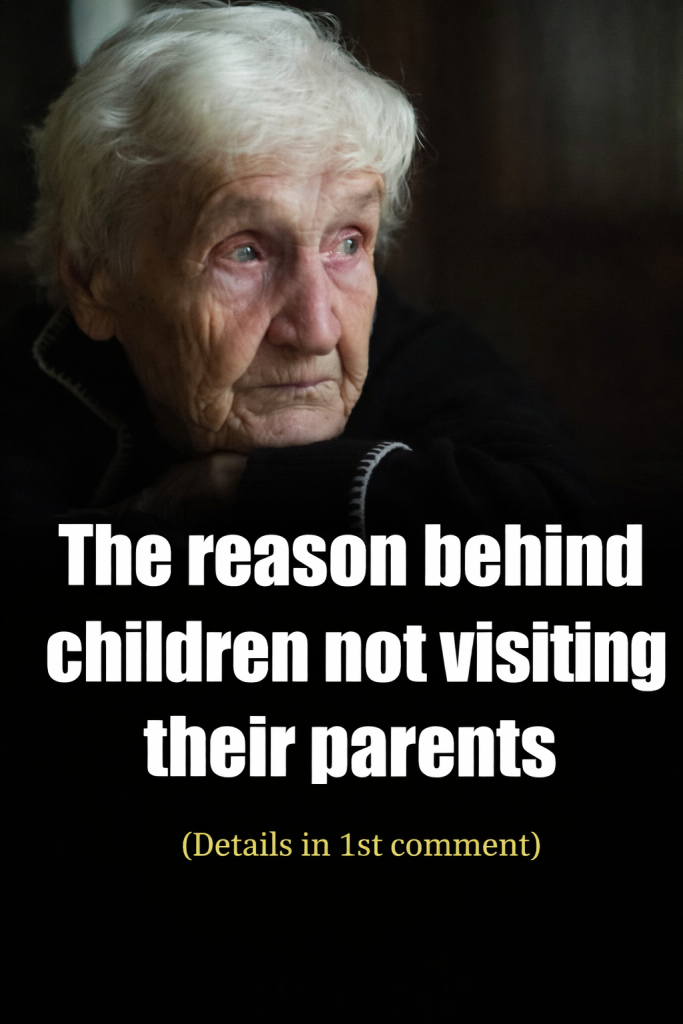
Why Adult Children Grow Distant From Their Parents: 6 Reasons Behind the Silence
Family relationships are often described as lifelong bonds that remain strong regardless of distance, disagreements, or the passage of time. Yet, for many families, the reality can be more complicated. Parents who once spoke with their children every day may eventually find themselves waiting weeks for a phone call or wondering why visits have become increasingly rare.
For some parents, this change is difficult to understand. They may remember school mornings, family vacations, birthday celebrations, and years spent providing care and support. From their perspective, the relationship has always been important. So why does staying connected suddenly seem so difficult?
The answer is rarely simple.
Adult children may become less involved in their parents’ lives for many reasons, ranging from demanding schedules and geographical distance to unresolved disagreements and emotional boundaries. Sometimes, contact decreases naturally as people build independent lives. In other cases, the distance reflects deeper feelings that have remained unspoken for years.
Understanding these possibilities does not mean assigning blame. Instead, it offers families an opportunity to look beyond appearances and consider what might be happening beneath the surface.
1. Adult Life Brings New Responsibilities and Priorities
One of the most common reasons adult children communicate less frequently with their parents is the gradual expansion of their responsibilities.
During childhood, daily life often revolves around the family home. Parents and children share meals, routines, celebrations, and ordinary conversations. Even when disagreements occur, opportunities to interact are built into everyday life.
Adulthood changes that structure.
Careers demand time and concentration. Romantic relationships require attention. Raising children introduces new responsibilities, while financial pressures and household commitments can leave people feeling stretched in several directions at once.
For an adult child working long hours or caring for a young family, calling a parent may become something they intend to do later but repeatedly postpone.
Days turn into weeks, and weeks sometimes become months.
From the parent’s perspective, the silence may feel personal. They may wonder whether their child has forgotten them or no longer values the relationship. The adult child, however, may believe that the relationship remains secure even when communication is infrequent.
These different expectations can create disappointment on both sides.
A parent may associate regular calls with love and respect, while the adult child may believe that affection does not need to be demonstrated through constant contact.
Neither interpretation necessarily tells the whole story.
Research on relationships between parents and young adult children shows that communication patterns and satisfaction vary between families. A 2024 Pew Research Center report found that while many parents were satisfied with their level of contact, some wanted more communication with their adult children.
The important lesson is that reduced contact does not automatically mean reduced affection. Sometimes, it reflects the practical demands of building an independent life.
2. Physical Distance Can Gradually Become Emotional Distance
Moving away is often an important part of adulthood.
Young people relocate for education, employment, relationships, or the chance to experience a different environment. Over time, they may settle in another city or country, establish new routines, and build social networks far from the place where they grew up.
Although technology makes communication easier, maintaining a close relationship across distance still requires effort.
A spontaneous visit becomes a carefully planned trip. A shared dinner may turn into a short video call. Family celebrations require travel arrangements, expenses, and coordination with work schedules.
At first, everyone may promise to stay in touch. Gradually, however, familiar routines disappear.
Parents may miss the small details of their children’s lives: what they are worried about, what makes them happy, or what happened during an ordinary afternoon. Adult children may also become less aware of changes in their parents’ daily lives.
The relationship can begin to feel less immediate.
This does not mean geographical distance inevitably weakens family bonds. Some families remain close despite living thousands of miles apart. Regular conversations, shared traditions, and genuine interest in one another can help preserve that connection.
The difference often lies in whether both sides make room for the relationship within their changing lives.
A short message, a scheduled call, or a shared photograph may seem insignificant, but these small interactions can help family members feel included in one another’s experiences.
3. Old Conflicts May Still Influence Present Relationships
Sometimes, the distance between parents and adult children cannot be explained by busy schedules or travel difficulties.
The underlying issue may be something that happened years earlier.
A painful argument, repeated criticism, a broken promise, or a moment when someone felt unsupported can remain emotionally significant long after the original event has passed.
Parents and children may remember the same experience differently. A parent might consider a disagreement a normal part of raising a family, while the child remembers it as an example of not being heard.
Neither person may fully understand how differently the event was experienced.
When these differences remain unaddressed, they can influence future interactions.
An ordinary conversation may unexpectedly return to an old disagreement. A well-intended question may sound like criticism. A family gathering may bring back feelings that someone thought they had already put behind them.
Eventually, avoiding contact can seem easier than risking another uncomfortable encounter.
Research into parent-adult child estrangement has identified a range of contributing factors, including unresolved family conflict, different interpretations of past experiences, and relationship difficulties that accumulate over time.
A study examining the perspectives of estranged parents and adult children found that the two groups often described the causes of their distance differently. Parents frequently emphasized their children’s behavior or outside relationships, while adult children more often described feeling unsupported or hurt by parental behavior.
These findings do not establish that one side is always correct. Instead, they illustrate how two people can experience the same relationship through different emotional histories.
Rebuilding trust may require more than asking why someone no longer calls. It may require listening to what that person believes happened, even when their recollection differs from one’s own.
4. Feeling Unheard Can Change How an Adult Child Connects
A child’s experience of family life can influence how they approach relationships as an adult.
When children feel that their thoughts and emotions are taken seriously, they may find it easier to share concerns and seek support. When they repeatedly feel dismissed, criticized, or misunderstood, they may gradually become more guarded.
These patterns do not affect every person in the same way, and childhood experiences alone do not determine how an adult relationship will develop. Nevertheless, early interactions can influence expectations about whether difficult conversations will lead to understanding or conflict.
Consider an adult child who tries to discuss a painful memory with a parent.
Instead of hearing an acknowledgment of their feelings, they receive a response such as, “That was a long time ago,” or “You are remembering it incorrectly.”
The parent may be trying to explain their perspective or defend themselves against an accusation. The child, however, may interpret the response as another dismissal.
If similar conversations happen repeatedly, the child may stop bringing up personal concerns.
Over time, conversations can become shorter and less meaningful. The adult child may still send birthday greetings or attend important family events, but they may avoid discussing subjects that make them feel vulnerable.
In some families, this emotional distance eventually becomes a form of self-protection.
It is important not to label every difficult parent as narcissistic or assume that every distant adult child has experienced serious mistreatment. Family dynamics are complicated, and isolated behaviors do not establish a psychological diagnosis.
What matters is whether family members can recognize harmful patterns, respect each other’s experiences, and make meaningful changes when necessary.
5. Different Expectations About Communication Can Create Misunderstandings
Not every family conflict begins with a major disagreement.
Sometimes, the problem develops because parents and adult children have different ideas about what a close relationship should look like.
A parent might believe that a loving child should call several times a week, visit every weekend, and share important decisions. Their adult child might prefer fewer conversations but feel that the relationship is still strong.
Both may believe their expectations are reasonable.
The difficulty begins when neither person explains those expectations clearly.
A parent who feels neglected may stop reaching out to see whether the child will make the first move. The child may interpret the silence as a sign that the parent wants space. Each side waits for the other to act.
The longer the silence continues, the more difficult it can become to restart the conversation.
Small misunderstandings may also grow when family members communicate indirectly. Sarcastic remarks, guilt-inducing comments, or repeated reminders about how rarely someone visits can turn an ordinary conversation into a source of stress.
A more constructive approach is to express needs without making accusations.
Instead of saying, “You never care enough to call,” a parent might explain, “I miss talking with you. Could we find a time to catch up each week?”
Likewise, an adult child might say, “My schedule has been difficult lately, but I want us to stay connected. Let’s plan a time that works for both of us.”
Clear communication cannot solve every disagreement, but it can help prevent assumptions from becoming lasting resentment.
6. Boundaries May Become Necessary for Emotional Well-Being
One of the most difficult realities for parents to accept is that an adult child may choose to limit contact even when the parent wants a closer relationship.
For some families, this decision follows repeated conflicts or long-standing problems. The adult child may feel that conversations regularly become arguments, that personal decisions are not respected, or that visits leave them emotionally exhausted.
In these situations, boundaries may be an attempt to make the relationship more manageable.
A boundary might involve limiting the length of visits, avoiding certain subjects, communicating through messages rather than frequent calls, or taking a temporary break after a difficult interaction.
In more serious situations, an adult child may decide that very limited contact or no contact is necessary.
Such decisions can be painful for parents, especially when they do not understand what led to them. They may feel confused, rejected, or unsure how to repair the relationship.
At the same time, family ties do not automatically remove an individual’s need for emotional safety, privacy, and independence.
A useful first step is to ask whether there are specific behaviors that have made communication difficult. This question is most productive when it is asked with genuine curiosity rather than as a demand for reassurance.
If a child explains that certain comments or actions have caused pain, listening without immediately arguing can create space for a more honest conversation.
Respecting a boundary does not mean giving up on the relationship forever. It means recognizing that closeness cannot be forced and that trust must be rebuilt through consistent behavior.
Can the Relationship Become Close Again?
Distance between parents and adult children can feel permanent, but it does not always remain that way.
Research on adult family estrangement suggests that relationships can change over time, although the process differs considerably from one family to another. Some family members reconnect after a period of distance, while others maintain limited contact because they believe it is healthier for them.
There is no single solution that works for every situation.
When both sides are willing to improve the relationship, small and realistic steps can help.
Start with a simple message. A brief, warm message can reopen communication without placing immediate pressure on the other person.
Listen before explaining. If an adult child shares a concern, try to understand what they are saying before defending past decisions. Listening does not require agreeing with every detail.
Acknowledge specific mistakes. A sincere apology is more meaningful when it identifies the behavior that caused hurt and recognizes its impact. General statements such as “I’m sorry you feel that way” may not communicate genuine understanding.
Respect different needs. One person may want frequent calls, while another needs more independence. A sustainable arrangement should take both people’s preferences into account.
Focus on consistency. Trust is rarely restored through one emotional conversation. Following through on promises, respecting boundaries, and maintaining a calm tone over time can be more meaningful than making grand gestures.
If conversations repeatedly become painful or seem impossible to resolve, family counseling may offer a structured setting in which both sides can express their perspectives.
However, reconciliation should not be treated as an obligation in every circumstance. Where there has been abuse, intimidation, or ongoing harmful behavior, safety and appropriate boundaries may need to come first.
A Different Way to Understand the Silence
When adult children stop calling or visiting as often as their parents would like, it is natural to search for an explanation.
Some parents may conclude that their children have become selfish. Some adult children may believe their parents will never understand them. Both interpretations can make it harder to see the full picture.
Silence can have many meanings.
It may reflect a demanding schedule, a new stage of independence, a misunderstanding, an unresolved conflict, or a deliberate effort to maintain emotional boundaries. Sometimes, several of these factors exist at once.
The absence of frequent contact does not reveal the entire history of a relationship.
Nor does the fact that two people share a family automatically mean that they experience the relationship in the same way.
The most helpful response is often to replace assumptions with questions, defensiveness with listening, and pressure with honest communication.
Parents can express that they miss their children without using guilt to demand attention. Adult children can explain their needs without assuming that their parents will automatically understand them.
Both sides can recognize that relationships change as people grow older, build new families, and develop different expectations.
Ultimately, a strong family bond is not measured only by the number of phone calls or visits. It is also reflected in the respect people show one another, the willingness to acknowledge hurt, and the effort they make to understand experiences beyond their own.
Sometimes, rebuilding closeness begins with a long conversation. Sometimes, it starts with a brief message that simply says, “I’ve been thinking about you. How are you?”
And sometimes, the first meaningful step is recognizing that love and distance can exist in the same relationship—and that understanding the difference is the beginning of finding a healthier way forward.
Sources
-
Blake, L. (2017). Parents and Children Who Are Estranged in Adulthood: A Review and Discussion of the Literature. Journal of Family Theory & Review. https://doi.org/10.1111/jftr.12216
-
Arránz Becker, O. (2022). Adult Children’s Estrangement From Parents in Germany. Journal of Marriage and Family. https://doi.org/10.1111/jomf.12796
-
Scharp, K. M., & Thomas, L. J. (2016). Giving Voice to the Silence of Family Estrangement: Comparing Reasons of Estranged Parents and Adult Children in a Nonmatched Sample. Journal of Family Communication. https://doi.org/10.1080/15267431.2015.1013106
-
Pew Research Center (2024). Parents’ Relationship With Their Young Adult Children. https://www.pewresearch.org/social-trends/2024/01/25/parents-relationship-with-their-young-adult-children/