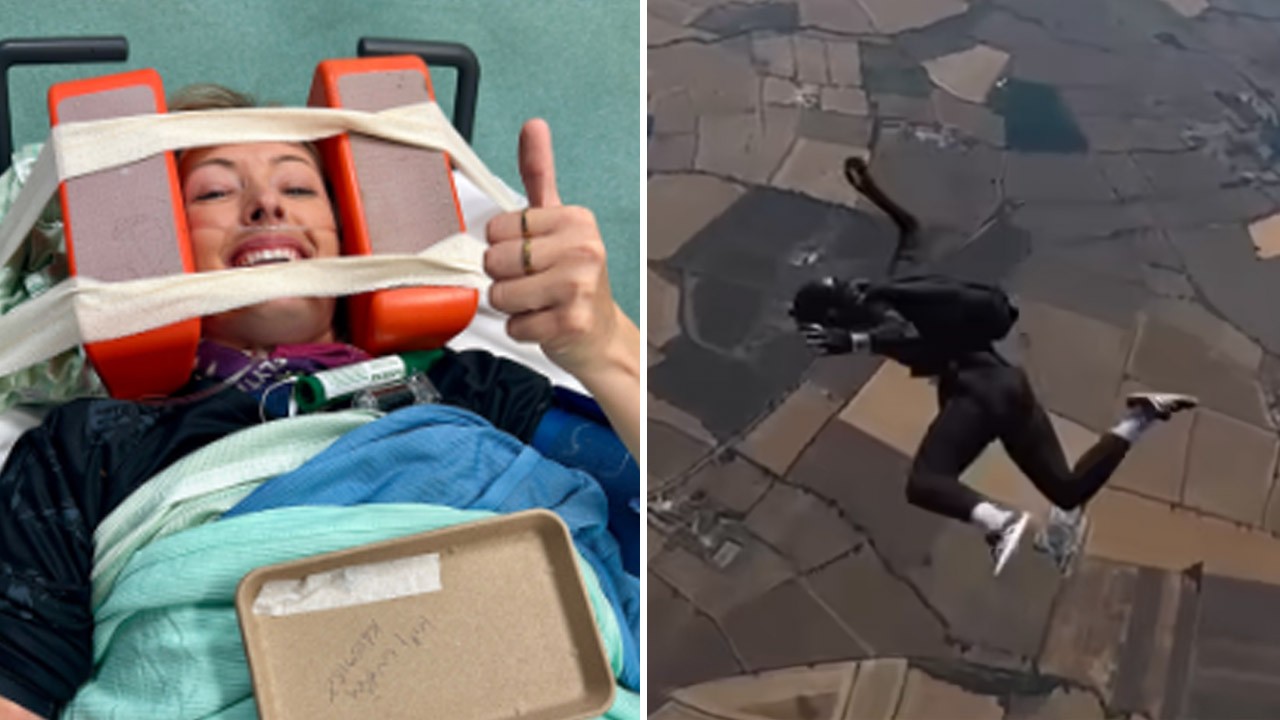
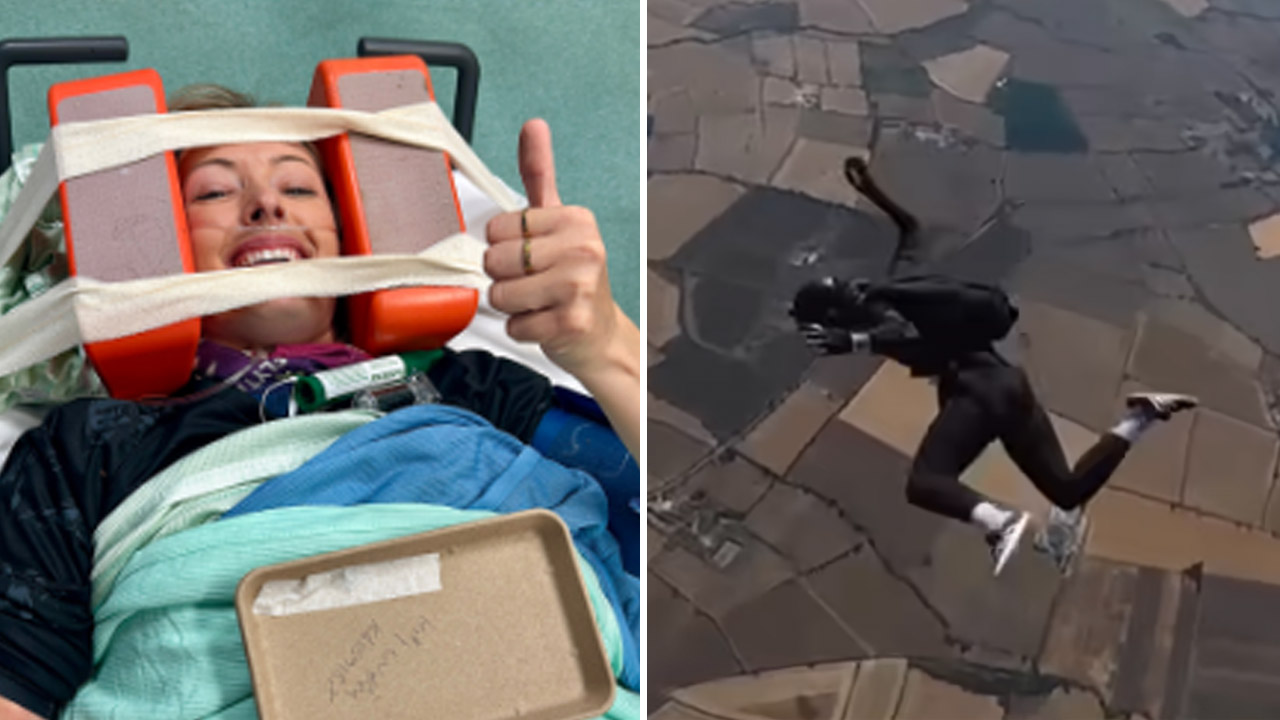
Holly Wiffen, 35, plummeted 10,000ft without an open parachute while skydiving – and miraculously survived the terrifying ordeal above Langar airfield, near Nottingham.
The Extraordinary Survival of Holly Wiffen: A Skydiving Accident Analysis
On August 7, 2023, Holly Wiffen, a 35-year-old woman from the United Kingdom, embarked on what was supposed to be an exhilarating skydiving experience, only to become the survivor of one of the most dramatic accidents in recent memory. Taking part in a group skydiving event at Langar Airfield near Nottingham, Holly joined others in a “tracking jump”—a specialized skydiving maneuver where participants move horizontally through the air, achieving higher speeds and a unique formation.
Skydiving is considered a safe sport when proper protocols are followed, but inherent risks remain. This incident, which quickly turned from thrilling to life-threatening, underscores both the hazards and the importance of safety procedures in extreme sports. According to Mirror, everything changed in mid-air when another skydiver accidentally struck Holly, knocking her unconscious thousands of feet above ground with her parachute not deployed.
Understanding the Accident: Skydiving Risks and Safety Protocols
In the world of skydiving, participants rely extensively on their training and equipment. “Tracking jumps” require additional awareness, as the horizontal speeds and proximity to other jumpers elevate the risk of accidents. Holly’s incident began when mid-flight, a fellow skydiver’s unintended kick caused her to lose consciousness instantly. Falling unconscious during freefall is extremely rare and perilous because the jumper cannot manually deploy their parachute.
Survival in such circumstances depends on a chain of safety features and protocols. Modern skydiving equipment incorporates devices known as Automatic Activation Devices (AADs), which monitor freefall speed and altitude. If a jumper is still in freefall past a preset altitude, the AAD automatically triggers the deployment of the reserve parachute. According to experts from the British Parachute Association and U.S. Parachute Association, AADs have saved lives in similar emergencies, although survival from a long unconscious fall remains exceptional.
The Fall: Holly Wiffen’s Experience and Immediate Aftermath
Holly’s ordeal began with the loss of consciousness at roughly 10,000 feet, leaving her life in the hands of her equipment and fate. Her sister described the terrifying sequence in a GoFundMe campaign: “Holly was involved in a skydiving accident … knocked unconscious by another skydiver during a tracking jump and woke up on the ground.” Holly herself only vaguely remembers the moments before the accident, recalling that everything went black as soon as she exited the airplane.
Appearing on the UK’s This Morning show, Holly expanded on the experience: “It was instant – it just went black. I don’t even remember leaving the plane … I just was dreaming of falling—it was really surreal.” While she was unconscious in freefall, her mind subconsciously replayed her training: “I was thinking … if I’m falling and unstable, I should be arching and trying to reach my parachute—but I was asleep.”
The significance of her mental training is notable in extreme sports: jumpers routinely practice emergency protocols. While many accidents involve physical injury, survival from unconscious freefall is almost unheard of, demonstrating the importance of well-maintained safety equipment and the psychological resilience developed through skydiving training.
Miraculous Survival: Automatic Deployment and Landing
With Holly unable to take manual control, her survival depended on the AAD integrated into her gear. The device sensed her altitude and speed, deploying the reserve parachute mere seconds before impact. The canopy slowed her descent, but she still landed among the branches of a large conifer tree—a factor that likely cushioned her fall and reduced the physical trauma.
Upon waking, Holly found herself suspended in the tree, numb and in shock. She immediately began a mental self-assessment, checking the status of her gear and injury. Her concern for the skydiving equipment was pragmatic, given the expense, and she reported performing a “full body check.” Despite a broken leg and fractured vertebrae, she was grateful to have survived when many similar accidents end in tragedy.
Physical Impact: Injuries, Treatment, and Recovery
Holly suffered a broken leg and fractured vertebrae, but miraculously avoided more catastrophic injuries. Her recovery process has been arduous, requiring ongoing physiotherapy and support due to long waiting lists in the UK’s National Health Service (NHS). As a self-employed woman, Holly was faced with significant challenges covering medical costs and lost income, leading her sister to organize fundraising efforts within the skydiving community.
The response was overwhelmingly supportive, highlighting the tight-knit nature of the skydiving world. According to the British Parachute Association, incidents are rare but when they occur, communities mobilize quickly to assist their own. Skydiving experts note that mental health support and rehabilitation after traumatic accidents are essential components of recovery.
Expert Views: Skydiving Safety and Emergency Response
While skydiving fatalities and injuries are rare relative to the number of jumps annually, experts emphasize the importance of redundancy in safety equipment and rigorous training for all jumpers. Dr. James Allen, an aviation medicine specialist interviewed by BBC, noted: “Automatic Activation Devices have revolutionized skydiving safety, but awareness and risk management are vital. Holly’s survival is an intersection of technology, proper equipment maintenance, and quick community response.”
International bodies such as the U.S. Parachute Association and the Fédération Aéronautique Internationale routinely investigate and analyze accidents to improve protocols. Holly’s case will likely influence future safety guidelines and training, serving as a real-world example of why stringent safety standards matter.
Societal and International Reactions
News of Holly’s survival spread quickly across media and social networks. Among skydivers worldwide, her story was met with both astonishment and relief. Trainers in Europe and the United States used the incident to reinforce the importance of checking equipment and practicing emergency drills. Within the broader public, the story sparked discussions about safety in adventure sports and the resilience of the human body under extreme conditions.
Several medical experts commented on the role shock plays in protecting individuals during traumatic injury. According to Mayo Clinic and the World Health Organization, post-traumatic amnesia and automatic physical responses can sometimes save lives when conscious intervention is impossible.
Holly Wiffen’s Perspective: Return to Skydiving and Community Support
Remarkably, Holly expressed determination to return to skydiving after her recovery, citing the sport’s importance to her well-being and sense of adventure. “After surviving a fall that could easily have ended in tragedy, Holly says she is still determined to return to the sport she loves,” her sister wrote on the fundraising page.
The skydiving community has rallied to support her through her rehabilitation, exemplifying the camaraderie and care inherent among enthusiasts. This support goes beyond financial aid, encompassing emotional reassurance, practical advice, and shareable lessons drawn from the accident.
Broader Implications: Adventure Sports, Safety Innovations, and Mental Resilience
Holly’s story offers key takeaways for adventure sports participants. Technological advancements such as AADs, ongoing training, and well-developed communities enhance safety, but accidents can still occur. The intersection of equipment, knowledge, and resilience is the foundation of survival in extreme situations.
Researchers and safety regulators continue to monitor and upgrade guidelines, aiming to further minimize risk. As adventure tourism expands globally, stories like Holly’s will influence both policy and the public’s understanding of risk management.
While her ordeal was traumatic, Holly’s survival brings hope and serves as an educational milestone for those seeking enjoyment in high-adrenaline activities. Her experience highlights both the fragility and the strength of the human spirit.
Watch Holly’s Interview and Further Reading
For readers interested in more unusual stories, consider:
- What ‘wide neck guy’ looks like today, eight years after his viral mugshot
- Youngest woman on death row’s last words before being taken away as execution date nears
Sources
- Reuters
- BBC
- Al Jazeera
- The Guardian
- World Health Organization (WHO)
- Centers for Disease Control and Prevention (CDC)
- Mayo Clinic
- British Parachute Association
- U.S. Parachute Association
- Fédération Aéronautique Internationale
Disclaimer: This content is intended for entertainment purposes only and is not based on real events.