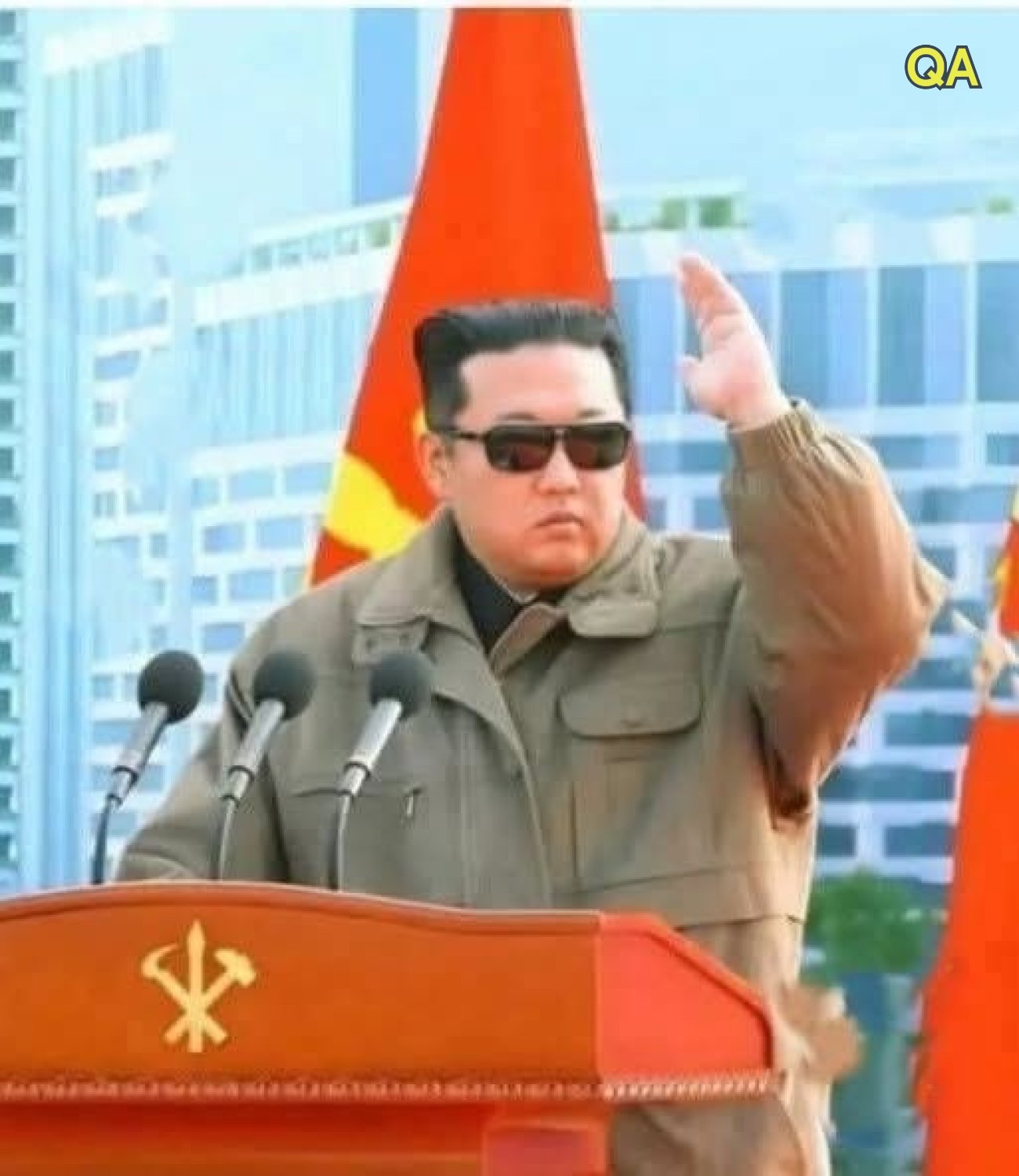
False Claims About a South Korean Military Strike Spread Online
A misleading online claim suggesting that South Korea had ordered a military strike against another country spread rapidly across social media, prompting concern among users who encountered alarming posts without clear sourcing. The episode illustrates how quickly unverified geopolitical information can travel online, especially when it concerns military activity, diplomatic tensions, or national security.
Claims involving armed forces can generate immediate attention because their potential implications appear serious. Yet attention is not the same as confirmation. In this case, widely shared posts did not provide reliable evidence of an official South Korean order, a confirmed military operation, or an escalation in conflict. Responsible reporting on security developments requires verification through official statements, established news organizations, and credible independent reporting.
South Korea is a major security actor in Northeast Asia, a region where developments involving the Korean Peninsula, Japan, China, Russia, and the United States are closely watched. That context makes accuracy particularly important. A false or poorly sourced claim can cause unnecessary public anxiety, distort discussions of foreign policy, and complicate efforts to understand genuine developments.
Why Claims About Military Action Spread So Quickly
Social media platforms allow information to reach large audiences within minutes. Posts framed as urgent news are often shared before readers examine where the information originated. Short videos, screenshots, anonymous accounts, and edited images can make a claim appear authoritative even when the underlying source is unclear or nonexistent.
Military and diplomatic stories are especially vulnerable to this pattern. They often involve technical language, rapidly changing events, and limited public information during the early stages of a developing situation. People may interpret routine military exercises, defense meetings, intelligence reports, or political statements as evidence of imminent action when no such conclusion is supported.
Researchers who study misinformation frequently note that emotionally charged content is more likely to be shared. Fear, uncertainty, and urgency can encourage users to react first and verify later. In international affairs, this can create a cycle in which one unverified post is repeated by many accounts, making a weak claim appear stronger simply because it has been widely circulated.
Volume is not evidence. A story repeated thousands of times does not become confirmed unless it is supported by credible documentation, on-the-record officials, or reporting from organizations with strong editorial standards. Readers should be particularly cautious when a post relies on phrases such as “breaking,” “urgent,” or “sources say” without naming a source that can be independently checked.
South Korea’s Security Policy and Decision-Making Process
South Korea’s national security decisions operate through formal government and military institutions. The country’s president serves as commander-in-chief, while the Ministry of National Defense, the Joint Chiefs of Staff, the National Security Council, and other government bodies have defined roles in defense planning and public communication. Major security developments are therefore likely to generate statements, briefings, or reporting from recognized official channels.
South Korea also maintains a longstanding defense alliance with the United States. The alliance includes consultation, combined readiness activities, and coordination on regional security issues. While the alliance is central to deterrence and defense planning, it should not be mischaracterized as proof that any reported action has occurred. Specific claims still require specific evidence.
The Republic of Korea Armed Forces routinely conduct training and readiness activities. Such exercises may be announced publicly, observed by the media, or discussed by defense officials. However, scheduled drills, defensive preparations, and military statements are not equivalent to an order for a strike. Accurate coverage needs to distinguish between normal defense activity and confirmed operational decisions.
Diplomacy also remains an important component of South Korea’s approach to regional security. Governments use dialogue, alliance consultations, international institutions, and communication channels to manage risks and reduce misunderstandings. Reporting that overlooks this broader context can make a routine event look more dramatic than the available evidence supports.
How to Verify a Claim About South Korea or Regional Security
When readers see a claim about a possible military strike, the first step should be to pause before sharing it. Check whether the information appears on the official website or verified social media accounts of South Korea’s Ministry of National Defense, Ministry of Foreign Affairs, presidential office, or Joint Chiefs of Staff. Official communications do not answer every question immediately, but they are an essential starting point.
Next, compare the claim with reporting from multiple reputable international news organizations. Established outlets such as Reuters, the BBC, and The Associated Press generally identify their sources, update developing reports, and correct errors when necessary. A single post or website should not be treated as sufficient confirmation, particularly if it provides no named officials, documents, dates, or location details.
Readers should also examine the date of the material being shared. Old footage from military exercises, previous missile tests, government ceremonies, or unrelated events is sometimes reposted as if it were current. Reverse-image searches and video verification tools can help identify whether visual material appeared online before the event it supposedly depicts.
Language is another useful clue. Reliable reporting usually distinguishes facts from analysis and uses careful wording when information remains unconfirmed. By contrast, misleading posts often make absolute claims, predict immediate catastrophe, or imply that secrecy itself proves the story is true. Such framing should increase skepticism, not confidence.
The Importance of Responsible Reporting During Security Concerns
False claims about military action can have consequences beyond online confusion. They can alarm families with connections to the region, affect public confidence, and contribute to misunderstandings between communities. In financial markets and travel planning, unverified reports of conflict can also prompt unnecessary reactions. For these reasons, journalists, public officials, platforms, and ordinary users all have a role in slowing the spread of inaccurate information.
Responsible reporting does not mean ignoring legitimate security concerns. The Korean Peninsula has a complex history, and developments there deserve close, informed attention. North Korea’s weapons programs, regional military activity, alliance coordination, and diplomatic relations are subjects of continuing international interest. But legitimate concern must be paired with careful sourcing and a clear separation between confirmed facts and speculation.
Professional news coverage often includes key context that viral posts leave out. It may explain who made a statement, whether officials have confirmed it, what relevant agencies have said, and how other governments have responded. It may also note what remains unknown. These distinctions help audiences understand events without overstating risks.
Media literacy organizations encourage people to use a “lateral reading” approach: leave the original post, search for independent coverage, investigate the account or website making the claim, and look for the primary source. This approach is especially useful when a claim appears designed to provoke an immediate emotional response.
International Attention and the Need for Accurate Information
Security issues involving South Korea attract international attention because the country is closely connected to wider regional and global partnerships. The United States, Japan, China, Russia, European governments, and international organizations all follow developments on the Korean Peninsula. Statements from governments are often assessed carefully because inaccurate interpretations can influence public debate and diplomatic messaging.
International reactions to unverified claims should likewise be interpreted cautiously. A government may issue a general statement supporting stability, urging restraint, or reaffirming a security partnership without confirming the underlying online allegation. These are not interchangeable. Readers should look for direct language addressing the specific event being discussed.
Credible institutions consistently emphasize the value of de-escalation, communication, and fact-based public information during periods of tension. Accurate reporting supports those goals by reducing the chance that rumors will shape public understanding. It also gives citizens a better basis for evaluating policy discussions and official decisions.
What Social Media Users Can Do
Every user can help reduce the reach of misinformation. Before reposting a dramatic claim, consider a few basic questions: Who is the original source? Is the claim confirmed by reliable outlets? Does the post link to an official statement? Is the image or video current? Is the wording designed to inform, or primarily to alarm?
If answers are unclear, it is better not to share the content as fact. Users can instead share verified reporting or note that a claim has not been independently confirmed. Correcting misinformation respectfully is also useful, particularly when friends or family members may have encountered a misleading post.
Platforms have introduced labels, context panels, and reporting tools intended to address false information, but these systems are not perfect. The most dependable safeguard remains thoughtful verification by readers. Digital speed has made information more accessible than ever; it has also made careful judgment more important.
Conclusion: Verification Matters More Than Virality
The circulation of false claims about a South Korean military strike is a reminder that geopolitical misinformation can spread faster than reliable reporting. Serious allegations should never be accepted solely because they are widely shared, accompanied by dramatic visuals, or presented in urgent language.
South Korea’s security environment is important and deserves rigorous, measured coverage. The most responsible approach is to rely on official information, compare reporting from credible news organizations, check dates and sources, and avoid amplifying claims that remain unsupported. In moments of uncertainty, verification is not a delay in understanding the news; it is an essential part of understanding it correctly.
Sources
Disclaimer: This content is intended for entertainment purposes only and is not based on real events.