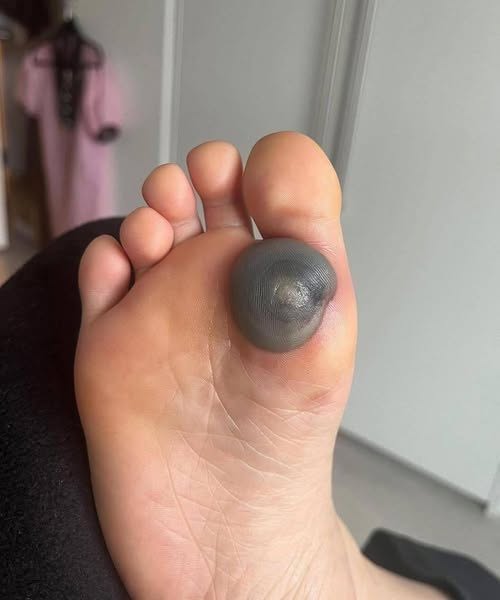
Imagine a parent waking up one morning to find their child complaining of foot pain. Upon closer inspection, there is a large dark spot on the sole of the foot that seemed to appear overnight. The area looks swollen, discolored, and tender to the touch. Naturally, questions begin to arise. Is it serious? Is it an infection? Could it be a sign of something more concerning?
In many cases, a sudden dark blister on the foot may be a blood blister. Although its appearance can be alarming, a blood blister is often a common and manageable skin condition. Understanding what causes blood blisters, how they heal, and when medical attention is necessary can help reduce anxiety and ensure proper care.
What Is a Blood Blister?
A blood blister is a pocket of fluid that forms beneath the skin when small blood vessels become damaged. Unlike a regular blister, which is typically filled with clear fluid, a blood blister contains blood trapped under an intact layer of skin.
The trapped blood gives the blister its characteristic dark red, purple, maroon, or nearly black appearance. Depending on its location and size, it may cause discomfort when pressure is applied.
Blood blisters can occur anywhere on the body but are especially common on areas that experience repeated pressure or friction, such as the feet, toes, fingers, and palms.
Why Do Blood Blisters Form?
Friction and Pressure
The most common cause of a blood blister is repeated rubbing or pressure against the skin.
This frequently happens when:
-
Shoes are too tight or poorly fitted
-
New footwear has not been properly broken in
-
A person walks or runs for extended periods
-
Sports activities place repeated stress on the feet
Over time, friction damages small blood vessels beneath the skin while leaving the outer skin layer intact.

Minor Injuries
A blood blister can also develop after a sudden injury.
Examples include:
-
Dropping a heavy object on the foot
-
Accidentally stubbing a toe
-
Pinching the skin
-
Compression from equipment or furniture
Even if the injury seems minor, enough pressure may be applied to break tiny blood vessels and create a blister.
Physical Activities
Athletes, hikers, dancers, and individuals with physically demanding jobs may be more prone to blood blisters due to repetitive movements and prolonged pressure on specific areas of the feet.
What Does a Blood Blister Look Like?
Blood blisters can vary in size and appearance.
Common characteristics include:
-
A raised bubble beneath the skin
-
Dark red, purple, or black coloration
-
Mild swelling around the area
-
Tenderness or soreness
-
Discomfort when walking or applying pressure
Some blood blisters remain small and barely noticeable, while others can become large enough to make walking uncomfortable.
Why Might Foot Movement Become Difficult?
When a blood blister forms on the sole of the foot or near a joint, movement may become painful.
The discomfort is often caused by:
Pressure During Walking
Every step places weight on the affected area. This repeated pressure can make the blister feel more sensitive and painful.
Localized Swelling
Inflammation around the blister may temporarily reduce flexibility and increase discomfort.
Protective Body Response
The body naturally encourages people to avoid putting pressure on injured areas. As a result, a child or adult may limp, walk differently, or avoid moving the foot altogether because of discomfort.

Is a Blood Blister Dangerous?
Most blood blisters are not dangerous and heal naturally without complications.
In many cases, the body gradually reabsorbs the trapped blood over one to two weeks. As healing progresses, the blister may shrink, darken, dry out, and eventually disappear.
However, not every dark spot on the foot is necessarily a blood blister. Because several skin conditions can appear similar, medical evaluation may sometimes be appropriate, especially if symptoms are unusual or severe.
Should You Pop a Blood Blister?
Healthcare professionals generally recommend leaving a blood blister intact whenever possible.
The skin covering the blister serves as a natural protective barrier that helps:
-
Reduce the risk of infection
-
Protect underlying tissue
-
Support natural healing
Popping a blood blister can expose sensitive skin underneath and increase the risk of complications.
If a blister opens on its own, it should be cleaned gently and covered with a clean dressing.
Home Care for Blood Blisters
Protect the Area
Avoid activities that place additional pressure on the blister.
Comfortable footwear with adequate cushioning can help prevent further irritation.
Apply a Cold Compress
A cold compress applied for short periods may help reduce discomfort and swelling.
The compress should never be placed directly on the skin. Wrapping it in a cloth helps protect the affected area.
Keep the Area Clean
Good hygiene supports healing and helps prevent infection.
Wash the area gently with mild soap and water if needed, especially if the blister has opened naturally.
Use Protective Padding
Soft padding or blister cushions may help reduce friction while walking.
These products can be particularly useful when the blister is located on a weight-bearing area of the foot.
When Should You Contact a Doctor?
Although most blood blisters heal without treatment, certain situations warrant medical evaluation.
Seek professional medical advice if:
-
The pain becomes severe
-
The blister continues growing
-
Signs of infection develop
-
The area becomes unusually warm
-
Symptoms persist beyond two weeks
-
Walking becomes increasingly difficult
-
The cause of the blister is unclear
Medical assessment is also especially important for individuals with conditions that affect healing or circulation.
Blood Blisters in Children
Children often spend long hours running, playing, and participating in sports. As a result, they may develop blood blisters from activities that place repeated pressure on their feet.
Because younger children may not always remember or recognize minor injuries, a blood blister can sometimes seem to appear suddenly.
Parents should monitor symptoms carefully and seek medical guidance if the child experiences significant pain, difficulty walking, or any unusual changes.
Conditions That May Resemble a Blood Blister
Several skin conditions can sometimes resemble blood blisters.
Examples include:
-
Friction blisters
-
Bruises beneath the skin
-
Certain skin infections
-
Inflammatory skin conditions
-
Other forms of localized tissue irritation
For this reason, a healthcare professional should evaluate any lesion that appears unusual, changes rapidly, or does not heal as expected.
Preventing Future Blood Blisters
While not all blood blisters can be prevented, several simple strategies may reduce the risk.
Choose Proper Footwear
Shoes should fit comfortably without excessive tightness or rubbing.
Wear Moisture-Wicking Socks
Quality socks help reduce friction and moisture buildup during physical activity.
Gradually Break In New Shoes
New footwear should be worn for short periods initially before extended use.
Protect High-Risk Areas
Athletes and active individuals may benefit from protective padding or specialized sports gear designed to reduce pressure points.
Understanding the Difference Between Concern and Emergency
Finding a large dark blister on a child’s foot can be unsettling, especially when pain makes movement difficult. However, most blood blisters result from pressure, friction, or minor injuries and typically improve with basic care and time.
The key is to monitor symptoms carefully. While many cases resolve naturally, persistent pain, worsening symptoms, or uncertainty about the diagnosis should prompt a consultation with a healthcare professional.

Conclusion
Blood blisters may look dramatic, but they are often a natural response to pressure or injury beneath the skin. Their dark appearance can cause concern, particularly when they appear suddenly on a child’s foot and make walking uncomfortable. Fortunately, most blood blisters heal on their own with proper protection and care.
Understanding how blood blisters form, recognizing common symptoms, and knowing when to seek medical advice can help families respond confidently. As with many health concerns, a combination of observation, patience, and professional guidance when needed provides the best path toward recovery and peace of mind.
Sources
-
Mayo Clinic – Skin Conditions and Blister Care
-
Cleveland Clinic – Blood Blisters: Causes and Treatment
-
NHS – Blisters and Foot Care
-
American Academy of Dermatology (AAD) – Blister Prevention and Care
-
MedlinePlus – Skin Injuries and Blister Management
-
Johns Hopkins Medicine – Foot Health and Common Skin Conditions