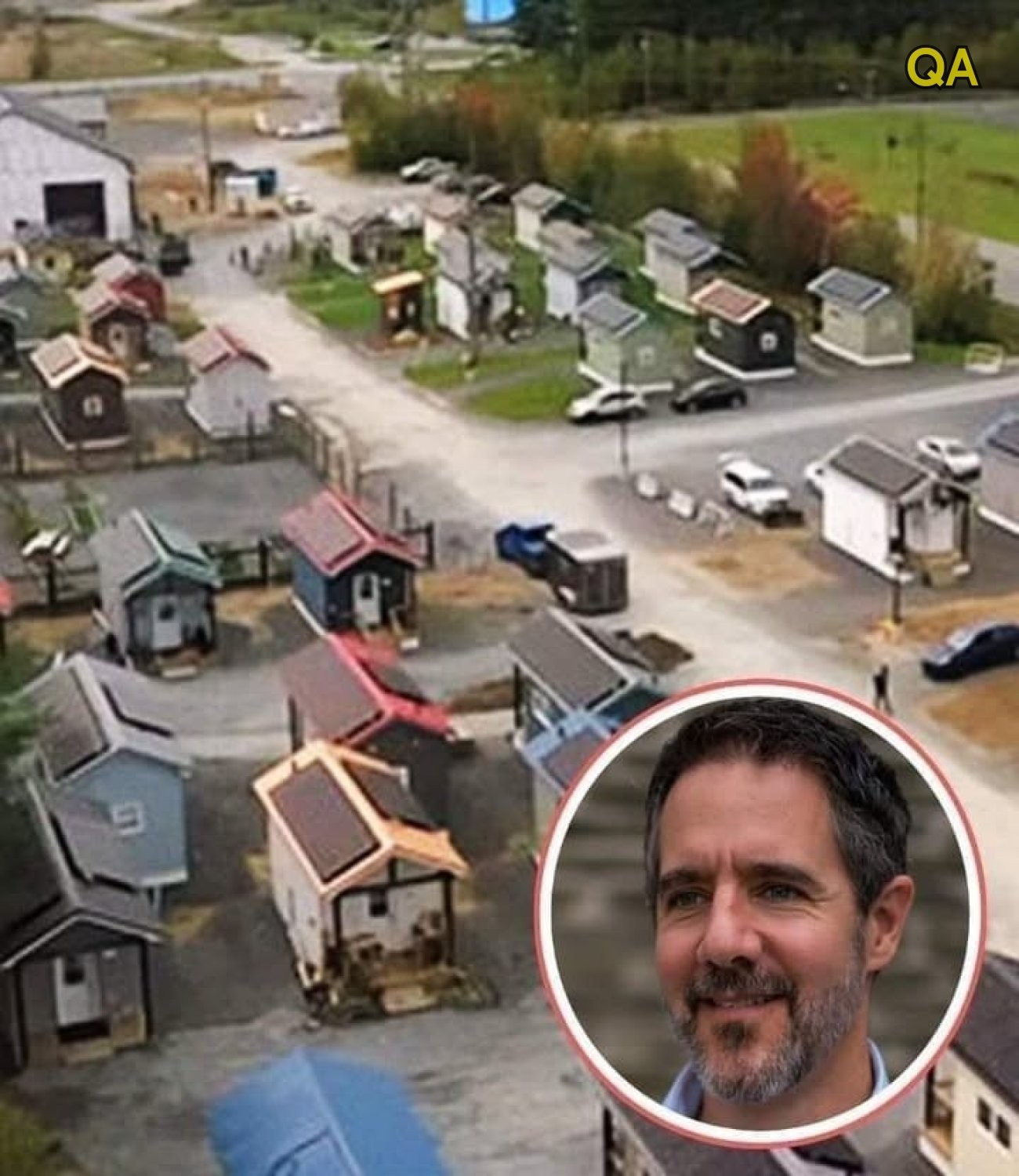
Could Tiny Homes Be the Answer to Homelessness? Inside a Community Offering a Fresh Start
For someone without a stable place to live, the idea of having a front door, a warm bed, and a kitchen of their own can represent far more than shelter. It can mean privacy, security, and the chance to begin rebuilding a life.
That is part of the appeal of tiny homes, a housing concept that has attracted everyone from minimalist homeowners to retirees looking to downsize. In recent years, the idea has also gained attention as a possible response to homelessness, particularly for people who have been living outdoors or in temporary accommodation.
One project drawing attention is the 12 Neighbours community in Fredericton, New Brunswick, Canada. Developed by entrepreneur Marcel LeBrun, the initiative uses small, fully functional homes as part of a broader effort to help people experiencing homelessness find stability and new opportunities.
The concept raises an important question: Can tiny homes provide a practical path out of homelessness, or is a small house only one piece of a much larger challenge?
Why Tiny Homes Are Attracting Attention
Tiny homes appeal to many people because they can require less space, fewer building materials, and lower construction costs than conventional houses. Depending on the design, land arrangements, and local regulations, smaller homes may also reduce certain ongoing expenses.
For people who have experienced housing insecurity, these advantages can be particularly meaningful. A compact home can offer a private living space without the cost of a traditional apartment or detached house. A permanent address can also make everyday tasks easier, from receiving mail to applying for work or accessing services.
Unlike emergency shelters, which may operate under strict schedules or provide limited privacy, an independent small home can give residents greater control over their daily routines.
However, tiny homes are not automatically inexpensive or easy to develop. Land prices, utility connections, construction standards, accessibility requirements, maintenance, and ongoing support services all affect the final cost. Communities must also comply with local zoning and building regulations.
The most promising projects therefore treat tiny homes not simply as inexpensive buildings, but as part of a larger housing strategy.
Inside the 12 Neighbours Community
The 12 Neighbours initiative offers an example of how small-scale housing can be combined with community facilities and opportunities for personal development.
The project was established in Fredericton, New Brunswick, with the goal of helping people move from homelessness into more stable living conditions. Its model centers on small, functional homes rather than temporary outdoor shelters.
The homes are designed to provide essential living spaces, including areas for sleeping, preparing food, and relaxing. Access to permanent utilities and basic household facilities can help residents establish everyday routines and enjoy greater privacy.
But the project’s approach extends beyond providing a roof.
Community amenities and social enterprise activities are intended to create opportunities for residents to participate in daily life, develop skills, and explore possible employment pathways. Activities associated with the initiative have included projects such as screen printing, building picnic tables, and working in a community coffee shop.
These opportunities can matter because finding stable housing does not automatically resolve every difficulty a person may face. Someone who has experienced homelessness might also need help obtaining identification, reconnecting with family, accessing healthcare, managing financial obligations, or finding long-term employment.
A community that recognizes these challenges may be better positioned to help residents move toward greater independence.
Can a Small Home Restore Stability?
Housing provides a foundation for stability, but its importance goes beyond physical protection from cold, rain, or extreme heat.
Without a secure place to live, even ordinary responsibilities can become difficult. Keeping personal belongings safe, getting adequate rest, maintaining hygiene, preparing meals, and attending appointments may require considerable effort.
A private home can make these routines more manageable. It may also provide a more dependable environment for searching for work, maintaining relationships, and accessing services.
For people who have spent extended periods in shelters or outdoors, the ability to close a door and have a space of their own can be especially significant.
Still, each person’s circumstances are different. Some people may need short-term assistance before moving into independent housing. Others may require ongoing support because of disabilities, chronic health conditions, trauma, or other barriers to maintaining a home.
This is why successful housing initiatives should avoid assuming that every resident will follow the same path. A stable home can create new possibilities, but the support needed to sustain that stability varies from person to person.
Why Housing Alone Cannot End Homelessness
Homelessness is not caused by a single problem, and it cannot be resolved through one type of housing alone.
High rents, limited affordable housing, job loss, family breakdown, domestic violence, health challenges, and gaps in social support can all contribute to housing insecurity. The circumstances that lead someone to lose a home may also affect their ability to secure another one.
For example, a person may find an affordable place to live but struggle to keep it without a reliable income. Another person may have employment but be unable to secure housing because of high rental costs, a poor credit history, or a lack of references.
People experiencing homelessness may also need mental health care, substance-use treatment when relevant, disability accommodations, legal assistance, or help navigating public benefits. These services should be offered according to individual needs rather than assumed to be necessary for everyone.
Tiny-home communities can provide a useful housing option, but their long-term effectiveness depends partly on whether residents can access the services and resources required to remain housed.
A small house is an important starting point. It is not a substitute for an affordable housing supply, accessible healthcare, income support, and effective social services.
The Importance of Location and Community
A tiny home may offer privacy and shelter, but its location can determine how useful it is in everyday life.
If a housing development is placed far from public transportation, grocery stores, healthcare facilities, schools, or employment centers, residents may face additional obstacles. Traveling to appointments or reaching a workplace can become expensive and time-consuming.
Poor access to essential services can undermine the benefits of affordable housing, especially for people who have limited financial resources.
There is also the question of social isolation. A community of small homes should not be designed merely as a place to move people out of public view. Residents need opportunities to participate in the wider community, maintain relationships, and make decisions about their own lives.
Good planning can help address these concerns. Developers and local authorities can consider public transportation, safe pedestrian routes, nearby services, shared spaces, and connections to existing neighborhoods.
Meaningful participation from residents is equally important. People who will live in a community should have a voice in its rules, facilities, services, and future development.
The goal should be to create a place where people can build stable lives, rather than simply concentrating housing in one location.
Work Opportunities and the Path Toward Independence
Employment can be an important part of rebuilding stability, although it is not a universal or immediate solution for everyone experiencing homelessness.
The 12 Neighbours model has drawn interest partly because it incorporates social enterprise and opportunities for practical skill development. Activities such as making products, constructing community items, or working in a coffee shop can provide experience in a structured environment.
For some participants, these activities may offer a way to develop skills, build confidence, establish routines, and explore future employment.
However, work opportunities need to be realistic, accessible, and appropriately supported. Residents may face transportation problems, health limitations, caregiving responsibilities, or other barriers that make conventional employment difficult.
A comprehensive program can therefore offer different pathways, including vocational training, supported employment, education, and connections to outside employers. Residents who cannot work should still have access to safe housing and appropriate support.
The broader lesson is that employment initiatives can complement housing assistance, but access to a home should not depend on whether a person can immediately become economically self-sufficient.
How to Evaluate Whether Tiny-Home Communities Work
The success of a housing project should not be measured only by the number of homes constructed or the number of people who move in.
Long-term outcomes are just as important. Evaluators can examine how many residents remain stably housed, whether they experience fewer returns to homelessness, how accessible healthcare and other services are, and whether residents feel safe and included.
The financial side also deserves attention. Construction costs are only one part of a project’s budget. Utilities, repairs, staff, community facilities, case management, and other ongoing services may require sustained funding.
Comparisons with other housing approaches can help determine when tiny homes offer good value and when different options may be more appropriate. Permanent supportive housing, affordable apartments, rapid rehousing, rental assistance, and emergency accommodation each serve different needs.
No single model will suit every community. Local housing costs, climate, available land, public transportation, and the needs of the people being served all influence which approaches are most effective.
Transparent reporting and feedback from residents can help decision-makers understand what works, what needs improvement, and which services should be expanded.
A Small Home Can Be a Beginning, Not the Whole Solution
Tiny homes offer an appealing possibility in a world where affordable housing remains out of reach for many people. They can provide private living space, reduce some construction requirements, and create a setting in which residents can begin rebuilding everyday routines.
The 12 Neighbours community illustrates an approach that combines small homes with community facilities and opportunities to develop practical skills. Its broader ambition reflects an important principle: helping people move beyond homelessness requires attention to more than buildings alone.
At the same time, the model should be viewed as one potential part of a wider response, not as a universal answer. Sustainable progress requires affordable housing, access to healthcare and social services, employment pathways where appropriate, and communities in which residents are treated with dignity.
The most important measure of success is not how small a home can be made. It is whether the people living there can find security, maintain stable housing, and have meaningful opportunities to shape their own futures.
A tiny home may provide the first step toward that goal. Lasting change depends on everything built around it.
Sources and Further Reading
-
Baue Funeral Homes is not relevant to this topic; the following sources relate specifically to housing and homelessness.
-
Canada Mortgage and Housing Corporation — Housing research and resources
-
U.S. Department of Housing and Urban Development — Homelessness resources
-
National Alliance to End Homelessness — Research and policy resources