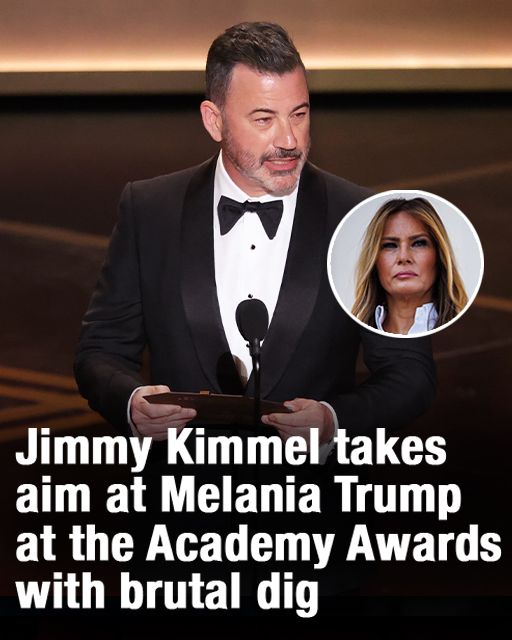
For anyone who has followed late-night television over the past several years, the idea of Jimmy Kimmel standing at a podium with a microphone and a captive audience and declining to say something pointed about the Trump family would require a fairly significant suspension of disbelief. The comedian has built a substantial portion of his public identity around his willingness to direct sharp commentary at Donald Trump and the people around him, and the Oscars — one of the most-watched entertainment events of the year — was never going to be an occasion that changed that pattern.
It did not.
The 2026 Academy Awards ceremony took place at the Dolby Theatre in Los Angeles, hosted this year by comedian Conan O’Brien, who guided the evening through a program that delivered some genuinely memorable moments for film enthusiasts. On the competitive side, the night proved particularly rewarding for two films. One Battle After Another emerged as the dominant force of the evening, collecting six Academy Awards across multiple categories, while Sinners earned four awards of its own — a strong showing that reflected the enthusiasm the film had generated among both critics and audiences during its theatrical run.
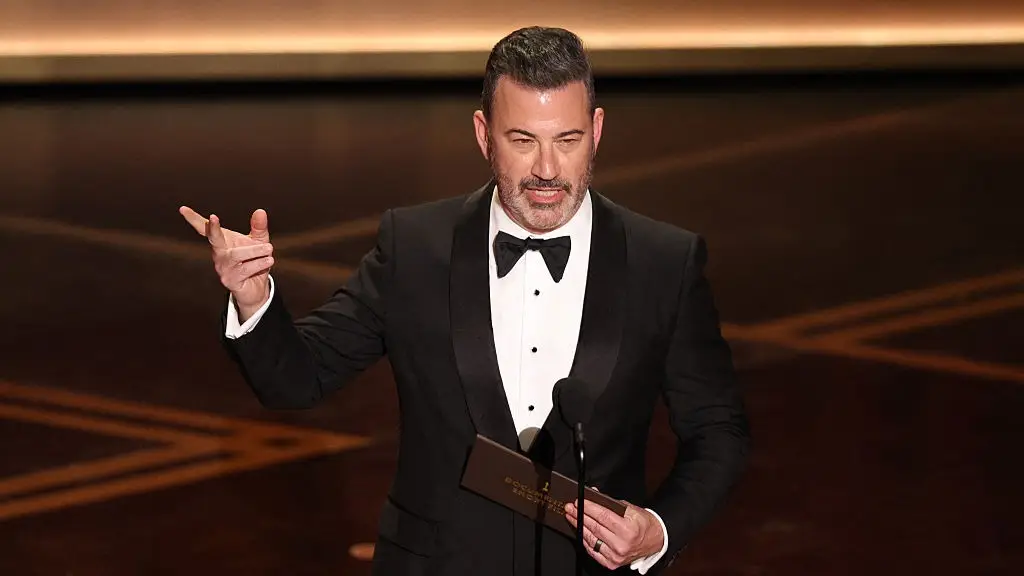
Amid the category announcements, acceptance speeches, and the general pageantry that defines the Oscars as a cultural institution, it was a presenter rather than a winner who generated some of the evening’s most widely discussed moments. Jimmy Kimmel took the stage to present the award for Best Documentary Feature Film, and true to the form he has maintained throughout years of public commentary on American politics, he arrived with material prepared.
The Setup Was Almost Inevitable
In retrospect, the combination of circumstances that surrounded Kimmel’s appearance made some form of pointed remark about Melania Trump essentially a foregone conclusion for anyone paying attention. The connection between the award category Kimmel was there to present and the recent public activities of the First Lady created an opening that the talk show host was always going to walk through.
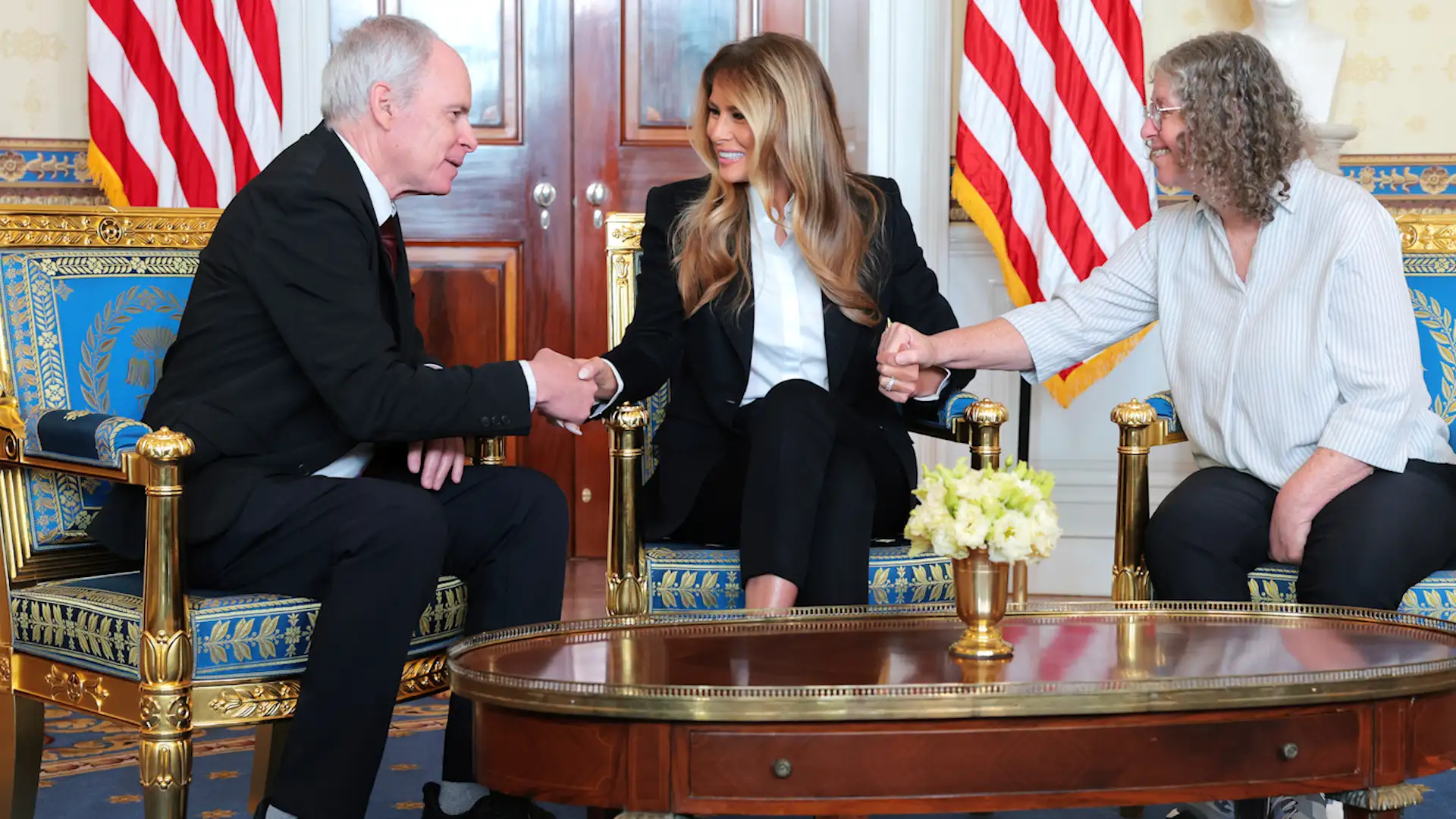
In January 2026, Melania Trump released a documentary bearing simply her name as its title. The film, produced for Amazon, followed the First Lady as she prepared to return to the White House following her husband’s victory in the 2024 presidential election. According to reporting that accompanied the project’s release, Melania received a payment in the region of forty million dollars from Amazon in exchange for exclusive behind-the-scenes access to her life during that transitional period. The film promised viewers a look at private conversations, critical meetings, and environments that had not previously been captured on camera, positioning itself as an intimate portrait of a woman returning to one of the most scrutinized roles in American public life.
The documentary’s reception, however, did not match the ambition of its marketing. Critics were, to put it gently, unimpressed. The Hollywood Reporter described the film using language that left very little room for interpretation, labeling it expensive promotional material dressed up as documentary filmmaking. The Atlantic was similarly direct, calling the project a disgrace. The Guardian offered perhaps the most colorfully dismissive assessment, describing it as gilded trash. On audience review platforms, the ratings were equally unkind, with the film settling at an extremely low score on IMDb.
Melania herself pushed back against the critical consensus with characteristic composure. In an interview with CNN following the release, she expressed genuine pride in the project and noted that not every audience member would respond to it in the same way, which she described as entirely their right. From her own perspective, she said, the film had accomplished what it set out to accomplish, and she considered it a success on those terms regardless of what critics chose to write about it.
What Kimmel Actually Said
With all of that context sitting in the background, Kimmel stepped to the Oscars podium and delivered his remarks in the measured, slightly theatrical cadence that his television audience would recognize immediately.
Before announcing the nominees and presenting the award, he offered a brief observation about the documentary form and what it can encompass. “There are also documentaries,” he said, pausing with the timing of someone who has been doing this long enough to know exactly when to let the silence do its work, “where you walk around the White House trying on shoes.”
The reference to Melania’s film was unmistakable. The audience response was immediate.
He then added a second line, delivered with the self-aware quality of a comedian who knows he is about to say something that will generate coverage the following morning. “Is he going to be upset that his wife was not nominated for this?”
The remark landed with the intended effect. The combination of the implied critique of the documentary’s quality — framed as a lighthearted observation about its content — and the suggestion that the president might take personal offense at his wife’s exclusion from the category Kimmel was there to represent was exactly the kind of layered barb that Kimmel has refined over years of political commentary. It operated on multiple levels simultaneously, which is precisely how the best observational humor tends to work.
A Long-Running Pattern of Commentary
Kimmel’s willingness to direct pointed remarks at the Trump family did not begin at this year’s Oscars, and it is unlikely to end there. The talk show host has maintained a sustained commentary on Trump’s presidency across both of his terms in office, making political humor a central element of his late-night program in a way that has occasionally generated significant controversy.
The most notable moment of friction in recent memory came last year, when Kimmel was temporarily taken off the air following comments he made in the aftermath of the death of conservative commentator Charlie Kirk. The remarks generated significant backlash from Trump supporters and, according to reports at the time, drew the specific attention of the president himself. Kimmel was subsequently reinstated at ABC and returned to his hosting duties, but the episode illustrated the degree to which his commentary had become genuinely consequential beyond the boundaries of entertainment television.
At the Oscars, he appeared to reference the episode obliquely — or at least to touch on the broader theme of speech and the conditions under which it can be exercised freely. In remarks that he delivered before another award presentation, Kimmel spoke about the courage required to tell stories that carry personal or professional risk. He then extended the observation in a direction that drew another round of audience reaction. He noted that certain countries around the world are governed by leaders who do not place a high value on open expression, and said he was not in a position to name which countries he had in mind. He suggested that the audience simply consider North Korea as one example — and then added CBS as the other.
The CBS reference, delivered in a tone that suggested it was being offered as entirely equivalent to the geopolitical example that preceded it, landed with the sharpness of a well-constructed joke. CBS and its parent company have been at the center of ongoing tensions with the current administration, making the implied parallel both topical and, depending on one’s perspective, either courageous or provocative — or both simultaneously, which is often where the most effective political humor operates.
The Broader Evening at the Dolby Theatre

While Kimmel’s remarks generated their share of discussion, the ceremony itself was primarily defined by the films that were being celebrated and the people who made them. Conan O’Brien’s hosting approach leaned into his particular brand of self-deprecating absurdism, offering a tonal counterweight to the grander ceremonial elements of the evening. The combination of his style and the energy of an audience gathered to celebrate genuine cinematic achievement produced an event that most observers described as successful by the standards of a broadcast that is notoriously difficult to execute well.
One Battle After Another’s six awards represented one of the stronger individual performances of any film in recent Oscars memory, and the cumulative weight of those recognitions spoke to the impression it had made on the Academy’s membership. Sinners, with four awards of its own, reinforced its standing as one of the more significant films of its release year.
Awards ceremonies like the Oscars have always been more than a simple accounting of cinematic merit. They are cultural events in the fullest sense of the term — occasions where the entertainment industry takes stock of itself, where the people who make films gather to acknowledge one another’s work, and where the broader conversation happening in American public life inevitably finds its way onto the stage, whether through acceptance speeches, presenter remarks, or the simple fact of who is in the room and what films have been deemed worthy of recognition.
Jimmy Kimmel’s remarks about Melania Trump fit squarely within that tradition. The Oscars has long been a space where political commentary and entertainment overlap, where a comedian standing at a podium can say something about a documentary that features a sitting First Lady and have those words reported and discussed across the country the following morning.
Whether those words were fair, necessary, or in good taste was, as Melania herself might observe, entirely a matter of personal perspective. Some found them amusing. Others found them unnecessary. And the president, according to Kimmel’s own prediction from the stage, was not expected to be among those who found them funny.
On that last point, at least, most observers seemed to agree.