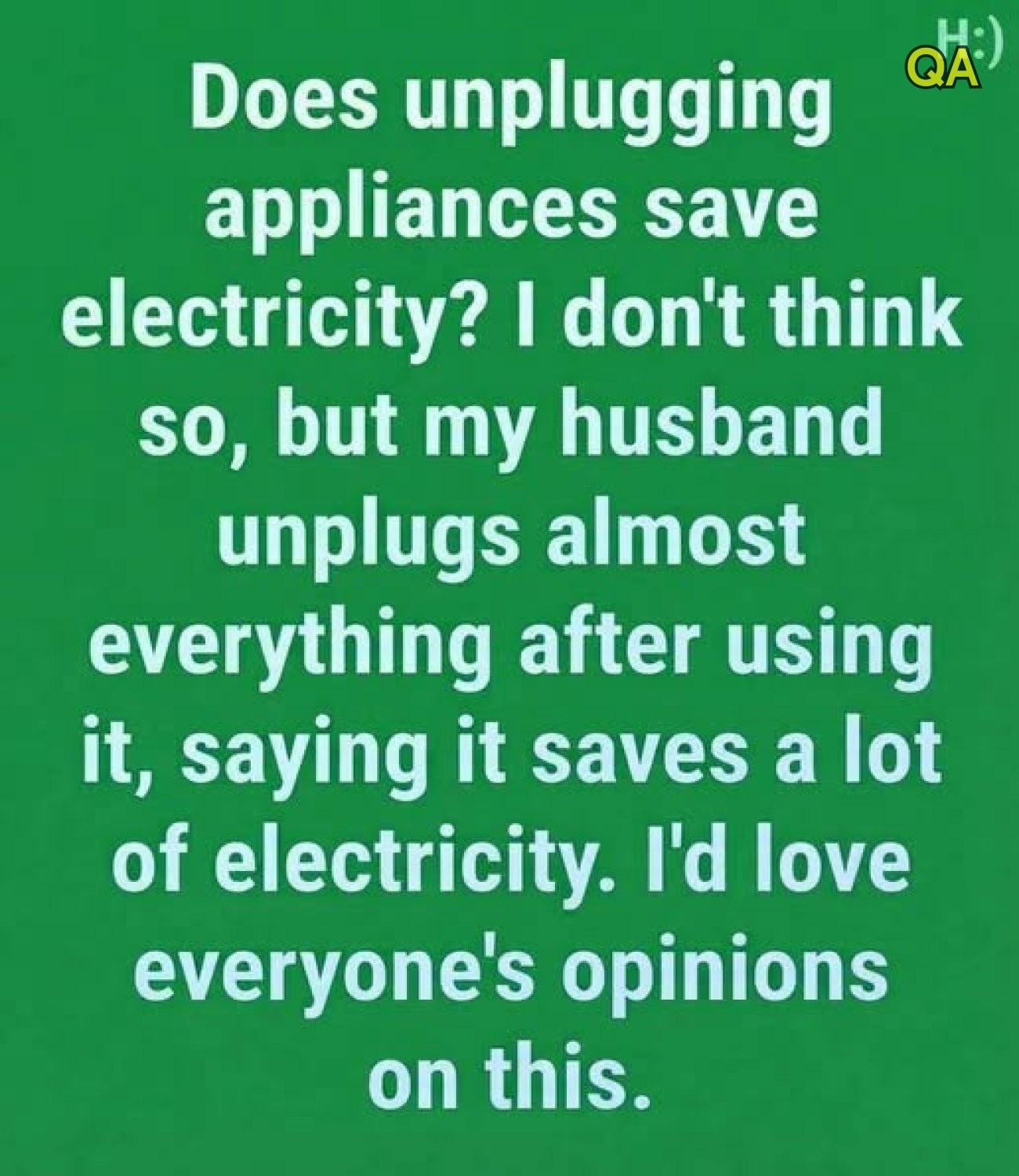
I Unplugged Almost Everything in My House to Save Money on Electricity — Here’s What I Discovered
For years, I believed that leaving electronic devices plugged into electrical outlets was quietly increasing my monthly electricity bill. Every phone charger, television, coffee maker, printer, gaming console, and speaker seemed like another opportunity for unnecessary energy consumption.
I had heard plenty of warnings about phantom power, sometimes called standby power. The idea that household electronics could continue consuming electricity even when they appeared to be switched off made me wonder how much money I was wasting without realizing it.
So I decided to take action.
My solution was simple: unplug almost everything.
Every evening, I walked through the house, checking electrical outlets and disconnecting appliances that were not being used. I unplugged chargers, switched off entertainment equipment, and made a habit of checking each room before going to bed.
Initially, I expected to see a noticeable reduction in my electricity expenses. However, after several weeks, I began questioning whether all that effort was actually making a meaningful difference.
The experience taught me an important lesson about household energy efficiency: saving electricity is not necessarily about unplugging everything. It is about understanding which devices consume the most power, identifying unnecessary energy use, and making practical changes that deliver worthwhile results.
Understanding Phantom Power and Household Electricity Consumption
Phantom power refers to electricity consumed by electronic devices when they are switched off or placed in standby mode but remain connected to a power source.
Although these devices may appear inactive, some continue performing background functions. They might maintain internal clocks, respond to remote controls, preserve network connections, download updates, or remain ready for immediate operation.
The U.S. Department of Energy recognizes standby power as one source of household electricity consumption. However, the amount varies considerably depending on the equipment, its age, design, and settings.
A modern phone charger left in an electrical outlet without a connected phone generally consumes very little electricity. By comparison, certain older electronic devices, entertainment systems, and network-connected equipment may continue drawing more power than homeowners expect.
Consider a device that continuously draws one watt of electricity. Over an entire year, that amounts to approximately 8.76 kilowatt-hours (kWh).
Whether eliminating that consumption produces meaningful financial savings depends on the local electricity rate and the number of devices involved.
This distinction matters because not every plugged-in appliance represents a significant source of wasted energy.
Phantom power is real, but its financial impact depends on what is connected to the outlet.
I Checked My Devices, and the Results Were More Modest Than Expected
After spending so much time unplugging household electronics, I decided to approach the problem more systematically.
Instead of assuming every connected device was wasting significant electricity, I started considering how much power each appliance actually consumed.
I paid particular attention to televisions, computers, gaming equipment, printers, chargers, and kitchen appliances.
One important discovery was that unplugging an unused phone charger did not necessarily produce a noticeable reduction in household electricity expenses.
Although removing unnecessary electrical loads is sensible, a charger consuming a fraction of a watt cannot deliver the same potential savings as reducing the operation of a much more energy-intensive appliance.
I also realized that electricity bills are influenced by several factors:
-
The number and efficiency of household appliances.
-
How frequently heating and cooling systems operate.
-
The amount of hot water used.
-
The size and insulation quality of the property.
-
Seasonal temperature changes.
-
Local electricity prices and billing arrangements.
Consequently, a small reduction in standby consumption may be difficult to distinguish from normal changes in monthly electricity use.
This does not mean unplugging electronics is pointless. It simply means realistic expectations are essential.
Which Household Devices Are Worth Switching Off?
Once I understood the differences between standby consumption and active electricity use, I changed my approach.
Rather than disconnecting every appliance, I focused on devices that could potentially consume unnecessary power for extended periods.
1. Televisions and Home Entertainment Systems
Televisions, streaming devices, sound systems, and related entertainment equipment can remain in standby mode for many hours each day.
Some modern televisions use relatively little standby electricity, while other equipment may consume additional power to maintain network connectivity or background functions.
Switching off equipment when it will not be used for extended periods can help reduce unnecessary consumption.
However, homeowners should check the manufacturer’s instructions before disconnecting devices that require background updates, scheduled recordings, or other automated operations.
2. Gaming Consoles
Gaming consoles deserve particular attention because their standby settings can vary.
Depending on the model and selected operating mode, a console may remain connected to the internet, download updates, charge accessories, or maintain certain background functions.
These features are convenient, but they can also consume electricity.
Reviewing the console’s power settings is a practical first step. Energy-saving modes may reduce consumption without requiring the device to be completely disconnected.
3. Desktop Computers and Printers
Desktop computers, monitors, and printers may continue using electricity when they are not actively being used.
Sleep settings can reduce computer power consumption, although the amount depends on the hardware and configuration.
Printers may also perform maintenance activities or remain connected to wireless networks.
For equipment that is not needed overnight or during extended periods of inactivity, using the manufacturer’s recommended shutdown procedure can be a sensible option.
4. Cable Boxes and Streaming Equipment
Cable boxes, digital video recorders, and other television accessories may remain operational even when the television itself is switched off.
Some devices maintain recordings, receive scheduled updates, or communicate with service providers.
Before disconnecting them, it is worth checking whether doing so could interrupt scheduled recordings or other important functions.
The goal should be to eliminate unnecessary consumption without disrupting useful services.
Switched Power Strips Made Energy Saving Easier
One of the most practical changes I made was using switched power strips for groups of electronic devices.
A television, soundbar, streaming device, and gaming console might all be connected to the same entertainment area.
Instead of unplugging each device individually, a suitable switched power strip allows several compatible devices to be disconnected from power with one action.
This approach makes energy management considerably easier. It is particularly useful for home offices and entertainment areas where multiple devices are connected together.
However, there are some important precautions.
Not every appliance should be connected to an ordinary power strip. High-power equipment, heating appliances, refrigerators, and other devices should follow their manufacturers’ electrical requirements.
Power strips should also be appropriately rated for the connected equipment. Avoid connecting multiple power strips together or exceeding their electrical capacity.
For households with several electronic devices, smart plugs and energy-monitoring power strips may provide additional convenience.
Some models allow users to monitor electricity consumption and establish schedules for compatible equipment. These products can be useful, but their own standby consumption and purchase costs should also be considered.
Why I Stopped Unplugging Certain Appliances
As I became more familiar with household electricity consumption, I realized that unplugging everything could create unnecessary inconvenience and, in some situations, practical problems.
Some appliances need continuous electricity to perform essential functions.
Refrigerators and Freezers
Refrigerators and freezers should generally remain connected to electricity because they must maintain safe storage temperatures for food.
Disconnecting them overnight to save electricity is not a sensible strategy.
A better approach is to ensure that refrigerator doors close properly, avoid leaving them open unnecessarily, and maintain the manufacturer’s recommended temperature settings.
Cleaning ventilation areas and ensuring sufficient airflow can also help equipment operate as intended.
Internet Routers and Networking Equipment
Internet routers and modems are designed to provide continuous connectivity.
Unplugging them every night may interrupt internet access, connected security systems, smart-home equipment, and other services.
Although switching them off can reduce electricity consumption, the inconvenience may outweigh the relatively small potential savings.
Appliances With Internal Clocks and Settings
Certain kitchen appliances and electronic equipment use continuous electricity to maintain clocks, settings, and programmed functions.
Disconnecting them may require users to reset these features.
Before unplugging an appliance, it is worth checking the manufacturer’s instructions to understand whether disconnecting the power could affect its operation.
Medical and Safety Equipment
Equipment supporting essential medical or safety functions should never be disconnected simply to reduce electricity consumption.
If an appliance is necessary for health, accessibility, security, or emergency preparedness, reliable operation should take priority over minor potential savings.
Ultimately, energy efficiency should improve household management rather than create additional risks.
What Made a Bigger Difference to My Electricity Bill?
Perhaps the biggest lesson from my experiment was that I had concentrated too much on small electrical loads.
Although standby power is worth understanding, larger household energy uses often offer better opportunities for savings.
According to the U.S. Energy Information Administration, space heating and air conditioning together accounted for approximately 52% of total annual household energy consumption in the United States in 2020.
Water heating, lighting, and refrigeration also contribute significantly to household energy requirements.
These figures vary according to climate, housing type, household size, and the energy sources used. Nevertheless, they demonstrate why focusing exclusively on phone chargers and standby lights may overlook more important opportunities.
1. Improve Home Insulation
Insulation helps reduce unwanted heat transfer between indoor and outdoor environments.
During colder weather, good insulation can help retain indoor warmth. During hot weather, it can help reduce unwanted heat entering the home.
Checking attic insulation, sealing air leaks, and improving weatherstripping around doors and windows can support more efficient heating and cooling.
The U.S. Department of Energy recommends identifying major air leaks and considering professional energy assessments to determine which improvements are most worthwhile.
2. Use Heating and Cooling Systems More Efficiently
Heating and cooling equipment can be among the largest contributors to household energy consumption.
Using an appropriate thermostat schedule can help prevent unnecessary operation when nobody is home or when occupants are sleeping.
The Department of Energy notes that adjusting thermostat settings by approximately 7–10°F for eight hours daily may reduce annual heating and cooling costs by up to 10%, depending on the circumstances.
However, the best settings depend on the heating system, climate, household comfort, and the needs of occupants.
Heat pump systems may require different temperature-management strategies from conventional heating equipment.
3. Reduce Hot Water Consumption
Heating water requires energy, and everyday activities can add up.
Long showers, unnecessary hot-water use, and inefficient water-heating equipment can contribute to higher household energy expenses.
Practical improvements include installing efficient showerheads, repairing leaking hot-water fixtures, insulating accessible hot-water pipes, and choosing an appropriate water heater temperature.
Reducing unnecessary hot-water consumption can therefore be a worthwhile part of an overall energy-saving strategy.
4. Replace Inefficient Lighting
Lighting is another area where households can make relatively straightforward improvements.
Replacing frequently used traditional incandescent bulbs with LED alternatives can reduce electricity consumption while providing comparable lighting.
LED bulbs generally use considerably less electricity and have longer operating lifetimes than traditional incandescent bulbs.
Turning off unnecessary lights and choosing suitable lighting levels can provide additional benefits.
5. Choose Energy-Efficient Appliances
When replacing household equipment, checking energy-efficiency information can help consumers make better purchasing decisions.
ENERGY STAR-certified products meet efficiency requirements established under the relevant certification programs.
Depending on the appliance, selecting a more efficient model may reduce electricity or water consumption over its operating lifetime.
However, replacement decisions should consider the purchase price, expected operating costs, appliance condition, and how frequently the equipment is used.
Replacing a functioning appliance solely because it is old does not automatically guarantee financial savings.
How to Measure Standby Power Instead of Guessing
Another useful lesson was the importance of measuring electricity consumption.
A plug-in electricity monitor can show how much power an individual compatible appliance draws while operating, sleeping, or remaining in standby mode.
These devices can help identify which electronics deserve attention.
For example, homeowners can use an energy monitor to:
-
Measure the electricity consumption of a television.
-
Compare different standby settings on a computer.
-
Check the consumption of entertainment equipment.
-
Identify appliances that remain active throughout the day.
-
Estimate annual energy consumption from measured power usage.
To estimate the annual electricity consumption of a continuously operating device, use this basic calculation:
Annual electricity consumption = Power in watts × Hours of operation ÷ 1,000
For example, a device using five watts continuously would consume approximately 43.8 kWh annually.
Multiply that figure by the electricity rate charged by your utility provider to estimate the annual cost.
Actual savings will depend on how much electricity the device consumes before and after the change.
It is also important to recognize that inexpensive electricity monitors may have limited accuracy when measuring extremely low standby loads.
The Lawrence Berkeley National Laboratory provides information about standby power and measurement methods that can help homeowners better understand these small but sometimes overlooked electrical loads.
A Practical Household Energy-Saving Checklist
Rather than spending every evening unplugging appliances, homeowners can adopt a more balanced approach.
The following checklist provides a useful starting point:
-
Identify electronics that remain in standby mode for long periods.
-
Review power-saving settings on televisions, computers, and gaming consoles.
-
Use suitable switched power strips for groups of compatible electronics.
-
Unplug chargers and accessories when convenient.
-
Keep refrigerators and essential appliances connected.
-
Check insulation and seal unnecessary air leaks.
-
Use heating and cooling systems efficiently.
-
Reduce unnecessary hot-water consumption.
-
Replace frequently used inefficient bulbs with LEDs.
-
Consider energy-efficient appliances when replacement becomes necessary.
-
Compare electricity bills over several months rather than judging savings from a single billing period.
These steps can help households develop a more informed approach to electricity consumption.
Importantly, every property is different. A household with electric heating may have very different energy-saving priorities from one that uses natural gas for heating and hot water.
Local electricity rates, weather conditions, building construction, and household routines also influence the results.
My Final Verdict: Stop Unplugging Everything
Today, I still switch off entertainment equipment and other electronics when they are not needed for extended periods.
However, I no longer feel compelled to inspect every electrical outlet before going to bed.
My experiment changed the way I think about household energy efficiency.
Phantom power is real, and reducing unnecessary standby consumption can contribute to lower electricity use. Nevertheless, the financial benefits depend on the equipment involved, its power consumption, how long it remains connected, and the electricity rate.
Unplugging an unused charger may offer a small benefit, while managing several continuously operating electronic devices could produce more meaningful results.
Even then, the biggest opportunities may lie elsewhere.
Improving insulation, managing heating and cooling, reducing hot-water consumption, choosing efficient lighting, and using appliances sensibly can all contribute to better household energy performance.
The most important lesson is that saving electricity should not become an exhausting daily routine.
Instead of unplugging everything in sight, take time to understand where your household energy goes. Measure consumption when possible, prioritize the biggest opportunities, and avoid disconnecting appliances that need continuous power.
A thoughtful approach can make energy saving more convenient, practical, and sustainable.
Ultimately, the goal is not to turn off every electrical device in the house. It is to use energy more intelligently, reduce unnecessary consumption, and make changes that genuinely benefit your household over time.
Sources
The following established organizations provide additional information about household electricity consumption, standby power, and practical energy-efficiency improvements.
-
U.S. Energy Information Administration – Energy Use in Homes
-
Lawrence Berkeley National Laboratory – Standby Power Frequently Asked Questions
-
ENERGY STAR – Energy-Efficient Products and Home Improvements
-
U.S. Energy Information Administration – Electricity Use in Homes
Disclaimer: This article provides general educational information about household energy efficiency. Actual electricity consumption and potential savings vary by appliance, home, climate, and local energy prices.