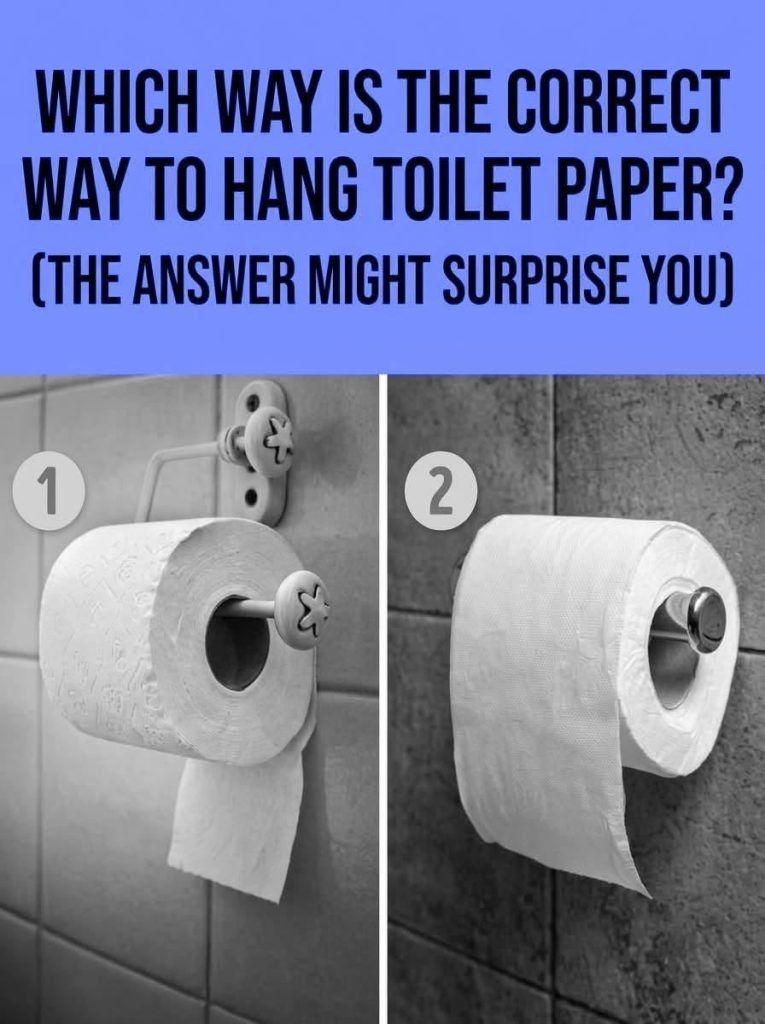
The Over or Under Debate: Why the Way We Hang Toilet Paper Matters More Than You Think
Introduction: A Common Household Dilemma
The question of whether toilet paper should hang over or under the roll seems trivial at first glance, yet it has become one of the most persistent household debates. This choice, which occurs in homes, hotels, workplaces, and public restrooms around the world, frequently sparks jokes, playful disagreements, and, on occasion, even real arguments between couples, families, and roommates. Though on the surface it may seem like a simple matter of preference, the issue of toilet paper orientation offers insights into human behavior, household harmony, and the importance of communication and flexibility in daily life.
The History and Origins of the Debate
The widespread use of toilet paper began in the late 19th century, and with it, the etiquette of how to hang the roll emerged. The patent filed in 1891 by Seth Wheeler, regarded as the inventor of perforated toilet paper rolls, actually depicts the paper hanging “over” the roll. This historic detail is frequently cited by proponents of the “over” method as the original and, therefore, correct way to hang toilet paper. Despite the patent, household habits vary, and the lack of a universal norm has fueled ongoing debates for decades.
According to surveys conducted in North America, most people favor the “over” method, finding it easier to locate and grab the loose end of the roll. However, a significant minority prefer the “under” method, often arguing that it creates a neater appearance and helps prevent pets or young children from unrolling the paper.
Psychology and Human Preferences in Everyday Choices
At heart, the toilet paper debate is rarely about the roll itself. Instead, it reflects how deeply ingrained preferences, routines, and habits can become over time. Individuals often attach meaning to the most inconspicuous aspects of daily life, sometimes without realizing it.
Dr. Gilda Carle, a relationship psychologist, points out that small disagreements, such as how to hang toilet paper, provide a “microcosm” of larger relationship dynamics. For some, the way a toilet paper roll hangs becomes a symbol of order, cleanliness, or respect for established household customs. For others, it’s simply not a priority—and can be dismissed as unimportant. The difference in importance attached to the issue can create tension if not addressed with sensitivity.
The Role of Compromise and Communication in Households
When people live together, whether as couples, families, friends, or housemates, they bring with them a lifetime of habits shaped by upbringing, culture, and personal experience. These everyday rituals—ranging from food preferences to organization methods—can become meaningful over time.
Sometimes, disagreements over small issues like toilet paper orientation are actually about something deeper: the need to feel understood and respected in shared spaces. Learning to navigate these minor but repeated points of friction often becomes a valuable exercise in compromise and communication. Experts suggest that couples who can successfully negotiate minor preferences build skills that help them tackle larger differences in the future.
Personality Types and Household Harmony
Personalities play a significant role in how people approach such minor differences. Some individuals are “maximizers,” who pay careful attention to detail and believe there is a best way to do every household task, including hanging toilet paper. Others are “satisficers,” content to do things in a way that works well enough without investing too much thought in them. These differences may seem trivial, but they can reveal patterns in how people handle not just toilet paper, but change and compromise in general.
For example, someone with a strong preference for routine may become frustrated when their method is not followed, feeling disrespected or ignored. A more flexible person might not even notice how the roll hangs. The key is finding common ground where both parties’ needs are respected—sometimes by alternating methods, sometimes by letting go of the issue entirely.
Social Etiquette, Hospitality, and Public Spaces
Beyond private homes, the over-under debate occasionally surfaces in the context of hospitality and public spaces. Well-known hotels, for instance, almost always arrange toilet paper in the “over” position, which is considered a mark of tidiness and customer care. The “hotel fold”—a triangular point at the end of the roll—is typically only possible with the over orientation. This subtle gesture implies that thoughtfulness and intention have gone into preparing a space for guests.
In public restrooms, cleaners and supply managers often have explicit instructions for toilet paper orientation, intended to reduce waste, prevent unspooling, and cater to the majority’s preference. These choices, though small, reveal a broader consideration for comfort, hygiene, and efficiency in shared environments.
When Minor Issues Become Major Tensions
While disagreements about toilet paper are usually lighthearted, they can sometimes escalate in tense household environments. Psychologists note that when seemingly unimportant arguments are repeated or unresolved, they can become “stand-ins” for more significant issues or unmet needs. If neither person is willing to compromise, these small frictions can chip away at relationship satisfaction over time.
Larger patterns emerge when repeated arguments over everyday details start to feel like battles for control, respect, or acknowledgment. Effective household communication means recognizing when a minor difference is simply a preference versus when it signals the need for a bigger conversation about boundaries and expectations.
The Value of Letting Go: Choosing Peace Over Perfection
Experts widely agree that compromise, empathy, and flexibility are invaluable skills for cohabitation. Not every disagreement requires resolution, and sometimes the healthiest choice is to release the need to be “right” about a minor issue. Demonstrating respect for someone else’s habits, especially when they pose little inconvenience, can foster goodwill and a harmonious environment.
In the case of toilet paper orientation, being flexible—or even turning the debate into a lighthearted joke—can neutralize tension and help partners, families, or housemates bond over their differences. Choosing to prioritize household peace over personal preference often leads to a more supportive and enjoyable home life.
International and Cultural Perspectives
Interesting variations do exist around the world, often reflecting the diversity of cultural approaches to comfort, hygiene, and etiquette. In some countries, toilet paper is replaced with water-based hygiene solutions or other regional options, making the over-under debate irrelevant or secondary. Yet, wherever toilet paper is common, the debate tends to surface. Online polls in countries such as the United States, Canada, and Australia have all revealed strong feelings about the topic, often mirroring patterns seen elsewhere in the Anglosphere.
Media coverage in Germany, Japan, and the United Kingdom illustrates that the over-under issue is not limited by geography, and continues to provide a source of humor and occasional tension wherever western bathroom traditions are adopted.
Expert Advice: Managing Everyday Differences
Many relationship therapists and household organization experts recommend approaching minor household disputes with curiosity rather than judgment. Asking questions such as, “Why is this important to you?” or, “Would you mind if we tried it your way for a week?” can open the door to deeper understanding and connection.
Some practical solutions include alternating methods, assigning each person their own bathroom when possible, or agreeing to let the person who replaces the roll pick the orientation. These strategies empower household members to share control and make compromises transparently.
Conclusion: More Than Just a Roll of Paper
Ultimately, the debate over whether toilet paper should hang over or under the roll is less about the direction of the paper and more about the way people interact when their preferences collide. The minor nature of the argument provides a safe space to practice bigger relationship skills: patience, compromise, and understanding. By focusing on what truly matters—respect, empathy, and a willingness to let go of the small stuff—households can create a more peaceful and loving environment for everyone.
Whether your toilet paper hangs over or under, embracing flexibility is a lifelong skill with benefits that go far beyond the bathroom door.
Sources
Disclaimer: This content is intended for entertainment purposes only and is not based on real events.