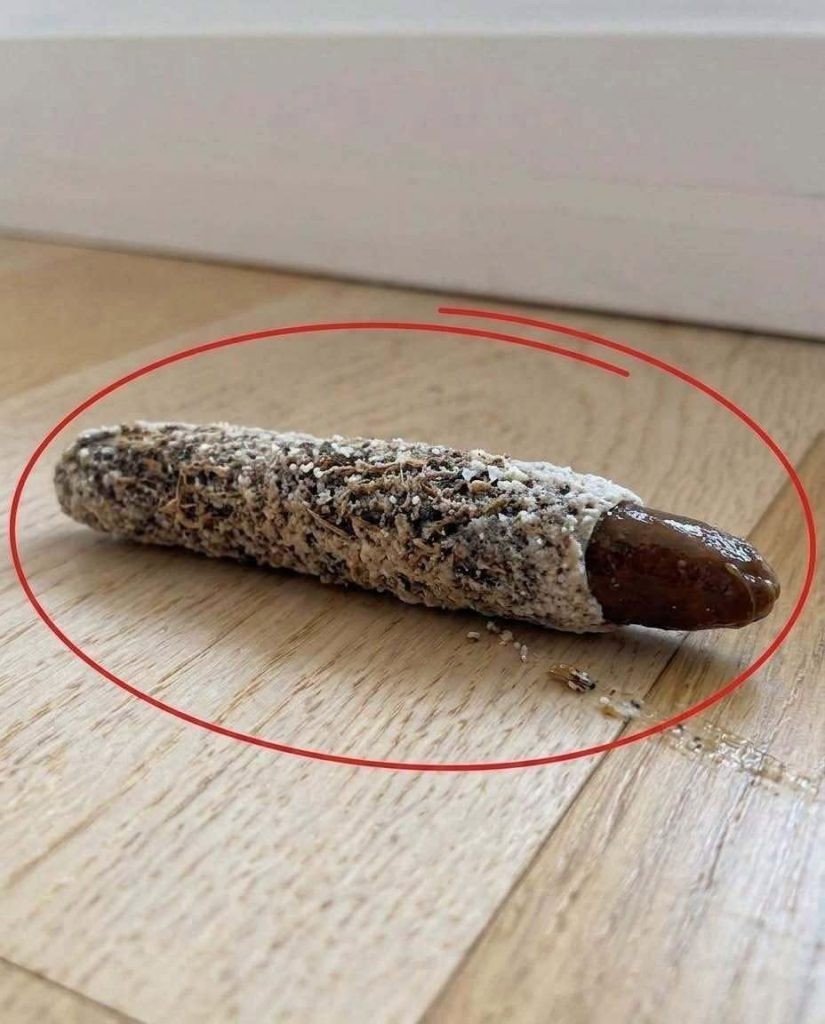
A Closer Look at the Household Casebearer: Nature’s Unexpected Visitor in Our Homes
Introduction: A Small Mystery in Everyday Life
Many homeowners have at some point glanced down and noticed what appears to be a small, tubular fragment on the floor, sometimes nestled near the wall, in a quiet corner, or hidden almost in plain sight amidst dust and debris. While it’s easy to dismiss such objects as simple specks of dirt, a closer look can often reveal a remarkable example of insect adaptation—namely, the case of the case-bearing moth larva, also known as the household casebearer. This article explores the biology, identification, habits, and practical management of this tiny but fascinating creature, delving into the larger implications of coexisting with nature’s ingenuity inside our living spaces.
Understanding the Household Casebearer
Case-bearing moth larvae belong to the family Tineidae, under the broader order Lepidoptera, which includes all moths and butterflies. The most frequently encountered species in human dwellings are various case-making clothes moths (such as Tinea pellionella) and their close relatives.
Casebearer larvae are uniquely adapted to living in environments rich in organic debris. What sets them apart is their habit of constructing protective cases using a mixture of silk and scavenged household particles, including dust, hair, lint, and thread. This portable home provides both camouflage from predators and protection from environmental hazards, allowing the larva to feed, hide, and thrive with relative safety.
The Life Cycle of a Case-Bearing Moth
A typical case-bearing moth begins life as a tiny egg laid in a secluded area, such as a closet, the edge of a carpet, or behind a baseboard—anywhere organic detritus accumulates undisturbed. Once hatched, the larva wastes no time spinning a silken case around its body, gathering additional materials from its immediate environment. As the larva grows, it enlarges the case, maintaining an opening at one end through which it can feed and move.
When threatened or disturbed, the larva can quickly retreat fully into its case, sealing itself inside for safety. This remarkable adaptation explains why people often find abandoned cases long after the insect has moved on or completed its metamorphosis into a small, inconspicuous adult moth.
Where Household Casebearers Are Found
Households of all kinds can provide suitable habitats for case-bearing larvae. You might encounter their cases:
- Along baseboards and in room corners
- Underneath furniture, particularly in areas not regularly cleaned
- Inside closets, especially among stored woolens or natural fibers
- Within boxes, drawers, or even along window sills
The presence of a single case is not necessarily a cause for alarm. Many homes will occasionally harbor a wandering larva seeking a suitable spot to feed or pupate.
What Do Casebearers Eat?
Case-bearing moth larvae have evolved to exploit a diet of keratin-containing materials, which include natural fibers such as wool, silk, feathers, hair, and leather. In human homes, these materials are commonly found in carpets, rugs, garments, old upholstery, and stored textiles. The larvae may also feed on bits of organic debris such as dead insects, cobwebs, and household dust mixed with food particles.
Notably, synthetic fabrics, such as nylon and polyester, are generally not at risk, unless they are blended with natural fibers or contaminated with food or sweat. This dietary selectivity partly explains why casebearers rarely prove to be as destructive as some other fabric pests, although the risk of damage rises with greater levels of dust and organic clutter.
Signs of Infestation: What Should You Look For?
Although an occasional case does not mean your home is infested, repeated discovery—especially near fabric-rich environments—warrants a closer investigation. Look for the following signs:
- Multiple larval cases congregating near stored clothes, carpets, or upholstered items
- Tiny holes or areas of thinning in wool or silk textiles
- Small, shed skins or webbing among fibers and threads
- Adult moths (usually small, brownish, and non-flashy in appearance) around lights, closets, or laundry areas
How to Address Casebearers in the Home
If you find a case-bearing larva or its case, immediate removal is the first step. You can use a tissue or vacuum cleaner to capture both the insect and its shelter. Dispose of the debris in a sealed bag to prevent possible reinfestation.
Next, clean the immediate area, paying special attention to corners, baseboards, and spaces beneath furniture where dust and fibers are likely to accumulate. Regular vacuuming, dusting, and rotation of stored items are simple but effective methods of prevention.
If you repeatedly discover similar cases, it is prudent to:
- Inspect closets, storage boxes, and under furniture for hidden cases
- Examine woolens, silks, and other natural-fiber materials for signs of damage
- Launder or dry clean vulnerable fabrics using a hot wash cycle where possible
- Store out-of-season clothing in airtight, clean containers with desiccant or natural repellents like cedar
For larger or persistent infestations, contacting a pest-control professional who can accurately diagnose the species and design an appropriate treatment plan is recommended.
Identifying the Culprit: When Species Matter
It is important to note that the appearance of a protective case alone does not confirm the exact species present. Other insects—such as carpet beetle larvae—can also produce visually similar cases or coverings. Accurate identification is key, especially when ongoing insect activity is suspected.
Most entomologists and pest management professionals recommend taking clear, close-up photographs of the insect and its case for remote consultation, or collecting a specimen for expert examination. This approach ensures the correct management strategy is applied and avoids unnecessary use of chemicals.
Is the Household Casebearer Dangerous?
The good news is that household casebearers pose no direct threat to human health. They do not bite, sting, or transmit disease. Their risk is primarily economic and aesthetic, relating to potential damage to precious or irreplaceable textiles. For this reason, early detection, cleaning, and organized storage provide sufficient protection for most households.
There are no known environmental health risks associated with the presence of household casebearers, regardless of how alarming their appearance may seem at first glance.
The Hidden World on Your Floor: Ecological Insights
Case-bearing moths are a vivid example of how small organisms adapt to survive within human environments. Their ingenuity—making use of available debris to shield themselves against predators and environmental threats—reflects the complex ecological interactions occurring daily, often unnoticed, in our homes.
For ecologists and biologists, the presence of these organisms provides insight into biodiversity and the resilience of insects in adapting to rapidly changing, human-dominated ecosystems. While their presence may sometimes inconvenience us, they also play a role in breaking down organic detritus, contributing to the micro-ecosystem of the home.
Expert Opinions and Preventive Strategies
Entomologists and pest management specialists generally agree that households can minimize interactions with case-bearing moth larvae using low-impact, routine practices:
- Frequent vacuuming of floors, carpets, and baseboards
- Laundering or dry-cleaning natural-fiber textiles regularly
- Thorough spring and autumn cleaning of closets, storage areas, and beneath furniture
- Promptly repairing holes or cracks in walls and baseboards to reduce entry points
In rare situations where infestations are significant or repeated, professionals may recommend the use of specific pheromone traps or, in the case of valuable collections, targeted treatments with heat or freezing, rather than broad insecticide application.
Conclusion: Seeing the Extraordinary in the Ordinary
What might at first appear to be a speck of dust or lint can, on closer inspection, reveal a world of natural ingenuity. The household casebearer is a testament to the adaptability of insects and highlights the subtle connections between domestic life and the larger forces of nature. By understanding, identifying, and humanely managing these tiny visitors, we can ensure both the preservation of our belongings and a greater appreciation for the hidden stories unfolding around us every day.
Sources
- Centers for Disease Control and Prevention (CDC)
- Mayo Clinic
- BBC News: Science & Environment
- Purdue University Extension: Clothes Moth Fact Sheet
- Encyclopedia Britannica: Tineid Moth
- Reuters
Disclaimer: This content is intended for entertainment purposes only and is not based on real events.