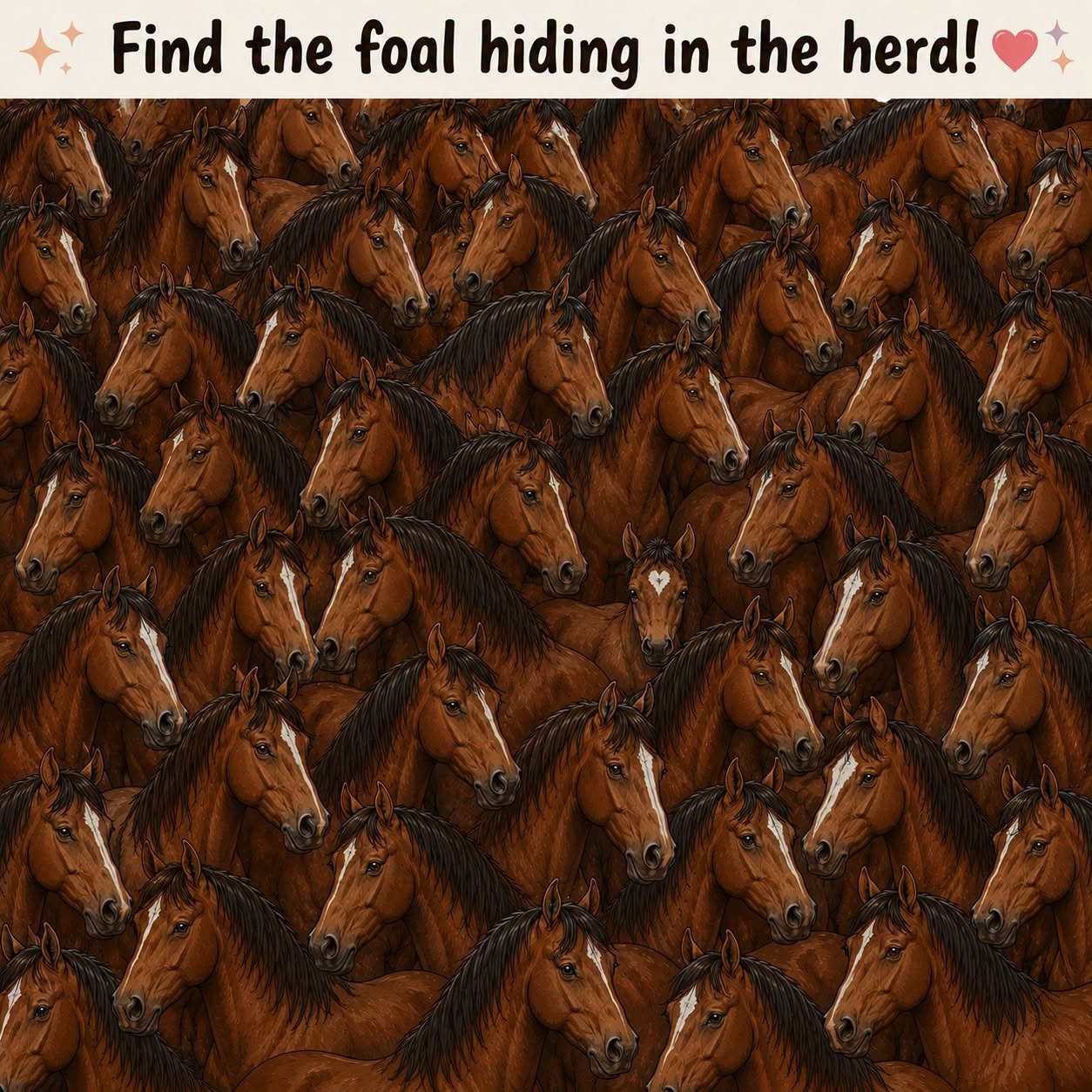
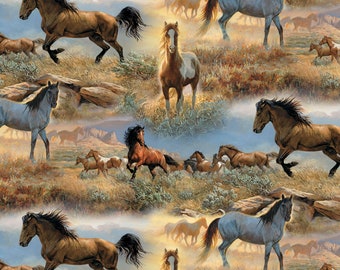
At first glance, it looked like nothing more than a beautiful illustration of a herd of horses standing shoulder to shoulder. Rich brown coats, flowing black manes, and alert expressions filled every corner of the image. Like thousands of people online, I confidently believed I would spot the hidden foal within seconds.
A minute passed.
Then another.
The more I searched, the more every horse began to look exactly the same.
Just when I was about to give up, something caught my eye—a tiny face tucked between the larger horses, marked by a distinctive white heart-shaped patch on its forehead. Suddenly, the hidden foal appeared as if it had been there all along.
That simple moment perfectly captures why hidden picture puzzles have become one of the internet’s favorite forms of entertainment. They challenge our brains, reward patience, and remind us that sometimes the smallest details are the easiest to overlook.
In this article, we’ll explore why images like this are so captivating, what science says about visual perception, and how different cultures have long celebrated horses as symbols of wisdom, family, and new beginnings.
What Makes Hidden Picture Puzzles So Popular?
Hidden object puzzles have entertained people for generations. Before smartphones and social media, magazines, newspapers, and children’s activity books regularly featured “find the hidden object” challenges.
Today, digital illustrations have taken these puzzles to a new level.
Artists carefully design scenes where colors, shapes, and textures blend together, making the hidden object difficult—but not impossible—to discover.
The appeal comes from a satisfying combination of curiosity and accomplishment. Every successful discovery triggers a small feeling of reward that encourages us to keep searching.
Unlike competitive games, hidden picture puzzles allow everyone to work at their own pace, making them enjoyable for both children and adults.
The Hidden Foal Challenge
The illustration asks viewers to locate a young foal concealed among dozens of adult horses.
Rather than standing in an obvious location, the foal is integrated naturally into the composition. Its smaller size, youthful features, and distinctive white marking on its forehead help distinguish it—but only after careful observation.
Many viewers report scanning the image several times before finally spotting it.
This experience demonstrates an interesting truth about human perception: our brains often overlook what we are not specifically expecting to see.
Why Our Brains Miss Obvious Details
Psychologists have studied visual attention for decades, discovering that our brains constantly filter enormous amounts of information.
Rather than processing every detail equally, the brain prioritizes patterns and familiar shapes.
When viewing a herd of horses, your mind quickly categorizes them as similar objects.
Because every horse shares nearly identical colors, posture, and facial features, the hidden foal blends seamlessly into the larger group.
Scientists refer to this as selective attention.
Instead of analyzing every individual horse equally, your brain simplifies the image into recognizable groups, making smaller differences much harder to notice.
Pattern Recognition at Work
Humans are natural pattern detectors.
This ability evolved because recognizing familiar shapes helped our ancestors quickly identify food, shelter, and potential dangers in their environments.
Today, the same ability helps us:
- Recognize faces instantly
- Read words rapidly
- Identify animals
- Navigate complex environments
Ironically, this remarkable skill can also work against us.
When everything appears similar, our brains may stop looking carefully, assuming we’ve already understood the entire scene.
Hidden picture puzzles cleverly exploit this mental shortcut.
Why Finding the Foal Feels So Rewarding
Have you ever wondered why solving visual puzzles feels satisfying?
Researchers suggest that successfully solving a challenge activates the brain’s reward system.
When we discover something unexpected, our brains recognize that we’ve solved a problem.
This creates a feeling of accomplishment that encourages curiosity and continued learning.
Even though finding a hidden foal is simply a recreational activity, the experience mirrors the same mental processes involved in everyday problem-solving.
Each discovery reinforces patience, observation, and persistence.
Horses Throughout History
Long before hidden puzzles became popular online, horses held extraordinary importance in civilizations around the world.
They were companions, working animals, transportation, and symbols of freedom.
Because of their close relationship with humans, horses appear in countless myths, legends, and works of art.
Different cultures have interpreted horses in fascinating ways.
Horses as Symbols of Strength
In many traditions, horses represent:
- Endurance
- Loyalty
- Courage
- Partnership
- Adventure
Their ability to travel great distances made them symbols of opportunity and exploration.
Artists frequently portrayed horses alongside heroes, travelers, and leaders, emphasizing trust between humans and animals.
The Special Meaning of Foals
While adult horses often symbolize power, foals usually represent something different.
Across various cultures, young horses have been associated with:
New beginnings
Growth
Hope
Potential
Family bonds
The hidden foal in this puzzle naturally evokes these gentle themes, making it more than simply a visual challenge.
Artistic Techniques Behind the Puzzle
Creating an effective hidden image requires remarkable artistic skill.
Illustrators carefully balance visibility with camouflage.
Several techniques are commonly used.
Similar Colors
Nearly every horse shares comparable shades of brown.
This prevents any single figure from immediately attracting attention.
Repeating Shapes
Horse heads, ears, necks, and manes repeat throughout the image.
The repeated forms encourage the brain to see one large pattern instead of many individual animals.
Visual Crowding
Objects positioned closely together become more difficult to distinguish.
The overlapping horses create natural visual complexity without appearing chaotic.
Strategic Contrast
The foal remains discoverable because of subtle differences in:
Facial proportions
Body size
Eye placement
Forehead marking
These details reward careful observation without making the puzzle frustrating.
Hidden Object Games Around the World
Visual puzzles are enjoyed across cultures.
Popular examples include:
Hidden object books
Optical illusion artwork
Spot-the-difference games
Maze illustrations
Picture riddles
Internet visual challenges
Although each format differs slightly, they all encourage careful observation rather than quick reactions.
Many educators even use similar puzzles to strengthen children’s concentration and attention to detail.
Can Visual Puzzles Improve Observation Skills?
While hidden picture games should not be considered formal brain training, researchers suggest they may support several useful cognitive abilities.
These include:
Visual scanning
Pattern recognition
Attention to detail
Patience
Problem-solving strategies
Because they require sustained focus, puzzles may provide a relaxing alternative to fast-paced digital entertainment.
They encourage slowing down and examining details that might otherwise go unnoticed.
Myth and Symbolism Versus Science
Throughout history, people often attached symbolic meaning to animals they admired.
A foal hidden among adult horses might inspire interpretations about family, protection, or discovering hidden potential.
Some may even see the image as representing hope quietly waiting to be found.
These symbolic interpretations belong to cultural traditions and personal reflection rather than scientific evidence.
From a scientific perspective, the challenge is simply an example of visual perception and artistic design.
Both viewpoints can coexist.
Science explains how we perceive the image, while symbolism explores why people find emotional meaning in it.
Together, they reveal the fascinating relationship between the human brain and imagination.
Tips for Solving Hidden Picture Puzzles Faster
If you enjoy visual challenges, a few simple strategies can improve your success.
First, avoid scanning randomly.
Instead, divide the picture into smaller sections and examine each one carefully.
Second, look for differences rather than similarities.
Search for unusual sizes, colors, or markings.
Third, take short breaks.
Looking away for a few seconds allows your brain to reset its perception.
Finally, remain patient.
Many puzzles become easier once your eyes adjust to the repeating patterns.
Why These Puzzles Continue to Go Viral
Social media thrives on interactive experiences.
Hidden picture puzzles invite people to participate rather than simply consume content.
Viewers naturally ask friends:
“Did you find it?”
“How long did it take?”
“Where is it hiding?”
These conversations transform a simple illustration into a shared experience.
Unlike controversial or sensational content, visual puzzles create positive engagement based on curiosity and enjoyment.
That universal appeal explains why they continue spreading across the internet.
The Hidden Foal Reminds Us to Look More Carefully
The tiny foal hidden among the larger horses offers a simple but memorable lesson.
In everyday life, we often rush past details because our brains prioritize efficiency over careful observation.
Whether we’re reading, working, exploring nature, or appreciating art, slowing down allows us to notice things we might otherwise miss.
The puzzle also demonstrates how artists skillfully work with human perception, creating images that are challenging without being impossible.
Most importantly, it reminds us that patience often reveals what hurried searching cannot.
Conclusion
A hidden foal tucked inside a crowded herd may seem like a simple internet puzzle, yet it highlights something remarkable about human perception. Our brains constantly organize information, recognize patterns, and make assumptions to help us understand the world efficiently. Occasionally, those same shortcuts cause us to overlook small but meaningful details.
Across cultures, horses have long represented strength, companionship, and new beginnings, while science explains the visual principles that make puzzles like this so engaging. Together, these perspectives enrich the experience without diminishing either one.
Whether you spotted the foal immediately or searched for several minutes before finding it, the journey itself is part of the fun. Hidden picture challenges encourage patience, sharpen observation, and celebrate one of humanity’s greatest qualities: curiosity. Sometimes the most rewarding discoveries are not the largest or the loudest—they are simply the ones that were quietly waiting to be seen.
Sources
National Eye Institute. How Vision Works. https://www.nei.nih.gov
American Psychological Association. Research on visual perception and attention. https://www.apa.org
Encyclopaedia Britannica. Horse. https://www.britannica.com/animal/horse
Smithsonian Institution. Educational resources on animal behavior and visual observation. https://www.si.edu
National Geographic. Resources on horses, animal behavior, and wildlife education. https://www.nationalgeographic.com