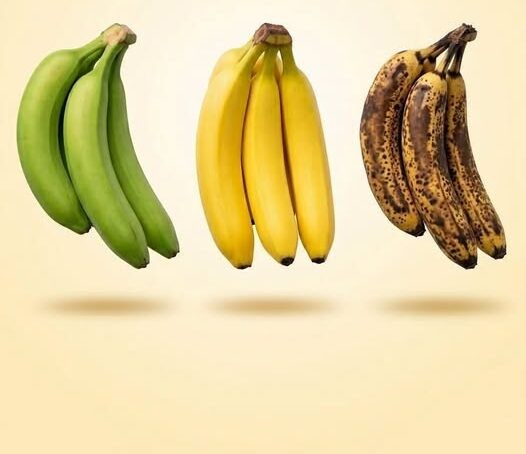
Bananas are one of the world’s most familiar fruits, but their changing appearance can cause unnecessary confusion. A bunch that begins green may turn bright yellow within days, followed by small brown freckles and eventually a deeply mottled peel. Many people assume that brown spots mean a banana has lost its value or should be discarded. In most cases, that is not true.
Brown spots are usually a normal sign of ripening. As a banana matures, its starch is gradually converted into sugars, its texture softens, and its flavor becomes sweeter. Green, yellow, and brown-spotted bananas can all be nutritious choices, although they have somewhat different carbohydrate profiles and may suit different preferences, digestive needs, and culinary uses.
The best banana is not universally the greenest or the ripest one. It depends on factors such as taste, portion size, medical needs, and how an individual tolerates the fruit. Understanding the science of banana ripeness can help consumers make informed choices, reduce food waste, and avoid exaggerated online claims about “super-ripe” bananas.
How Bananas Change From Green to Brown
Bananas are harvested while still green and continue ripening after harvest. This process is influenced by ethylene, a natural plant hormone involved in fruit maturation. During ripening, enzymes inside the banana break down complex starches into simpler sugars. The result is a fruit that becomes softer, sweeter, and easier to mash.
The peel also changes because chlorophyll, the green pigment in unripe bananas, breaks down as the fruit matures. Yellow pigments become more visible, and brown spots can develop later as the peel ages. These marks alone do not indicate that the flesh is unsafe. A spotted banana can remain perfectly suitable for eating, blending, or baking if it has no mold, leakage, foul odor, or extensively decayed interior.
While ripeness changes the balance of starch and sugar, it does not transform a banana from healthy to unhealthy. Bananas at every normal stage of ripeness provide carbohydrates and nutrients, including potassium, vitamin B6, and dietary fiber.
Green Bananas: Higher in Starch and Resistant Starch
Green bananas are typically firm, mildly flavored, and less sweet than yellow bananas. At this stage, they contain more starch and less sugar. A portion of this starch is known as resistant starch, meaning it is not fully digested in the small intestine in the same way as ordinary digestible starch.
Instead, resistant starch can reach the large intestine, where gut bacteria may ferment it. This fermentation can produce short-chain fatty acids, including butyrate, which is used by cells lining the colon. Researchers are interested in resistant starch because it may contribute to a dietary pattern that supports normal gut function. However, the effect of any single food is limited and varies between individuals.
Green bananas may also be more filling for some people because of their firmer texture and starch content. Their carbohydrate profile can lead to a different blood glucose response than that of a very ripe banana. Still, the response depends on many factors, including banana size, the amount eaten, the rest of the meal, physical activity, and a person’s metabolism.
Digestive Considerations for Green Bananas
More resistant starch is not necessarily better for everyone. Because it can be fermented by intestinal bacteria, a large amount may contribute to gas, bloating, or discomfort in some people, particularly those with sensitive digestive systems. Introducing green bananas gradually may be more comfortable than eating several at once.
In many cuisines, green bananas and plantains are cooked rather than eaten raw. Cooking can make their firm texture more appealing and allows them to be used in savory dishes. Whether raw or cooked, green bananas are one option among many foods that can contribute fiber and fermentable carbohydrates to the diet.
Yellow Bananas: A Convenient Everyday Fruit
When bananas turn yellow, more of their starch has been converted into naturally occurring sugars. This is why a yellow banana tastes sweeter and has a softer texture than a green one. Yellow bananas remain a practical, nutrient-rich fruit for snacks, breakfast, lunchboxes, and meals on the go.
According to nutrition data from the U.S. Department of Agriculture, a medium banana contains roughly 105 calories, although this varies by size. It also provides carbohydrates, fiber, potassium, vitamin B6, and small amounts of other nutrients. Potassium is involved in normal nerve and muscle function and fluid balance, while vitamin B6 participates in many metabolic processes.
A yellow banana can be useful when a person wants a readily available source of carbohydrate, such as before or after exercise. It is portable, requires no preparation, and can be paired easily with other foods. However, bananas are not uniquely necessary for athletic performance. Other fruits and carbohydrate-containing foods can serve a similar role depending on personal preference and nutritional needs.
Pairing Bananas With Protein or Fat
Some people find a banana more satisfying when it is eaten with plain yogurt, nuts, nut butter, or another protein- and fat-containing food. These combinations change the overall composition of a snack by adding protein, fat, and sometimes additional fiber. For people monitoring blood glucose, meal composition and serving size can matter as much as the ripeness of the fruit.
There is no requirement to pair bananas with another food. A banana on its own can fit well into a balanced diet. Pairing is simply an option for those who want a more substantial snack or prefer the flavor and texture combination.

Brown-Spotted Bananas: Sweeter, Softer, and Often Still Good to Eat
Brown-spotted bananas are among the most misunderstood foods in the kitchen. Their spots usually signal that ripening is continuing, not that the fruit has become unusable. By this stage, more starch has changed into sugar, giving the banana a noticeably sweeter flavor and softer consistency.
This makes brown-spotted bananas especially useful for smoothies, oatmeal, pancakes, muffins, and banana bread. Their natural sweetness can enhance recipes without requiring as much added sugar, although the final nutritional value of a baked food still depends on all of its ingredients.
A banana with a freckled peel is generally fine if the flesh looks and smells normal. It should be discarded if there is visible mold, a strongly unpleasant or fermented smell, leaking liquid, or widespread mushy and discolored flesh suggesting spoilage. Peel color by itself is not a reliable food-safety test.
Are Brown Bananas Healthier Than Yellow or Green Bananas?
Claims that spotted bananas are dramatically healthier than other bananas are not supported by strong human evidence. Bananas contain naturally occurring plant compounds with antioxidant activity, and their composition may change during ripening. However, laboratory measurements of antioxidant activity do not prove that a heavily spotted banana prevents disease, produces extraordinary immune benefits, or works as a medical treatment.
It is more accurate to say that ripeness changes a banana’s nutritional characteristics rather than creating a miracle food. Green bananas generally contain more resistant starch. Yellow and spotted bananas generally contain more available sugars and are softer. All can contribute to fruit intake and dietary variety.
Health authorities consistently emphasize overall eating patterns rather than relying on one food for dramatic results. Eating a range of fruits, vegetables, legumes, whole grains, and other nutrient-dense foods is a more dependable way to obtain fiber, vitamins, minerals, and diverse plant compounds.
Banana Ripeness and Blood Sugar
Because bananas contain carbohydrates, they can affect blood glucose levels. Ripeness can influence how quickly the carbohydrate is digested, with less-ripe bananas generally containing more resistant starch and ripe bananas containing more simple sugars. Yet peel color is only one part of the picture.
For people with diabetes, the amount of carbohydrate eaten is important, as are portion size, medication use, individual glucose patterns, and the rest of the meal. A large banana contains more total carbohydrate than a small banana regardless of its ripeness. A ripe banana does not need to be automatically avoided, and a green banana should not be viewed as a treatment for diabetes.
People managing diabetes should follow guidance from their clinician or registered dietitian and, where appropriate, use their own glucose monitoring information to understand personal responses. Choosing a smaller banana, eating it as part of a mixed meal, or pairing it with yogurt or nuts may suit some meal plans, but individualized advice remains important.
When Should You Avoid or Limit Bananas?
Most healthy adults can enjoy bananas as part of a varied diet. Still, certain people may need tailored guidance. Anyone with a confirmed banana allergy should avoid the fruit. People with kidney disease or other conditions requiring potassium restriction should consult a healthcare professional, since bananas can contribute meaningful potassium to the diet.
Individuals with irritable bowel syndrome or other digestive sensitivities may notice that one stage of ripeness feels more comfortable than another. Those who experience repeated digestive symptoms after eating bananas may benefit from discussing the issue with a qualified healthcare professional rather than relying on general internet advice.
How to Store and Use Ripe Bananas to Reduce Food Waste
Using bananas at different stages is an easy way to reduce household food waste. Green bananas may be preferred by people who enjoy a firmer, less sweet fruit. Yellow bananas work well as an everyday snack. Spotted bananas can be mashed into baking recipes or blended into smoothies.
If bananas become riper than you would like, peel them and freeze them in a sealed container or freezer bag. Frozen banana pieces are useful for smoothies, blended desserts, oatmeal, and baking. Freezing before spoilage helps preserve the fruit while providing a convenient ingredient for later.
For counter storage, bananas ripen at room temperature. Refrigeration can slow further ripening once they have reached the preferred stage, although the peel may darken in the refrigerator. The darkened peel does not necessarily mean the inside has spoiled.
Green, Yellow, or Brown: Which Banana Is Best?
The answer depends on what you value most. A green banana may appeal to someone seeking a firmer texture and more resistant starch. A yellow banana offers a balanced middle stage that is sweet, convenient, and easy to eat. A brown-spotted banana is ideal for those who enjoy a soft, sweet fruit or need bananas for baking.
Rather than judging a banana only by the color of its peel, consider its condition, size, ripeness, and intended use. Brown spots often represent a normal part of the banana’s life cycle, not a reason to throw away nutritious food.
In practical terms, bananas remain a versatile and affordable fruit throughout their normal ripening stages. Choosing the stage that suits your taste, digestive tolerance, and dietary needs is more useful than searching for a single “perfect” banana.
Sources
Disclaimer: This content is intended for entertainment purposes only and is not based on real events.