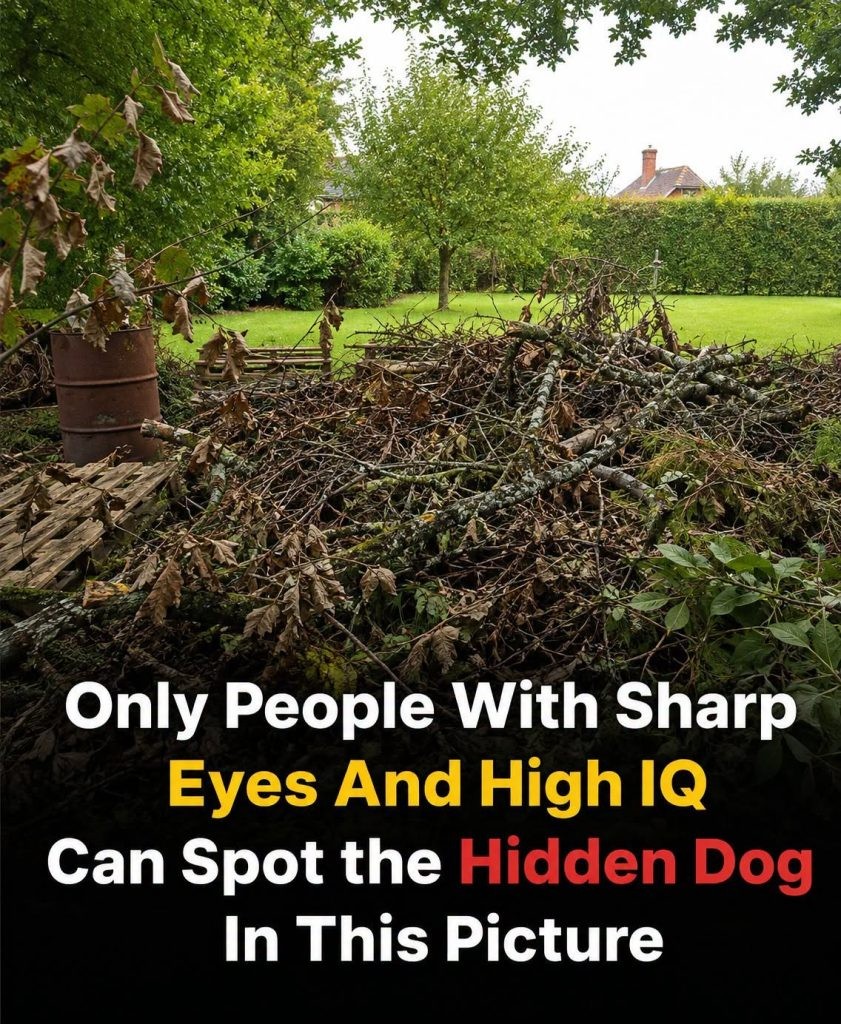
Viral Image Challenges Reddit as Viewers Attempt to Spot Hidden Spaniel Camouflaged in Tree Branches
Introduction: The Fascination with Visual Illusions
The internet is no stranger to viral puzzles and optical illusions that challenge our perceptions and test our patience. Among the latest to capture widespread attention is an image circulating on Reddit, where a spaniel dog is expertly camouflaged within a maze of tangled tree branches. This visual puzzle has sparked intense discussion online as thousands of users attempt to spot the hidden canine, only to find themselves repeatedly confounded by the subtlety of the dog’s disguise.
The Challenge: Spotting the Spaniel
At first glance, the image appears to be a straightforward photograph of intertwined twigs and natural woodland clutter. The apparent randomness and density of the branches make it an ideal environment for natural camouflage. The spaniel, with brown fur that almost seamlessly matches the hues and shadows of the environment, is nearly indistinguishable from the tree limbs surrounding it. This clever positioning creates a powerful optical illusion, making it difficult for even the most observant viewers to pinpoint the dog’s location.
On Reddit, particularly within the FindTheSniper community—known for sharing and solving “hidden object” challenges—users shared their experiences with this puzzle. Many openly admitted defeat, confessing that they could not find the hidden spaniel even after numerous attempts. There were even suggestions that the image might be a joke, a test of patience, or a trick with no hidden subject at all.
Camouflage and Human Perception: Why It’s Difficult
The difficulty in spotting the spaniel stems from the dog’s near-perfect blend into its background. The branches and twigs not only obscure its full outline but also break up the familiar patterns we associate with a dog’s body, such as the face, ears, and tail. This disruption of recognizable shapes is a classic feature of natural camouflage—a biological response observed in many animals that helps them evade predators in the wild.
Humans rely heavily on pattern recognition and edge detection to interpret visual information. When these cues are obscured, our brains struggle to identify familiar objects. Cognitive scientists explain that we are conditioned to notice unusual movement or contrast, so when an object remains still and shares the same colors or textures as its background, it can become functionally invisible. This effect is amplified in complex, densely detailed environments such as forests or underbrush.
Community Responses and Strategies for Success
Within the puzzle-solving community, various strategies emerged for tackling this challenge. Some recommended dividing the image into smaller sections and methodically scanning each. This systematic approach reduces the likelihood of missing subtle differences that might signal the hidden dog’s location. One particularly useful hint suggested starting from the center and gradually working outward, as the eye can easily become overwhelmed by the intricate web of branches if the entire image is scanned at once.
Eventually, clues pointed toward a spot just slightly to the left of the image’s center. There, tucked between overlapping branches, the outline of the spaniel can be pieced together. Only careful attention to small differences in tone, slight curves, and fluffy texture reveals the animal that so many had overlooked. In several discussions, those who eventually found the spaniel described a sense of surprise and satisfaction, exclaiming that the dog became obvious once seen—a classic hallmark of successful visual illusions.
The Trend of “Sniper” Visual Puzzles Online
The spaniel-in-the-branches puzzle is part of a larger trend of online visual challenges colloquially referred to as “sniper” puzzles. These often feature animals or objects hidden among visually complex environments—snowy landscapes concealing a white hare, rocks disguising a stone-colored insect, or leafy trees sheltering a camouflaged lizard. The objective is to locate the concealed subject, offering a social and cognitive activity that bridges entertainment, art, and scientific curiosity.
Such challenges have surged in popularity on platforms like Reddit, Twitter, and Facebook. They combine the appeal of a mystery with the satisfying “aha” moment of solution. The fact that visual search is universally accessible also means these puzzles attract a diverse audience. Some users enjoy them as lighthearted distractions, while others approach them as informal tests of cognitive ability or attention to detail.
The Science of Camouflage and Visual Perception
Camouflage as a biological adaptation is well-documented. Many animals—ranging from moths and frogs to big cats and domestic dogs—possess natural coloring, patterns, and behaviors that make them less conspicuous to both prey and predators. Scientists have long been fascinated by the mechanics of natural camouflage, studying how environments shape the evolution of concealment strategies.
Experts in vision science note that human eyes are relatively adept at detecting motion and high-contrast boundaries but less skilled at identifying stationary objects that closely match their backgrounds. According to studies published in journals like Nature and reports by organizations like the American Optometric Association, the brain’s ability to “fill in” missing information often leads to visual oversights, especially in cluttered environments.
Optical illusions, whether intentionally designed or accidental, leverage these quirks of human perception. These puzzles are valuable not only as entertainment but also as educational tools, shedding light on visual and cognitive function and informing research in artificial intelligence and computer vision.
Expert Views: The Role of Online Puzzles in Cognitive Health
Psychologists and neuroscientists often encourage the engagement with puzzles and visual challenges as a means of maintaining cognitive health. These activities can sharpen observation skills, enhance memory, and foster creative problem-solving. According to experts interviewed by the BBC and The Guardian, regularly working through optical illusions or visual puzzles can benefit people of all ages by exercising neural pathways involved in sight, attention, and reasoning.
In educational contexts, teachers and cognitive therapists sometimes use similar imagery to support developmental goals, teach about the brain’s processing limits, or provide engaging challenges for students. The popularity and shareable nature of puzzles like the spaniel-in-the-branches image make them a useful tool beyond casual entertainment.
International and Societal Reactions to Viral Visual Challenges
The global spread of such visual challenges highlights the connective power of the internet. Shared across countries and cultures, images like the camouflaged spaniel foster conversations about perception, creativity, and the limits of human awareness. On social media, users from around the world posted their attempts, frustrations, and eventual successes, often translating and localizing clues to support non-English-speaking audiences.
Media outlets such as Reuters and Al Jazeera have previously reported on the phenomenon of viral optical illusions in their science and technology sections, noting their emergence as a form of digital folk art and a spontaneous social activity. While most reactions are lighthearted, these puzzles also serve as reminders of the brain’s boundless complexity and our collective curiosity about the world.
Conclusion: More Than Just a Puzzle
The viral image of a spaniel hidden among tree branches is a powerful demonstration of both natural camouflage and the mysteries of human perception. While the puzzle may frustrate some and delight others, its popularity underscores the enduring fascination with visual illusions and the joy of solving a good mystery. Through systematic scanning and a bit of patience, even the most challenging illusions can be revealed, offering insight into how we see—and sometimes fail to see—the world around us.
Whether as lighthearted entertainment, cognitive training, or genuine artistic curiosity, visual puzzles like this continue to unite and intrigue internet users, encouraging us all to look a little closer.
Sources
Disclaimer: This content is intended for entertainment purposes only and is not based on real events.