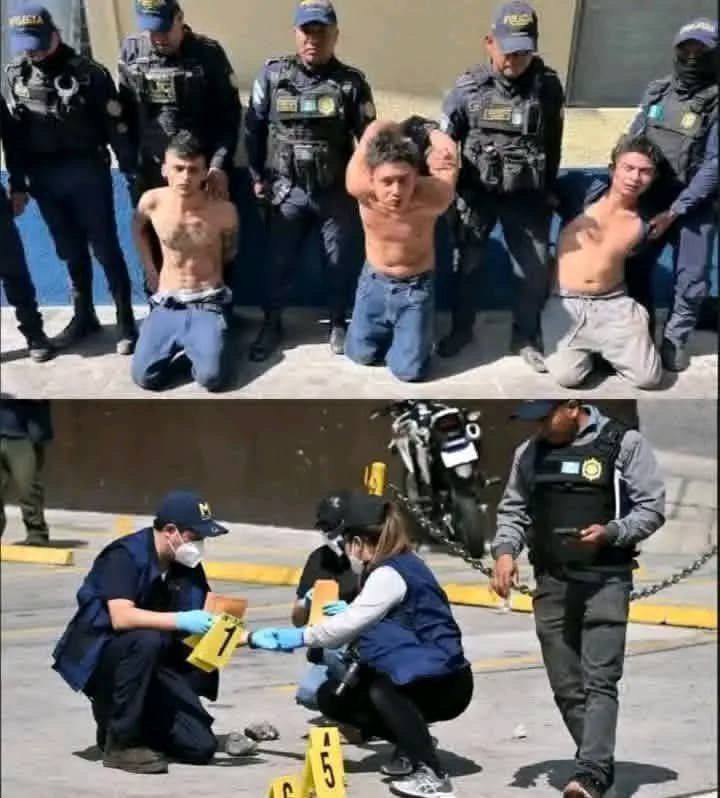
In a dramatic escalation of the Guatemalan government’s efforts to reassert control over organized criminal networks operating within its borders, President Bernardo Arévalo announced a 30-day state of emergency on Sunday, responding to a concentrated wave of violence that has shaken the Central American nation over the course of just a few days. The declaration came in the immediate aftermath of coordinated uprisings at three separate prisons across the country and the killing of eight police officers — events that authorities have directly attributed to organized criminal groups retaliating against government crackdowns on their operations.
The state of emergency, announced by President Arévalo at a Sunday afternoon news conference, grants expanded authority to both the national police and the Guatemalan army to act against criminal organizations and their networks. The president was careful to emphasize that the measure was targeted in its intent and would not significantly disrupt the daily lives of the vast majority of ordinary Guatemalan citizens. As a precautionary measure, schools were suspended on Monday, a decision framed as a temporary protective step while security forces worked to stabilize the situation across the most affected areas of the country.
A Weekend of Coordinated Violence

The events that precipitated the state of emergency unfolded rapidly and with a coordination that immediately suggested these were not spontaneous or isolated incidents. On Saturday, inmates took dozens of prison guards hostage at three different facilities located in separate parts of the country. The Ministry of the Interior confirmed that the uprisings appeared to have been deliberately coordinated, and characterized them as a direct response to a policy decision by authorities to withdraw certain privileges that had previously been extended to the leaders of criminal organizations operating from within the prison system.
The timing and the simultaneous nature of the hostage-taking at three separate facilities underscored what officials and security analysts have long argued about Guatemala’s prison system: that criminal networks have, over many years and with considerable effectiveness, extended their organizational reach and operational capacity to function not just despite incarceration but in many ways through it. The ability to coordinate a multi-site action of this kind from inside prison walls speaks to the depth of infrastructure these organizations have built within institutions that were designed to contain and neutralize them.
By Sunday, the national police had successfully regained control of all three affected facilities and secured the release of the hostages. President Arévalo confirmed this development at his news conference, presenting the resolution of the prison crisis as evidence that the state was capable of responding to the challenge. But the day was not without its own profound and devastating cost.
Eight police officers were killed on Sunday, according to a statement from the national police. Authorities attributed the killings directly to criminal organizations, and President Arévalo characterized the attacks as deliberate retaliation — a calculated effort to punish security forces for having moved against the prison uprisings and to signal to the government that the cost of confrontation would be severe. The deaths of eight officers in a single day represented a stark and painful illustration of the scale of the challenge the Guatemalan government has taken on.
Some of the Sunday attacks were specifically attributed by police to the Barrio 18 organization, a criminal network with deep roots and a long operational history across Central America. The group had been designated a foreign terrorist organization by the United States government in the latter part of the previous year, a classification that carries significant implications for how international partners can engage in efforts to counter its activities.
The Context Behind the Crisis

To understand why this particular moment has produced such an intense and coordinated response from organized criminal networks, it helps to understand the political and institutional context that President Arévalo inherited when he took office and the specific policy direction he had signaled in the months leading up to this week.
Arévalo was elected in 2023 as a moderate reformist candidate, winning the presidency in part on the strength of his pledges to confront corruption and work to dismantle the influence of criminal organizations within Guatemalan state institutions. His victory was a genuinely surprising outcome in an election that the political establishment had not anticipated going in his direction, and the reaction from entrenched power structures was immediate. The country’s attorney general at the time sought to prevent him from taking office through legal maneuvers that sparked widespread public protests in defense of the democratic result. He ultimately assumed the presidency, but the opposition from conservative institutional forces has continued throughout his time in office, consistently blocking or complicating most of the significant reforms his administration has attempted to advance.
The United States, meanwhile, signaled its own concerns about the previous government’s conduct by imposing a travel ban on Arévalo’s predecessor, Alejandro Giammattei, in 2024, citing accusations that the former president had accepted bribes. The designation reflected long-standing American concerns about corruption within Guatemalan institutions and the degree to which criminal financial interests had penetrated the highest levels of government.
Arévalo has stated publicly that he intends to work with the Federal Bureau of Investigation and other United States agencies to tackle the criminal organizations that, in his assessment, effectively run the nation’s prison system and have used that operational base to extend their reach and influence throughout the country. Late last year, he called specifically for a comprehensive overhaul of the prison system, identifying it as a central node of criminal power that had been allowed to function without meaningful accountability for far too long, sustained by pervasive corruption and bribery among those charged with administering and overseeing it.
It was the implementation of policies flowing from that reform agenda — specifically the decision to withdraw privileges that criminal leaders had come to rely on and expect within the prison environment — that appears to have triggered the coordinated response seen over this past weekend. In the logic of organized criminal networks, the removal of those privileges was an act of aggression that required a visible and costly response. The hostage-takings and the attacks on police officers were, in that framework, a message: a demonstration that the organizations retained the capacity to inflict serious harm and that the government should think carefully before continuing down a path of genuine confrontation.
President Arévalo addressed this dynamic directly at his news conference, describing the prison uprisings as an attempt by criminal organizations to coerce the state into accepting their demands, demands that he noted had been granted by successive governments for decades. The subsequent attacks on police officers, he said, were designed to terrorize security forces and the broader population with the goal of pressuring his government to step back from its confrontational posture toward the criminal networks.
His decision to declare a state of emergency rather than retreat from that posture represents a significant escalation of the political and security stakes surrounding his administration’s reform agenda. It is, in effect, a public declaration that this government does not intend to be intimidated into the same accommodations that criminal organizations have successfully extracted from previous administrations.
What the State of Emergency Means in Practice
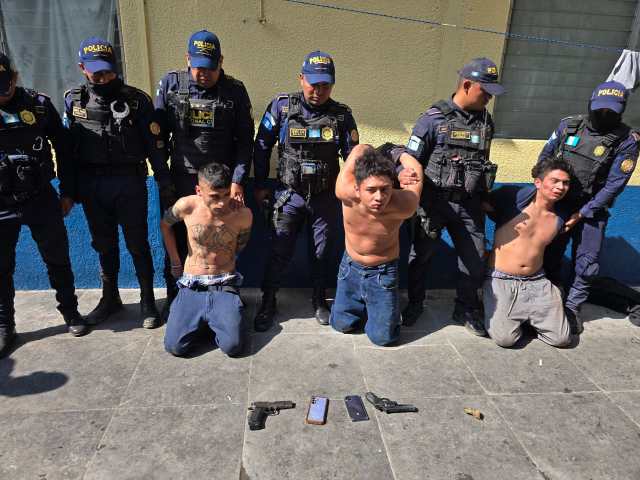
The 30-day timeframe of the emergency declaration gives authorities a defined window within which the expanded powers granted to police and military forces will be in effect. During this period, those institutions will have greater latitude to move against criminal networks, conduct operations in areas where gang influence is concentrated, and take action against the financial and logistical infrastructure that supports criminal organizations in their day-to-day operations.
The measure also provides political cover and legal authorization for a more aggressive posture by security forces, which in the context of an ongoing and active confrontation with organized criminal networks is a practically significant consideration. It signals to both domestic and international audiences that the Guatemalan government regards the current situation as a genuine security crisis requiring an exceptional response.
At the same time, states of emergency carry their own risks, particularly in countries with institutional histories that include periods of severe abuse of emergency powers. Civil society organizations and human rights observers will be watching carefully to ensure that the expanded authorities granted under the declaration are exercised with appropriate restraint and within legal boundaries — concerns that are always legitimate in this kind of context and that reflect lessons learned from painful historical experiences across the region.
A Difficult Road Ahead
Guatemala’s struggle with organized criminal networks is not a new challenge, and no 30-day emergency declaration will resolve dynamics that have been decades in the making. The institutional corruption that has allowed criminal organizations to embed themselves within the prison system and, more broadly, within various state bodies, reflects deep structural problems that require sustained and comprehensive reform efforts well beyond what emergency measures can accomplish on their own.
President Arévalo came to office with genuine reform ambitions and has faced persistent institutional resistance to most of his significant policy initiatives. The events of this weekend, and his response to them, represent a critical test of whether his administration can translate its stated commitments into durable change in how the Guatemalan state functions and how seriously it is willing to confront the criminal interests that have benefited from its previous failures to do so.
The families of the eight police officers killed on Sunday, and the communities across Guatemala that have lived for years under the weight of criminal violence and the fear it generates, deserve an answer to that question that goes beyond a 30-day emergency declaration. They deserve the kind of sustained, systematic, and honest institutional reform that is the only path to a genuinely different outcome.
Whether this government, in this political environment, has the capacity to deliver that remains one of the most consequential open questions in Guatemalan public life.