Blanche Monnier: The Woman Kept Hidden in an Attic for 25 Years

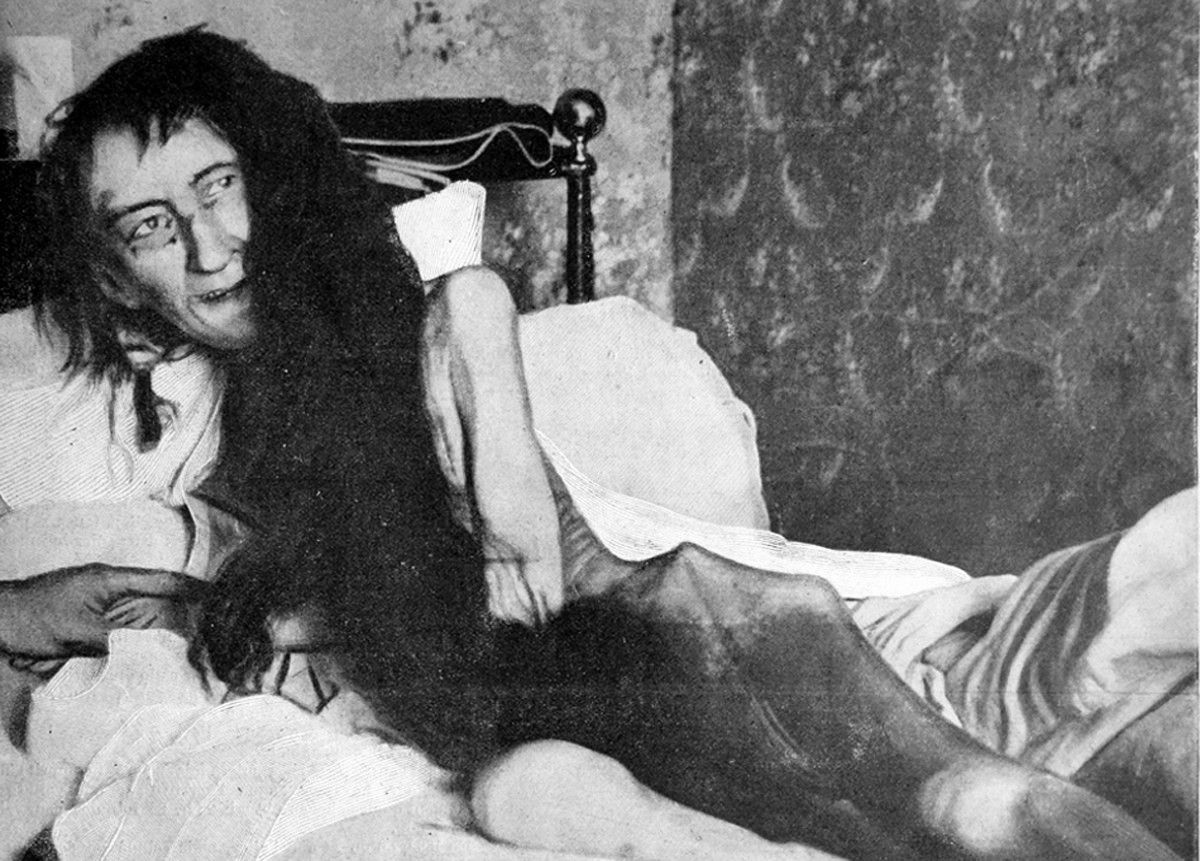
In 1901, a letter surfaced at the Paris Attorney General’s office, revealing a secret that had been hidden for a quarter-century. The letter described the unimaginable: Blanche Monnier, a French woman born in 1849, had been imprisoned within her family home in the picturesque city of Poitiers for 25 years. The account accompanying the tip was grim, detailing Blanche’s emaciated, neglected state—trapped in filth and malnourished in a sealed attic room. The subsequent police discovery would not only expose one of France’s most disturbing cases of captivity but would also spark widespread debates about family, societal pressure, and legal responsibilities.
Blanche Monnier’s Background: A Family of Standing
To comprehend Blanche’s tragic ordeal, it is crucial to understand her origins in the context of late 19th-century France. The Monnier family was a highly respected bourgeois household in Poitiers, famed for their civic contributions and local roots. Charles Monnier, Blanche’s father, held a prominent academic position, heading the arts faculty at the local university. His wife, Louise Monnier, was celebrated in the community for her philanthropic work and later received an award for her contributions to charitable causes. Their son Marcel followed an academic path, studying law and obtaining a role as an administrative official.

The Monnier family’s public image was irreproachable, and they upheld the traditions of French high society. Blanche, with her spirited charm, thick curls, and engaging personality, was regarded as a vibrant addition to social gatherings. She contrasted sharply with the era’s conservative expectations for women—expectations that demanded obedience, reserved behavior, and alignment with parental wishes regarding marriage and social class.
In the 1870s, France was still grappling with the aftershocks of revolution and reordering of society. For families like the Monniers, maintaining status and reputation was paramount. Blanche’s independent streak and romantic aspirations were destined to collide head-on with the rigid strictures of her environment.
Blanche’s Disappearance: A Life Cut Off
By 1876, at the age of 26, Blanche Monnier captured the interest of many suitors and was active in her community and law studies. As a woman from a notable family, she was subject to public scrutiny and the arrangement of advantageous marriages. Suddenly, Blanche vanished. When friends and acquaintances inquired, Madame Monnier gave only vague explanations—Blanche had traveled or moved abroad. Over time, the inquiries ceased, and the absence of concrete answers allowed the mystery to fade, as the Monnier matriarch’s explanations were seldom challenged in a city that respected her standing.
Unbeknownst to anyone but her immediate family, Blanche was in fact captive within her own home, shut away in an attic room under appalling conditions that would not come to light for decades.
The Anonymous Letter and the Shocking Discovery
The truth emerged on May 23, 1901, when an anonymous letter alerted the Paris authorities to Blanche’s plight. “A woman, a spinster, has been locked away in Madame Monnier’s house, half-starved and living in filth for the past twenty-five years,” reported the anonymous informant. Police were dispatched to the Monnier home. Initially, they faced resistance. Madame Monnier reportedly refused entry and tried to deter investigation. The police broke in and followed the overpowering stench to a locked attic door.
After breaking down the door and unblocking the window, the police found Blanche, now in her early 50s, lying on a dirty mattress, naked and shrouded in a filthy blanket. The room was squalid, strewn with rotting scraps of food, excrement, and crawling with insects. At approximately 55 pounds, Blanche was severely malnourished and nearly unrecognizable compared to her former vibrant self. The sight was so shocking that it entered official reports, with one officer describing her bed as encrusted with refuse and her physical frame emaciated and weak, her eyes barely able to withstand daylight after years in darkness.
The Voice of Despair: Blanche’s Own Words
According to a New Zealand Times article from 1901, investigators found a message Blanche had scrawled on the attic’s walls: “Shall I ever regain my freedom, or am I to be forever consigned to this living tomb?” Rescuers wrapped her in a blanket, rushing her to a Paris hospital. Physicians were stunned at her resilience—despite deprivation, she showed a remarkable lucidity and immediately spoke of the relief of breathing fresh air.
Madame Louise Monnier, meanwhile, was found calmly sitting in her study and was arrested without resistance. She confessed to her actions, and her subsequent death—reportedly from a heart attack just two weeks later in police custody—sparked fury in the town. Crowds of angry citizens gathered outside the Monnier residence, a reflection not just of public disgust but perhaps of collective guilt and horror that such an abuse had gone unnoticed.
The Motive Behind the Confinement
During police questioning, Louise Monnier explained the catalyst for her daughter’s confinement. Blanche had fallen in love with a lawyer whose financial status did not meet the family’s exacting standards. Some sources assert he was much older; others describe him as a young but poor barrister. What seems clear is the Monniers objected strenuously to the match, fearing a union that would lower their social standing.

Madame Monnier insisted Blanche would remain locked away until she relinquished her romantic attachment and submitted to the family’s wishes. But Blanche’s resolve equaled her mother’s stubbornness, and neither relented. Even after Blanche’s beloved died in 1885, Louise persisted in her insistence that family honor must be preserved, regardless of her daughter’s suffering.
This devastating familial standoff lasted until Blanche’s liberation in 1901, highlighting the dark extremes to which societal expectations and family control could be exercised in the era.
The Aftermath: Legal and Societal Repercussions
In the wake of the discovery, Marcel Monnier—Blanche’s brother—was charged as an accomplice in the illegal detention. The trial, commencing in October 1901, attracted widespread media coverage. Marcel was initially sentenced to 15 months in prison, a verdict that prompted cheers in court. He appealed, however, contending that Blanche had not been forcibly imprisoned and could leave at any time—an argument rejected by the initial court but sustained by an appeals judge. Ultimately, on November 20, 1901, Marcel was acquitted. The court determined there was no legal precedent in the French penal code for a “duty to rescue,” preventing his conviction despite the judges criticizing his passivity.
The trial raised searching questions in French society about the responsibilities of family members, the limits of legal intervention, and the broader issue of domestic violence and psychological abuse, which at that time were rarely discussed in official or legal circles.
The Mystery of the Anonymous Letter
Speculation has always surrounded the origin of the letter that led to Blanche’s rescue. Its delivery did not conform to typical postal practices, suggesting direct handoff or involvement of someone with inside knowledge of the Monnier household. Theories abound—from family servants to acquaintances emboldened by guilt or moral outrage—but the author’s identity remains unknown. Without this intervention, Blanche might never have left her attic prison.
Legacy and Cultural Reflections
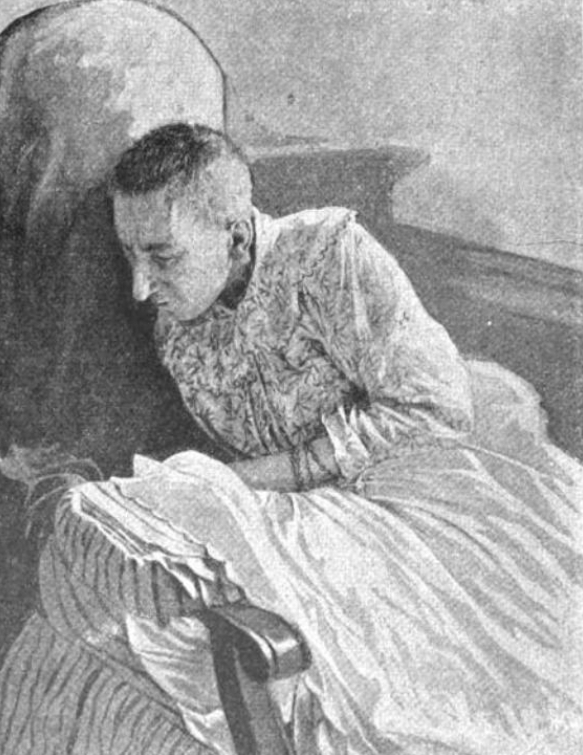
The case of Blanche Monnier became a touchstone for discussions on societal complicity, the limits of individual autonomy under familial power, and the role of the press in uncovering hidden abuses. Early 20th-century reports, such as those in French and international newspapers, were at times shaped by sensationalism or cultural bias, leading modern historians to carefully sift available evidence for the most accurate account.
Nobel laureate André Gide revived the story for new generations in his 1930 book La Séquestrée de Poitiers, changing only the characters’ names. More recently, Blanche’s ordeal has inspired numerous books, documentaries, and articles. While no major film adaptation has been produced—despite occasional rumors of a Netflix project—the Monnier case continues to captivate audiences who seek to understand how such an atrocity could unfold within the confines of family respectability.
The story also catalyzed debate within the fields of psychology, law, and gender studies, prompting closer scrutiny of domestic abuse and the fates of women who failed to conform to prescribed roles in their societies. Blanche’s story is invoked in contemporary France as a cautionary tale and a symbol of resilience in the face of unimaginable adversity. Her dignity and clarity of mind after release, as documented by medical professionals, served to underscore the capacity of the human spirit to endure oppression.
Ongoing Questions and Lessons
Despite countless analyses and retellings, questions about Blanche’s experience remain. Primary records and medical documents were often limited in scope or shaped by the prejudices and limitations of their time. The available facts, however, are chilling: a respected family, a lively young woman, years of silence from neighbors and acquaintances, and finally liberation through an act of anonymous bravery. The Monnier case is now studied in historical, psychological, and legal contexts to examine risk factors for hidden domestic abuses, methods of social denial, and the critical importance of outside intervention.
As such, the implications of Blanche Monnier’s ordeal have resonance beyond her own time and place, raising ongoing debates about individual agency, the responsibilities of bystanders, and the vigilance required to combat abuse and neglect even within the most esteemed homes.
Remembering Blanche Monnier
No single narrative can capture fully the suffering or complexity of Blanche Monnier’s life. Yet telling—and retelling—her story ensures her courage is not forgotten. It also serves as a call to remain attentive to the plights of those who are hidden or silenced, to question accepted narratives, and to strengthen legal and social protections for the vulnerable. In recounting the Monnier case, contemporary society both mourns a terrible injustice and acknowledges the ongoing duty to safeguard human dignity and freedom.
Sources
Disclaimer: This content is intended for entertainment purposes only and is not based on real events.