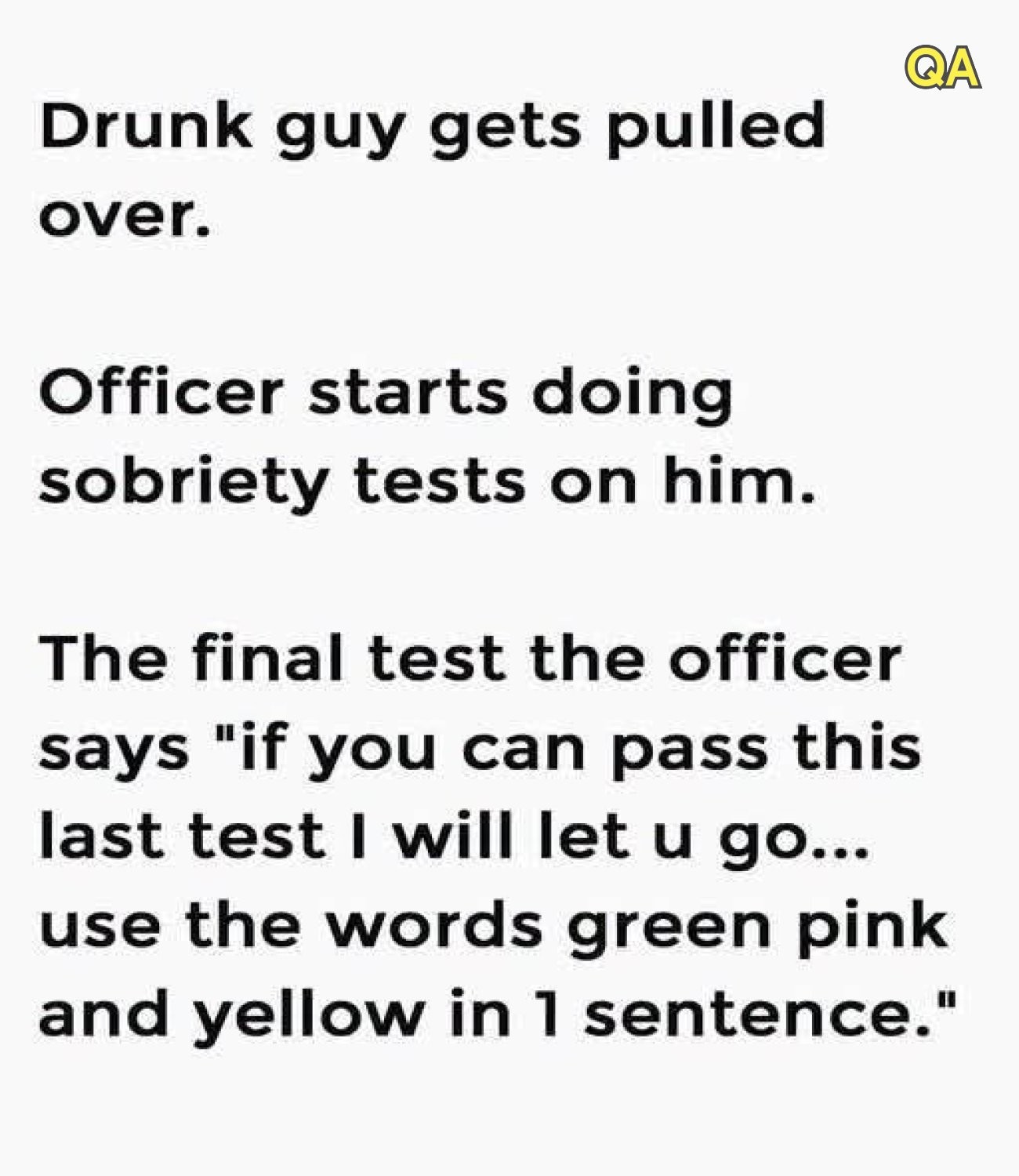
Note: The original story is a fictional joke. In real life, impaired driving is a serious public-safety issue with potentially life-changing consequences. This article uses the scenario as a starting point for an evidence-based discussion of alcohol impairment, traffic stops, and safer choices.
Why Impaired Driving Is Never a Joke
A fictional traffic-stop story may be written for humor, but driving after drinking alcohol is not a harmless situation. Alcohol can affect judgment, reaction time, vision, coordination, and the ability to assess risk. These effects can begin before a person feels noticeably intoxicated, which is one reason public-health agencies consistently advise people not to drive after drinking.
In the original scenario, a driver attempts to explain away swerving, delayed reactions, and difficulty completing simple tasks. While such scenes are common in entertainment, real roadside encounters are handled according to local laws, police procedures, and road-safety standards. Officers are trained to observe driving behavior and other indicators that may suggest impairment. However, legal processes and testing requirements differ by country, state, and jurisdiction.
The central lesson is straightforward: if alcohol, drugs, fatigue, or another condition may affect safe driving, the responsible option is to avoid getting behind the wheel. Planning transportation before drinking can protect the driver, passengers, pedestrians, cyclists, and other road users.
How Alcohol Affects Driving Ability
Alcohol is a depressant that affects the central nervous system. It does not affect every person in exactly the same way, but even relatively small amounts can reduce the skills needed for safe driving. The U.S. National Highway Traffic Safety Administration, commonly known as NHTSA, notes that alcohol can impair judgment, concentration, comprehension, coordination, and reaction time.
Driving requires a person to continuously process information: reading road signs, judging speed and distance, noticing changes in traffic flow, monitoring pedestrians, and responding to unexpected hazards. Alcohol can make these tasks more difficult. A driver may feel confident while becoming less capable of accurately evaluating their own performance.
Common effects that can interfere with driving include:
- Slower reactions to braking, traffic signals, and changing road conditions.
- Reduced ability to focus on more than one task at a time.
- Difficulty maintaining lane position and steady speed.
- Reduced visual function, including tracking moving objects.
- Overconfidence and poorer decision-making.
- Reduced coordination, balance, and attention.
These effects are especially concerning at night, when visibility is already lower and drivers must rely more heavily on concentration and quick responses. A quiet or nearly empty road is not automatically safe. Road conditions can change quickly, and a single unexpected event can require immediate action.
Understanding Blood Alcohol Concentration and Legal Limits
Blood alcohol concentration, or BAC, is a measurement of the amount of alcohol in a person’s bloodstream. In many jurisdictions, laws set a BAC limit for drivers. In the United States, the legal limit for most adult drivers is generally 0.08%, although lower limits may apply to commercial drivers, younger drivers, and people subject to specific licensing rules.
Legal limits should not be misunderstood as a guarantee of safety below a particular number. Impairment can occur at BAC levels below the legal threshold, and the amount of alcohol that affects a person varies depending on body size, biological factors, food intake, medications, drinking pace, and other circumstances. A person may also be legally impaired based on observed driving behavior or other evidence, even where a BAC result is not available.
There is no reliable way to calculate safety based solely on the number of drinks consumed. The idea that someone is “fine to drive” because they had only one or two drinks can be misleading. Coffee, cold showers, food, fresh air, and exercise do not quickly reverse alcohol impairment. Time is the only dependable way for the body to process alcohol.
What Happens During a Suspected Impaired-Driving Stop?
When law enforcement officers observe behavior that may indicate unsafe driving, such as swerving, failing to maintain a lane, unusually slow responses, or disregarding traffic rules, they may conduct a traffic stop in accordance with applicable laws. The purpose is to assess safety and determine whether further action is needed.
During a stop, an officer may ask for identification, vehicle documents, and basic information. They may also observe speech, coordination, eye movement, responsiveness, and the driver’s ability to follow instructions. Depending on the location and circumstances, the officer may request standardized field sobriety tests or a breath test. Procedures, consent rules, and consequences for refusing certain tests vary considerably by jurisdiction.
Field sobriety tests are not party tricks and should not be treated as entertainment. They are structured assessments used within a legal and investigative context. Medical conditions, injuries, age, footwear, road surfaces, lighting, language barriers, and other factors may influence performance. For this reason, evidence is evaluated under legal standards that can differ from one place to another.
For anyone stopped by police, the safest approach is to remain calm, be respectful, follow lawful instructions, and avoid making the situation more difficult. People should also understand their rights and responsibilities under the laws where they live or travel.
The Wider Social Cost of Drunk Driving
Impaired driving affects far more than the individual behind the wheel. Collisions can have lasting consequences for passengers, families, emergency workers, health-care providers, employers, and entire communities. Beyond injuries and loss of life, crashes can result in emotional trauma, lost income, legal expenses, insurance costs, and long-term rehabilitation needs.
Road-safety organizations around the world emphasize that impaired driving is preventable. Unlike unexpected mechanical failures or sudden weather changes, the decision to drive after drinking can often be avoided through advance planning. A designated driver, public transit, a licensed taxi, a ride-hailing service, or staying overnight are all safer alternatives.
Public attitudes have changed substantially over recent decades. Campaigns by governments, road-safety groups, schools, and health organizations have helped make clear that driving after drinking is not simply a personal risk. It is a community concern because every road user depends on others making safe choices.
Why Excuses Do Not Reduce Risk
In fictional stories, an impaired driver may blame the road, the weather, tiredness, or bad luck. In reality, these explanations do not change the underlying safety problem. A road may be uneven, a driver may indeed be tired, or visibility may be poor, but alcohol can intensify the danger of each of those conditions.
Fatigue and alcohol are particularly risky together. Both can reduce attention and slow reactions. Similarly, mixing alcohol with certain prescription medications, over-the-counter drugs, or other substances can increase impairment. The U.S. Centers for Disease Control and Prevention advises people to consult a health-care professional or pharmacist about interactions between alcohol and medications.
Social pressure can also play a role. Someone may worry about leaving their car, inconveniencing friends, spending money on transportation, or appearing overly cautious. These short-term concerns are small compared with the potential consequences of an unsafe drive. A supportive friend will respect the decision not to drive.
Practical Ways to Prevent Impaired Driving
The best prevention begins before the first drink. Making a transportation plan early removes the pressure of deciding what to do at the end of a night out. Individuals and groups can use several practical strategies:
- Choose a designated driver who will not drink alcohol.
- Use public transportation, taxis, or reputable ride-hailing services where available.
- Arrange for a trusted friend or family member to provide a ride.
- Stay overnight if it is safe and practical to do so.
- Keep emergency transportation funds available.
- Do not ride with a driver who may be impaired.
- Offer a nonjudgmental alternative when a friend is considering driving after drinking.
Hosts can also help reduce risk. Providing non-alcoholic drinks, encouraging guests to arrange rides, offering space for guests to stay overnight, and checking that people have a safe way home are practical steps. These measures are not about policing others; they are about creating an environment where safe decisions are easier to make.
A Responsible Ending to the Story
The fictional line about using colors in a sentence is meant as wordplay, but real impaired-driving situations should end differently. A responsible ending is one in which the person does not continue driving, gets home safely through another option, and has an opportunity to reflect on the decision without anyone being harmed.
Alcohol-related driving risks are preventable, and the most effective message remains simple: if you drink, do not drive. If you plan to drive, do not drink. That choice protects not only the person making it, but also everyone else sharing the road.
Sources
- National Highway Traffic Safety Administration: Drunk Driving
- Centers for Disease Control and Prevention: Impaired Driving
- World Health Organization: Road Traffic Injuries
- National Institute on Alcohol Abuse and Alcoholism: Alcohol’s Effects on the Body
- U.S. Department of Transportation: Road Safety
Disclaimer: This content is intended for entertainment purposes only and is not based on real events.