This story is presented as a personal reflection. The broader discussion below draws on established health guidance about illness, emotional wellbeing, caregiving, and communication in close relationships.
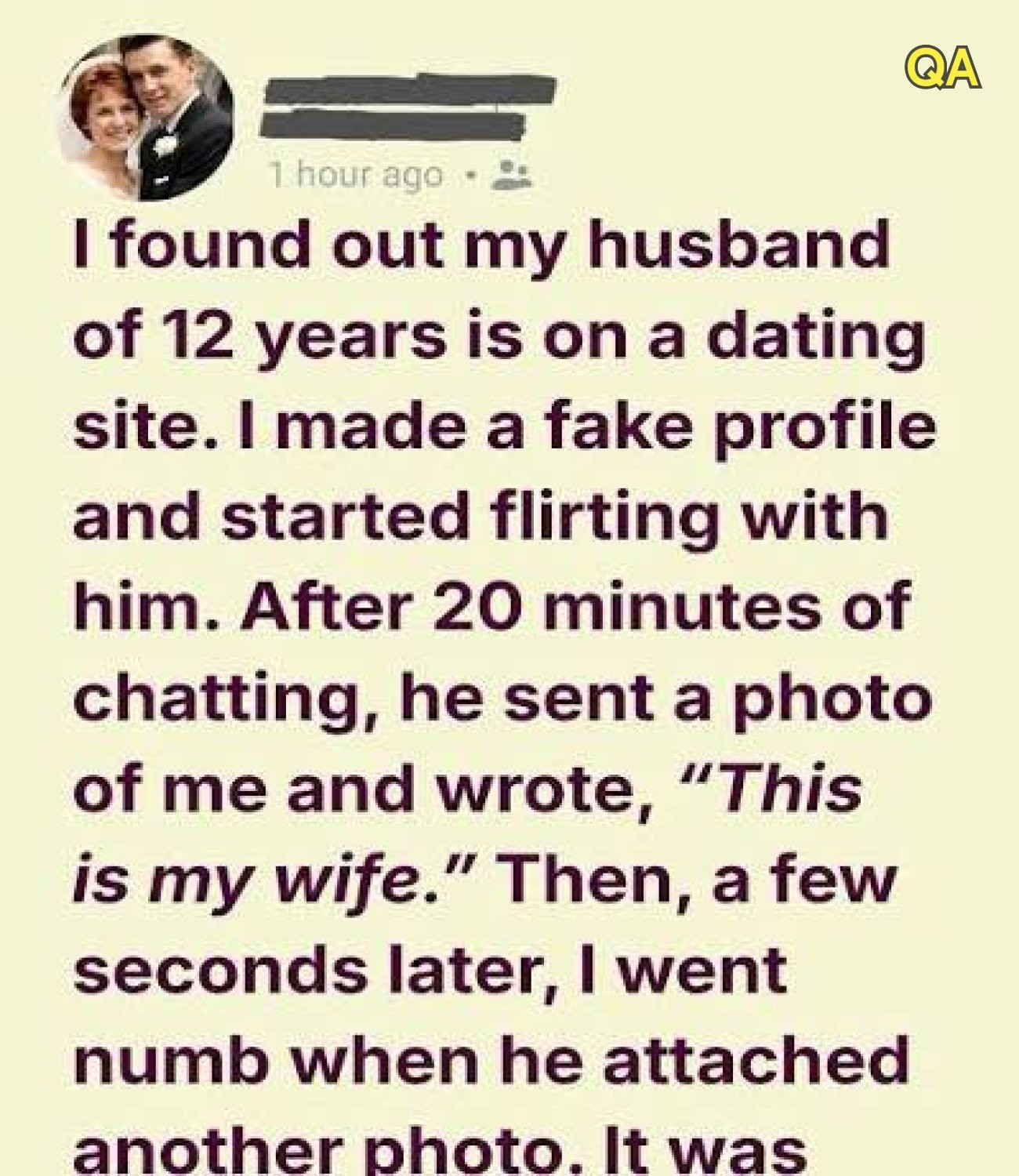
At 11:42 p.m. on an ordinary Tuesday, I came across something that seemed to confirm the fear I had quietly carried for months: my husband appeared to have a dating profile.
I had not been looking for evidence of betrayal. I was simply awake, scrolling without much purpose, unable to settle after another long day shaped by appointments, recovery, fatigue, and the lingering emotional weight of illness. Two years of treatment and surgeries had changed my routines, my energy, and perhaps most painfully, the way I saw myself.
Then I saw his name.
His photograph.
Details that sounded unmistakably familiar: favorite books, an enthusiasm for cooking on Sunday mornings, and a self-deprecating joke about burnt pancakes. It did not look like a stranger impersonating him. It looked like my husband.
For a moment, the discovery felt like another loss waiting to happen. I wondered whether the person beside me through difficult appointments and anxious nights had been living a separate life online. After 12 years of marriage, I feared I had become someone too exhausted, too changed, or too difficult to love.
Those thoughts can be especially powerful during serious illness. Changes in appearance, physical ability, independence, work, intimacy, and daily roles can affect a person’s self-image. Health organizations and support services consistently recognize that emotional distress can accompany medical treatment, and that patients may experience anxiety, sadness, isolation, or a reduced sense of self-worth. These feelings are real, even when loved ones remain devoted and present.
When Illness Changes More Than the Body
A major health condition can reshape a relationship in ways that are difficult to explain from the outside. The person receiving care may feel guilty about needing help. The partner providing support may feel worried, overwhelmed, or uncertain about how to help without taking away the other person’s independence. Both people may be trying to protect each other while avoiding painful conversations.
That emotional distance does not necessarily mean that love has faded. Often, it reflects stress, fear, and exhaustion. The World Health Organization notes that mental health is closely connected to overall health, while medical organizations including the Mayo Clinic emphasize that caregiving can carry significant emotional and practical demands. Families facing illness may benefit from recognizing that distress is not a personal failure. It is a human response to a demanding situation.
Still, suspicion can make uncertainty feel unbearable. I wanted clarity. I wanted to know whether my fears were justified.
So I created a simple profile and sent a brief message.
He replied quickly. At first, the conversation seemed ordinary: polite, warm, and familiar in the way he asked questions. That familiarity hurt. I expected the exchange to become proof that I had been right to fear the worst.
Instead, after a short conversation, he sent a photograph.
It was a picture of me from years earlier, laughing outdoors with sunlight on my face. It was not an image of the person I believed I had become after hospital corridors, difficult recoveries, and endless worry. It was a reminder of a version of myself I had begun to think was gone.
Then came his explanation.
He was not seeking a new relationship. In the story he had created online, he had described his wife’s illness, her struggle with feeling like a burden, and his wish to help her feel valued again. He had been asking people for ideas about how to support a loved one whose confidence had been damaged by illness and treatment.
Support, Self-Worth, and the Need to Be Seen
What I found was not a secret romantic life. It was a collection of messages from people who had experienced caregiving, recovery, bereavement, or serious illness. Some suggested simple daily affirmations. Others recommended recognizing small milestones, preserving routines where possible, and listening without immediately trying to solve every problem. A few stressed the importance of professional counseling or support groups when fear and sadness become too difficult to manage alone.
These ideas align with common guidance from health and patient-support organizations. Emotional support is not a substitute for medical or mental health care, but it can help people feel less alone. Supportive relationships may include practical assistance, open conversation, patience, respect for autonomy, and encouragement to seek professional help when needed.
The most meaningful part was that he had saved the messages. He had been gathering words of encouragement, not because he believed strangers could fix everything, but because he wanted to find a way to reach me when his own reassurance did not seem enough.
I had spent so much time focusing on what illness had taken away that I had not noticed the quiet ways he was trying to give something back.
It is important not to romanticize silence or private worry. In real relationships, secrecy around online activity can understandably cause concern, and people deserve honesty, respect, and clear boundaries. If someone discovers a partner’s dating profile or has reason to believe trust has been broken, a calm and direct conversation is generally healthier than relying on assumptions, hidden accounts, or prolonged surveillance.
But this experience reminded me that appearances can be incomplete. A single online profile can carry very different meanings depending on context. The healthiest next step is usually communication: asking questions, sharing feelings without accusation, and agreeing on boundaries that protect both people.
Why Couples Need Honest Conversations During Health Crises
Serious illness can make ordinary conversations feel harder. A patient may avoid discussing fear because they do not want to upset their partner. A spouse may hide their own stress because they do not want to add to the patient’s burden. Over time, both people can feel alone despite living in the same home.
Experts often encourage couples and families to discuss practical needs as well as emotional ones. These conversations can include appointment schedules, finances, household responsibilities, changing levels of independence, physical affection, privacy, and mental health support. They can also include a direct question that many people hesitate to ask: “How are you really coping?”
There is no perfect script. Some people find it easier to speak during a walk, in the car, or after a medical appointment. Others prefer writing a note or speaking with a counselor present. The point is not to force optimism. It is to create room for honesty.
Caregivers should also be allowed to acknowledge their own needs. The Centers for Disease Control and Prevention and other public health bodies have highlighted the importance of caregiver wellbeing. Rest, respite, support groups, trusted friends, and professional advice can help caregivers sustain the role without losing their own health and identity.
Likewise, people receiving treatment should not be expected to prove gratitude by minimizing their pain. Needing care does not make someone a burden. Illness is not a moral failing, and dependence during recovery is not the opposite of dignity. Healthy support respects the person’s choices, listens to their preferences, and recognizes that they remain more than a diagnosis.
A Quiet Moment of Reassurance
After reading the messages, I put down my phone and sat in silence. The feelings that followed were complicated. There was relief, but also sadness for the months I had spent believing I was less lovable because I was unwell.
I found him in the living room, where he was reading beneath the light of a small lamp. He looked up and asked whether I could not sleep.
I sat beside him and leaned against his shoulder. It was a familiar gesture, but it felt different then. That shoulder had been present through difficult nights, uncertain news, recovery, and silence. Without asking for an explanation, he put an arm around me.
“You’re already doing everything right,” I told him.
He looked confused, and I did not explain immediately. I simply thanked him.
That moment did not erase the challenges of illness. It did not make fear disappear forever, and it did not solve every communication problem that can arise in a long relationship. But it gave me a clearer view of something I had struggled to believe: love can remain steady even when life, health, and self-image change dramatically.
Building Trust and Compassion After a Difficult Discovery
For anyone facing a similar situation, it may help to pause before reaching conclusions. A dating profile or unexpected online activity can be upsetting, and trust concerns deserve to be taken seriously. At the same time, a direct conversation is usually more reliable and more respectful than guessing at motives.
Try to begin with specific observations and personal feelings. For example: “I found something online that worried me, and I need to understand what it means.” This approach is less likely to make the other person defensive than an immediate accusation. Listen carefully, ask follow-up questions, and be honest about what you need in order to feel safe and respected.
If the conversation reveals deeper conflict, couples counseling may offer a structured setting for both partners. If illness, grief, depression, anxiety, or caregiver strain is affecting daily life, a doctor, mental health professional, hospital social worker, or patient-support organization may be able to help. Support is not limited to a crisis; it can be useful whenever people feel stuck, isolated, or unable to communicate clearly.
The central lesson is not that people should ignore warning signs. It is that compassion and clarity can coexist. Trust is strengthened not by pretending difficult feelings do not exist, but by addressing them with honesty, boundaries, and care.
That night, I stopped seeing myself only through the lens of what illness had changed. I remembered that being loved does not depend on being endlessly strong, cheerful, independent, or unchanged. Sometimes love is visible in grand declarations. More often, it appears in quieter forms: a late-night light left on, a hand held at an appointment, a meal prepared without being asked, or a determined effort to remind someone that they still matter.
For the first time in a long time, I did not feel like a burden. I felt like a person worthy of patience, support, and love.
Sources
Disclaimer: This content is intended for entertainment purposes only and is not based on real events.