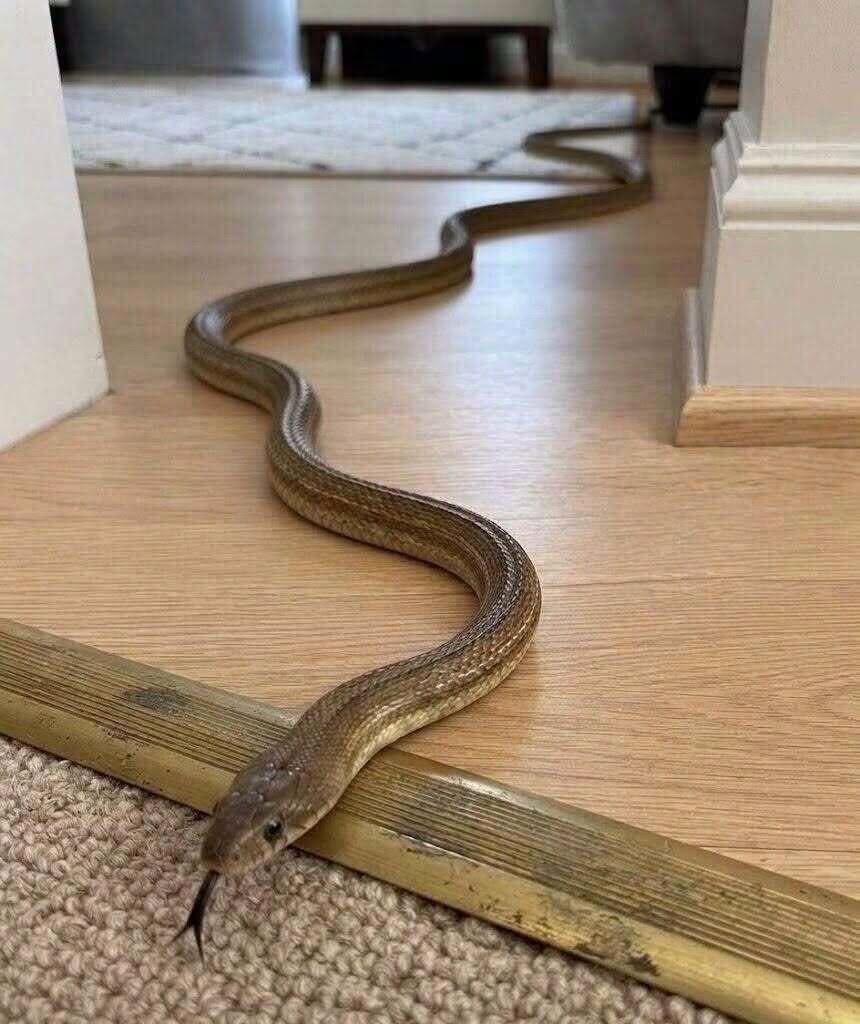
Finding a Snake in Your Home Can Be Frightening. Here Is How to Respond Safely
Imagine walking into your kitchen early in the morning, only to notice something moving near the cabinets. At first, you might think it is a piece of string or a shadow. Then you look closer and realize it is a snake.
For many homeowners, this is the kind of surprise they never expect to experience. Even a small snake can cause immediate panic, especially when it appears in a place where children, pets, and family members should feel safe.
However, the most important thing to remember is simple: Do not approach the snake or attempt to remove it yourself.
Although some snakes can be dangerous, many prefer to avoid people and will try to escape when given the opportunity. A snake entering a house does not necessarily mean it is searching for a confrontation. It may simply be looking for food, shelter, or a suitable place to hide.
Understanding why snakes enter homes and knowing how to respond can help prevent an unexpected encounter from becoming a dangerous situation.
Why Would a Snake Enter Your House?
Snakes do not usually enter buildings without a reason. Like other wild animals, they search for places that provide the conditions they need to survive.
Food is one possible attraction. Mice, rats, frogs, lizards, and insects can provide a convenient food source for different snake species. If a property has a rodent problem, it may also attract predators that feed on those animals.
This is why homeowners sometimes discover snakes near garages, storage areas, kitchens, gardens, or other places where pests may be present.
Shelter is another important reason. Snakes may seek out dark, quiet spaces where they can remain undisturbed. Areas beneath furniture, inside storage rooms, behind appliances, and around cluttered corners can provide places to hide.
Temperature and weather conditions can also influence animal movement. Depending on the species and local climate, a snake may seek a cooler, shaded area during hot conditions or a sheltered location when the weather becomes unfavorable.
In many cases, the animal simply finds an opening and follows it into a space that offers food or protection.
How Do Snakes Get Inside a House?
Homeowners often assume that doors and windows are the only possible entry points. In reality, snakes can use surprisingly small openings, depending on their body size and flexibility.
Common access points include gaps beneath exterior doors, damaged window screens, openings around plumbing pipes, spaces near utility lines, ventilation openings, and cracks in foundations.
Garages and storage buildings deserve particular attention. Their doors may not close tightly, and boxes, equipment, and stored materials can create sheltered spaces where animals can hide.
Outdoor areas can also provide a route toward the house. Overgrown plants touching exterior walls, piles of leaves, stacked bricks, and wood stored close to the building may offer shelter for snakes and the smaller animals they hunt.
Inspecting these areas regularly can help homeowners identify potential problems before an animal finds its way indoors.
What Should You Do If You Find a Snake Inside?
The first few moments after discovering a snake are important. Fear may cause someone to grab a broom, throw an object, or move closer to get a better look. Unfortunately, these reactions can increase the risk of a bite.
A safer response involves giving the animal space and allowing trained professionals to handle the situation when necessary.
1. Stay Calm and Move Away Slowly
Your first reaction may be to run toward the snake, chase it away, or try to block its movement. Avoid doing this.
Instead, maintain a safe distance and slowly move away. Do not touch, corner, chase, or attempt to capture the animal.
Snakes may bite when they feel threatened or trapped. Giving them room to move can reduce the likelihood of a defensive reaction.
If you cannot identify the species, treat it as potentially venomous. Never assume that a snake is harmless because it looks small, has an unusual color, or appears calm.
2. Keep Children and Pets Away
Children may be curious about the animal, while dogs and cats may instinctively approach or chase it.
Both situations can create additional danger.
Move children and pets away from the area without approaching the snake. If possible, keep everyone in another room or outside the affected area.
Do not allow anyone to stand nearby and watch from a short distance. Even an animal that appears motionless should be left alone.
3. Contact a Qualified Wildlife Professional
If the snake is inside your home and cannot safely leave on its own, contact a local wildlife rescue organization, animal-control service, or trained snake-removal professional.
Avoid attempting to catch it with your hands, a stick, a broom, or improvised equipment. Even people who have watched snake-removal videos may not have the training needed to identify or handle an unfamiliar species safely.
If you can observe the animal from a safe distance without moving closer, details such as its approximate size, color, and location may help professionals prepare for the situation. A photograph should only be taken if it can be done safely from where you already are.
4. Avoid Trapping Yourself or Others Near the Snake
Do not block the animal’s movement by standing in front of it or surrounding it with furniture.
If you can safely keep people away from the affected area without approaching the snake, do so. Follow the instructions of the local wildlife professional about whether exterior doors or windows should be opened to provide an escape route.
Avoid entering the room again simply to check whether the snake has disappeared. If it moves out of sight, tell the professional where you last saw it rather than searching behind furniture or inside storage spaces yourself.
5. Seek Medical Attention Immediately if Someone Is Bitten
A snake bite should always be treated seriously, especially when the species is unknown.
Move away from the snake and seek emergency medical care immediately. Do not attempt to catch or kill the animal before getting help.
Avoid cutting the wound, sucking out venom, applying ice, or using a tight tourniquet. Follow emergency medical guidance and try to remember the snake’s appearance from a safe distance if possible.
Quick access to appropriate medical treatment is more important than identifying the animal yourself.
What Attracts Snakes to Your Property?
Once the snake has been safely removed or has left the area under professional guidance, it is worth examining why it appeared in the first place.
One of the most important factors is the presence of prey animals.
Rodents, frogs, lizards, and insects can attract different snake species. Uncovered garbage, food scraps, pet food left outdoors, and poorly maintained storage areas may encourage pests to gather around a property.
Wood piles and outdoor clutter are another concern. Stacked boards, unused containers, rocks, bricks, and piles of leaves can provide sheltered spaces for small animals. They may also become hiding places for snakes.
Tall grass and dense vegetation can make it harder to notice wildlife moving around the yard. Keeping these areas maintained can improve visibility and reduce the number of places where snakes can remain hidden.
The goal is not to eliminate every wild animal from the surrounding environment. Snakes play an important role in controlling certain pest populations. Instead, homeowners should reduce the conditions that make their buildings and immediate surroundings attractive places for snakes to hide or hunt.
Practical Ways to Keep Snakes Out of Your Home
Preventing another encounter begins with a careful inspection of the property. Small improvements can make a meaningful difference, especially when combined with good pest management.
Seal Gaps Around Doors, Windows, and Pipes
Inspect the exterior of your home for openings that could allow wildlife to enter.
Pay particular attention to gaps beneath doors, damaged window screens, foundation cracks, ventilation openings, and spaces around plumbing or electrical lines.
Install appropriate door sweeps, repair damaged screens, and use suitable materials to seal openings. Larger gaps may require professional repairs to ensure that they are properly closed without interfering with ventilation or drainage.
Remember that sealing entry points can also help prevent rodents from entering. This is useful because fewer rodents may mean fewer potential food sources for snakes.
Keep the Yard Clean and Organized
Outdoor clutter creates opportunities for animals to hide.
Remove unnecessary piles of leaves, unused containers, discarded building materials, and other debris from areas close to the house.
If you store firewood, keep it away from exterior walls and arrange it neatly. Avoid placing bricks, rocks, or boards directly against the foundation when they are not needed.
Trim shrubs and ground vegetation regularly, particularly around entrances, pathways, and the edges of buildings.
A tidy yard does not guarantee that snakes will never appear, but it can reduce the number of suitable hiding places around your property.
Control Rodents and Other Pests
Because many snakes feed on smaller animals, managing pest populations is an important part of prevention.
Store food in sealed containers, clean up food scraps, secure garbage bins, and avoid leaving pet food outside overnight.
Check garages, kitchens, storage rooms, and other areas for signs of rodent activity. If you notice droppings, damaged packaging, or other evidence of an infestation, consider contacting a qualified pest-control professional.
Avoid using unsafe or excessive pest-control products. Choose methods appropriate for your home, pets, children, and local environment.
Maintain Doors, Windows, and Outdoor Structures
A damaged screen or poorly fitted garage door can create an easy access point.
Check that doors close properly and that there are no large gaps along their edges. Repair broken window screens and inspect vents, sheds, and other outdoor structures.
Garages should receive special attention because they often contain boxes, tools, equipment, and materials that remain undisturbed for long periods.
Keep stored items organized and avoid leaving unnecessary clutter on the floor. This makes it easier to notice signs of unwanted animal activity.
Be Careful When Working Outdoors
Some encounters happen when people move materials that have been left undisturbed for weeks or months.
Before handling firewood, moving garden pots, clearing thick vegetation, or reaching into storage spaces, inspect the area carefully from a safe position.
Wear suitable footwear and gloves when doing ordinary yard work, but remember that protective clothing does not make it safe to handle a snake.
If you discover one while gardening or cleaning, stop working and give it space.
Do Snake Repellents Actually Work?
Homeowners sometimes look for quick solutions such as strong-smelling chemicals, mothballs, or homemade mixtures advertised as snake repellents.
However, these products should not be treated as reliable protection.
The effectiveness of many commercial and homemade snake repellents is not well established. Some substances can also create unnecessary risks for children, pets, and other wildlife.
A more practical approach is to focus on exclusion and habitat management. Seal openings, reduce clutter, maintain vegetation, and address rodent problems.
These steps target the conditions that may attract snakes rather than relying on a product that promises to drive every snake away.
Why Staying Calm Can Make All the Difference
Finding a snake inside your home can be an unsettling experience, particularly when you have never encountered one before.
But panic rarely improves the situation.
A snake is a wild animal, not an intruder that understands the boundaries of a house. It may have entered by following a food source, looking for shelter, or simply moving through an accessible opening.
When people attempt to attack or capture it, they may unintentionally make the animal feel trapped. That can increase the risk of defensive behavior and create danger for everyone nearby.
Keeping a safe distance, protecting children and pets, and contacting a trained professional are usually the most responsible steps.
The experience can also serve as a reminder to examine the condition of your home. A small gap beneath a door, an unsecured vent, or an untreated rodent problem may be worth addressing before another animal finds its way inside.
A Safer Home Starts With Prevention
A snake appearing inside your house does not automatically mean that your property is unsafe or that the animal is aggressive. In many situations, it is simply looking for food, shelter, or a quiet place to hide.
Still, an unfamiliar snake should never be approached or handled casually. Some species can be venomous, and identifying them incorrectly can have serious consequences.
If you discover one indoors, move away, keep children and pets clear, and contact a qualified local professional when removal is needed. If someone is bitten, seek emergency medical care immediately.
After the encounter, inspect possible entry points, repair damaged screens, seal appropriate gaps, remove unnecessary outdoor clutter, and address any pest problems.
These practical habits cannot guarantee that a snake will never visit your property again. However, they can make your home less attractive to unwanted wildlife and help your family respond more confidently if another unexpected visitor appears.