
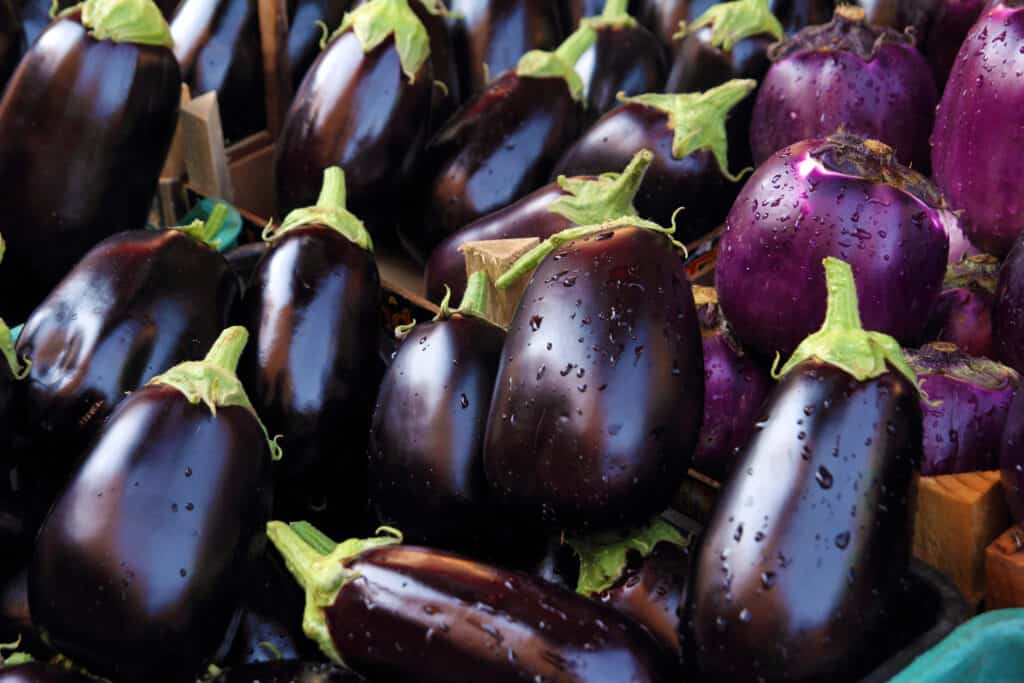
Eggplant is one of the most recognizable foods in produce departments and home kitchens. Its glossy purple skin and broad, rounded shape are familiar in dishes ranging from Italian-style baked eggplant to Middle Eastern dips, South Asian curries, and East Asian stir-fries. Yet its English name can seem puzzling. Most of the eggplants commonly sold in supermarkets do not look much like eggs.
The explanation lies in the remarkable diversity of the plant. Certain cultivated eggplant varieties produce small, smooth, white fruits that closely resemble chicken eggs while they are growing on the plant. These pale, oval varieties helped inspire the name “eggplant,” a term that became especially widespread in North American English.
The familiar purple eggplant is only one form of a plant with a long agricultural history and a wide range of colors, shapes, sizes, and culinary uses. Known scientifically as Solanum melongena, eggplant is both botanically interesting and culturally significant. It is technically a fruit, is part of the nightshade family, and has been cultivated across Asia and beyond for centuries.
Why Is It Called an Eggplant?
Eggplant received its English name because some varieties look strikingly similar to eggs. The fruits of these varieties are usually small, rounded or oval, and white or creamy ivory in color. Hanging among green leaves, they can resemble clusters of chicken eggs placed on a garden plant.
Historical references to eggplants describe a diverse crop rather than a single standardized vegetable. Although dark purple varieties are now prominent in many Western grocery stores, growers have long cultivated eggplants that are white, green, yellowish, lavender, striped, elongated, round, or tiny and pea-sized. The white, egg-shaped types made a particular impression on English-speaking observers and helped establish the common name still used today.
Language varies by region. In the United Kingdom, Ireland, Australia, and parts of Europe, eggplant is commonly called aubergine, a word that entered English through French and ultimately has roots in older terms used across the Mediterranean and Asia. In India, Pakistan, Bangladesh, and other parts of South Asia, it is widely known as brinjal. These names reflect the plant’s long journey through different languages, trade routes, and food traditions.
White Eggplants Are Natural Varieties, Not Unripe Purple Eggplants
White eggplants are genuine cultivated varieties of Solanum melongena. Their pale color is determined by the genetics of the cultivar, not by an artificial coating or an early stage of a purple eggplant’s development. Like purple varieties, white eggplants develop from flowers and produce seeds inside their fleshy fruit.
Some white types are nearly round and egg-sized, while others are large, long, or pear-shaped. Their skin can be bright white, off-white, or lightly creamy. A gardener may also encounter varieties with green-and-white striping, purple-and-white stripes, or pale lavender skin. This variation is the result of generations of cultivation and selection for regional growing conditions, preferred textures, storage qualities, and culinary traditions.
Eggplants belong to the Solanaceae family, commonly known as the nightshade family. This large plant family also includes tomatoes, peppers, potatoes, and tobacco. Although these plants are related botanically, they are grown and used in very different ways. Eggplant should be eaten when properly prepared as a food crop, as is customary in cuisines around the world.
Is Eggplant a Fruit or a Vegetable?
In botanical terms, eggplant is a fruit. More specifically, it is classified as a berry because it develops from the ovary of a flower and contains seeds in its interior. This scientific definition differs from the everyday culinary use of the word “fruit.”
In the kitchen, eggplant is treated as a vegetable because it is usually served in savory dishes. The same distinction applies to tomatoes, peppers, cucumbers, and zucchini. Botanists classify fruits according to plant structure and reproduction, while cooks often classify ingredients according to flavor, texture, and how they are used in a meal.
This dual identity helps explain why eggplant can be both scientifically described as a berry and practically described as a vegetable. Neither description is misleading when the context is clear. For shopping, cooking, and meal planning, eggplant belongs with vegetables. For plant science, it is a fruit.
What Do White Eggplants Taste Like?
White eggplants can be used in many of the same recipes as purple eggplants. Their flavor is often described as mild, subtle, and slightly sweet, though the taste and texture depend on the specific variety, growing conditions, freshness, and maturity at harvest.
Some cooks report that particular white varieties seem less bitter than older, oversized purple eggplants. However, skin color alone does not determine bitterness. Modern purple cultivars are often bred for mild flavor, and any eggplant can develop less appealing texture or stronger flavor if it is allowed to become overmature. Younger, firm fruits generally have fewer developed seeds and a more tender texture.
When selecting eggplant, look for fruit that feels firm and heavy for its size, with unbroken skin and a fresh-looking green cap, called the calyx. Avoid eggplants with soft spots, deep wrinkling, or signs of decay. Because eggplants are sensitive to cold injury, they are generally best stored briefly and used soon after purchase.
How to Cook White and Purple Eggplant
White eggplants are versatile and can usually replace purple eggplants directly in a recipe. They may be roasted, grilled, sautéed, baked, steamed, stuffed, or added to soups, stews, curries, and casseroles. Their flesh becomes soft and creamy with cooking, while high-heat methods such as roasting and grilling can create deeper, caramelized flavors.
For a simple roasted preparation, wash the eggplant, remove the stem, and cut it into slices, wedges, or cubes. Toss the pieces with a modest amount of oil and seasonings, then roast until tender and lightly browned. Eggplant absorbs oil readily, so measured use of oil and sufficiently high cooking heat can help produce a pleasant texture without making the dish overly rich.
Smaller white eggplants are particularly useful for stuffing or roasting whole. Larger types work well in layered baked dishes, vegetable curries, ratatouille-style recipes, and grilled platters. In many cuisines, salting sliced eggplant before cooking is used to draw out moisture. This step is optional for many modern varieties, but it can be helpful when a recipe calls for a firmer texture or when using a larger, more mature fruit.
Eggplant Nutrition and Its Place in a Balanced Diet
Eggplant is a low-calorie food that provides dietary fiber and small amounts of several vitamins and minerals. According to nutrition data from the U.S. Department of Agriculture, plain cooked eggplant is largely water and contains fiber, potassium, and other nutrients. Its exact nutritional profile changes depending on portion size and cooking method.
The deep purple color of many eggplants comes from naturally occurring plant pigments called anthocyanins. These compounds are found in a range of purple, blue, and red plant foods. A varied eating pattern that includes vegetables, fruits, legumes, whole grains, and other minimally processed foods is widely recommended by public health and nutrition organizations.
How eggplant is prepared matters nutritionally. Roasting, grilling, steaming, and sautéing with moderate amounts of oil can fit easily into balanced meals. Deep-fried dishes can also be enjoyed as part of varied eating patterns, but they typically contain more added fat and calories. Pairing eggplant with beans, lentils, whole grains, lean proteins, herbs, and other vegetables can create satisfying meals with a broad range of nutrients.
A Long History of Eggplant Cultivation
Eggplant has been cultivated in Asia for a very long time, with its domestication history linked particularly to South and Southeast Asia. Botanical and historical research indicates that the crop’s development involved multiple wild relatives and long-term selection by farmers. Over centuries, cultivation and trade helped move eggplant westward through the Middle East and Mediterranean region and eventually into Europe and the Americas.
As eggplant traveled, agricultural communities selected plants that suited local climates and cooking preferences. This is why the crop now appears in so many distinct forms. Long, narrow Japanese and Chinese types are often suited to quick cooking. Small round varieties are common in several South Asian and Southeast Asian dishes. Large globe eggplants are widely available in North American and European markets, while compact white varieties remain popular with specialty growers and home gardeners.
Eggplant’s international presence can be seen in the many dishes built around it. Examples include baba ghanoush and related roasted eggplant dips from the Middle East; Mediterranean vegetable stews; Italian eggplant dishes; Turkish stuffed preparations; Indian baingan recipes; Chinese eggplant dishes; and Japanese grilled eggplant. Each preparation uses the fruit’s ability to absorb seasonings and develop a soft texture when cooked.

Why Purple Eggplants Became the Supermarket Standard
Large purple eggplants became especially familiar in many supermarkets because they are visually distinctive, widely grown, and suitable for numerous recipes. Their consistent appearance also makes them easy for shoppers to identify. However, their dominance in retail displays does not mean they are the only traditional or authentic form of eggplant.
Commercial supply chains tend to favor varieties that travel well, meet expected size and appearance standards, and match consumer demand in a given region. Farmers’ markets, specialty grocers, seed catalogs, and home gardens often reveal a wider range of eggplants than standard supermarket selections. White, striped, green, tiny round, and long slender types all demonstrate the crop’s considerable diversity.
Can You Grow White Eggplant at Home?
White eggplants can be grown using methods similar to those used for purple varieties. They prefer warm weather, full sun, fertile soil with good drainage, and regular watering. Because eggplants are sensitive to frost and grow best in warm conditions, gardeners in cooler regions often start seeds indoors and transplant young plants after the risk of frost has passed.
Plants benefit from adequate spacing for air circulation and may need support when heavily laden with fruit. Gardeners should monitor for common pests and plant diseases, follow local gardening guidance, and use appropriate integrated pest management practices where possible. Harvesting fruits while they are firm, glossy, and at the recommended size for the cultivar generally supports the best eating quality.
For families and school gardens, white eggplants can be an engaging way to connect plant science with food history. Seeing small white fruits on a living plant makes the origin of the word “eggplant” immediately understandable.
The Meaning Behind a Familiar Name
The name eggplant is not as strange as it first appears. It is a practical description rooted in the appearance of particular white, egg-shaped varieties of Solanum melongena. Although deep purple globe eggplants now dominate many produce aisles, they represent only one part of a diverse crop with a long history across continents and cuisines.
Whether it is called eggplant, aubergine, or brinjal, this botanical fruit remains an adaptable ingredient and an important example of agricultural diversity. White eggplants offer a direct reminder of the origin of the English name, while purple, striped, green, and slender varieties show how much variation can exist within one cultivated species.
Sources
Disclaimer: This content is intended for entertainment purposes only and is not based on real events.