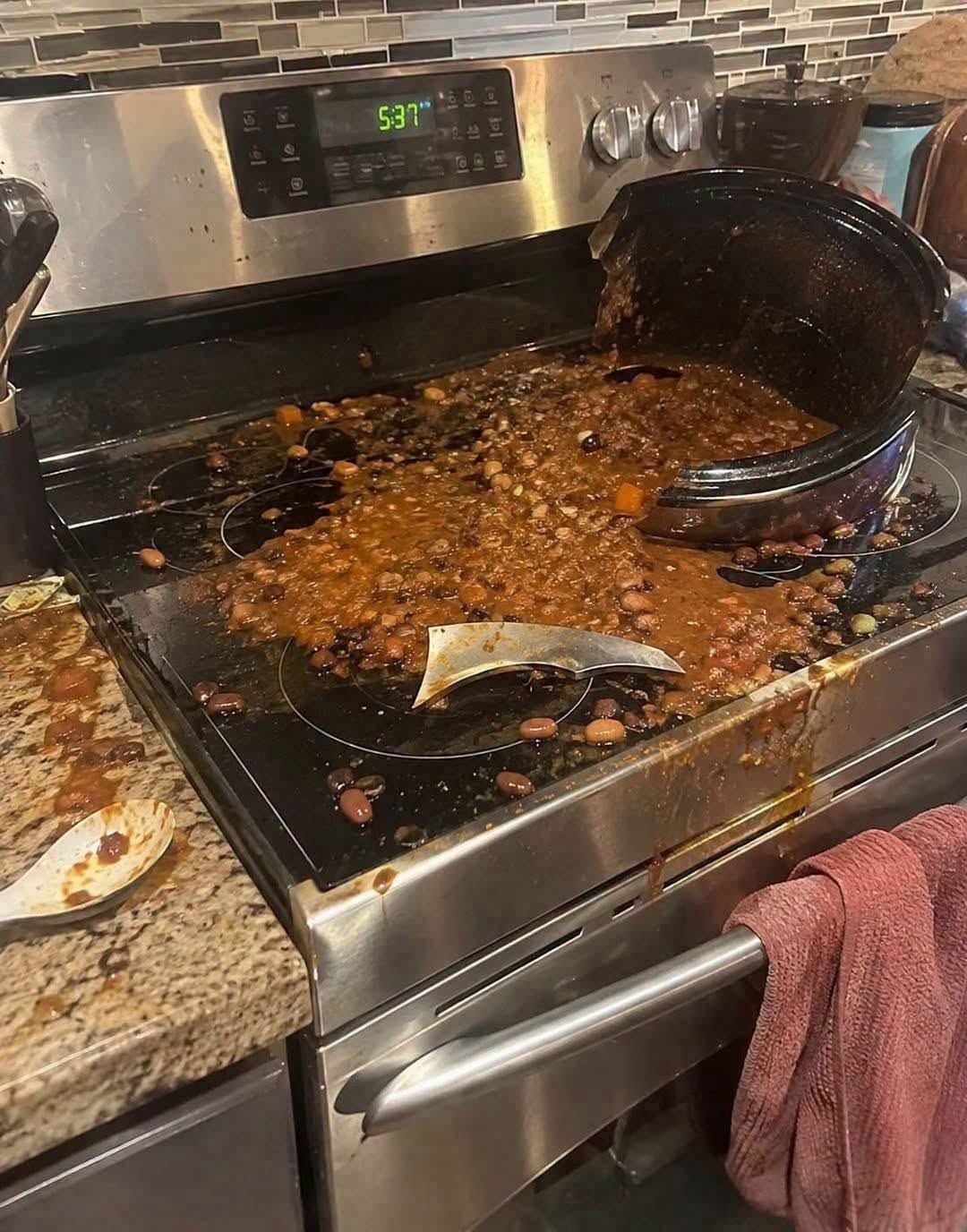
A slow cooker is one of the most convenient appliances in the kitchen. It allows home cooks to prepare comforting meals with minimal effort, making it especially useful on busy weekdays. But there is one common cooking shortcut that can turn an ordinary dinner into a dangerous situation: placing a removable slow cooker insert directly on a stovetop burner.
At first glance, the ceramic or stoneware insert may look just like a traditional cooking pot. It is heavy, sturdy, and designed to withstand hours of heat. However, that does not automatically mean it can handle direct heat from a gas or electric burner.
Using the wrong type of insert on a stovetop can cause it to crack or break unexpectedly, potentially spilling hot food and creating a risk of burns. Understanding how slow cookers are designed to work can help prevent an avoidable kitchen accident.
Why Slow Cooker Inserts Are Not Always Stovetop-Safe
Traditional slow cookers typically use a removable ceramic or stoneware insert that sits inside an electrical heating base.
The appliance is designed to warm the insert gradually, allowing heat to spread through the cooking vessel over an extended period. This controlled heating process is very different from placing a pot directly over a burner.
A stovetop produces concentrated heat in a relatively small area. When the bottom of a ceramic insert becomes much hotter than the surrounding material, uneven expansion can create stress within the cookware.
This phenomenon is known as thermal shock.
Depending on the material, construction, condition, and temperature difference, the resulting stress can cause cracks or even sudden breakage. If the insert contains hot soup, sauce, or cooking oil, the consequences can be particularly unpleasant.
The important point is that a removable insert is not necessarily designed to function as an ordinary stovetop pot.
The Difference Between a Slow Cooker and a Regular Cooking Pot
Although slow cooker inserts may resemble casserole dishes, their intended use can be quite different.
A traditional slow cooker is designed to maintain a relatively low and steady cooking temperature over several hours. Its heating base distributes warmth around the insert according to the appliance’s design.
A stovetop burner, on the other hand, applies direct heat to the bottom of the cookware.
That difference matters because cookware must be manufactured and tested for the type of heat it is expected to encounter.
Some ceramic vessels are suitable for slow cooking but not for direct flame or contact with an electric burner. Others may be approved for certain stovetop applications, depending on the manufacturer’s specifications.
Therefore, the material and appearance alone are not enough to determine whether an insert is safe to use on the stove.
Why Browning Meat Directly in the Insert Can Be a Mistake
Many recipes recommend browning meat before placing it in a slow cooker. Searing helps develop a deeper flavor and creates a browned exterior that can make the finished dish more appealing.
This step often tempts people to use the removable insert as a regular cooking pot.
The idea seems convenient: brown the meat, add the remaining ingredients, and return the insert to its heating base without transferring anything between pans.
However, convenience should never replace checking the manufacturer’s instructions.
If the insert is not explicitly approved for stovetop use, placing it over a burner may expose it to conditions it was never designed to withstand.
A safer approach is to use a regular skillet for browning meat, sautéing onions, or cooking other ingredients that require direct heat. Once those steps are complete, transfer the ingredients into the slow cooker and continue following the recipe.
It may mean washing one extra pan, but it avoids taking an unnecessary risk with the appliance.
Are Any Slow Cooker Inserts Safe to Use on a Stovetop?
Yes. Some modern appliances are specifically designed with removable inserts that can be used for multiple cooking methods, including stovetop searing.
However, this feature is not universal.
Different manufacturers use different materials and construction methods. Even products that look similar may have very different heat limitations.
Before placing an insert on a burner, check the owner’s manual or the manufacturer’s official product information. Look for explicit instructions confirming that the particular insert is suitable for stovetop use.
Pay attention to any restrictions involving burner types, maximum temperatures, or heating methods.
Oven compatibility should also be checked separately. An insert that is safe for oven use is not automatically safe for direct stovetop heat.
If the instructions do not clearly approve stovetop use, assume that the insert should not be placed directly on a burner.
What Should You Do If a Slow Cooker Insert Breaks?
If a ceramic or stoneware insert cracks while being heated, safety should come first.
Turn off the heat source if it is safe to do so, and keep your distance from the damaged cookware. Do not attempt to lift or move a hot, cracked insert, especially if it contains liquid or food.
Allow the cookware to cool naturally. Avoid pouring cold water over hot ceramic because the sudden temperature change can create additional thermal stress.
Once everything has cooled, inspect the insert carefully. A cracked or broken vessel should not be used again, even if the damage appears small.
Small cracks can compromise the structure of the cookware and may worsen during subsequent heating.
Check the manufacturer’s instructions for replacement parts. Using a compatible replacement insert is generally safer than attempting to repair damaged ceramic cookware.
Why the Bottom of the Insert Matters
The bottom of a slow cooker insert plays an important role in how heat is transferred.
In a conventional appliance, the heating base is designed to work with the insert as part of a complete system. The vessel receives heat in a controlled way rather than being exposed to the concentrated temperature of a burner.
When an insert is placed directly on a stovetop, the area touching the heat source may become significantly hotter than the rest of the vessel.
This uneven temperature distribution can create internal stress, particularly in materials that are not intended for direct heating.
A heavy appearance does not guarantee that cookware can withstand these conditions. A thick ceramic vessel may still be vulnerable to sudden temperature changes or concentrated heat.
Simple Habits That Can Make Slow Cooking Safer
Avoiding this type of kitchen problem does not require complicated precautions. A few simple habits can make a meaningful difference:
-
Read the manufacturer’s instructions: Check whether the removable insert is approved for stovetop or oven use.
-
Use a separate skillet when necessary: Brown meat and sauté vegetables in cookware designed for direct heat.
-
Avoid sudden temperature changes: Do not expose hot ceramic to cold water or place cold cookware directly into extreme heat unless the manufacturer permits it.
-
Inspect the insert regularly: Look for cracks, chips, or other visible damage before using it.
-
Replace damaged cookware: Do not continue using an insert that has cracked or broken.
-
Never place the electrical slow cooker base on a burner: The appliance’s heating base is not designed for direct stovetop cooking.
These precautions are especially important when preparing meals that involve hot liquids, sauces, or large quantities of food.
A Small Kitchen Shortcut Is Not Worth the Risk
Slow cookers are designed to make everyday cooking easier, but each component has a specific purpose. A removable insert may look like an ordinary pot, yet its ability to withstand direct heat depends entirely on its design and the manufacturer’s approval.
Using a separate skillet for browning and transferring the ingredients afterward may take an extra few minutes, but it is a sensible alternative when the insert is not rated for stovetop use.
The next time a recipe suggests searing meat before slow cooking, take a moment to check your appliance instructions. A little preparation can help protect your cookware, prevent a messy accident, and keep an otherwise enjoyable meal from becoming a kitchen hazard.