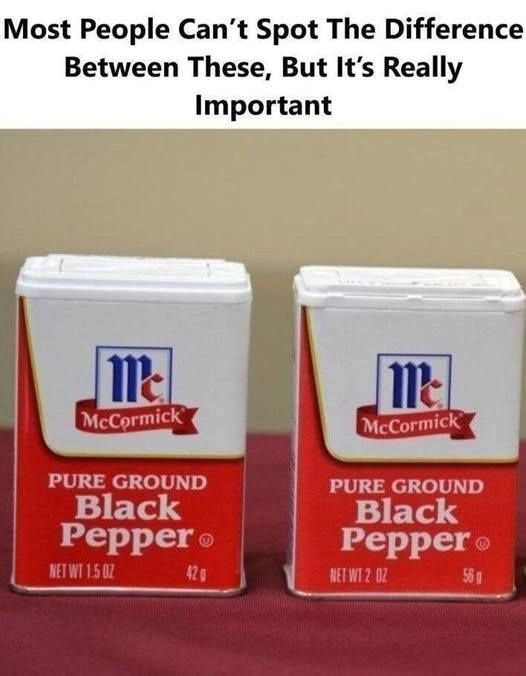
McCormick vs. Watkins: Why the Difference in Pepper Packaging Has Shoppers Questioning What They Really Get
Most shoppers rarely stop to examine the weight of a product before placing it in their shopping cart. They recognize a familiar brand, spot the packaging they have purchased many times before, and assume they are getting roughly the same amount as always.
But what happens when the package looks almost identical while the amount inside becomes noticeably smaller?
That question has drawn attention to a comparison between two familiar pepper brands: McCormick and Watkins. The difference is not simply about which product contains more pepper. It has also sparked a broader conversation about packaging, transparency, and how much attention consumers should pay to the details on supermarket shelves.
At the center of the discussion is a practice commonly known as shrinkflation—when a company reduces the quantity of a product while keeping its price the same or increasing it.
The Packaging Difference That Caught Shoppers’ Attention
McCormick’s pepper packaging has become a talking point because of the contrast between the amount of seasoning inside and the appearance of its familiar container.
The container is opaque, meaning shoppers cannot easily see how much pepper remains inside or compare its contents visually with another product. When the packaging retains a familiar shape and appearance, customers may naturally assume that the quantity has remained unchanged.
Watkins, by comparison, uses a clear jar that allows shoppers to see the pepper inside.
That difference may seem minor, but it changes how easily customers can judge what they are purchasing. With transparent packaging, the contents are visible. With an opaque container, shoppers have to rely more heavily on the information printed on the label.
The comparison has therefore become about more than appearance. It raises a question about whether packaging gives consumers a clear understanding of the value they are receiving.

What Is Shrinkflation, and Why Does It Matter?
Shrinkflation is a term used to describe a reduction in the quantity or size of a product while its price stays the same or rises.
It can happen in many everyday categories, including groceries, household supplies, snacks, cleaning products, and personal-care items.
For example, a package of coffee might become slightly lighter, a box of cereal might contain fewer servings, or a bottle of cooking oil might hold less than it did previously.
The change is not always obvious. Companies may preserve familiar packaging designs, which means shoppers can continue purchasing a product without immediately realizing that the quantity has changed.
This can make shrinkflation particularly frustrating for people who manage household budgets carefully. A small reduction in one product may not seem significant, but similar changes across multiple purchases can gradually affect how much value a family receives for its money.
Why Packaging Can Influence Consumer Decisions
Packaging plays an important role in how shoppers recognize and evaluate products.
A familiar container can create a sense of consistency. Customers may associate a particular shape, color, or label with a product they have trusted for years. When they see the same design on a supermarket shelf, they may not think to check whether the quantity has changed.
This is especially true when shopping quickly.
Most people have limited time to compare every item in their cart. They often rely on brand familiarity, previous experience, and visual recognition to make decisions.
An opaque container can make that process even more difficult because the product’s contents are hidden from view.
A transparent jar offers a different experience. It allows shoppers to see the product itself, although visibility alone does not guarantee that one package contains more than another. The actual quantity still needs to be checked using the net-weight information on the label.
Ultimately, good packaging should help customers understand what they are buying rather than leave them relying entirely on assumptions.
Is It Legal to Sell Less Product in the Same Package?
One important distinction in the discussion is the difference between legal requirements and consumer expectations.
In the United States, packaged food products generally must display their net quantity of contents. This information tells customers how much product they are purchasing, usually by weight or volume.
If the stated net weight is accurate and the product complies with applicable labeling rules, a company may generally reduce the quantity of its product without necessarily breaking the law.
That does not mean every packaging decision will be welcomed by customers.
A product can meet labeling requirements and still leave shoppers feeling disappointed if the change is difficult to notice. Consumers may reasonably expect brands to communicate important changes clearly, particularly when the packaging looks much the same as before.
This is where the discussion moves beyond legal compliance and into the broader issue of brand trust.
Why Consumer Trust Matters More Than a Familiar Label
For established brands, customer loyalty can take years to build.
People return to products because they know what to expect. They recognize the packaging, trust the quality, and believe that purchasing the same item will provide a familiar experience.
But trust can be weakened when customers feel that important changes have gone unnoticed.
Even when a company follows labeling regulations, shoppers may question why the packaging remains so similar if the quantity has been reduced. They may begin checking every purchase more carefully or comparing competing brands that provide a clearer view of their products.
That reaction can have consequences beyond a single purchase.
A customer who feels misled may switch brands, recommend alternatives to friends, or become less willing to pay a premium for a familiar name.
For companies, the long-term value of customer confidence may be far greater than the short-term benefit of maintaining a familiar package design.
How Shoppers Can Avoid Being Caught Off Guard
The comparison between McCormick and Watkins offers a useful reminder that the appearance of a package does not always tell the full story.
There are several simple ways consumers can make more informed decisions:
1. Check the net weight.
Look at the quantity printed on the package rather than relying on the size or shape of the container.
2. Compare unit prices.
Many retailers display the price per ounce, gram, or other standard unit. This makes it easier to compare products of different sizes.
3. Look beyond familiar packaging.
A product that appears unchanged may have undergone adjustments to its quantity, ingredients, or presentation.
4. Compare competing brands.
Different brands may offer different quantities and packaging styles. Comparing the actual amount and price can help determine which option offers better value.
5. Pay attention to product changes.
If a familiar item seems smaller or lighter, checking its label against an older package can help reveal whether the quantity has changed.
These habits do not require shoppers to spend a long time studying every product. Even a quick glance at the net weight and unit price can make a meaningful difference.
A Bigger Conversation About Transparency in Grocery Shopping
The discussion surrounding McCormick and Watkins reflects a broader challenge facing consumers: knowing exactly what they are paying for.
As grocery prices and household expenses remain important concerns for many families, shoppers are becoming more attentive to product sizes, unit prices, and packaging changes.
Companies have a legitimate need to manage production costs and respond to changing market conditions. But customers also have a reasonable expectation that product information will be clear and easy to understand.
The difference between an opaque container and a transparent jar may appear small, yet it highlights an important principle: consumers should not have to guess how much product they are purchasing.
In the end, the most valuable thing a brand can offer is not simply a recognizable package or a familiar name. It is the confidence that customers know what they are getting every time they make a purchase.
And perhaps that is the real question behind this pepper comparison: When you shop for an everyday product, do you trust the packaging, or do you always check the fine print?