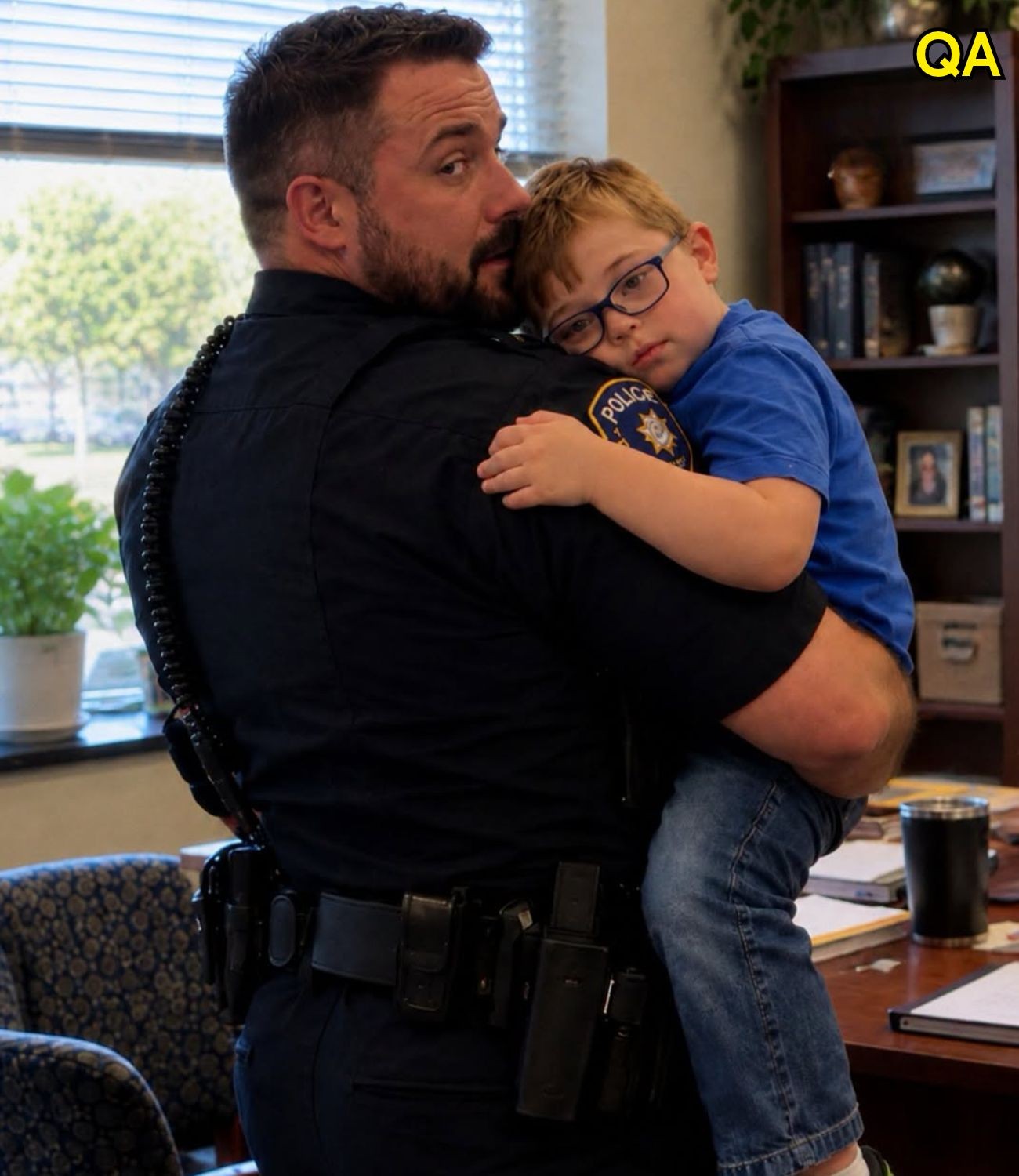
After years of learning at home, Ethan was finally getting the chance to attend a mainstream school. His parents worried about how he would adjust, whether he would make friends, and whether his new classmates would welcome him.
But Ethan surprised them.
Every afternoon, he returned home smiling. He talked about his lessons, his classmates, and a new friend named Oliver. For the first time, his parents began to believe that their son had found a place where he truly belonged.
Then came Friday.
At 11:17 a.m., Ethan’s mother received a call from Principal Harris.
“Mrs. Parker, I need you and your husband to come to school immediately.”
She froze.
“Is Ethan okay?”
“He’s safe, but there are two police officers here. We need to discuss an incident involving several students.”
Five days. That was all the time Ethan had spent at his new school.
His parents hurried to the building, wondering what could possibly have happened.
They had no idea that the meeting would reveal something both painful and deeply moving about their son’s first friendship.
A New Beginning After Years of Homeschooling
Ethan had Down syndrome, and his parents had spent years carefully considering how best to support his education.
He was curious, enthusiastic, and especially interested in science. He loved asking questions about planets, insects, machines, and anything else that caught his attention.
Although he had learned at home for years, his parents knew that opportunities to meet other children and participate in a wider school community could be valuable.
After speaking with professionals and discussing their options as a family, they decided to give mainstream education a try.
Ethan was excited.
On his first day, he came home with a huge smile.
“Mom, I love it!”
The following day, he told his parents about a boy named Oliver who sat beside him. By Wednesday, he was talking about classmates who had invited him to join them at lunch.
On Thursday, he even prepared his clothes for school the next morning.
His parents were relieved. They had spent so much time worrying about whether Ethan would feel accepted that seeing him excited about school felt like a wonderful answer to their fears.
They believed things were going well.
But there was something Ethan had not told them.
Why Were Two Police Officers Waiting?
When Ethan’s parents arrived at school, they found him sitting beside the window in the principal’s office.
His blue backpack rested on his lap, and his eyes were red.
“Mom!”
He immediately ran into his mother’s arms.
She hugged him and asked whether he was hurt.
Ethan shook his head.
Then he whispered something that made her heart sink.
“Please don’t make me leave school.”
His parents exchanged worried looks.
Principal Harris explained that several students had been involved in a confrontation during lunch. Some children had been making fun of Ethan, and another student had stepped in to defend him.
The situation had escalated when students began pushing one another. Staff members became concerned and contacted the school’s resource officers.
One officer quickly reassured the parents.
“Your son isn’t in trouble. We are here because staff needed assistance after the confrontation.”
No one had been seriously injured, and the school would handle the matter through its student-support and disciplinary procedures.
Ethan’s father, Michael, was still upset.
“Then why weren’t we told that when you called?”
The principal admitted that he should have explained the situation more clearly.
But the parents still had an important question.
What had happened to their son?
A Video Revealed What Ethan Had Been Experiencing
Principal Harris placed a tablet on his desk and showed the family a short recording from the school cafeteria.
In the video, Ethan was sitting at a table with several boys. One student was holding up a phone and recording him.
The boys asked Ethan to repeat something about his dream of becoming a famous scientist.
At first, Ethan smiled.
He proudly repeated his ambition, unaware that the other children were turning his words into a joke.
Then one boy began imitating the way Ethan spoke.
Ethan’s smile disappeared.
Another student, Oliver, approached the table.
“Stop recording him,” he said.
The boys dismissed his concern, claiming they were only joking.
Oliver pointed out that Ethan was not laughing.
The situation became tense. Someone pushed Oliver, and he pushed the person’s hand away. A chair scraped across the floor before the recording ended.
Michael turned away from the screen.
His wife was struggling to hold back tears.
Their son loved science. He had spent countless afternoons talking about discoveries and inventions. His dream was something he shared proudly.
Now they were seeing how some classmates had treated that excitement.
The mother turned toward Ethan.
“Has this happened before?”
Ethan looked down.
“Sometimes.”
He counted on his fingers and mentioned Wednesday.
His parents remembered that day. Ethan had come home talking excitedly about being invited to lunch.
They had assumed he was making friends.
Now they realized that the situation might have been more complicated.
“I Thought They Might Be Nice Tomorrow”
The principal stepped outside with the officers so the family could speak privately.
Michael knelt in front of his son.
“Why didn’t you tell us, buddy?”
Ethan looked uncertain.
He remembered that his parents had told him he could come home if school became too difficult.
He worried that telling them about the teasing might mean losing the opportunity he had been so excited about.
His mother gently explained that they would not automatically take him out of school because someone had treated him unkindly.
They would listen, understand what happened, and work with the school to make sure he received appropriate support.
Then she asked about Oliver.
“He’s my friend,” Ethan replied.
He explained that Oliver had also been new to the school. When Ethan noticed him sitting alone, he had invited him to join his table.
The two boys began talking about dinosaurs.
They soon became friends.
But Oliver had noticed that some of the other children were not treating Ethan kindly.
He had suggested that they sit somewhere else.
Ethan did not want to leave.
“Why?” his father asked.
Ethan thought for a moment.
“I thought they might be nice tomorrow.”
His mother held his hand.
He had recognized that something was wrong, but he had continued hoping that the other children would eventually accept him.
Then he said something that made the room even quieter.
“They laugh when I talk sometimes.”
When his mother asked why he kept sitting with them, Ethan answered:
“Because they let me.”
His parents understood that their son had been trying very hard to belong.
He had accepted unkind behavior because having a place at the table seemed better than being alone.
The Other Boy Had Tried to Help
When Principal Harris returned, he shared another important detail.
Oliver had reported the teasing to a lunch supervisor the previous day.
The staff member had spoken to the students involved, but the concern had not been properly passed on to the classroom teacher or school administration.
As a result, the problem had not received the follow-up it needed.
The principal acknowledged that the school should have taken the report more seriously and investigated further.
Michael wanted to know why Oliver had been sent to the office after defending his friend.
The principal explained that staff initially believed Oliver had started the confrontation. However, the video and accounts from other students provided additional information.
Oliver had not been trying to hurt anyone. He had been trying to stop the teasing.
More importantly, he had stayed beside Ethan while the adults worked to understand what happened.
According to the principal, Oliver had insisted that Ethan be given the opportunity to explain the situation without interruption.
Ethan confirmed this.
“Oliver said we should tell the truth.”
Then he added:
“I told him he could go, but he said friends don’t leave.”
Michael wiped his eyes.
The two boys had only known each other for a few days, yet they had already developed a friendship built on trust and mutual care.
The principal admitted that the situation had affected him.
In his many years working in education, he had seen students defend their classmates before. But he was particularly struck by how both boys had continued trying to protect each other.
His Parents Had One Important Request
After the officers confirmed that neither boy faced any police action, the school began discussing what would happen next.
Principal Harris proposed documenting the bullying concerns, speaking with the students involved, contacting their parents, and increasing supervision during lunch.
He also suggested regular check-ins with Ethan’s teacher.
But Ethan’s mother had an important condition.
She did not want her son separated from his classmates as though he were the problem.
She wanted him to have the opportunity to participate in school life alongside other children, with the support he needed.
Michael agreed.
He also asked that Oliver not be punished simply for trying to help his friend.
The principal acknowledged both concerns.
The school would address the behavior of the students involved while making sure Ethan and Oliver received appropriate support.
Before the meeting ended, Principal Harris asked Ethan whether there was anything he wanted the adults to understand.
Ethan thought carefully.
“I don’t like when they laugh at my words.”
The principal nodded.
“Thank you for telling me. We need to understand that.”
Then Ethan added another request.
“I want to sit with Oliver.”
The principal agreed to arrange it.
His mother looked at him and asked whether he still wanted to return to class.
Ethan nodded.
“I want to go back.”
His parents wanted to protect him. They also knew how much this opportunity meant to him.
They agreed that returning to class was the right choice, provided the school followed through on its support plan.
“Can I Still Be a Scientist?”
Before leaving the office, Ethan asked a question that his parents would remember for a long time.
“Can I still be a scientist?”
His mother smiled through her tears.
“Of course you can.”
Then he asked:
“Even if I talk differently?”
Michael knelt beside him.
“Talking differently doesn’t make your ideas less important.”
Ethan considered his father’s words.
Then he picked up his blue backpack.
“Okay. I’m going to science class.”
His parents watched him walk down the hallway with his teacher.
They felt proud of his determination, but they also knew that the experience had shown them something important. Their son needed more than encouragement. He needed adults who would take his concerns seriously and make sure that the school environment was safe and welcoming.
A Friendship That Continued Beyond the First Week
Over the following weeks, Ethan’s parents stayed in contact with the school.
The administration followed up on the incident and strengthened supervision during lunch. Staff members checked in with Ethan, and the school addressed the behavior that had caused the problem.
The family also continued talking with Ethan about what had happened.
They encouraged him to tell a trusted adult if someone made him uncomfortable, rather than feeling that he had to manage the situation by himself.
There were still difficult days.
Sometimes another child did not want to include him in a game. Sometimes an assignment took longer than expected.
His parents and teachers worked together to help him participate and develop confidence without expecting every school day to be perfect.
Through it all, Oliver remained his closest friend.
One afternoon, Oliver’s mother invited Ethan over to play.
She thanked Ethan’s parents and explained that her own son had struggled after transferring to a new school.
He had left his old friends behind and spent his first days feeling uncertain.
Then Ethan had approached him and asked about dinosaurs.
Oliver had gone home talking about his new friend.
The two boys had helped each other feel less alone.
Their friendship was not about one child rescuing the other. It began with a simple invitation to sit together and grew through shared interests, honesty, and kindness.
The Science Project That Made His Parents Proud
A month later, the school organized a science afternoon for families.
Ethan was excited because he and Oliver had prepared a project about the solar system.
Oliver had drawn the planets, while Ethan helped label them and prepare the explanations.
When his parents arrived, Ethan proudly stood beside their poster.
“Welcome to our space station!” he announced.
A few children nearby laughed briefly.
His mother’s heart tightened, but Ethan did not give up.
He continued explaining the project.
Oliver pointed toward the poster and told the other children that Ethan had come up with the name.
The boys then began their presentation.
Ethan stumbled over a word while describing Saturn. He paused, took a breath, and tried again.
This time, nobody interrupted.
When he finished, his parents applauded.
On the way home, Ethan asked whether Oliver could visit the following weekend.
Then he asked another question.
“Mom, do you think I’ll have more friends someday?”
His mother looked at him through the rearview mirror.
“I think you will.”
“But Oliver’s my best friend,” Ethan replied.
Michael smiled.
“That’s pretty special.”
Ethan nodded.
“It is.”
What Ethan’s Story Reminds Us About Inclusion
The most difficult part of Ethan’s experience was not simply that some classmates had been unkind. It was that he had hidden his feelings because he feared losing an opportunity he loved.
His story highlights why inclusion in education requires more than placing children with different abilities in the same classroom.
It requires an environment where every student is treated with respect, where bullying concerns are taken seriously, and where children can ask for help without feeling responsible for fixing everything themselves.
It also reminds parents and educators that friendship can make a meaningful difference. Oliver did not need to have all the answers. He simply recognized that Ethan was uncomfortable and chose to stand beside him.
At the same time, children should never be expected to handle bullying alone or become responsible for protecting another student. That responsibility belongs to the adults and the school community.
Ethan’s parents could not guarantee that every day would be easy. What they could do was listen, work with his teachers, and remind him that his dreams were worth taking seriously.
His ambition to become a scientist did not become less meaningful because he had Down syndrome. His ideas deserved attention, his voice deserved respect, and his place in the classroom mattered.
Perhaps the most important lesson from this story is that belonging should never depend on how closely someone fits another person’s expectations.
Every child deserves the chance to learn, build friendships, discover their interests, and feel valued.
And sometimes, a friendship that begins with a simple conversation about dinosaurs can remind an entire school what kindness really looks like.
SEO Title: Boy With Down Syndrome Faces Bullying at Mainstream School, but One Friend Stands by Him
Meta Description: After five days at mainstream school, a boy with Down syndrome faces a difficult incident. His parents discover how one classmate stood up for him.
SEO Keywords: boy with Down syndrome, Down syndrome and mainstream education, bullying at school, inclusive education, friendship at school, child with special educational needs, school bullying story, kindness and friendship, supporting children with Down syndrome