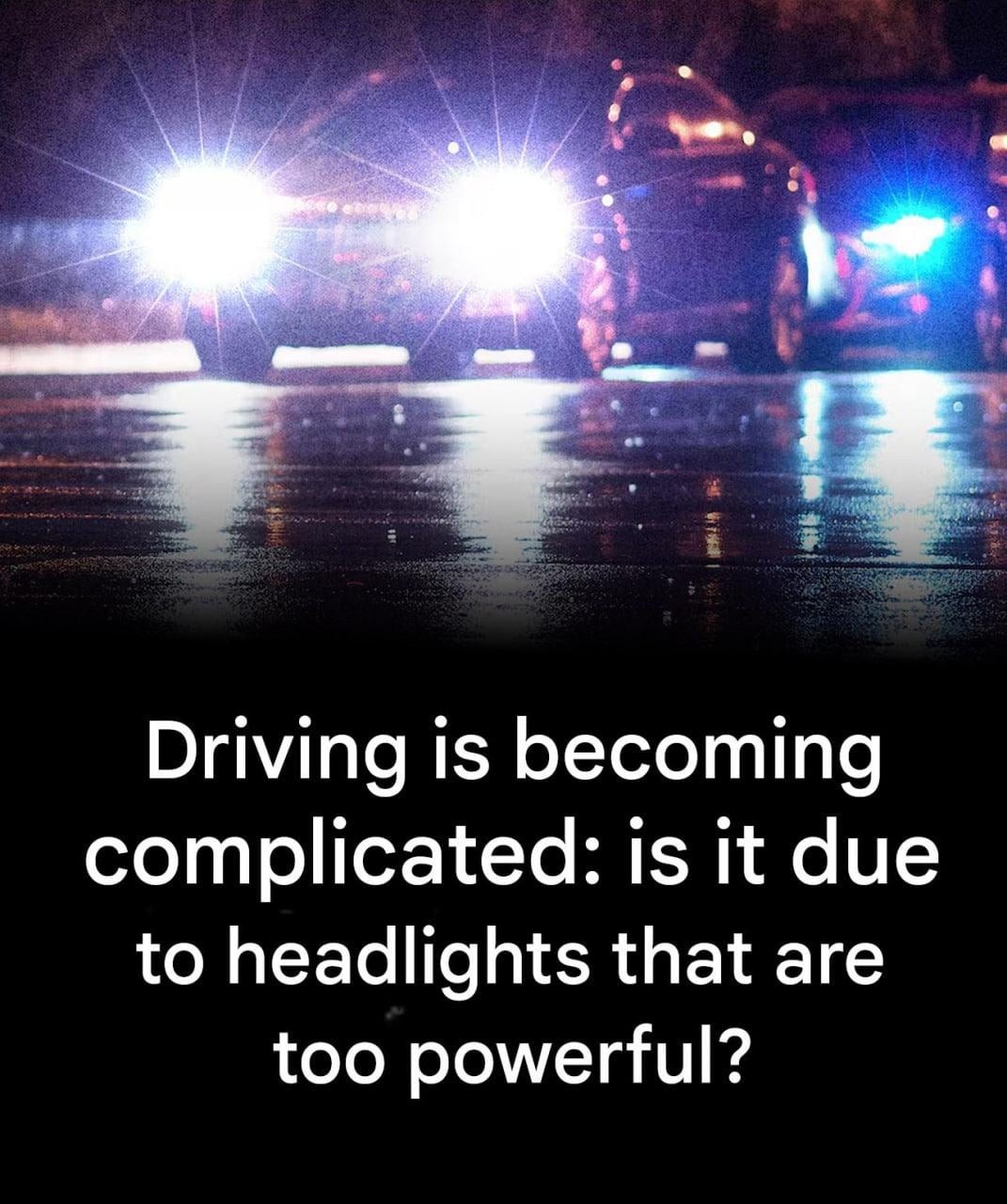
Driving at night should be a routine part of everyday life. Yet for many motorists, an ordinary journey has become increasingly uncomfortable. A vehicle approaches from the opposite direction, its headlights appear intensely bright, and suddenly the road ahead becomes harder to see. Drivers may experience blurred vision, discomfort, or a brief moment of hesitation as their eyes struggle to adjust.
Many people blame modern LED headlights. Compared with traditional halogen lamps, LED headlights often produce a whiter, cooler-looking light and can deliver highly focused illumination. They can improve visibility for the driver using them, but the experience may be very different for someone approaching from the opposite direction.
The problem is not simply that modern headlights are brighter. Their color, beam pattern, mounting height, alignment, and the condition of the surrounding environment can all influence how much glare another driver experiences.
Understanding these factors can help motorists protect their vision, improve nighttime visibility, and make safer decisions on the road.
Why Do Modern Headlights Seem So Bright?
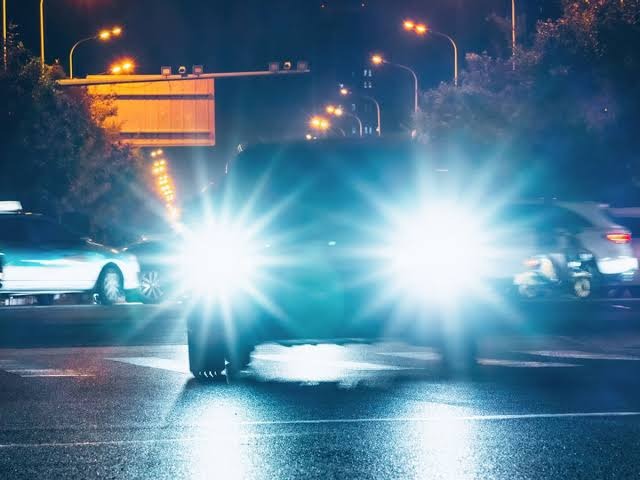
One major change in vehicle lighting is the growing use of light-emitting diode technology, commonly known as LED.
Traditional halogen headlights produce a warmer, yellowish light. Many modern LED systems produce a cooler white light, sometimes with a noticeable blue tint.
This difference is partly described by a measurement called correlated color temperature (CCT), expressed in kelvin (K). Traditional halogen headlights often have a lower color temperature, while many modern LED systems are designed around cooler white tones.
The color difference can influence how drivers perceive light. Research discussed by the AAA Foundation for Traffic Safety in 2026 notes that cooler, bluer-looking headlights may improve certain aspects of visual performance while also producing greater discomfort for people looking toward them.
However, color temperature is not the same as brightness. A white headlight is not automatically more intense than a yellow one. Actual glare depends on several optical characteristics, including the amount of light reaching another driver’s eyes and the direction in which that light is projected.
This distinction helps explain why two headlights with similar apparent brightness can create different experiences on the road.
The Difference Between Better Visibility and Discomfort Glare
Headlights are designed to help drivers see obstacles, road markings, pedestrians, and other vehicles in low-light conditions.
But the same light that improves visibility for one person can become uncomfortable for another.
There are two useful concepts to understand.
Discomfort glare describes the unpleasant sensation caused by a bright light. It can make someone squint, feel distracted, or become uncomfortable without necessarily preventing them from seeing an object.
Disability glare occurs when scattered light within the eye reduces visual contrast, making objects more difficult to distinguish.
These effects are related, but they are not identical. A driver may feel strongly bothered by approaching headlights even when their ability to detect objects has not been significantly reduced.
The distinction matters because complaints about dazzling headlights do not always mean that every modern lighting system is technically unsafe. The challenge is to balance good road illumination with minimal glare for other road users.
Why SUVs and Higher-Mounted Headlights Can Create Problems
Another factor is the height at which headlights are positioned.
Many SUVs and larger vehicles sit higher off the road than conventional passenger cars. Their headlights may therefore be positioned closer to the eye level of drivers in smaller vehicles.
This can make approaching lights feel more direct, particularly on uneven roads or when vehicles are traveling uphill or downhill.
However, vehicle height alone does not determine whether a headlight causes excessive glare. Beam design and correct alignment are also important.
A headlight that is aimed too high may send more light toward the eyes of approaching motorists. Even a properly designed system can create discomfort if its alignment changes or if the vehicle is carrying a heavy load that alters its angle.
The Insurance Institute for Highway Safety (IIHS) evaluates headlight systems partly by measuring how much glare they produce for drivers approaching from the opposite direction. Its testing also considers how effectively headlights illuminate straight roads and curves.
This shows why good headlight performance involves more than simply producing the greatest amount of light.
Rain, Dirty Windshields, and Other Conditions Make Glare Worse
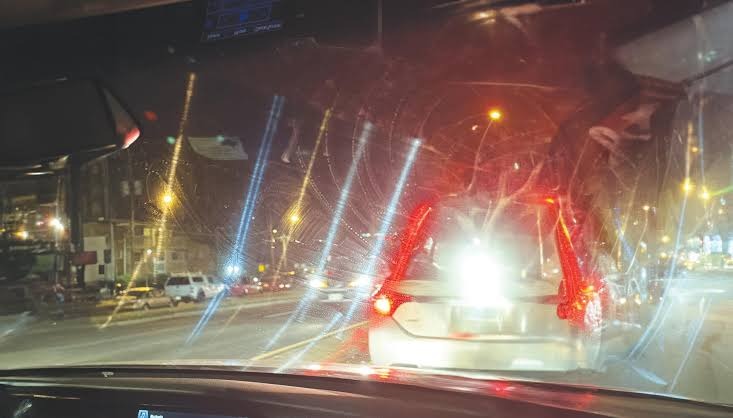
Headlight glare can become particularly difficult during rain or on wet roads.
Water droplets on the windshield scatter incoming light, while reflections from wet pavement can create additional visual distractions. If the windshield is dirty, streaked, or covered with a thin layer of condensation, the problem may become even more noticeable.
Many drivers remember to clean the outside of their windshield but overlook the inside surface. Dust, fingerprints, and residue can create halos around bright lights, making approaching vehicles appear larger or more dazzling.
Worn windshield wipers can also leave streaks that reduce visibility during rainfall.
Other environmental factors may contribute to the problem:
-
Fog and mist can scatter light and reduce contrast.
-
Poorly maintained headlights may produce irregular illumination.
-
Dirty headlight lenses can interfere with the intended beam pattern.
-
Bright dashboard lighting can make it harder for the eyes to adapt to darkness.
-
Curved or hilly roads can change the angle at which headlights reach another driver.
These conditions explain why a journey that feels comfortable on a clear, dry evening may become much more stressful during wet weather.
Why Tired Eyes Struggle More With Bright Lights
The human visual system needs time to adapt when moving between bright and dark environments.
During nighttime driving, the eyes are constantly adjusting to changes in illumination. Streetlights, illuminated signs, vehicle headlights, and dark stretches of road create a changing visual environment.
Fatigue can make this experience more difficult.
When drivers are tired, maintaining concentration becomes harder, and their ability to respond to unexpected situations may decline. Bright lights can feel especially distracting when combined with reduced visibility and long periods of driving.
Age and eye health can also influence nighttime vision. Conditions such as cataracts and dry eye may increase sensitivity to glare or make it more difficult to see clearly in low-light environments.
The American Academy of Ophthalmology advises drivers experiencing persistent nighttime vision problems to seek an eye examination. Difficulty driving after dark should not automatically be blamed on other vehicles’ headlights.
Sometimes, the issue may involve an individual’s vision and can benefit from professional assessment.
Practical Ways to Reduce Headlight Glare
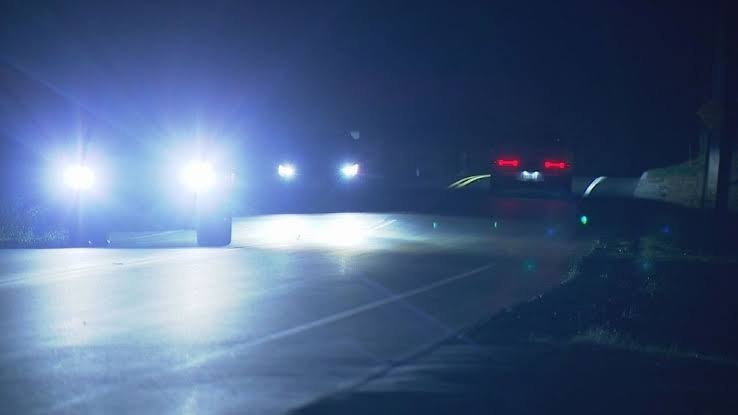
Although drivers cannot control the lighting systems of every vehicle they encounter, several simple habits can make nighttime journeys more comfortable.
1. Keep Your Windshield Clean
Clean both the inside and outside of your windshield regularly.
A clear surface reduces unwanted reflections and halos around headlights. If the windshield repeatedly fogs up, use the vehicle’s demisting system to maintain visibility.
Do not overlook your side windows and mirrors, as these also contribute to awareness of surrounding traffic.
2. Avoid Looking Directly at Oncoming Headlights
When another vehicle approaches, avoid staring directly into its headlights.
Instead, look toward the left edge of the road or the lane markings while maintaining awareness of your position. This can help reduce direct exposure to the brightest part of the light.
Do not turn your head away completely or lose sight of the road. The goal is to maintain control while avoiding direct fixation on the glare source.
3. Slow Down When Visibility Becomes Poor
If bright headlights temporarily affect your ability to see, reduce your speed smoothly.
Leave more space between your vehicle and the one ahead. Avoid sudden braking or steering movements.
If visibility becomes too poor to continue safely, find an appropriate place to stop and wait until conditions improve.
4. Check Your Own Headlight Alignment
Headlights that are incorrectly aimed can create problems for other road users.
Have them inspected by a qualified mechanic if they appear unusually high, uneven, or poorly directed.
If your vehicle has a manual headlight adjustment control, consult the owner’s manual and use the correct setting when carrying a heavy load.
Also, avoid installing non-approved replacement bulbs. A bulb that does not match the headlight housing can alter the beam pattern and increase glare.
5. Maintain Your Headlights and Wipers
Clean headlight lenses regularly and replace damaged or cloudy components when necessary.
Check that both headlights are working correctly and that the windshield wipers clear water effectively.
These small maintenance tasks can improve visibility for you while reducing unnecessary glare for other drivers.
6. Adjust Interior Lighting
Bright dashboard screens and interior lights can make nighttime adaptation more difficult.
Reduce dashboard brightness to a comfortable level while keeping essential information visible.
If your vehicle has an automatic rear-view mirror dimming feature, make sure it is functioning correctly.
Can Automatic Headlights Solve the Problem?
Vehicle lighting technology is continuing to develop, and some newer systems are designed to improve visibility while reducing glare for other motorists.
Automatic high-beam assist is one example. It detects other vehicles and switches between high and low beams when appropriate.
Another development is adaptive driving beam technology.
Unlike conventional automatic high-beam systems, adaptive driving beams can adjust specific parts of the light pattern. They can create darker areas around other vehicles while maintaining stronger illumination in other parts of the road.
The IIHS has reported that adaptive driving beams can significantly reduce glare compared with certain conventional headlight systems.
These technologies offer a promising way to balance visibility and comfort. However, their performance depends on the system’s design, calibration, operating conditions, and applicable regulations.
They should be viewed as improvements rather than a complete solution to nighttime driving difficulties.
When Should You Consider an Eye Examination?
Occasional discomfort from approaching headlights is common, especially in poor weather or on dark roads.
However, persistent or worsening difficulty seeing at night deserves attention.
Consider speaking with an eye-care professional if you regularly experience:
-
Strong sensitivity to headlights or streetlights.
-
Blurred vision when driving after dark.
-
Difficulty recognizing road signs or pedestrians.
-
Halos or unusual glare around lights.
-
Problems that continue even when your windshield and vehicle lighting are properly maintained.
Cataracts, dry eye, and uncorrected vision problems are among the possible causes of nighttime visual difficulties.
A professional eye examination can help identify the underlying issue and determine whether treatment or updated vision correction is needed.
Drivers should not rely on heavily tinted night-driving glasses as a universal solution. Dark lenses can reduce the amount of light reaching the eyes and may make it harder to see in already dim conditions.
A Safer Future for Night Driving
Modern headlights have brought important improvements to vehicle safety. Better illumination can help drivers recognize hazards earlier and see more clearly along dark roads.
But the experience of one driver should not come at the expense of another’s visibility.
The growing discussion about headlight glare highlights the need for better lighting design, correct vehicle maintenance, responsible use of high beams, and greater awareness of how different road users experience the same light.
For drivers, the most effective steps are often simple: keep the windshield clean, maintain properly aligned headlights, avoid staring into approaching beams, and slow down whenever visibility becomes uncomfortable.
The future may bring more intelligent lighting systems that adapt to surrounding traffic and reduce unnecessary glare. Until then, a combination of responsible driving habits, well-maintained vehicles, and regular eye care can make nighttime journeys safer and more comfortable.
Sources
-
AAA Foundation for Traffic Safety, Effects of Vehicle Headlight Color on Glare and Safety, April 2026.
-
American Academy of Ophthalmology, Night Driving Glasses May Hurt, Not Help.
-
Insurance Institute for Highway Safety, Headlights: Ratings and Testing.
-
UK Government, Minimising Headlight Glare and Its Effects.
-
American Optometric Association, Vision Tips for Safe Driving at Night.