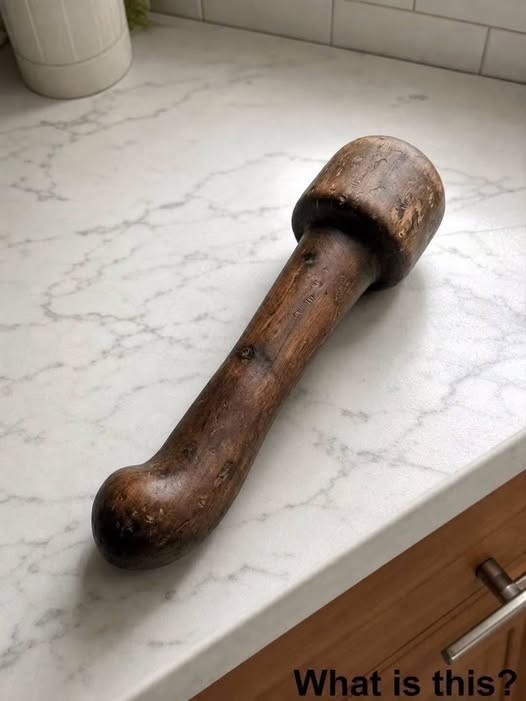
At first glance, an old wooden kitchen utensil with a rounded end, curved handle, and sturdy hand-carved shape can be difficult to identify. It may resemble a workshop tool, a small mallet, or an object made for an entirely different household task. In many homes before electric appliances became widespread, however, practical wooden implements were essential for preparing everyday meals.
One likely interpretation of this type of object is an antique potato masher or a simple pestle-like food mashing tool. It was designed to apply steady pressure to soft, cooked ingredients. While the exact purpose of an individual antique object can depend on its dimensions, wear patterns, region, and family history, tools with a rounded wooden working end were commonly used for mashing potatoes, crushing cooked vegetables, softening fruit, and blending ingredients by hand.
These uncomplicated utensils offer a useful view into the history of domestic cooking. They reflect a period when preparing food often involved physical work, durable materials, and multipurpose tools rather than specialized electrical equipment. Today, food processors, immersion blenders, and electric mixers can complete similar tasks quickly. Yet the basic culinary principle behind the old wooden masher remains familiar: pressure changes the texture of food.
Why Old Wooden Kitchen Tools Can Be Hard to Identify
Antique household tools are frequently difficult to identify because they were often made locally, adapted by their owners, and used in more than one way. Unlike modern kitchen products, older utensils did not always come with labels, standard model numbers, or detailed manufacturer records. A handmade wooden tool could vary substantially from one household to another while serving the same general purpose.
Its shape may provide important clues. A smooth, rounded base is suitable for pressing into a bowl, pot, or crock. A handle that fits comfortably in the hand allows repeated downward motion. Dense wood can withstand regular contact with cooked food while remaining relatively easy to carve and repair. These features are consistent with a hand masher or pestle, particularly for ingredients that have already been softened through boiling, steaming, baking, or stewing.
However, responsible identification requires caution. A photograph alone may not establish that an object was specifically used as a potato masher. Similar wooden forms have been used for pounding, grinding, textile work, or other household jobs. If an item has known provenance, family documentation, a maker’s mark, or a connection to a particular region, those details can help historians and collectors make a more confident assessment.
The Role of Hand Tools in Traditional Food Preparation
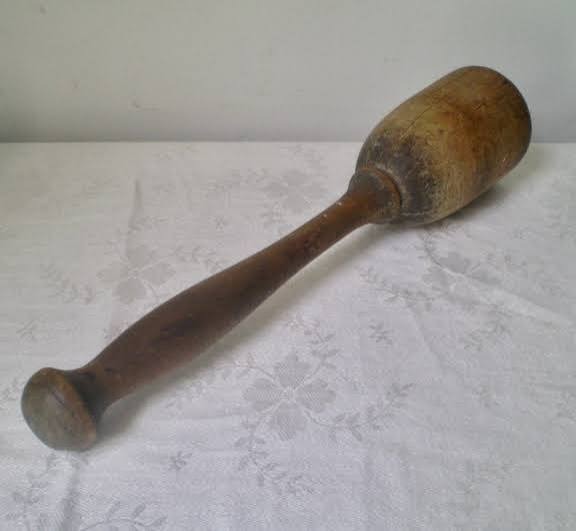
For much of history, cooking depended on manual skill. Before the broad household adoption of electricity in the twentieth century, preparing a meal could include washing, peeling, chopping, grinding, stirring, kneading, straining, and mashing by hand. The kitchen was a place of sustained physical effort, and tools were valued for being reliable, repairable, and versatile.
Wood was a common material for kitchen equipment because it was accessible in many regions, relatively affordable, and workable with hand tools. Spoons, paddles, rolling pins, bowls, butter workers, and mashers could all be made from wood. Hardwoods were especially useful for items expected to endure pressure and frequent use. With routine cleaning and drying, a well-made wooden utensil could remain useful for many years.
The simplicity of a wooden masher was part of its appeal. It contained no gears, electrical components, blades, or moving parts. A cook could grasp the handle and use repeated pressing or twisting motions to break down tender food. The technique required time and effort, but it gave the user direct control over the final consistency. Some people preferred a coarse, rustic mash, while others continued working the ingredients until they were smoother.
How an Antique Potato Masher Was Used
Potatoes were an especially suitable ingredient for a hand masher. After being boiled or steamed until tender, they could be placed in a deep bowl, pot, or other sturdy container. The cook would then press the rounded end of the wooden tool into the potatoes repeatedly. As the pieces broke apart, butter, milk, cream, salt, or other ingredients could be added according to local customs and household preferences.
The goal was not always to create an entirely uniform puree. Traditional mashed potato dishes often had a more varied texture than products made with modern electric appliances. A wooden masher could produce a soft and comforting result while leaving some small pieces intact. This texture remains popular in many home kitchens today.
Hand mashing also encouraged cooks to pay close attention to the condition of the food. Potatoes that were undercooked would resist pressure, while overly waterlogged potatoes could become loose or gluey. The cook could judge the texture through touch and sight, adjusting liquid or seasoning gradually. In this way, the tool was not merely an object; it was part of a practical cooking process shaped by experience.
More Than Potatoes: Other Possible Uses for a Wooden Masher
Although potatoes are the most familiar association, a wooden mashing tool could be used for many soft ingredients. Cooked root vegetables such as turnips, carrots, parsnips, and squash can be softened and crushed using similar pressure. Beans, peas, and cooked apples may also be mashed by hand for soups, side dishes, fillings, or sauces.
In some kitchens, a sturdy wooden tool could also function in a manner similar to a pestle. A pestle is traditionally used with a mortar to crush, grind, or combine ingredients. The distinction between a masher and a pestle is not always absolute, particularly with handmade or locally produced utensils. A dedicated pestle is usually paired with a bowl-shaped mortar and may be intended for spices, herbs, grains, or other ingredients. A potato masher, by contrast, is generally designed to work directly in a cooking vessel or serving bowl with already-soft food.
Regional cooking traditions shaped how such tools were used. Across the world, cooks have long relied on wooden, stone, or ceramic implements to transform food through pounding and crushing. The material and form varied according to local resources and culinary needs, but the idea was shared: manual tools could change whole ingredients into a texture suitable for a meal.
From Manual Mashers to Modern Kitchen Appliances
The development of modern kitchen appliances gradually changed the role of hand-operated mashers. Metal potato mashers with perforated plates or wire heads became common in many markets. Later, electric hand mixers, blenders, food processors, and immersion blenders offered faster options for pureeing and mixing food.
These appliances can save time, particularly when preparing large quantities. They may also create very smooth textures with limited physical effort. Yet speed is not the only consideration in cooking. Many cooks still use manual mashers because they provide control and reduce the risk of overprocessing certain foods. For example, potatoes can become overly sticky when their starch is worked too aggressively by high-speed blades. A hand masher can help maintain a lighter or more textured result.
Traditional tools have therefore not disappeared entirely. Contemporary kitchens often combine old and new methods. A cook may use an electric appliance for soup or sauces while choosing a manual masher for potatoes, avocado, beans, or cooked vegetables. This continued use demonstrates that simple hand tools can remain practical even in technologically advanced homes.
Wooden Utensils and Kitchen Hygiene
Wooden kitchen utensils require sensible care. Food safety guidance generally emphasizes cleaning utensils after use, preventing cross-contamination, and allowing equipment to dry thoroughly. A wooden masher intended for cooked vegetables should be washed promptly with warm water and dish soap, then dried completely rather than left soaking in water.
Extended soaking can cause wood to swell, split, or warp. Dishwashers may also expose wooden utensils to high heat and long moisture cycles that can shorten their lifespan. If a utensil develops deep cracks, splinters, severe staining, persistent odors, or a surface that cannot be adequately cleaned, replacing it may be the safest option.
Wood is a porous natural material, so proper cleaning matters. The United States Department of Agriculture and other food safety authorities advise consumers to clean food-contact surfaces and utensils thoroughly, especially after contact with raw animal products. A vintage wooden item with an uncertain history may be best displayed rather than used for food unless its condition is sound and it can be cleaned appropriately.
What Antique Kitchen Utensils Tell Us About Everyday Life
An old potato masher or primitive pestle is more than a curiosity. It can reveal how families organized domestic work, how meals were prepared, and how useful objects were made to last. In many households, kitchen tools were not disposable. They were maintained, repaired, and passed along when possible.
Such objects also highlight the knowledge involved in ordinary cooking. Preparing meals without automated equipment required judgment about heat, texture, timing, and ingredients. The person using a wooden masher understood when vegetables were soft enough, how much force was needed, and when a mixture had reached the desired consistency. Those skills were learned through observation and repetition, often within families and communities.
Museums and historical collections preserve domestic objects because they document aspects of life that formal records may overlook. Grand historical events receive significant attention, but daily routines such as preparing a simple meal are equally important for understanding the past. A worn handle or smooth working end can suggest years of use, care, and practical value.
How to Evaluate a Vintage Wooden Masher or Pestle
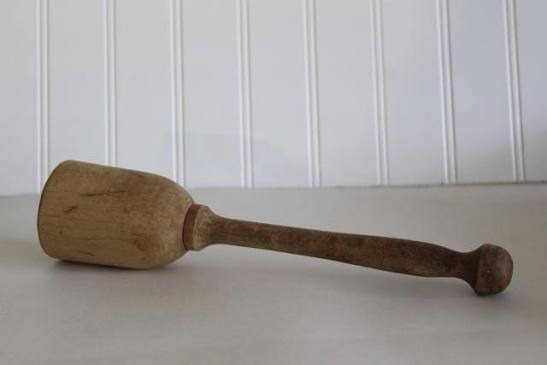
If you have a similar object, start by examining its overall form. Consider the length of the handle, the size and shape of the rounded end, and whether the base appears worn from pressing against a bowl or pot. Look for maker’s marks, initials, old labels, or clues about where it was found. Family stories can also be valuable, although they should be treated as personal evidence rather than definitive proof.
Condition is important for both collectors and cooks. Check for cracks, insect damage, loose pieces, mold, or flaking finishes. Avoid sanding away historic marks or applying harsh chemicals without professional advice, especially if the object may have collectible value. For a potentially significant antique, a local museum, historical society, antiques specialist, or qualified conservator may be able to offer guidance.
When selling or describing an item online, it is best to use careful language. Terms such as “wooden food masher,” “pestle-like kitchen tool,” or “possibly used for mashing cooked vegetables” are more accurate than making unsupported claims about an object’s exact age, origin, or purpose. Honest descriptions help buyers, researchers, and future owners understand what is known and what remains uncertain.
The Enduring Appeal of Traditional Kitchen Tools
In an era of fast appliances and highly specialized gadgets, an antique wooden masher can seem remarkably basic. Its simplicity is precisely what makes it compelling. It represents an approach to cooking based on durable materials, direct manual work, and close attention to food.
Whether it was used primarily for potatoes, cooked vegetables, fruit, or another household task, this kind of wooden tool belongs to a long history of practical food preparation. It reminds us that modern convenience rests on older methods that were effective in their own time. The equipment has changed, but the essential act of turning raw or cooked ingredients into nourishing meals remains the same.
For collectors, historians, and home cooks, the antique potato masher or primitive pestle remains a modest but meaningful link to traditional kitchens. Its worn wood, comfortable grip, and rounded working end tell a story of usefulness rather than ornament: a tool made to be held, used, cleaned, and relied upon day after day.
Sources
Disclaimer: This content is intended for entertainment purposes only and is not based on real events.