How to Tell If Eggs Are Fresh and Safe to Use
Eggs are among the most useful ingredients in a home kitchen. They can become a quick breakfast, add structure to baked goods, enrich sauces, or provide protein in a wide range of meals. Because eggs are so widely used, it is helpful to know how to assess their quality before cooking.
Freshness can affect an egg’s appearance, texture, and performance in recipes. A fresher egg usually has a firmer white and a more rounded yolk, while an older egg may spread more when cracked into a bowl. However, freshness and food safety are not exactly the same thing. An egg that is older may still be usable if it has been stored properly, while an egg that appears normal can still pose a food safety risk if it has been mishandled.
The most reliable approach combines several checks: review the package date, consider how the eggs have been stored, inspect the shell, crack eggs separately into a bowl, and use your senses carefully. The familiar water or “float” test can offer information about an egg’s age, but it should not be treated as a definitive food safety test.
Why Egg Freshness Matters
Egg freshness matters for both cooking results and practical kitchen decisions. In baking, eggs contribute moisture, structure, color, and emulsification. In poached eggs, fresh whites tend to hold together more neatly in the water. For fried eggs, fresher eggs generally have whites that remain more compact rather than spreading widely across the pan.
As an egg ages, moisture and carbon dioxide gradually move through the shell’s pores. This natural process increases the size of the air cell inside the shell. The white can become thinner, and the yolk membrane can weaken over time. These changes do not automatically mean an egg is unsafe, but they can affect its quality and suitability for certain recipes.
Food safety is a separate concern. Eggs can sometimes carry bacteria such as Salmonella, which may cause foodborne illness. Proper refrigeration, clean handling, and thorough cooking are important precautions regardless of whether an egg seems especially fresh.
Start With the Carton Date and Storage History
The carton is often the best place to begin. In the United States, egg cartons may display a “sell-by,” “best if used by,” or expiration date, depending on the producer and retailer. These dates are generally indicators of quality rather than a guarantee that eggs become unsafe immediately after the printed date.
The U.S. Department of Agriculture advises consumers to refrigerate eggs promptly and keep them at 40°F (4°C) or below. When eggs have been stored continuously at a safe refrigerator temperature, they can generally remain usable for several weeks after purchase. USDA guidance commonly notes that shell eggs can be kept in the refrigerator for three to five weeks from the date they are placed there.
Storage history is especially important. Eggs that have been left out for extended periods, exposed to warm temperatures, or repeatedly moved between warm and cold environments may not be as reliable as eggs that remained refrigerated. Refrigeration slows bacterial growth and helps preserve egg quality.
For best results, keep eggs in their original carton rather than transferring them to the refrigerator door. The carton helps protect the shells, reduces odor absorption, and makes it easier to track the package date. The middle or back of the refrigerator is usually more temperature-stable than the door, which is opened frequently.
Check the Eggshell Before Cracking It
Before using an egg, examine the shell under good lighting. A clean, intact shell is a positive sign, while cracks can create a route for bacteria to enter. It is best not to purchase cracked eggs, and eggs with damaged shells should be handled cautiously.
Discard eggs with shells that are visibly cracked, leaking, or unusually dirty. A powdery or fuzzy appearance may indicate mold and is also a reason to dispose of the egg. Avoid using eggs that have an unusual residue or a strong odor coming from the shell or carton.
Some natural shell variations are not necessarily a problem. Eggshell color, whether white, brown, or another shade, does not determine freshness or nutritional quality. Small rough spots or uneven texture may occur naturally. What matters most is whether the shell is intact and the egg has been stored safely.
Crack Eggs Into a Separate Bowl First
One of the most practical kitchen habits is to crack each egg into a small bowl before adding it to a recipe. This prevents one questionable egg from affecting an entire batch of batter, sauce, or other ingredients. It also gives you a clear chance to inspect the egg’s contents.
A fresh egg typically has a yolk that sits high and rounded, surrounded by a relatively thick white. An older egg may have a flatter yolk and a thinner white that spreads more easily. These characteristics are useful indicators of age and quality, especially when deciding whether an egg is ideal for poaching, frying, or baking.
However, a thin white alone does not necessarily mean an egg is unsafe. Eggs naturally lose quality over time even when refrigerated correctly. If an egg looks normal, has no unpleasant smell, and has been stored properly, it may still be appropriate for thoroughly cooked dishes.
Occasionally, consumers notice a small blood spot in an egg. According to food safety authorities, blood spots are not an indication that an egg is fertilized or unsafe. They are caused by the rupture of a small blood vessel during egg formation. The spot may be removed with the tip of a clean utensil if desired, provided the egg otherwise appears and smells normal.
Use Smell as an Important Warning Sign
An unpleasant odor is one of the clearest reasons to discard an egg. A spoiled egg usually produces a distinct sulfur-like or otherwise offensive smell when cracked, whether it is raw or cooked. If an egg smells unusual, do not taste it to test whether it is still usable.
The smell test is useful because spoilage can be obvious once the shell is opened. Still, the absence of a bad odor does not eliminate all food safety risks. Some harmful bacteria do not change an egg’s smell, color, or appearance. Safe storage and cooking remain necessary even when eggs pass a visual and smell check.
What the Egg Float Test Can and Cannot Tell You
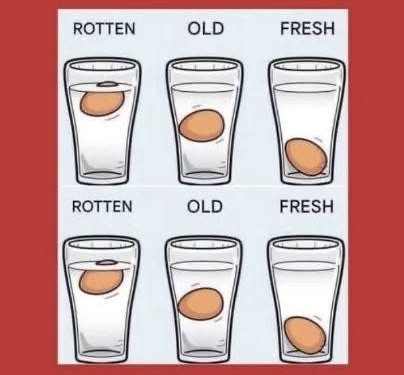
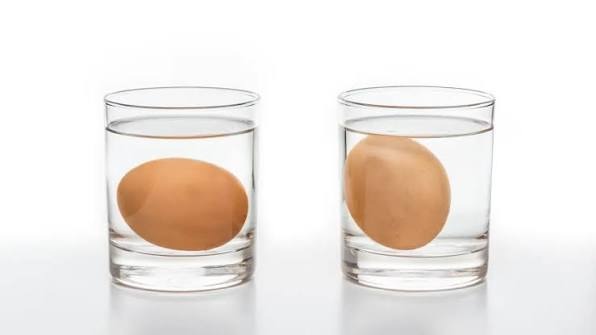
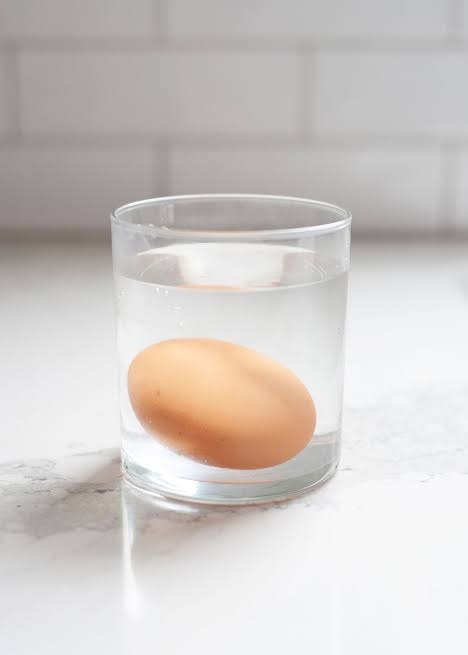
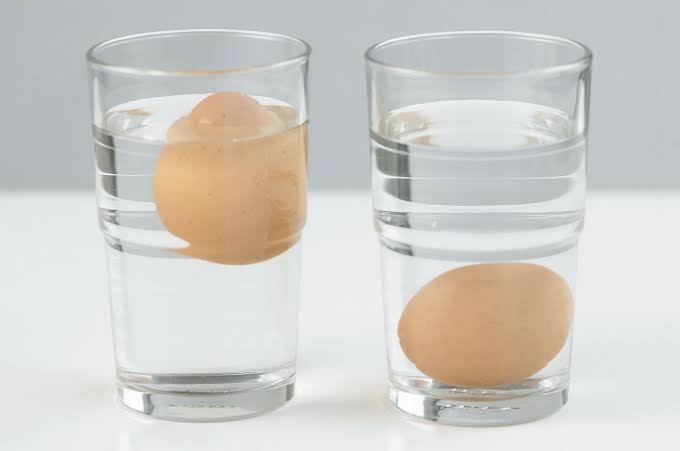
The water test is a popular method for estimating egg age. To try it, gently place an egg in a bowl or glass of cool water. A very fresh egg usually lies flat on the bottom. An egg that is somewhat older may stand upright on the bottom. An egg that floats has a larger air cell, indicating that it has lost more moisture and is likely older.
This happens because eggshells are porous. Over time, air enters the shell and the internal air pocket grows. The greater buoyancy makes an older egg more likely to stand up or float.
While the float test can indicate relative age, it is not a reliable test for safety. A floating egg is not automatically spoiled, and a sinking egg is not automatically free of harmful bacteria. If an egg floats, it is wise to crack it into a separate bowl and inspect it closely for odor and appearance. When there is any uncertainty about storage conditions or quality, discarding the egg is the safer choice.
How to Store Eggs Safely at Home
Proper storage is the foundation of egg safety. In the United States, commercially produced eggs are washed and refrigerated before sale. Consumers should continue refrigerating them at 40°F (4°C) or below. Keeping eggs consistently cold helps limit bacterial growth and protects quality.
Store eggs in the original carton on an interior refrigerator shelf. The carton provides physical protection and reduces the chance that eggs will absorb strong odors from foods such as onions, garlic, or certain cheeses. Keeping the carton also preserves the date information and plant code, which can be useful if a product recall is announced.
Do not leave refrigerated eggs at room temperature for long periods. When cold eggs sit in a warm environment, moisture can form on the shell. This condensation may make it easier for bacteria on the outside of the shell to move inward. If eggs have been left out for an extended time, follow local food safety guidance or discard them if their safety cannot be confirmed.
Egg handling practices vary internationally. In some countries, eggs are sold unrefrigerated because they are not washed in the same way as eggs in the United States, leaving a natural protective coating on the shell. Consumers should follow the storage advice printed on local packaging and provided by their national food safety authorities.
Cook Eggs Thoroughly for Better Food Safety
For many everyday dishes, thorough cooking is an important safeguard. The USDA recommends cooking eggs until both the yolk and white are firm for recipes that use whole eggs. Egg dishes such as casseroles and quiches should reach an internal temperature of 160°F (71°C).
People who are pregnant, older adults, young children, or have weakened immune systems may be at greater risk of serious illness from foodborne bacteria. These groups may wish to avoid foods containing raw or undercooked eggs unless pasteurized eggs or egg products are used. Examples can include certain homemade dressings, sauces, desserts, and beverages made with uncooked eggs.
Pasteurized eggs have been treated to reduce harmful bacteria while remaining suitable for many recipes. They can be particularly useful when a dish traditionally calls for raw or lightly cooked eggs. Read the label carefully and follow preparation instructions.
When to Throw Eggs Away
Discard an egg if the shell is cracked, leaking, moldy, or unusually dirty. Throw it away if it has a strong unpleasant odor after cracking, or if the contents show unusual discoloration, such as pink, green, or iridescent hues. These signs can indicate spoilage or microbial growth.
It is also sensible to discard eggs when you cannot confirm that they were stored safely. For example, if a carton was left in a hot car, sat out overnight, or remained at room temperature for a prolonged period, the potential risk may outweigh the value of saving the eggs.
When in doubt, it is better to choose a new egg. Eggs are relatively inexpensive compared with the consequences of foodborne illness, particularly for people at higher risk.
Key Takeaways for Checking Egg Freshness
The best way to tell whether eggs are suitable for use is to consider multiple factors rather than relying on one kitchen trick. Check the carton date, think about refrigeration history, inspect the shell, crack each egg into a separate bowl, and discard any egg with an unusual smell or appearance.
The float test can be a helpful estimate of age, but it cannot confirm safety. Most importantly, maintain proper refrigeration and cook eggs thoroughly when appropriate. With careful storage and sensible kitchen habits, eggs can remain a versatile, nutritious, and dependable ingredient for many meals.
Sources
Disclaimer: This content is intended for entertainment purposes only and is not based on real events.