A Remarkable Find in Teotihuacan
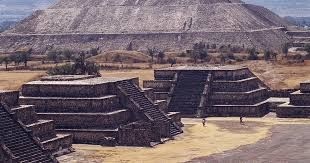
Archaeological discoveries at Teotihuacan continue to reshape understanding of one of ancient Mesoamerica’s most influential urban centers. Among the objects reported from investigations around the Pyramid of the Sun is a carefully carved greenstone mask, found with other materials interpreted as ritual offerings. Its striking color, refined workmanship, and location beneath or near the pyramid’s earliest construction levels have made it a compelling example of the ceremonial practices associated with the city’s monumental architecture.
Teotihuacan, located northeast of present-day Mexico City, was home to a large and culturally diverse population during the first centuries of the Common Era. Although the city’s original name is unknown, its later Nahuatl name is commonly translated as “the place where the gods were created” or “the place where people become gods.” The city’s pyramids, broad Avenue of the Dead, residential compounds, painted murals, and long-distance trade networks demonstrate an extraordinary level of planning and social organization.
The green mask is important not simply because it is visually distinctive. Archaeologists study such objects in relation to their materials, craftsmanship, find location, and the other items deposited beside them. Together, these details can help explain how Teotihuacan’s builders marked sacred spaces, expressed political authority, and connected large construction projects with religious ideas.
The Greenstone Mask and the Pyramid of the Sun Excavations
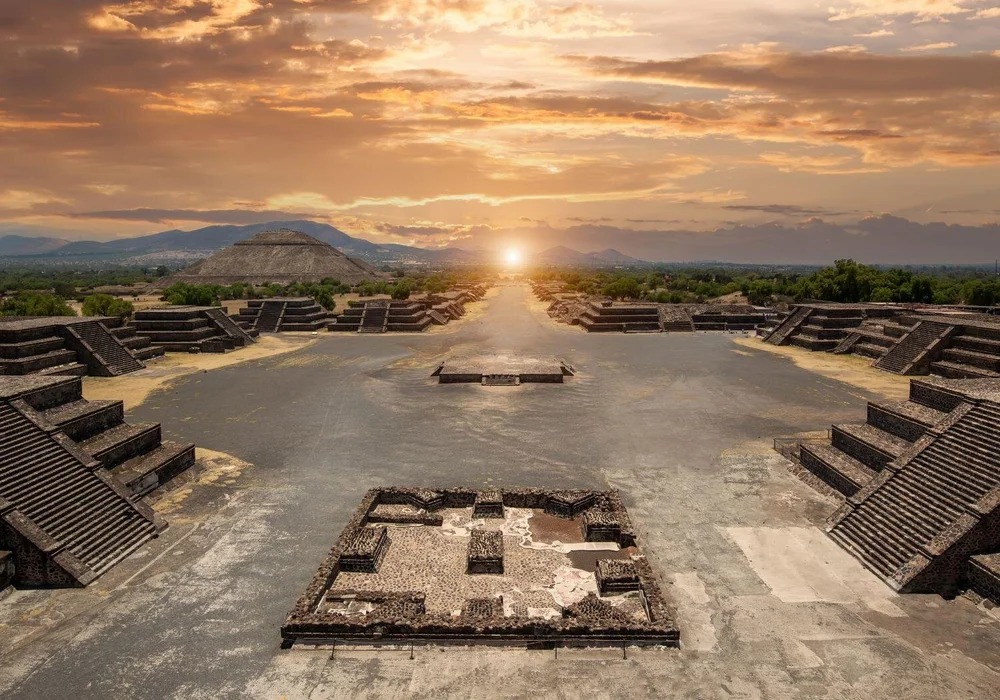
Mexico’s National Institute of Anthropology and History, known by its Spanish initials INAH, has led and supported extensive archaeological research at Teotihuacan for decades. Investigations of the Pyramid of the Sun have included work in tunnels and excavated areas that offered researchers access to sections beneath the massive structure. These studies have provided evidence that the pyramid was not merely an imposing platform: it was also a carefully consecrated monument whose construction involved meaningful deposits and ceremonial activity.
Reports from excavations at the Pyramid of the Sun have described a group of offerings that included greenstone objects, pottery fragments, animal remains, and human figurines. A mask carved from green stone was among the most discussed finds. Greenstone is a broad archaeological term that can include materials such as serpentine, jadeite, and related minerals. Identifying the precise stone requires scientific examination, and researchers generally rely on mineralogical and geochemical analysis rather than appearance alone.
Its polished surface and modeled facial features distinguish the mask from ordinary utilitarian objects. Masks in ancient Mesoamerica could have several roles. They might be associated with elite identity, ancestors, deities, ritual transformation, or funerary and dedicatory traditions. However, an artifact’s meaning cannot be determined from its appearance alone. Archaeologists compare it with securely dated objects, artistic conventions, and the exact circumstances of its burial before drawing conclusions.
The placement of the mask alongside other objects is therefore central to its interpretation. Deposits made during the building or enlargement of pyramids are often described as dedicatory offerings. These rituals could sanctify a structure, connect it to cosmological beliefs, or publicly affirm the authority and resources required to organize monumental construction. At Teotihuacan, where written records are limited, such material evidence is especially valuable.

Why Archaeological Context Matters
The scientific value of an archaeological object is inseparable from context. A greenstone mask displayed without information about its discovery can still be admired as art, but its original location can reveal far more. Researchers document the soil layers surrounding an item, its orientation, its relationship to architecture, and nearby artifacts. They also use dating methods and comparative analysis to establish whether objects were deposited at the same time or introduced during later activity.
At the Pyramid of the Sun, offerings may have been placed during different building phases. The monument was constructed and modified in antiquity, and identifying the timing of each deposit is necessary before linking it to a particular event. Archaeologists avoid assuming that every buried artifact belonged to a single ceremony or represented one uniform belief system. Instead, interpretations develop gradually as field records, laboratory studies, and comparisons with other Teotihuacan sites are reviewed.
Animal remains can also provide important evidence. Species selection, skeletal condition, and traces of mineral coatings or pigments may indicate that animals were included in formal ceremonial deposits. Across Mesoamerica, certain animals were associated with status, landscape, warfare, fertility, water, or the sky, but these meanings varied by place and period. Careful zooarchaeological analysis is required to distinguish between ritual deposition, food remains, and later disturbance.
Similarly, small human figurines may offer clues about identity and ceremony, yet they do not automatically represent specific individuals. Teotihuacan artists produced figures in several materials and styles, including stone, clay, and shell. Some may have been used in domestic settings, while others were placed in more formal sacred contexts. Their discovery with the mask strengthens the case that the deposit had ceremonial importance, but it does not eliminate uncertainty about the exact beliefs involved.
Teotihuacan: A Major City of Ancient Mesoamerica
Teotihuacan flourished roughly between the first century BCE and the middle of the first millennium CE. At its height, it was among the largest cities in the ancient Americas, with estimates often ranging into the tens of thousands and, in some scholarly reconstructions, well above 100,000 residents. Its population included people from different regions, reflected in neighborhoods and material traditions linked to places such as Oaxaca and the Gulf Coast.
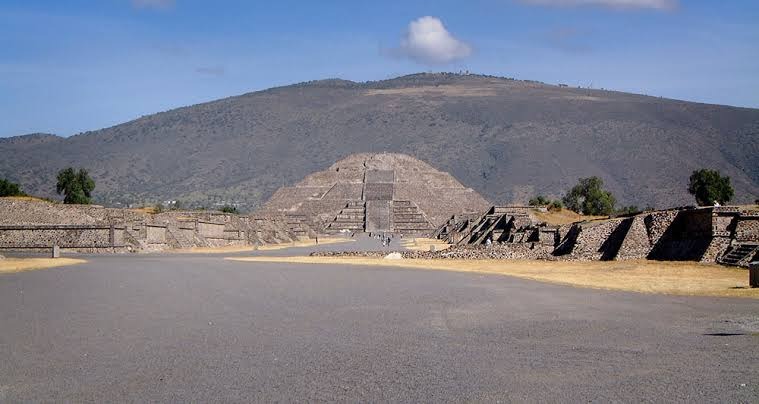
The city was organized on a grand scale. The Avenue of the Dead formed a major north-south axis, while the Pyramid of the Sun and Pyramid of the Moon dominated the ceremonial landscape. Residential compounds housed extended households and craft workers, and workshops produced obsidian tools, ceramics, ornaments, and other goods. Teotihuacan’s influence reached far beyond the Basin of Mexico through commerce, migration, religious exchange, and political relationships.
The Pyramid of the Sun remains the site’s largest structure and one of the most recognizable monuments in Mexico. It was built over earlier features and occupies a carefully selected position within the urban plan. Archaeological studies have shown that the monument was associated with a cave or tunnel beneath it, a feature that has attracted particular scholarly interest because caves held powerful symbolic importance in many Mesoamerican traditions. They could be understood as places of emergence, water, ancestors, fertility, or access to the underworld.
It is important, however, not to project later traditions directly onto Teotihuacan without evidence. The people who lived there did not leave behind a clearly deciphered body of historical texts comparable to those of some Maya cities. Their language or languages, political system, and self-designation remain subjects of research. This uncertainty is one reason excavated offerings and artworks are so significant: they are among the most direct sources for reconstructing aspects of Teotihuacan society.
Greenstone, Craftsmanship, and Long-Distance Exchange
The mask’s green material is meaningful in practical as well as symbolic terms. High-quality greenstone was valued across much of ancient Mesoamerica. Depending on the mineral involved, it may have originated from sources far from Teotihuacan, requiring exchange networks that linked communities across mountains, valleys, and coastal regions. Transporting and working such materials would have required specialized knowledge and access to valuable resources.
Green colors were frequently associated with preciousness and vitality in later Mesoamerican cultures, but interpretations must be applied carefully to the earlier Teotihuacan period. What can be stated with greater confidence is that stone objects of this quality were labor-intensive and unlikely to have been casual refuse. Their selection for a buried offering suggests that the deposit was planned and that the objects had recognized value.
Craft specialists shaped hard stones through abrasion, drilling, polishing, and patient finishing. The lifelike qualities that viewers may see in a mask’s face are the result of artistic choices involving proportions, contours, eyes, nose, and mouth. Whether the object was intended as a portrait, a divine image, or a more generalized ritual face remains an interpretive question. Researchers normally reserve the term “portrait” for cases with strong supporting evidence, since individualized features alone do not prove that a work depicts a known person.
Scientific testing may eventually clarify the artifact’s geological source and manufacturing history. Non-destructive techniques, including portable X-ray fluorescence and microscopy, can help specialists study elemental composition and surface modifications. Such research can be combined with broader studies of Teotihuacan trade to examine how prized materials entered the city and who controlled their circulation.

Ritual Offerings and Monumental Construction
Buried offerings are documented at important structures throughout Mesoamerica. They were often placed beneath floors, inside construction fills, at corners, along central axes, or near stairways and temples. These deposits could include ceramics, stone tools, figurines, shells, animals, and other materials. Their arrangement was frequently deliberate, making them an essential source of evidence for ancient ritual practice.
At Teotihuacan, the relationship between offerings and architecture suggests that major buildings were understood as more than functional spaces. Monumental projects could have helped create a shared civic and religious identity, bringing residents together around ceremonies, labor obligations, and processional routes. The Pyramid of the Sun’s scale alone indicates coordinated planning and a substantial workforce. Depositing valued objects during construction may have reinforced the monument’s sacred status at a key moment in its history.
Scholars also consider the possibility that offerings expressed connections between Teotihuacan and other parts of Mesoamerica. The city contained evidence of foreign contacts, and its art shows both local traditions and wider regional relationships. Materials from distant places, if identified in a deposit, can reveal exchange routes and cultural ties. Yet contact does not necessarily mean direct political control; trade, migration, diplomacy, and shared religious practices may all leave archaeological traces.
Public Interest and Responsible Interpretation
The unusual green color of the mask has encouraged lighthearted comparisons in popular culture, including references to the 1994 film The Mask. Such reactions can help draw public attention to archaeology, but the object’s deeper importance lies in what it can teach about an ancient society. The mask is not evidence of a fictional story or a simple curiosity. It is part of a carefully documented archaeological record connected to one of the world’s most studied pre-Columbian cities.
Responsible reporting on archaeology should distinguish verified findings from speculation. Claims about a mask’s exact owner, its precise religious purpose, or the identity of a figure it depicts should be presented as hypotheses unless they are supported by published research and official archaeological documentation. This approach respects both the complexity of the evidence and the work of Mexican researchers, conservators, and local institutions responsible for protecting cultural heritage.
Conservation is equally important. Stone artifacts can be affected by handling, changes in humidity, salts, previous repairs, and environmental exposure. Museums and archaeological authorities use controlled storage, documentation, and conservation assessments to preserve objects for study and public education. At a site as heavily visited as Teotihuacan, balancing tourism with preservation remains a long-term responsibility.
What the Teotihuacan Mask Reveals
The greenstone mask from the Pyramid of the Sun is a reminder that archaeology rarely provides a single, final answer. Instead, it offers evidence that is refined through excavation, conservation, laboratory analysis, and scholarly debate. The object’s value comes from its artistry and age, but also from its association with a major monument and a broader offering deposit.
For visitors and researchers alike, Teotihuacan remains a place of enduring questions. Who organized its enormous building projects? Which languages were spoken in its neighborhoods? How did its leaders maintain influence across a vast region? Why did the city decline after centuries of prominence? Each carefully recorded object adds a small but meaningful piece to that larger puzzle.
In this context, the mask is best understood as evidence of Teotihuacan’s sophisticated material culture and ceremonial life. It reflects the skill of ancient artisans, the importance of valuable materials, and the deliberate rituals surrounding the construction of monumental spaces. Continued research by INAH and other specialists may provide further detail, while the artifact itself remains a powerful link to the people who built and inhabited one of ancient America’s great cities.
Sources
Disclaimer: This content is intended for entertainment purposes only and is not based on real events.