Teenagers Learn an Important Lesson About Tipping and Gratitude
A restaurant visit can be much more than a meal. For young people attending a special event, it may be one of their first opportunities to make reservations, order independently, manage a budget, and experience the expectations that come with dining out. For restaurant staff, meanwhile, attentive service often requires patience, professionalism, and a willingness to help guests feel comfortable.
One widely shared story about a group of teenagers and their waiter highlights how misunderstandings about tipping can lead to disappointment, reflection, and ultimately a meaningful act of gratitude. The account centers on a group of young diners celebrating homecoming at a restaurant, where a waiter reportedly made an extra effort to give them a positive experience.
Although the details of personal viral stories can be difficult to independently verify, the central lesson is widely relevant: many young people are not taught how restaurant tipping works until they encounter it themselves. When expectations are unclear, mistakes can happen. What matters is how people respond after they understand the situation.
A Special Evening at a Restaurant
According to the account, the waiter recognized that the teens’ meal was an important occasion. Remembering the excitement of school events from his own teenage years, he aimed to provide the kind of attentive service he would offer any customer celebrating a milestone.
The group was reportedly treated with courtesy and respect throughout the evening. The waiter helped address food allergies and accommodated the diners’ needs, helping make the meal feel more comfortable and memorable. That level of care can be especially important for younger guests who may be unfamiliar with formal restaurant settings.
Good hospitality is not limited to taking an order and delivering food. It can include explaining menu options, answering questions clearly, respecting dietary requirements, and ensuring every guest feels welcome. For diners with allergies, careful communication between customers, servers, and kitchen staff is particularly important. Organizations such as Food Allergy Research & Education emphasize that people with food allergies should communicate their needs clearly and ask questions about ingredients and food preparation when dining away from home.
For the teenagers, the dinner appeared to represent a “grown-up” experience connected to a memorable school occasion. For the waiter, it was an opportunity to help create a positive experience for guests who were still learning the social and financial customs of restaurant dining.
Why Tipping Can Be Confusing for First-Time Diners
At the end of the meal, the group reportedly left a $3.28 tip. The amount left the waiter disappointed, particularly because tipping plays a significant role in the income of many restaurant workers in the United States.
Tipping practices vary substantially around the world. In some countries, service charges are automatically included in the bill, and additional gratuities are optional. In the United States, however, customers are generally accustomed to adding a voluntary tip for table service. Common guidance in U.S. restaurants often ranges from approximately 15% to 20% of the pre-tax or total bill, depending on local custom and the quality of service.
For adults who have spent years dining out, that expectation may feel familiar. For teenagers, however, tipping may not be obvious. Schools do not always teach practical consumer skills such as reading restaurant bills, calculating percentages, budgeting for tax and gratuity, or understanding how service workers are paid. Parents and caregivers may discuss these topics at home, but not every young person has received the same guidance.
The U.S. Department of Labor notes that federal labor rules allow employers to take a “tip credit” toward the minimum wage for eligible tipped employees under certain conditions, although state and local laws may provide stronger protections. The rules differ by location, but the broader reality remains that tips can be an important part of a server’s earnings.
That context helps explain why a small tip can feel discouraging to a restaurant worker, especially after providing careful, personalized service. At the same time, a low tip is not always evidence that a customer is uncaring. It may reflect a lack of knowledge, an incorrect calculation, financial limitations, or different cultural expectations.
The Apology That Changed the Situation
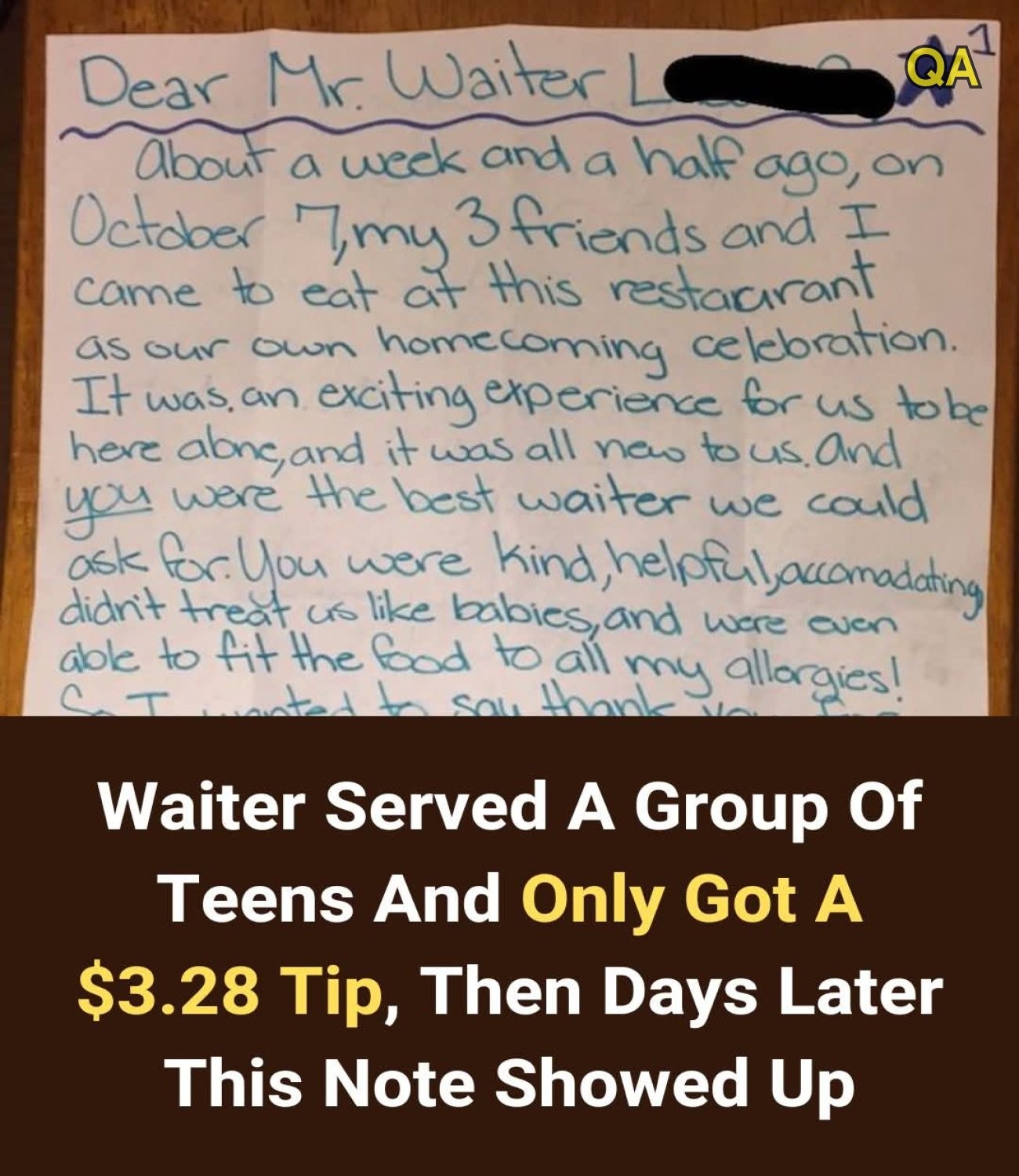
Several days after the meal, the waiter reportedly received a letter from the teenagers along with additional money. In the note, the young diners expressed appreciation for his kindness and acknowledged that they had not understood what a tip was or how much they should leave.
The letter reportedly explained that the group had emptied their pockets at the end of the meal and believed that $3.28 was an acceptable amount. After learning more about tipping customs, they realized that the amount did not reflect the service they had received. They then decided to correct the mistake.
According to the account, the envelope contained an 18% tip along with extra money intended as an apology. The teens also thanked the waiter for helping make their homecoming dinner enjoyable and for treating them respectfully rather than dismissing them because of their age.
This response is notable because it reflects accountability. Making a mistake is a normal part of learning, particularly when someone is navigating unfamiliar social expectations. Recognizing the error, discussing it honestly, and taking steps to make amends are valuable lessons that can extend far beyond a single restaurant meal.


Empathy Matters for Both Customers and Service Workers
The story offers a reminder that restaurant interactions involve people on both sides of the table. Servers are professionals doing demanding work that may include managing multiple tables, communicating with kitchen staff, handling payment requests, and responding to customer needs in a fast-paced environment. A thoughtful tip or a sincere thank-you can acknowledge that effort.
Customers, meanwhile, may arrive with different levels of experience and confidence. Teenagers dining out independently for the first time may be excited but uncertain. They may not understand the customary timing of a meal, the difference between sales tax and gratuity, or the expectation that a tip is usually calculated as a percentage of the bill.
A charitable interpretation can sometimes prevent an uncomfortable moment from becoming a lasting negative judgment. The waiter in this story initially had reason to feel disappointed. Yet the later letter revealed information he did not have at the time: the teens’ small tip was reportedly the result of inexperience rather than indifference.
This does not mean restaurant workers should be expected to accept poor treatment or inadequate compensation without concern. Rather, it highlights the value of context. Clear communication, empathy, and a willingness to learn can improve experiences for workers and guests alike.
How Families Can Teach Young People About Tipping
Practical financial education can make a first independent dining experience easier. Before attending a school dance, celebration, or group outing, families can talk with teenagers about the full cost of a restaurant meal. That discussion can include menu prices, sales tax, drinks, shared appetizers, and a tip.
A simple example can help. If a meal costs $40 before tax, a 15% tip would be $6, while an 18% tip would be $7.20 and a 20% tip would be $8. Many smartphone calculators can calculate percentages quickly, and some restaurants print suggested gratuity amounts directly on receipts.
Young diners can also be encouraged to plan ahead. Setting aside money for the tip before leaving home helps avoid spending the entire budget on food and beverages. When a group is sharing a bill, it can be helpful to decide in advance whether everyone will contribute evenly to the gratuity.
Other useful restaurant etiquette lessons include arriving on time for reservations, notifying staff about allergies early, treating employees respectfully, keeping noise at an appropriate level, and thanking workers for their assistance. These habits are not about performing adulthood; they are about showing consideration for other people in shared spaces.
Financial Literacy Beyond the Restaurant Table
The restaurant setting is one practical place where young people can build financial confidence. Understanding tips requires basic percentage skills, but it also involves budgeting and decision-making. A person must consider what they can afford, calculate the total cost, and recognize that the listed menu price may not be the final amount paid.
Financial literacy advocates often stress the importance of teaching practical money skills early. Topics such as saving, comparison shopping, borrowing, taxes, and budgeting can help young people prepare for greater independence. Everyday experiences, including restaurant meals, can provide useful opportunities to practice those skills in a real-world setting.
Schools, families, community groups, and employers can all contribute to this education. A brief conversation before a special event may prevent embarrassment later and help teenagers feel more prepared to navigate adult responsibilities with confidence.
A Lasting Lesson in Appreciation
The reported apology transformed an initially disappointing moment into a positive lesson about gratitude and responsibility. The teenagers’ decision to return with an explanation and a corrected tip showed that they took the waiter’s work seriously once they understood the situation.
It also demonstrated the importance of giving people room to learn. Young people will inevitably make mistakes as they gain independence. The most meaningful lessons often come not from never getting something wrong, but from responding thoughtfully after receiving new information.
For restaurant workers, customers, parents, and educators, the story underscores a simple point: kindness and clear communication can have a lasting effect. A considerate server can make a young person’s first formal dinner feel special. In return, a sincere apology and a better understanding of tipping can show respect for the labor behind that experience.
Whether the setting is a homecoming dinner, a family celebration, or an ordinary meal out, thoughtful behavior matters. Learning how to tip appropriately is one small but meaningful way to recognize service, support workers, and participate responsibly in everyday social life.
Sources
Disclaimer: This content is intended for entertainment purposes only and is not based on real events.