House Centipedes: Why They Appear Indoors and What They Mean
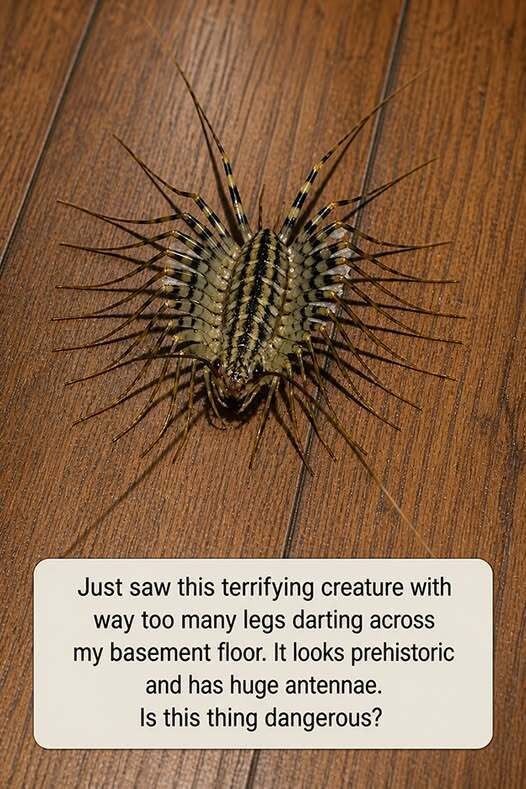
Seeing a house centipede race across a basement floor can be startling. Its long, delicate legs, rapid movement, and exceptionally long antennae can make it seem far larger and more alarming than it really is. For many people, the first reaction is understandable: surprise, discomfort, and concern about whether the animal could be harmful.
In most cases, the creature is a house centipede, scientifically known as Scutigera coleoptrata. Although it is often casually called an insect, a centipede is actually a myriapod, a distinct group of arthropods. House centipedes are common in homes in many temperate regions, especially in areas that provide moisture, shelter, and a supply of smaller arthropods to hunt.
While their appearance may be unsettling, house centipedes are generally not a serious danger to people or pets. They are predators that feed on other household pests, including spiders, silverfish, flies, small cockroaches, moths, and other insects. Their presence can, however, be useful information about conditions inside a building. A recurring sighting may point to excess moisture, entry gaps, or an underlying pest population that is providing the centipedes with food.
What Is a House Centipede?
House centipedes belong to the class Chilopoda. Unlike insects, which have six legs, centipedes have many legs and elongated, segmented bodies. Adult house centipedes commonly have 15 pairs of very long legs. Their legs become longer toward the rear of the body, which can create the impression that the animal has far more body length than it actually does.
They are usually grayish-yellow or brown with darker stripes along the body. A typical adult may have a body measuring about 1 to 1.5 inches long, although the full span of its legs can make it appear considerably larger. The long antennae at the front help the centipede sense its surroundings, while the rear pair of elongated legs can confuse predators and contribute to its distinctive silhouette.
House centipedes are built for speed. Their quick, unpredictable movement is one reason they can cause such a strong reaction when spotted indoors. They are most active in dim, quiet areas and are often noticed at night, when they leave cracks, floor drains, wall voids, or storage spaces to search for prey.
Why House Centipedes Appear in Basements, Bathrooms, and Garages

House centipedes need moisture and shelter. For that reason, they are frequently found in basements, bathrooms, laundry rooms, crawl spaces, garages, and other parts of a home where humidity may be higher. Damp concrete, plumbing areas, cardboard storage boxes, cluttered corners, and cracks around foundations can all offer suitable hiding places.
They also need food. A house centipede is more likely to remain in a building where it can find other small pests. Silverfish, springtails, carpet beetles, ants, flies, spiders, and cockroaches can all become prey. In this sense, a house centipede is not usually the original household pest problem. Instead, it may be a sign that the home offers both favorable environmental conditions and a reliable food source.
A single sighting does not necessarily mean there is a major infestation. Centipedes can enter through small gaps around doors, utility lines, windows, and foundations. Seasonal weather changes may also encourage them to move indoors in search of more stable conditions. Repeated sightings, particularly in the same damp area, are a stronger reason to inspect moisture levels and look for other pest activity.
Are House Centipedes Dangerous?
House centipedes are not known to spread disease to people, contaminate food in the way some pests can, or cause structural damage to a home. They generally avoid people and prefer to escape rather than confront anything larger than themselves. Their intimidating appearance is therefore out of proportion to the risk they usually pose.
Like other centipedes, house centipedes have modified front legs called forcipules that they use to subdue prey. These structures deliver venom to small insects and spiders. A bite to a person is uncommon and is most likely if the animal is trapped, handled, or pressed against skin. Available medical guidance indicates that centipede bites are generally painful but typically mild, often causing localized redness, swelling, or discomfort.
Anyone who experiences severe swelling, trouble breathing, dizziness, widespread hives, or other signs of a serious allergic reaction should seek urgent medical care. People with known insect or arthropod allergies, young children, and pet owners may also wish to contact a health professional or veterinarian if they have concerns following a suspected bite. However, severe reactions associated with common house centipedes are considered unusual.
Why House Centipedes Can Be Helpful
House centipedes are active hunters. Rather than feeding on fabrics, books, wood, or stored food, they pursue live prey. Their diet can include several arthropods that homeowners may find more troublesome, such as cockroaches, silverfish, flies, and spiders. This predatory role is why some pest-management experts describe them as beneficial in limited numbers.
That does not mean everyone needs to welcome centipedes indoors. It is reasonable to remove an individual centipede if its presence causes distress. Still, killing visible centipedes without addressing moisture or other pests may not solve the conditions that attracted them. A more effective long-term strategy is to make the home less hospitable to both centipedes and the smaller pests they eat.
Integrated pest management, often called IPM, emphasizes prevention, monitoring, sanitation, exclusion, and targeted control rather than relying only on broad pesticide treatments. This approach can reduce household pest activity while limiting unnecessary chemical exposure in living spaces.
How to Reduce House Centipedes in Your Home

The most reliable way to discourage house centipedes is to reduce dampness and remove hiding places. Basements and other lower levels deserve particular attention because they often combine cool temperatures, humidity, cracks, and stored materials.
Control Moisture and Humidity
Repair dripping pipes, leaking fixtures, and water intrusion around foundations. Use exhaust fans in bathrooms and laundry areas where possible. A dehumidifier can help maintain a drier basement, especially during humid weather. The U.S. Environmental Protection Agency recommends controlling indoor moisture as an important part of preventing mold and maintaining healthy indoor environments.
Check floor drains, sump pump areas, and corners near water heaters or washing machines. Persistent condensation, musty odors, peeling paint, or damp walls may indicate a moisture problem that needs more thorough investigation.
Seal Entry Points
Inspect the exterior and interior of the home for narrow gaps. Seal cracks in foundations, around window frames, near pipes, and around utility penetrations with appropriate materials. Add door sweeps and repair damaged weather stripping where needed. Screens on basement windows and vents should fit securely.
Exclusion is especially useful because house centipedes can move through surprisingly small openings. Sealing access points may also help reduce the entry of ants, spiders, cockroaches, and other arthropods that can serve as centipede prey.
Reduce Clutter and Improve Cleaning
Store belongings in clean, dry plastic containers rather than damp cardboard boxes when practical. Keep basement floors, closets, and garage corners free of accumulated paper, debris, and unused items that can create shelter. Vacuuming along baseboards, behind furniture, and around utility areas can remove dust, insects, and egg cases from other household pests.
Cleaning alone will not eliminate a moisture issue, but it can make it easier to spot pest activity and reduce protected hiding spaces. Pay attention to places that are seldom disturbed, including behind shelving, under sinks, and near floor drains.
Address Other Household Pests
Because house centipedes hunt other arthropods, reducing their food supply can reduce their numbers over time. If you have noticed silverfish, cockroaches, ants, or frequent spiders, identify the source of that activity. Food crumbs, unsealed pantry goods, pet food left out overnight, standing water, and clutter can support broader pest populations.
Sticky monitoring traps placed in low-traffic areas can help indicate where pests are active. They should be used carefully and kept away from children and pets. If pest activity is persistent or extensive, a licensed pest-management professional can inspect the property and recommend a targeted plan.
What to Do When You Find a House Centipede
If you find one house centipede, there is usually no need to panic. Avoid touching it with bare hands. A simple method of removal is to place a glass or container over the animal, slide a stiff piece of paper underneath, and release it outdoors away from the home. A vacuum can also remove an individual centipede, although addressing the surrounding conditions remains more important for long-term prevention.
For people who prefer not to handle any household arthropods, asking another adult for help or contacting a pest professional may be the most comfortable option. Avoid using excessive pesticide sprays in enclosed rooms, particularly when the underlying issue may be dampness or another pest population. Products should always be used only as directed on their labels.
When Repeated Sightings Need Further Attention
Frequent sightings can justify a closer inspection of the home. Look for signs of dampness, plumbing leaks, foundation cracks, standing water, or concentrations of other insects. In older buildings, gaps around pipes and aging seals may create both entry routes and humid hiding spaces.
Homeowners and renters should consider professional assistance if they find many centipedes regularly, suspect hidden water damage, notice cockroach activity, or cannot identify the source of moisture. A qualified building, plumbing, or pest-control professional can help distinguish between a minor seasonal issue and a condition requiring repair.
The Bottom Line on House Centipedes
House centipedes may look alarming, but they are usually harmless predators that prefer dark, humid spaces and feed on smaller household pests. Their speed, long legs, and antennae can make an unexpected encounter memorable, particularly in a basement or bathroom at night. Yet they are generally more of a nuisance than a threat.
The most useful response is to focus on prevention: reduce moisture, seal cracks, clear clutter, and address the insects and spiders that may be attracting centipedes. By improving these conditions, homeowners can make indoor spaces less welcoming to house centipedes while also supporting a cleaner, drier, and more comfortable home environment.
Sources
- U.S. Environmental Protection Agency: Mold and Moisture
- University of California Agriculture and Natural Resources: Integrated Pest Management
- University of Minnesota Extension: House Centipedes
- Penn State Extension: House Centipedes
- Centers for Disease Control and Prevention: Indoor Environmental Health Resources
Disclaimer: This content is intended for entertainment purposes only and is not based on real events.