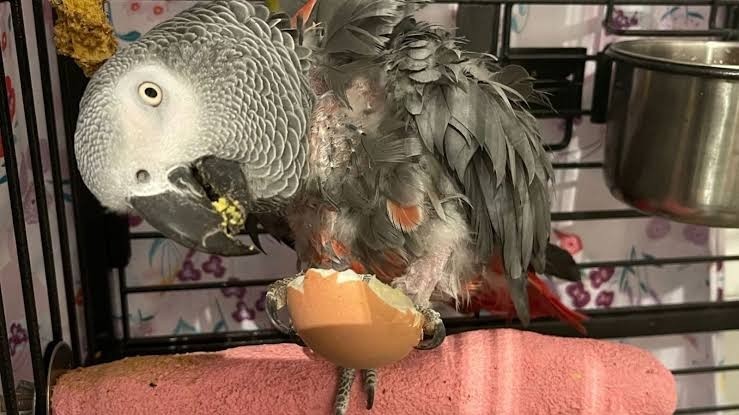
Parrot Stays By Dying Owner’s Side During Her Final Days
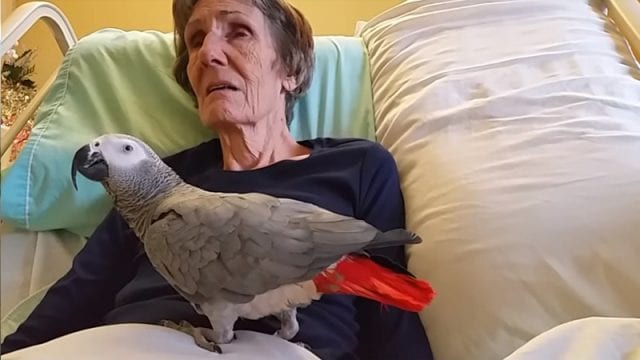
Stories about the bond between people and animals often resonate because they reflect something familiar: companionship built over years of shared routines, trust, and care. A widely shared video featuring Sinbad, an African grey parrot, beside his longtime owner during her final days has prompted many viewers to reflect on the emotional lives of birds and the meaningful relationships they can form with people.
According to the account shared with the video, Sinbad had lived with his owner for approximately 25 years. In the recording, the parrot appears unusually quiet while remaining near her hospital bed as family members gather around. The owner is heard speaking affectionately to the bird, creating a tender moment that has been shared widely online.
While a short video cannot establish exactly what an animal is feeling, veterinary researchers and animal behavior specialists agree that parrots are highly social, perceptive animals. African grey parrots in particular are known for their advanced cognitive abilities, strong social awareness, and capacity to form lasting attachments with both other birds and familiar human caregivers.
A Long-Term Bond Between a Parrot and a Caregiver
Companion parrots can live for decades, making their relationships with human families very different from those involving many other household pets. African grey parrots may live for 40 years or longer in appropriate conditions, although lifespan varies based on genetics, diet, veterinary care, housing, and overall welfare. A bird that has spent 25 years with one person has likely experienced countless daily interactions, including feeding, communication, training, play, and quiet time together.
For a social species, these repeated experiences can create a stable and important bond. In the wild, African grey parrots live in social groups and depend on flock relationships for communication, safety, and access to resources. In a home environment, people can become part of a bird’s social world. This does not mean a human replaces the needs that other parrots can meet, but it does help explain why a bird may seek out a familiar person or react when household routines suddenly change.
Sinbad’s stillness in the video should not be interpreted as proof of one particular emotion. Birds may become quiet for many reasons, including changes in their environment, unfamiliar medical equipment, reduced activity in a room, altered schedules, or the emotional behavior of people nearby. Nevertheless, the scene is consistent with what many experienced parrot caregivers and avian veterinarians observe: birds often notice changes in the people and settings they know best.
What Science Says About African Grey Parrot Intelligence
African grey parrots are among the most extensively studied bird species in animal cognition research. Their abilities gained international attention through the work of the late animal cognition researcher Dr. Irene Pepperberg and Alex, an African grey parrot whose learning and communication skills were studied over several decades.
Research involving African greys has shown that some individuals can learn to identify colors, shapes, materials, quantities, and categories. They can also use vocal labels in ways that appear meaningful within the context of their training. These findings do not mean that parrots think exactly like humans or that every individual has the same abilities. They do, however, demonstrate that birds possess sophisticated forms of learning and problem-solving that were once underestimated.
Claims that African grey parrots have the intelligence or emotional capacity of a child of a specific age are common online, but experts generally view such comparisons as oversimplified. Intelligence is not one single trait, and bird cognition has developed along a different evolutionary path from human cognition. A more accurate description is that African greys can demonstrate impressive memory, social learning, vocal communication, and flexible problem-solving abilities.
These traits may help parrots respond to changes in their caregivers’ voices, facial expressions, body language, and routines. They are attentive observers. A parrot may learn that certain tones of voice predict attention, food, departure, or comfort. Over time, this close observation can make a bird seem especially sensitive to the mood of people in the household.
Can Parrots Experience Grief or Loss?
Scientists are careful when assigning human emotional labels to animals. It is difficult to know precisely what another species experiences internally. However, animal behavior research supports the view that many social animals can show behavioral changes after the loss or absence of a close companion.
In parrots, the departure, illness, or death of a familiar person or bird may lead to noticeable changes. A previously active bird may vocalize more or less often, search for the absent companion, become withdrawn, show altered eating habits, or display repetitive behaviors. These responses should be taken seriously, especially if they continue for more than a brief period.
Avian veterinarians caution against assuming that every change is purely emotional. Birds are skilled at concealing illness, a survival adaptation that can make medical problems difficult to detect in their early stages. Loss of appetite, reduced activity, unusual droppings, feather damage, or sudden quietness may indicate stress, illness, pain, or a combination of factors. A qualified avian veterinarian should evaluate a bird showing concerning changes in behavior or physical condition.
The word “grief” may be meaningful to families who observe a bird reacting to a loss, but responsible care should include practical support. Maintaining predictable routines, providing familiar enrichment, monitoring food and water intake, and arranging veterinary care can help protect a bird’s welfare during a major household transition.
Why Quiet Companionship Can Matter
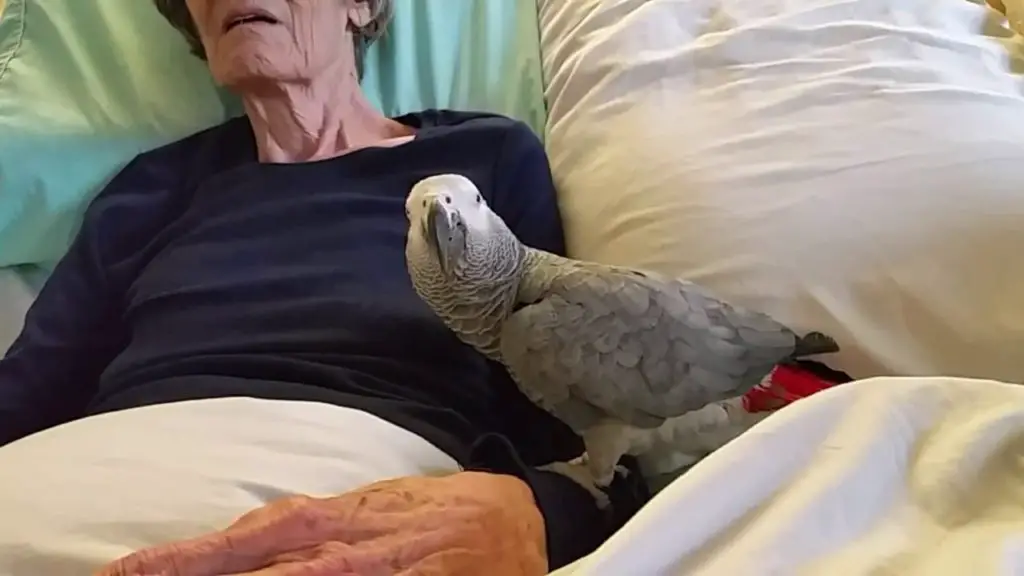
The most striking element of Sinbad’s story is not a dramatic action but his apparent decision to remain close. For many people, the quiet presence of a trusted animal can be comforting during serious illness or at the end of life. Families may find reassurance in allowing a beloved pet to be nearby when it is safe, practical, and approved by the care setting.
Hospitals, hospices, and care facilities have different rules regarding animal visits. These policies are designed to protect patients, visitors, and staff, particularly people with weakened immune systems or severe allergies. In some cases, supervised visits from a family pet or trained therapy animal may be possible. Families interested in arranging a visit should speak directly with the care team and facility administrators rather than assuming it will be permitted.
When a pet visit is allowed, careful planning is important. The animal should be healthy, calm, properly supervised, and kept away from medical devices and other patients. A familiar blanket, carrier, or perch may help a bird feel secure. For parrots, short visits are often preferable because travel, unfamiliar sounds, and new surroundings can be stressful.
Even when an in-person visit is not possible, people can sometimes maintain a connection through familiar voices. Some birds respond to recordings of a caregiver speaking or singing, although every bird is different. The goal should always be to support the animal’s comfort rather than to force a reaction.
Responsible Care for African Grey Parrots
The emotional impact of stories like Sinbad’s can inspire people to consider bringing a parrot into their home. However, African grey parrots are not simple or low-maintenance pets. Their intelligence and long lifespan require a major commitment from caregivers, often extending across generations of a family.
A healthy parrot needs more than a cage and food. Welfare experts recommend a spacious, safe living environment; regular opportunities for exercise; appropriate sleep; social interaction; mental enrichment; and routine examinations by an avian veterinarian. Nutrition should be discussed with a veterinary professional, but it commonly includes a balanced formulated diet supplemented with suitable vegetables and other veterinarian-approved foods. Seeds alone are generally not considered a complete diet for most companion parrots.
Enrichment is essential because parrots are active, curious animals. Foraging activities, safe toys, training sessions, climbing opportunities, and changes to their daily activities can help prevent boredom. A parrot’s need for attention should also be balanced with the ability to spend time independently, since overly dependent behavior can become difficult for both the bird and caregiver.
Prospective owners should also plan for the bird’s future. Because African greys may outlive their original caregivers, families should consider a written care plan that names a trusted future guardian. The plan can include information about the bird’s diet, medical history, routines, favorite enrichment, veterinary provider, and social preferences. This kind of preparation is an act of care that can reduce uncertainty for a bird if a major life change occurs.
Social Media Reactions and the Importance of Context
The video of Sinbad and his owner has moved viewers around the world, with many people sharing memories of their own pets offering companionship during difficult times. Such reactions reflect the important role animals play in family life. Pets can be sources of routine, affection, and comfort, particularly during periods of illness, bereavement, or change.
At the same time, emotional videos should be viewed with care. Social media clips usually show only a few moments of a much larger story. Viewers cannot reliably diagnose an animal’s emotional state from a brief recording, and viral descriptions may include details that are difficult to independently verify. The most constructive response is to appreciate the relationship shown while relying on veterinary and scientific guidance for broader claims about animal behavior.
Sinbad’s story remains meaningful because it draws attention to a reality supported by decades of observation and research: parrots are complex social animals whose wellbeing depends on secure relationships, skilled care, and respect for their individual needs. Whether the bird was responding to a familiar voice, an unfamiliar atmosphere, a disrupted routine, or the condition of a beloved caregiver, his presence illustrates the depth that can develop in a long shared life.
A Reminder of the Commitment Behind Animal Companionship
The image of an African grey parrot sitting quietly beside a longtime owner is a powerful reminder that companionship is built through everyday care. For 25 years, Sinbad and his owner reportedly shared a home and a routine. That history matters. It helps explain why a moment of quiet closeness can feel so profound to the family and to viewers who understand the role animals can play in human lives.
For families caring for pets during illness or loss, the most important steps are compassionate and practical: keep routines as steady as possible, watch for signs of distress or illness, seek professional veterinary advice when behavior changes, and make a long-term care plan. These measures honor the bond between people and animals while ensuring that the animal receives the support it needs.
Sources
Disclaimer: This content is intended for entertainment purposes only and is not based on real events.