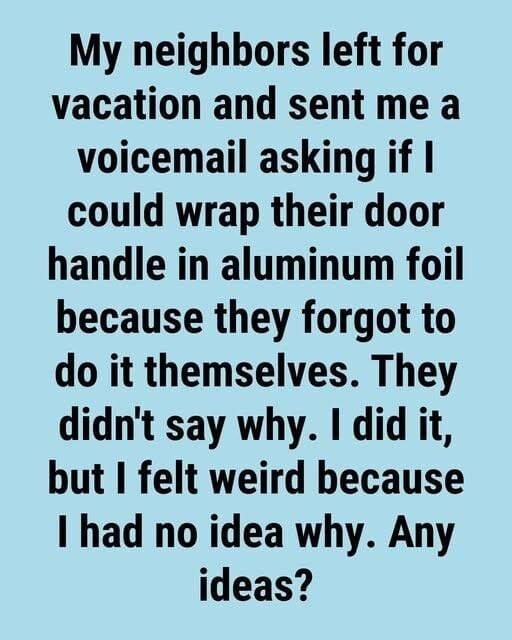
Wrap Aluminum Foil Around Your Door Handle Before Bed: A Surprisingly Effective Security Trick
Advice to wrap aluminum foil around a door handle before going to bed has circulated widely online as a simple home-security tip. The claim is usually that crinkled foil can reveal whether someone has touched or tried to move an exterior door handle while a resident is asleep or away. It is inexpensive, easy to try, and has become especially popular in posts aimed at travelers, older adults, and people seeking extra reassurance at home.
However, it is important to separate a harmless personal habit from an effective security measure. Aluminum foil is not a reliable burglary-prevention tool, a lock, an alarm, or evidence that a person attempted to enter a property. A piece of foil may move for many ordinary reasons, including wind, vibration, routine household activity, pets, or someone in the home using the door. It can also be removed or disturbed without providing useful information about what happened.
For homeowners and renters, the more useful question is not whether foil can make a door handle look different, but how to build a practical, layered home-security routine based on secure locks, lighting, awareness, communication, and properly installed equipment. This article examines the viral aluminum foil door-handle idea, explains its limitations, and outlines credible steps that can help make a home more secure.
Why the Aluminum Foil Door Handle Idea Became Popular
The appeal of aluminum foil is easy to understand. It is a common household item, costs very little, and can be wrapped around a handle in moments. Once it is crumpled or folded, any movement may be visible. Some social-media posts describe this as a “tamper indicator,” suggesting that a changed appearance could alert a resident to possible contact with the handle.
In a narrow sense, foil can show that the foil itself has been moved. But that is very different from proving that someone tried to enter a home. A changed piece of foil does not identify who touched it, when it happened, why it happened, or whether the door was ever at risk. It also does not notify the resident in real time. If a person is asleep, they may not notice any change until the next morning.
There is no established guidance from major law-enforcement agencies, home-security authorities, or consumer-safety organizations recommending aluminum foil as a primary method of preventing unlawful entry. Credible home-security guidance generally emphasizes securing doors and windows, keeping valuables out of view, maintaining clear sightlines around a property, and using dependable systems such as alarms, cameras, and exterior lighting where appropriate.
Can Aluminum Foil on a Door Handle Prevent a Break-In?
Aluminum foil should not be viewed as a deterrent that can stop an attempted break-in. It does not strengthen a door, protect a lock cylinder, reinforce a frame, or prevent an intruder from using another point of access. It cannot replace a deadbolt, a solid strike plate, window locks, or good door hardware.
A door’s real security depends on several physical elements working together. These include the door material, hinges, locking mechanism, strike plate, screws anchoring the plate into the frame, frame condition, and the way the door is installed. A strong lock on a weak door frame may still leave a property vulnerable. Likewise, a visible door camera may offer useful awareness but does not physically reinforce the entrance.
If someone chooses to use foil as a personal reminder to check an exterior door, it should be treated only as an informal visual cue. It should never create a false sense of protection. In fact, relying on an improvised method may distract from more meaningful improvements, such as replacing worn hardware or fixing a door that does not latch correctly.
The Problem With Unverified Home Security “Hacks”
Viral safety advice often spreads because it offers a quick answer to a genuine concern. People want to feel secure in their homes, particularly after hearing about neighborhood crime, traveling alone, moving into a new property, or experiencing a stressful event. Yet simple tips can become misleading when they imply a level of reliability that they do not have.
Security experts generally encourage a risk-based approach. This means considering the actual features of the home, the local environment, who has access to keys or entry codes, and whether doors and windows are in good repair. It also means recognizing that no single product or household trick guarantees safety.
For example, foil can easily produce false alarms. A resident may become worried after finding it shifted, even when there is an innocent explanation. Conversely, foil may remain in place even if someone looked around the property but did not touch that particular handle. Reliable security planning should reduce uncertainty where possible, not add more of it.
Anyone who believes there has been suspicious activity should avoid drawing conclusions from foil or other improvised markers alone. Document clear observations, such as damaged property, missing items, or unfamiliar people repeatedly attempting access, and contact local law enforcement through the appropriate non-emergency or emergency channel. Immediate emergencies should always be reported to local emergency services.
Evidence-Based Ways to Improve Door Security
Exterior doors are among the most important parts of a home-security plan. The following measures are widely recognized as more meaningful than a foil-wrapped handle.
Use Quality Locks and Check That They Work Properly
Doors should have functioning locks that are appropriate for the type of entrance. A deadbolt can provide an additional layer of protection on many exterior doors, while doors with multipoint locking systems should be maintained according to the manufacturer’s instructions. A lock is only useful if residents consistently use it, so make locking exterior doors part of an everyday routine.
Keys should also be managed carefully. If keys have been lost, if a resident has moved into a previously occupied home, or if access has been given to people who no longer need it, changing locks or having them rekeyed may be sensible. Renters should discuss lock changes and security upgrades with their landlord or property manager before making alterations.
Reinforce the Door Frame and Strike Plate
The lock engages with the strike plate on the frame, making this area especially important. A loose, damaged, or poorly fitted strike plate can reduce the practical value of a good lock. Homeowners may consider asking a qualified locksmith, builder, or property-maintenance professional to inspect exterior doors, frames, hinges, and hardware.
Professional assessment is particularly useful for older homes, doors that stick, doors with visible gaps, or frames affected by moisture, settling, or past damage. Repairs can improve both security and everyday usability.
Keep Entryways Well Lit
Exterior lighting can make entrances easier for residents and visitors to use safely after dark. Motion-activated lights may be useful around driveways, paths, side gates, and entrances, provided they are installed in a way that does not create unnecessary glare for neighbors or road users. Replace burned-out bulbs promptly and trim vegetation that blocks light from reaching key areas.
Good lighting is not a guarantee against crime, but it can support visibility, help cameras capture clearer images, and make it easier for residents to notice maintenance issues around the property.
Consider Alarms and Cameras Carefully
Home alarms, video doorbells, and exterior cameras can offer notification and documentation features that aluminum foil cannot. Their effectiveness depends on placement, configuration, internet reliability where applicable, privacy settings, and regular maintenance. A camera should cover an entry route without unnecessarily recording private areas belonging to neighbors.
Before purchasing equipment, consumers should review data-storage policies, subscription costs, battery requirements, and local privacy rules. Strong account passwords and two-factor authentication are also important for connected devices. A smart device with weak digital security can create a different set of risks.
Simple Nighttime Home Security Habits
Most effective security routines are straightforward and repeatable. Before bed, residents can take a brief, calm walk through the home to confirm that exterior doors and accessible windows are closed and locked. This is often more useful than repeatedly checking a single door handle or relying on a makeshift signal.
A practical evening checklist may include:
- Locking exterior doors, including side and garage-access doors.
- Checking that accessible windows are shut and secured.
- Making sure spare keys are not left in obvious outdoor locations.
- Turning on appropriate exterior lighting.
- Keeping phones charged and emergency contacts available.
- Confirming that alarm systems or cameras are armed or functioning, if installed.
- Ensuring gates, sheds, and garages are secured when they contain valuable tools or equipment.
These steps are also useful before leaving for work, going on holiday, or staying away overnight. Consistency matters more than complicated rituals.
Home Security for Travelers and People Living Alone
Travelers may encounter similar aluminum foil advice in relation to hotel rooms and temporary accommodation. In these settings, guests should prioritize the security features provided by the property. Check that the door closes and latches fully, use the deadbolt or internal lock if available, and use the peephole or door viewer before opening the door to an unexpected visitor.
If a hotel-room door lock, window, or other security feature appears damaged, guests should contact the front desk and request assistance or a different room. Travelers should avoid opening the door for people who cannot verify why they are there. Reputable accommodations have procedures for identifying staff and handling guest concerns.
People living alone may find a trusted network especially valuable. Sharing travel plans with a friend or family member, arranging for someone to collect mail during a long absence, and knowing local non-emergency contact numbers can help reduce isolation and support practical decision-making. Community awareness is often more useful than alarming online claims.
What to Do if You Notice a Genuine Security Concern
A changed piece of foil, an unfamiliar knock, or a noise outside does not automatically mean a crime has occurred. Staying calm and assessing the situation is important. Do not confront a person you believe may be trying to enter the property. If there is an immediate threat or you believe someone is attempting to gain entry, move to a safer location and contact emergency services.
For non-urgent concerns, residents can record relevant facts: dates, times, descriptions of observable damage, screenshots from security devices, or details of repeated suspicious behavior. Avoid publicly sharing identifying images or accusations before authorities have reviewed the situation. Misidentification can cause serious harm to innocent people and may interfere with an investigation.
After a concerning incident, a locksmith or property professional can inspect doors and locks for damage. Neighbors may also be able to share useful information, such as whether they observed a delivery issue, maintenance visit, or other ordinary reason for activity near the entrance.
The Bottom Line on Aluminum Foil and Door Handles
Wrapping aluminum foil around a door handle may serve as a personal visual reminder, but it is not a proven home-security strategy. It cannot prevent entry, reliably detect tampering, or replace proper locks, reinforced frames, lighting, alarms, cameras, and sensible daily habits.
The strongest approach to home security is layered and realistic. Maintain doors and windows, secure access points, use trustworthy equipment when it suits your needs, protect digital accounts connected to smart devices, and contact appropriate local services when there is a real concern. Rather than depending on a viral household hack, residents can gain greater confidence by focusing on practical measures supported by established safety guidance.
Sources
Disclaimer: This content is intended for entertainment purposes only and is not based on real events.