The 710 Mystery and More: A Collection of Classic Everyday Jokes
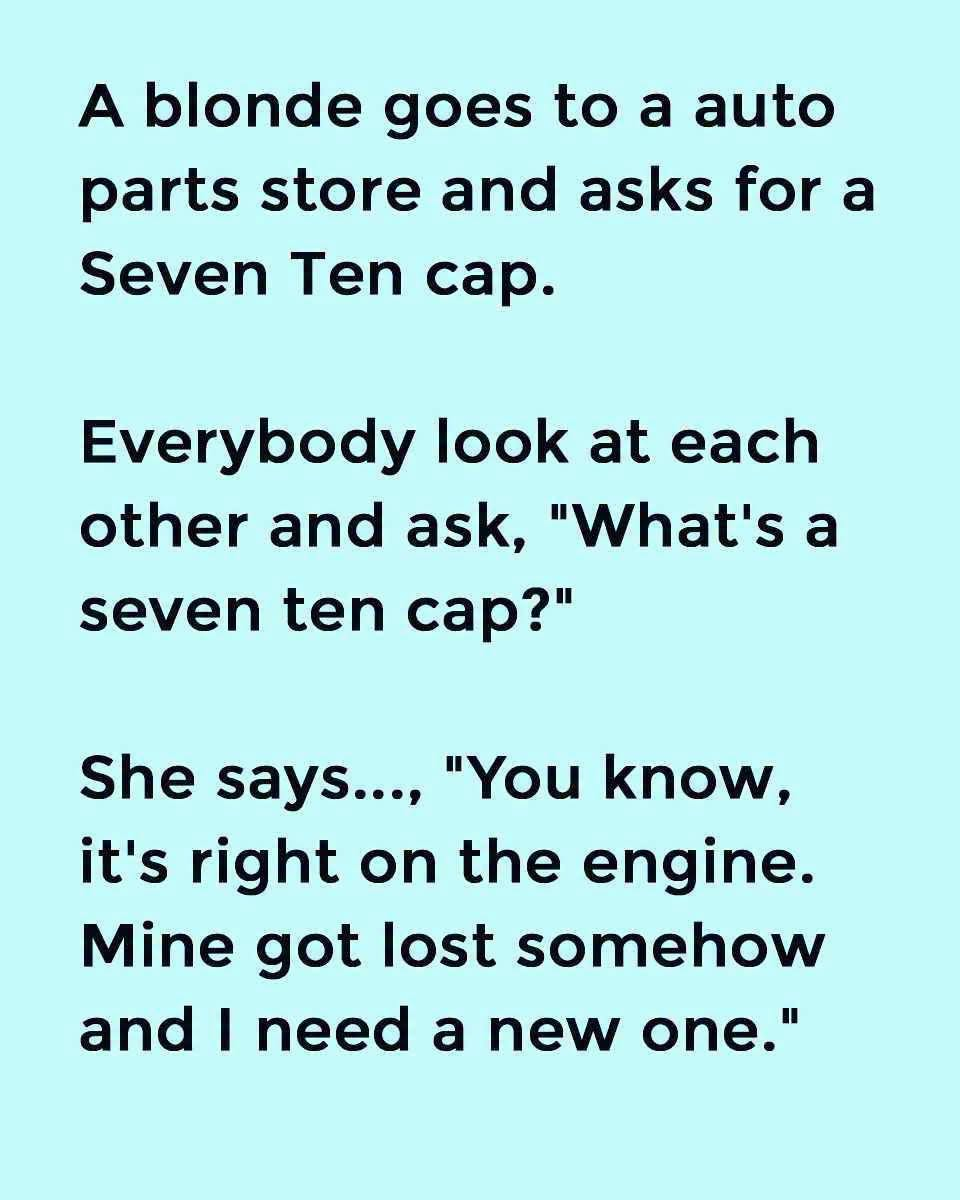
A brief exchange at an auto parts counter can become memorable when everyday language, vehicle terminology, and a familiar visual joke collide. The classic “710 mystery” is built around a simple misunderstanding: when the number 710 is turned upside down, it resembles the word “OIL.” In the joke, a customer asks for a replacement “710 cap,” leaving employees puzzled until the number is written down and viewed from another angle.
Although the story is fictional and has appeared in many versions over the years, it reflects something genuine about automotive ownership. Cars contain dozens of parts, labels, fluids, warning lights, and maintenance terms that may not be immediately clear to every driver. A person does not need to be an automotive expert to own or maintain a vehicle, but knowing a few basic terms can make routine service safer, quicker, and less stressful.
This lighthearted automotive joke also offers a useful reminder: asking questions is always preferable to guessing when it comes to a vehicle. Whether someone is looking for an oil filler cap, checking tire pressure, replacing windshield wipers, or responding to a dashboard warning light, clear communication and reliable information matter.
What Is the “710” Mystery?
The humor behind the 710 mystery is visual. Written normally, “710” looks like an ordinary number. When rotated 180 degrees, the characters can be read as “OIL.” The joke usually imagines a customer visiting an auto parts store or repair shop and requesting a “710 cap” for a particular car. Staff members search catalogues and inventories for a part that does not exist under that name.
Eventually, the customer writes “710” on paper. Once the paper is turned upside down, the intended meaning becomes clear: the customer is referring to the cap on the engine’s oil filler opening.
It is a classic example of a harmless misunderstanding joke. Its appeal comes from the gap between what one person means and what another person hears. The customer may be using a description that seems obvious to them, while the employees are searching for a technical product name. Similar jokes are common in workplaces, schools, and families because they rely on a familiar experience: people often use different words for the same object.
The Real Automotive Part Behind the Joke: The Oil Filler Cap
In real-world automotive language, the item commonly associated with the 710 joke is called an engine oil filler cap or simply an oil cap. It sits on top of the engine, usually on the valve cover, and covers the opening where engine oil is added.
The oil cap is not the same as the oil drain plug, which is located underneath the engine oil pan and is removed when old oil is drained during an oil change. It is also different from the dipstick, where applicable, which is used to check the engine oil level. Many modern vehicles still have a dipstick, though some newer models use electronic oil-level monitoring systems instead.
Oil caps are generally marked with an oil-can symbol or the word “oil.” Some may display the recommended oil-viscosity grade, such as 0W-20 or 5W-30. Drivers should not rely only on a cap marking, however. The vehicle owner’s manual is the most dependable source for the manufacturer’s oil specification, oil capacity, service schedule, and approved product standards.
Why Engine Oil Matters
Engine oil performs several important functions. It lubricates moving components, helps reduce friction, supports temperature control, assists with cleaning internal engine surfaces, and helps protect against wear. Oil is designed to work within a specific range of operating conditions, which is why manufacturers recommend particular viscosity grades and performance standards.
Using the correct oil and maintaining an appropriate oil level can support reliable engine operation. On the other hand, operating a vehicle with insufficient oil or with oil that does not meet the manufacturer’s requirements may contribute to mechanical problems. The exact consequences depend on the vehicle, engine design, driving conditions, and duration of use.
For this reason, routine oil maintenance is more than a minor chore. It is part of responsible vehicle ownership. Drivers who are unsure how to check oil, identify the filler cap, or select the right product can consult the owner’s manual, a qualified technician, or a reputable auto parts retailer.
How to Identify an Oil Filler Cap Safely
For many vehicles, identifying the oil filler cap is straightforward. Before opening the hood, park on a level surface, place the transmission in park or neutral as appropriate, and set the parking brake. If the vehicle has been driven recently, allow the engine compartment to cool. Hot engine components can cause burns.
After opening the hood, look for a round cap on the upper part of the engine. It commonly has an oil-can icon, the word “oil,” or an oil-viscosity marking. The appearance and location vary by manufacturer and engine layout, so the owner’s manual remains the best guide.
It is important not to confuse the oil filler cap with other fluid reservoirs. Engine coolant, brake fluid, windshield washer fluid, and power steering fluid, where fitted, each have separate reservoirs or access points. Adding a fluid to the wrong location can create safety concerns or lead to vehicle damage. When there is uncertainty, stopping and seeking professional guidance is the sensible option.
Clear Communication at an Auto Parts Store or Repair Shop
The 710 joke works because the customer and staff are using different descriptions. In real life, a few details can help an auto parts employee or technician identify the right item efficiently.
When seeking a replacement part, drivers can provide the vehicle’s year, make, model, engine size, and vehicle identification number when available. They can also explain what the part does or where it is located. A photo of the component, taken safely with the engine off and cool, may be helpful as well.
For an oil filler cap, useful descriptions include “engine oil cap,” “oil fill cap,” or “cap on top of the engine where oil is added.” These phrases are clearer than a visual nickname and are more likely to match catalogue terminology.
Good service communication is a two-way process. Customers should feel comfortable asking staff to explain unfamiliar terms. In turn, businesses can use plain language, confirm the vehicle details, and avoid assuming that every customer has the same mechanical knowledge. Respectful communication is especially valuable because maintenance decisions can involve cost, safety, and long-term reliability.
Automotive Literacy Is a Practical Life Skill
Not every driver needs to perform their own repairs. Modern vehicles are complex, and many tasks require specialized tools, technical training, or access to manufacturer information. Still, basic automotive literacy can help consumers make informed choices.
Useful topics include understanding dashboard warning indicators, knowing how to check tire pressure, recognizing the importance of scheduled maintenance, reading the owner’s manual, and keeping records of service work. The National Highway Traffic Safety Administration encourages drivers to maintain their vehicles and pay attention to safety-related concerns such as tires, brakes, lights, and recalls.
Knowing the difference between routine maintenance and urgent warning signs can also be helpful. For example, an oil-pressure warning light should not be ignored. Unlike a maintenance reminder, an oil-pressure warning may indicate a condition that requires prompt attention. Drivers should follow the vehicle manufacturer’s instructions and seek qualified service when needed.
Educational resources can make this information more approachable. Owner manuals increasingly include diagrams, searchable digital versions, and maintenance schedules. Many manufacturers also publish support materials online. Government safety agencies offer recall databases and consumer guidance, allowing owners to check whether their vehicle has an unresolved safety recall.
Why Everyday Jokes About Cars Endure
Automobiles have long been a source of everyday humor because they are widely used but not always fully understood. A vehicle is both familiar and technical: most people depend on one for transportation, yet many of its systems remain out of sight beneath the hood or behind computer-controlled interfaces.
The 710 mystery is especially durable because it requires no complicated setup. It relies on a visual trick, a moment of confusion, and a final explanation that is easy to understand. It does not depend on a specific era of vehicle technology, which is why versions of the joke continue to circulate.
At its best, this kind of humor can encourage curiosity rather than embarrassment. Everyone encounters unfamiliar terminology in some area of life, from technology and finance to medicine and car care. Asking for clarification is a practical response, not a sign of failure. In automotive settings, asking an extra question may even prevent the purchase of an incorrect part or the use of an unsuitable fluid.
Practical Tips for Oil Cap and Oil Maintenance Questions
If an oil cap is missing, cracked, or damaged, it is worth replacing with a cap designed for the specific vehicle or confirmed as compatible by a qualified parts professional. The correct fit matters because the cap helps protect the oil-fill opening from dirt and moisture and supports the engine’s intended operating setup.
Drivers should also avoid overfilling engine oil. Adding too much oil can be harmful in some engines, just as running with too little oil can be a problem. The owner’s manual explains the correct checking procedure, including whether the engine should be warm or cold and how long to wait after shutting it off before checking the level.
When in doubt, use the manufacturer’s recommended oil type and follow the maintenance interval that applies to the vehicle and driving conditions. Some vehicles calculate oil-life estimates electronically, while others use mileage or time intervals. Severe driving conditions, such as frequent short trips, towing, extreme temperatures, or heavy stop-and-go traffic, may affect maintenance needs.
A Small Joke With a Useful Lesson
The 710 mystery remains a cheerful reminder that words, symbols, and perspective can change the meaning of what we see. The fictional search for a “710 cap” ends with a simple realization: the customer meant an oil cap all along.
Beyond the punchline, the story highlights an important everyday lesson. Drivers do not need to know every part under the hood, but they benefit from knowing where to find trustworthy information and how to ask clear questions. An owner’s manual, a reputable repair professional, and official safety resources can turn uncertainty into useful knowledge.
Whether the subject is an oil cap, a warning light, or a scheduled service item, a careful and informed approach is more valuable than guesswork. And if a mysterious number appears on a notepad at an auto parts counter, turning the paper upside down may be a good place to start.
Sources
- National Highway Traffic Safety Administration: Vehicle Safety and Maintenance Information
- National Highway Traffic Safety Administration: Vehicle Recall Search
- Federal Trade Commission: Consumer Guidance on Auto Repair
- AAA: How to Check Your Engine Oil
- Cars.com: General Guide to Checking Engine Oil
Disclaimer: This content is intended for entertainment purposes only and is not based on real events.