I Stole a Married Man, a Husband and Father of Three Children Who Trusted Him Completely
Infidelity can leave lasting emotional consequences for everyone involved: the committed partner, the person outside the relationship, children, relatives, and friends. This personal account is a reflection on betrayal, denial, accountability, and the difficult process of choosing a healthier future. It is not a justification for harmful choices, but an exploration of how people can recognize unhealthy relationship patterns and respond with honesty and compassion.
At the time, I told myself that I had found love. I became involved with a married man who was also a father of three children. Rather than confronting the reality of his existing commitments, I focused on the attention he gave me and the future he described. I convinced myself that intense feelings could make an unfair situation acceptable.
Looking back, I understand that no relationship can become healthy through secrecy, dishonesty, or disregard for the people who may be affected. A relationship may involve complicated emotions, but each adult remains responsible for their own decisions. The married partner is responsible for honoring commitments or ending a relationship respectfully before starting another one. The other person also has a responsibility to consider whether they are participating in a situation built on deception.
When Attraction Is Mistaken for Commitment
Strong attraction can feel persuasive, especially when someone offers affection, reassurance, or promises of a new beginning. In my case, I interpreted his words as proof that I was uniquely important to him. I believed that he would leave his marriage and that we would create a stable life together.
But attraction and commitment are not the same. Commitment is demonstrated through consistent, transparent, and responsible actions over time. It includes honesty, respect, emotional reliability, and a willingness to address difficult choices directly. When a relationship begins with hidden messages, broken promises, or conflicting stories, those patterns deserve attention rather than excuses.
Relationship experts often emphasize that trust is built through behavior. A person may make powerful promises, but promises alone do not create security. It is reasonable to pause and assess whether actions align with words, whether boundaries are being respected, and whether every person involved is being treated with basic dignity.
The Human Cost of Betrayal
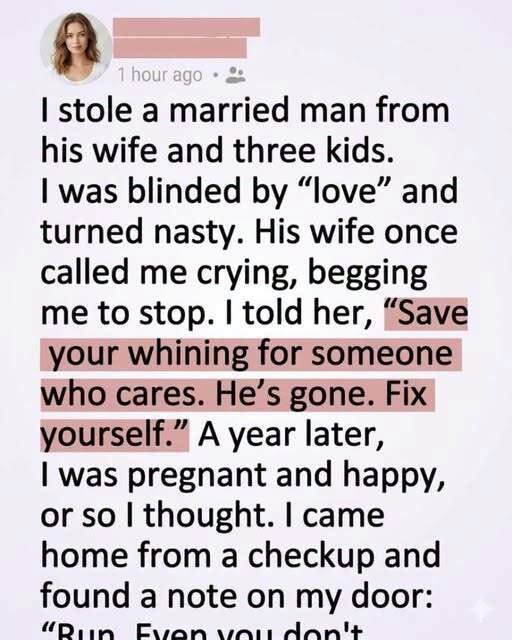
When his wife contacted me, she was distressed and asked me to stop seeing her husband. Instead of responding with empathy, I reacted defensively. I dismissed her feelings because acknowledging her pain would have meant confronting my own role in a situation that was harming a family.
I regret that response. Emotional distress after discovering betrayal can be profound. People may experience sadness, anger, anxiety, confusion, sleep disruption, or difficulty concentrating. The impact can extend beyond the couple, particularly when children are exposed to conflict, uncertainty, or major changes in the household.
There is no single correct response to betrayal, and people should not be judged for needing time, support, or professional guidance. For some, rebuilding a relationship may be possible through genuine accountability and sustained change. For others, separation may be the healthier choice. What matters is that decisions are made safely, honestly, and with consideration for emotional well-being.
Denial Can Make Warning Signs Easier to Ignore
A year later, I was pregnant and living with him. I continued to imagine that our relationship would be different from the one he had left behind. I saw the life we were building as proof that I had been chosen. Yet I ignored information that should have made me question the relationship more carefully.
Denial can be a powerful coping mechanism. When people have invested time, emotions, money, or major life plans into a relationship, it can feel overwhelming to admit that the relationship may not be what they hoped. This is sometimes described as the difficulty of changing course after a major emotional investment. It does not excuse harmful conduct, but it can help explain why people remain in situations that no longer feel safe, respectful, or stable.
Some warning signs are worth taking seriously: repeated dishonesty, unexplained absences, secrecy around phones or finances, blame shifting, pressure to accept behavior that causes distress, and a pattern of making promises without following through. One sign alone does not always define a relationship, but repeated patterns should not be ignored.
Learning the Truth About Repeated Patterns
One evening, after returning from a routine appointment, I found a note at my door telling me to leave. Soon afterward, I received photographs showing him with another pregnant woman. The message was difficult to process because it challenged the story I had been telling myself.
The person who sent the information was his former wife. She was the person I had treated cruelly when she was trying to protect her family. Yet she chose to share what she knew rather than allow me to remain unaware. Her message was not about celebrating my pain. It was a warning that I was repeating a pattern she had already lived through.
That moment forced me to recognize something important: I had not created a secure relationship by becoming his partner. I had entered a cycle of dishonesty that existed before I arrived. While every relationship is different and people can change, meaningful change requires more than regret after being confronted. It requires openness, responsibility, repair, and sustained behavior that demonstrates respect for others.
Accountability Without Self-Destruction
Feeling ashamed was painful, but shame alone did not solve anything. I had to distinguish between accountability and self-punishment. Accountability meant admitting that I had caused harm, refusing to make excuses, and choosing different behavior moving forward. It meant recognizing that the former wife’s pain was real and that my earlier response had lacked compassion.
Self-punishment, by contrast, would have kept me trapped in hopelessness. It is possible to regret past choices while still believing that a better future is possible. People who recognize harmful relationship patterns can learn from them, seek support, set stronger boundaries, and become more considerate partners, parents, friends, and family members.
Taking responsibility may include offering an apology when it is appropriate and welcome, though an apology should never pressure another person to forgive or reconnect. It may also mean respecting distance, avoiding further conflict, and focusing on actions that prevent future harm. Accountability is most meaningful when it changes how a person behaves.
Planning a Safe and Practical Separation
After learning what had happened, I began planning to leave. I reviewed my finances, considered where I could live, and thought carefully about how I could support myself and my child. Leaving a relationship can be emotionally and practically challenging, particularly during pregnancy or while caring for children.
People considering a separation may benefit from building a support network before making major changes. Trusted relatives, friends, counselors, health professionals, legal advisers, and community organizations may be able to provide practical information and emotional support. Keeping copies of important documents, reviewing personal finances, and arranging a safe place to stay can help reduce uncertainty.
Safety should always come first. If a partner’s behavior causes someone to fear for their immediate safety, they should contact local emergency services or a trusted domestic violence support organization. Support services can help people think through options privately and without judgment. Seeking help is not a sign of failure; it is a step toward stability and protection.
Why Children Need Stability, Honesty, and Care
My unborn child changed the way I viewed my choices. I began to think less about preserving a relationship at any cost and more about creating a stable, respectful environment. Children do not need adults to be perfect, but they benefit from dependable care, age-appropriate communication, and freedom from being drawn into adult conflicts.
Parents and caregivers facing separation can help children by maintaining predictable routines when possible, avoiding negative comments about the other parent in front of them, and listening carefully to their concerns. Children may have questions or emotional reactions that change over time. Calm reassurance and professional support can be valuable, especially if a child appears persistently distressed.
Co-parenting is not always easy, and it may not be appropriate in every situation. However, when it is safe and workable, respectful communication focused on a child’s needs can reduce conflict. The goal is not to erase the past, but to make decisions that give children the greatest possible security and care.
Compassion Can Be More Powerful Than Revenge
The former wife had every reason to feel anger toward me. I had dismissed her suffering and contributed to a painful chapter in her life. Yet her warning gave me the information I needed to make a different decision. Her choice showed that compassion does not require pretending that harm never happened. Sometimes compassion means telling the truth clearly, even when that truth is difficult to hear.
Her actions also reminded me that people should not be reduced to the worst moment of their lives. The former wife was not simply someone I had viewed as an obstacle. She was a person navigating betrayal, parenting, and the aftermath of a broken marriage. I had failed to see her humanity until I faced a similar reality.
Empathy does not erase responsibility, but it can interrupt cycles of resentment. It can encourage people to respond with greater maturity, seek help before acting impulsively, and recognize the wider consequences of private choices.
Building Healthier Relationships After Betrayal
Leaving did not instantly remove the sadness, embarrassment, or uncertainty I felt. Recovery took time. I had to rebuild confidence in my own judgment and learn what healthy love should look like. Healthy relationships are not defined by competition, secrecy, or emotional highs alone. They are grounded in mutual respect, consent, clear communication, and dependable behavior.
For anyone recovering from betrayal, whether they were deceived, participated in an affair, or are trying to rebuild after a difficult relationship, professional counseling can offer a confidential place to process emotions. Therapy is not only for crisis. It can help people understand patterns, develop boundaries, communicate more effectively, and make decisions based on their values.
It is also important to avoid broad assumptions. Not every person who has made a harmful choice will repeat it, and not every damaged relationship has the same outcome. However, lasting change requires honesty and evidence over time. Trust should not be demanded; it must be earned.
A Lesson in Honesty, Empathy, and Responsibility
I once believed that winning someone’s attention meant I had won love. I now understand that attention without honesty is not security, and possession is not commitment. The relationship I thought would validate me instead forced me to confront the harm caused by denial, selfishness, and silence.
The person I had hurt most became the person who showed me the truth I needed to see. Her honesty did not remove the consequences of my past choices, but it gave me an opportunity to make a better one. I left, focused on building stability, and began learning how to treat myself and others with greater respect.
The central lesson is not that pain is deserved or that people cannot change. It is that healthy relationships require integrity. When a relationship depends on deception, someone is likely to be hurt. Choosing honesty, accountability, and compassion may be difficult in the moment, but those choices create a stronger foundation for the future.
Sources
Disclaimer: This content is intended for entertainment purposes only and is not based on real events.