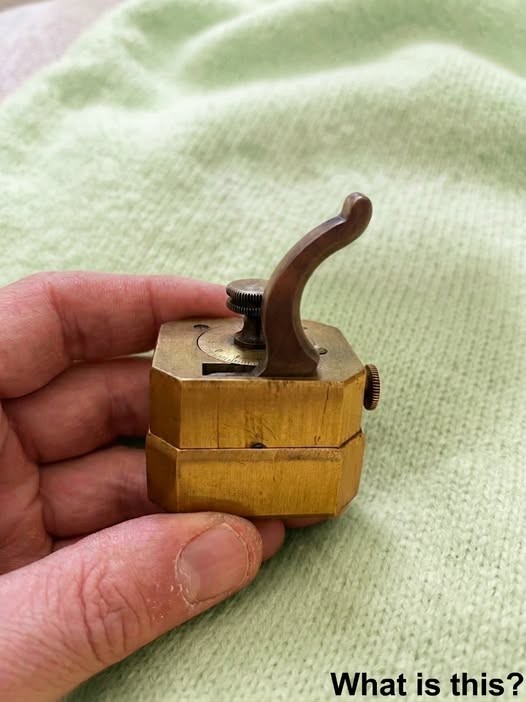
What Is an Old Medical Scarificator?
An old medical scarificator can look like a small mechanical curiosity at first glance. Often compact, metal-bodied, and carefully engineered, these instruments were once part of mainstream medical practice. Today, they are historical objects that offer an important reminder: medicine has changed dramatically as scientific evidence, anatomy, microbiology, and clinical testing have improved.
A Small Antique With a Significant Medical History
Discovering an unfamiliar antique tool can be intriguing. A pocket-sized object with levers, springs, or a clicking mechanism may appear to be a precision device from an earlier era of engineering. Yet some of these items have a more serious history. A medical scarificator was designed for bloodletting, a treatment that was widely used in Europe and North America for centuries.
Scarificators typically contained a set of small blades inside a protective case. When the device was activated, the blades briefly moved outward and made shallow, controlled cuts in the skin. The goal was to draw blood quickly and, compared with using a single handheld blade, with greater regularity. Their construction reflected the medical thinking and technical craftsmanship of their time.
Although these objects may now be displayed in museums, private collections, or antique shops, they should be understood as historical medical artifacts rather than usable healthcare equipment. Their importance lies in what they can teach modern audiences about the changing standards of medical knowledge and patient care.

How Bloodletting Became a Common Treatment
Bloodletting has roots in ancient medical traditions. For much of Western history, many physicians relied on the theory of the four humors: blood, phlegm, black bile, and yellow bile. This framework held that health depended on maintaining a balance among these bodily substances. Illness was often interpreted as a sign that the balance had been disrupted.
Within that system, removing blood was thought to restore equilibrium. Physicians and other practitioners used bloodletting for a wide range of complaints, including fever, inflammation, headaches, and general discomfort. The approach was not based on the modern understanding of disease mechanisms, infection, or circulation. Instead, it reflected the most influential medical theories available at the time.
There were different methods of bloodletting. A practitioner might open a vein with a lancet, apply leeches, or use scarification tools. Scarification involved making small cuts, sometimes followed by the application of suction cups to encourage blood flow. A mechanical scarificator made these small incisions more quickly than a manually held blade could.
It is important to view this practice in historical context. Many patients and clinicians believed bloodletting was beneficial because it was supported by long-established medical teaching and professional custom. Before the development of germ theory, laboratory diagnostics, antibiotics, and rigorous clinical trials, doctors had far fewer reliable ways to determine whether a treatment was safe or effective.
What a Medical Scarificator Was Designed to Do
A scarificator was an example of mechanical innovation applied to medicine. Many surviving instruments are made of brass, steel, or other durable metals. They often include a spring-loaded internal mechanism and a row or grid of small blades. Depending on the design, a user could adjust the blade depth or prepare the spring before placing the device against the skin.
When activated, the mechanism released the blades for a very brief moment. The design aimed to create a series of shallow, similar cuts with a single action. Some scarificators were made for physicians, while others may have been used by barber-surgeons or other practitioners working within the medical systems of the period.
These devices are sometimes confused with ordinary grooming tools, small boxes, or mechanical instruments because their blades are concealed when not in use. Their compact form was practical for practitioners who traveled to patients’ homes or worked in clinics and hospitals. However, the appearance of precision should not be mistaken for proof of medical effectiveness.
Modern medicine recognizes that unnecessary blood loss can be harmful, particularly for people who are already ill, dehydrated, anemic, or vulnerable to infection. The historical scarificator therefore represents both ingenuity in design and the limits of medical theory before evidence-based practice became the standard.
Why Medical Understanding Changed
The gradual decline of routine bloodletting was linked to major changes in medical research and professional practice. During the nineteenth century, physicians increasingly began to observe outcomes more systematically. They compared treatments, recorded patient experiences, and questioned practices that had been accepted primarily because of tradition.
Scientific discoveries also transformed how illness was understood. Research into human anatomy and physiology clarified the role of the circulatory system. Later, the acceptance of germ theory helped explain how many diseases spread and why hygiene, sanitation, and infection control mattered. These developments made it increasingly clear that many conditions could not be explained by an imbalance of bodily humors.
The growth of evidence-based medicine further changed expectations. Rather than relying chiefly on authority, custom, or anecdotal experience, healthcare professionals increasingly evaluated treatments through research, clinical observation, and controlled studies. Modern medical decisions are still refined as new evidence emerges, but the central principle is that treatments should be assessed for both likely benefits and possible harms.
Bloodletting did not disappear overnight. Some medical practices persist for years after questions arise about their effectiveness, especially when they are deeply embedded in culture and professional training. The history of scarificators shows why scientific humility is valuable. Medical knowledge advances when established assumptions can be tested, challenged, and revised.
Modern Medical Uses of Controlled Blood Removal
Although historical bloodletting is no longer used as a general remedy, controlled removal of blood can still have a role in specific, medically diagnosed conditions. Therapeutic phlebotomy, for example, may be recommended by qualified clinicians for certain disorders involving excess iron or an unusually high concentration of red blood cells.
These modern procedures are fundamentally different from traditional bloodletting. They are based on established diagnoses, laboratory testing, clinical guidelines, sterile equipment, and ongoing medical supervision. The amount of blood removed, the timing of treatment, and the patient’s health status are assessed carefully. A person should never attempt to treat symptoms through self-directed blood removal or by using historical instruments.
In contemporary healthcare, blood donation is also a separate, carefully regulated activity. Donation centers screen donors, use sterile single-use equipment, and follow protocols designed to protect both donors and recipients. These safeguards demonstrate how far medical practice has moved from earlier eras, when infection prevention and the biological effects of blood loss were not fully understood.
What Historical Medical Tools Reveal About Patient Experience
It can be tempting to view a scarificator only as an unusual antique. However, it also represents the experiences of patients who sought relief at a time when medical options were limited. People often placed substantial trust in practitioners and in the prevailing beliefs of their communities. For many, treatment was connected to hope, reassurance, and the desire to act against illness when few alternatives existed.
Historical medical objects can therefore encourage a more empathetic perspective. Earlier patients were not simply uninformed; they lived within the knowledge systems available to them. Likewise, many healthcare workers were attempting to help using the theories and tools they had been taught. Understanding this context does not validate ineffective treatment, but it does help explain why such practices became widespread.
Museums and medical history collections preserve scarificators alongside other instruments to document this long process of change. Their collections help visitors see that healthcare is shaped by scientific discovery, social conditions, ethics, technology, and public trust. They also show that improvements in medicine depend not only on new tools, but on better methods for evaluating whether those tools truly help patients.
Safety and Preservation Advice for Antique Medical Instruments
Anyone who finds or purchases a possible scarificator should handle it cautiously. Antique medical devices may have sharp components, old lubricants, corrosion, or material residues. They should not be activated, tested on skin, or used for any health-related purpose. Even if an object appears clean, historical instruments cannot meet modern standards for sterilization or safe clinical use.
If the item may be valuable, consultation with a reputable antiques specialist, museum curator, or medical-history collection can help identify it. Clear photographs of the exterior, markings, mechanism, and case can be useful for research, but handling should be minimized if the object is fragile. Conservation professionals can advise on appropriate storage, which often includes keeping metal artifacts dry, stable, and away from direct sunlight.
For people interested in the history rather than ownership of such objects, museum collections and university archives offer safer ways to learn. These institutions frequently provide contextual information that explains how historical devices were used and how medical understanding has evolved.
The Lasting Lesson of the Medical Scarificator
An old medical scarificator is a powerful symbol of medicine’s long journey. Its concealed blades and spring mechanism may seem impressive as examples of historical design, but its deeper significance is intellectual and ethical. It reminds us that a treatment can be common, confidently recommended, and technically sophisticated while still resting on an incomplete understanding of health.
Modern healthcare is not perfect, and medical research continues to develop. Yet today’s standards place greater emphasis on transparent evidence, patient safety, informed consent, peer review, and careful monitoring of outcomes. These principles help reduce harm and improve care over time.
Seen in this light, the scarificator is more than a mysterious old tool. It is a witness to earlier efforts to heal, to the limitations of past knowledge, and to the value of questioning certainty. Its history encourages patients and professionals alike to seek reliable information, discuss treatment choices openly, and value medical care grounded in credible evidence.
Sources
Disclaimer: This content is intended for entertainment purposes only and is not based on real events.