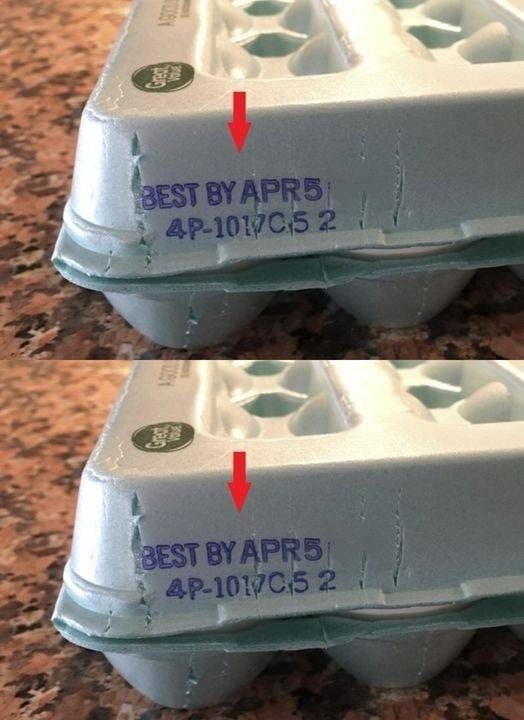
How to Read Julian Dates on Egg Cartons
Eggs are a practical, nutritious staple found in many kitchens. They can be scrambled for breakfast, baked into desserts, poached for lunch, or added to countless family meals. Yet carton labels can be confusing, particularly when shoppers see a sell-by date alongside a three-digit number known as a Julian date. Understanding these markings can help people choose fresher eggs, store them properly, reduce unnecessary food waste, and make informed food-safety decisions.
By

Why Egg Carton Dates Can Be Confusing
Unlike some foods, eggs may carry several types of dates and codes depending on where they are sold and which company packaged them. A carton may display a sell-by date, a best-by date, an expiration date, a packing date, or some combination of these labels. These dates do not all mean the same thing.
In the United States, federal rules require egg cartons with the official U.S. Department of Agriculture grade shield to display a packing date. This is commonly written as a three-digit Julian date. Cartons may also carry an expiration date, although this is not required on all egg packages under federal standards. State requirements can vary, so shoppers may encounter different labels in different locations.
The important point is that a printed date is not always a simple instruction to discard food immediately. It is often intended to help retailers manage inventory and help consumers estimate quality. Food safety also depends on whether eggs have been refrigerated consistently, handled hygienically, and cooked appropriately.
What Is the Julian Date on an Egg Carton?
The Julian date on an egg carton is a three-digit number ranging from 001 to 365. It identifies the day of the year when the eggs were packed. In leap years, the range can extend to 366. The system counts each day in sequence rather than using a conventional month-and-day format.
For example, 001 represents January 1, 032 represents February 1 in a non-leap year, and 365 represents December 31. If a carton shows 150, it was packed on the 150th day of the year, which is generally May 30 in a non-leap year. Shoppers can use a calendar or a reliable date converter to identify the corresponding date if they do not want to count the days manually.
This code is sometimes called a packing date because it reflects when eggs were washed, graded, packaged, and placed in the carton. It does not show the date the hen laid the egg. Still, it is one of the most useful indicators available to consumers who want to compare the relative freshness of cartons on a store shelf.
How Fresh Are Eggs After the Packing Date?
According to USDA food-safety guidance, shell eggs should be refrigerated at 40°F (4°C) or below and can generally be kept for three to five weeks from the date they are placed in the refrigerator. Eggs may remain usable after the date on the carton when they have been handled and stored correctly, although their quality gradually changes over time.
Freshness is especially noticeable in recipes where egg structure matters. A very fresh egg usually has a rounded yolk and a thick white that stays close to the yolk when cracked into a bowl. As the egg ages, moisture and carbon dioxide slowly escape through the porous shell. The air cell inside becomes larger, the white becomes thinner, and the yolk membrane weakens. These changes do not automatically mean that the egg is unsafe, but they can affect cooking results.
Older eggs may spread more in a frying pan and may not produce the same height when poached. They can still work well in many cooked dishes, including omelets, casseroles, cakes, muffins, and baked goods, provided they have been refrigerated and show no signs of spoilage. In fact, eggs that are not extremely fresh can sometimes be easier to peel after hard-cooking because the internal membrane separates more readily from the shell.
Sell-By, Best-By, and Expiration Dates Explained
A sell-by date is primarily designed for stores. It helps retailers know how long to display a product for sale. It is not necessarily a food-safety deadline for consumers. USDA guidance notes that eggs can often be used for several weeks after a sell-by date when they have remained properly refrigerated.
A best-by or best-if-used-by date is generally about expected quality. It suggests the period when the manufacturer believes the food will offer its best flavor, texture, or performance. Eggs may remain suitable after this date, but consumers should evaluate their storage history and condition carefully.
An expiration date can carry more significance, but its meaning can also be influenced by state regulations and product labeling practices. For eggs with a USDA grade mark, an expiration date cannot be more than 30 days after the pack date. A carton may therefore be several weeks old while still being legally offered for sale. That is one reason the Julian date can be helpful when choosing between cartons.
When shopping, compare the packing dates of the available cartons and select the most recent one if freshness is important for your intended recipe. Also inspect the carton for cracks, moisture, or obvious damage. Do not purchase eggs with broken shells, since cracks can allow bacteria and other contaminants to enter.
Do Older Eggs Create a Food Safety Risk?
Egg age alone does not determine whether an egg will cause foodborne illness. The larger food-safety concerns are contamination, temperature control, and preparation. Eggs can sometimes carry Salmonella, a type of bacteria that may cause illness. Proper refrigeration and thorough cooking reduce the risk.
As eggs age, their physical quality declines, and storage conditions become increasingly important. An egg left at an unsafe temperature or exposed to cross-contamination should not be treated the same way as an egg that has stayed consistently refrigerated. The U.S. Food and Drug Administration advises consumers to refrigerate eggs promptly, keep them in their original carton, and avoid leaving them at room temperature for extended periods.
For recipes that use raw or lightly cooked eggs, such as certain homemade dressings, sauces, desserts, or drinks, pasteurized eggs or egg products are a safer choice. This recommendation is particularly relevant for young children, older adults, pregnant people, and individuals with weakened immune systems, who may face a higher risk of serious complications from foodborne illness.
Cooking eggs until both the yolk and white are firm is a straightforward safety measure for many home meals. Egg dishes such as quiches, breakfast casseroles, and other combined recipes should be cooked to an internal temperature of 160°F (71°C), according to USDA guidance. Safe handling matters at every stage, from shopping and refrigeration to preparation and leftovers.
How to Store Eggs for Maximum Freshness
Proper storage is one of the most effective ways to preserve egg quality. Refrigerate eggs at 40°F (4°C) or below as soon as possible after purchase. The USDA recommends keeping them in their original carton rather than transferring them to the molded egg holder often built into refrigerator doors.
The original carton offers practical protection. It helps prevent shells from cracking, reduces the chance that eggs will absorb strong odors from nearby foods, and retains the packing information and date labels. Keeping eggs on an interior refrigerator shelf, rather than in the door, also helps maintain a more stable temperature. Refrigerator doors are opened frequently and may become warmer than the main compartment.
It is generally best not to wash eggs at home before storing them. Commercially produced eggs in the United States are washed and processed under regulated conditions. Additional washing can damage the protective outer layer or potentially move bacteria across the shell if done improperly. If there is visible dirt on an egg, follow local food-safety guidance and avoid using cracked or heavily soiled eggs.
Hard-cooked eggs require different timing from raw shell eggs. USDA guidance recommends refrigerating hard-cooked eggs and using them within one week. Prepared egg dishes should be refrigerated promptly and used within a few days. Perishable foods should not remain at room temperature for more than two hours, or one hour when temperatures are above 90°F (32°C).
Can the Water Test Tell Whether Eggs Are Good?
A popular kitchen method involves placing an egg in a bowl of water. A very fresh egg is likely to sink and lie flat, while an older egg may stand upright or float because its air cell has grown larger. This test can provide a rough indication of age, but it does not reliably establish food safety.
An egg can sink and still be unsuitable if it has been improperly stored or contaminated. Conversely, an egg that floats may simply be older and could still be usable after further inspection. For this reason, the water test should not replace safe storage practices, carton-date information, or a careful check after cracking the egg.
If there is uncertainty, crack the egg into a clean bowl separate from other ingredients. Discard it if it has an unusual odor, an abnormal appearance, or visible signs of spoilage. A sulfur-like or strongly unpleasant smell is a clear warning sign. Avoid tasting raw batter or uncooked eggs to assess quality.
How to Buy Eggs More Confidently
Reading carton information can make grocery shopping simpler. First, look for the three-digit Julian packing date and compare it with other cartons. Next, check any sell-by, best-by, or expiration information. Finally, make sure the carton is clean, dry, and free from cracked eggs.
It is also sensible to place eggs in the cart near the end of a shopping trip, especially in warm weather. Take them home promptly and refrigerate them without delay. These small habits help protect both quality and safety while limiting food waste.
Eggs remain a useful source of protein and other nutrients, and they can fit into many balanced eating patterns. Their versatility is a major reason they are common in households around the world. Understanding packaging dates allows consumers to make decisions based on evidence rather than assuming that every carton near a printed date must be discarded.
The Bottom Line on Egg Carton Dates
The Julian date is a practical tool for identifying when a carton of eggs was packed. It runs from 001 through 365 and helps shoppers estimate freshness more precisely than a sell-by date alone. Eggs gradually lose moisture and carbon dioxide as they age, which can make whites thinner and yolks easier to break, but this natural change does not automatically make them unsafe.
Safe refrigeration, intact shells, clean handling, and proper cooking are the most important safeguards. When in doubt, consult official food-safety guidance, inspect eggs carefully after cracking them, and discard any egg with an off odor or unusual appearance. With a clear understanding of Julian dates and proper storage, consumers can use eggs confidently while avoiding unnecessary waste.
Sources
Disclaimer: This content is intended for entertainment purposes only and is not based on real events.