
Dogs are often known as loyal companions, beloved family pets, and protectors of the people they live with. However, even a friendly-looking dog can bite under certain circumstances. A sudden movement, a frightening situation, pain, or a perceived threat may cause a dog to react defensively, sometimes leaving a person with serious injuries.
Dog bites can happen in familiar surroundings, such as a person’s home or a neighbor’s yard, as well as in public places. Understanding why dogs bite, recognizing warning signs, and knowing how to respond can help prevent injuries and reduce the risk of complications.

Why Would a Dog Bite a Person?
A dog does not always bite because it is aggressive. In many cases, biting is a response to fear, stress, discomfort, or a situation the animal does not know how to handle.
Several common factors may contribute to a dog bite.
Fear and self-defense: A frightened dog may bite when it believes it has no way to escape. Approaching too quickly, cornering the animal, or reaching toward it unexpectedly can trigger a defensive reaction.
Pain or illness: Dogs experiencing an injury or medical condition may become unusually sensitive to touch. Even an animal that normally tolerates handling may snap or bite when someone touches a painful area.
Protective behavior: Some dogs react defensively when a person approaches their puppies, food, toys, sleeping area, or another resource they consider important.
Lack of socialization or training: Dogs that have had limited positive experiences with people may find unfamiliar interactions stressful. Poorly managed behavior can increase the risk of biting, although training alone does not guarantee that a dog will never bite.
Startling the animal: Waking a sleeping dog, pulling its tail, hugging it tightly, or grabbing it suddenly can frighten the animal and provoke a defensive response.
Understanding these possible triggers is important because many dog bites can be prevented by giving animals space and recognizing when they are uncomfortable.
Warning Signs That a Dog May Bite
Dogs often communicate discomfort through body language before biting. Learning to recognize these signals can help a person move away before a situation escalates.
Warning signs may include:
-
Growling, snarling, or showing teeth.
-
Stiffening the body or standing unusually rigid.
-
Staring intensely or repeatedly watching a person’s movements.
-
Flattening the ears, tucking the tail, or crouching in fear.
-
Backing away, hiding, or attempting to escape.
-
Lunging, snapping, or repeatedly barking in a tense situation.
No single signal guarantees that a dog will bite, and some dogs may show few obvious warnings. However, a dog that appears frightened, tense, or defensive should be given plenty of space.
Never punish a dog simply for growling. Growling can be a warning that the animal is uncomfortable. Suppressing that warning without addressing the underlying cause may make future interactions less predictable.
What to Do If a Dog Approaches Aggressively
If a dog appears threatening, avoid running or making sudden movements. Running may trigger chasing behavior in some dogs and can make it harder to maintain your balance.
Instead, try to remain as calm as possible.
-
Avoid direct, prolonged eye contact.
-
Stand sideways rather than facing the dog head-on.
-
Keep your hands close to your body and avoid reaching toward the animal.
-
Use a calm, firm voice if you need to speak.
-
Slowly move away when there is a safe opportunity, without turning your back or running.
If the dog attacks, use an object such as a bag, jacket, bicycle, or other available barrier to put distance between yourself and the animal. If you fall, curl into a ball, protect your head and neck, and cover your ears with your hands as best you can.
Once you can safely get away, move to a secure location and seek help. Do not attempt to grab an attacking dog’s collar or physically separate fighting animals with your bare hands if doing so would put you in immediate danger.
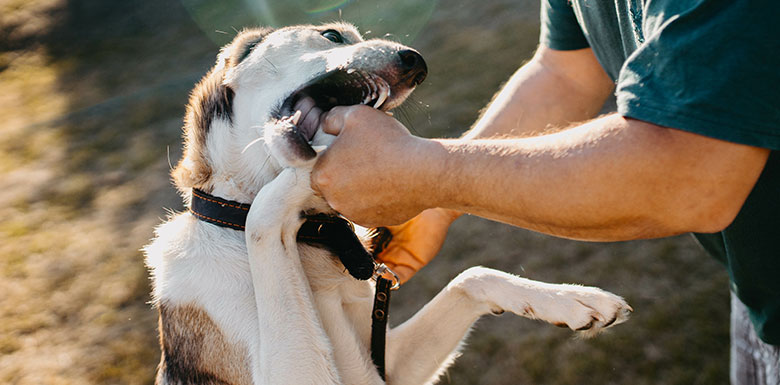
What Should You Do Immediately After a Dog Bite?
A dog bite can cause more than visible puncture wounds. Teeth may damage deeper tissues, and bacteria can enter through broken skin. Prompt first aid and medical assessment are therefore important.
1. Get away from the dog safely.
Move to a secure location to prevent another bite. If the wound is bleeding heavily, apply firm, continuous pressure with a clean cloth or dressing.
2. Wash the wound thoroughly.
Once it is safe to do so, wash the bite with soap and running water for about 15 minutes. Thorough washing is particularly important when rabies exposure is possible.
3. Cover the wound.
After cleaning, cover the area with a clean dressing. Avoid applying harsh chemicals or attempting to close a deep bite wound yourself.
4. Seek medical advice promptly.
A healthcare professional can assess the injury, determine whether antibiotics or a tetanus booster are needed, and evaluate the risk of rabies.
Seek urgent medical attention for deep wounds, uncontrolled bleeding, severe pain, numbness, reduced movement, or bites involving the face, head, neck, hands, or joints. Children should receive prompt assessment after a bite, even when the wound initially appears small.
5. Find out what is known about the dog.
If it is safe, obtain the owner’s contact information and information about the dog’s vaccination status. Do not delay medical care while trying to locate these details.
Why Rabies Risk Must Be Taken Seriously
Rabies is a viral disease that affects the nervous system and is almost always fatal once symptoms develop. However, timely post-exposure treatment can prevent the disease.
Not every dog bite carries a rabies risk, but the risk depends on factors such as the animal’s health, vaccination status, local rabies situation, and the circumstances of the exposure.
If a dog bite breaks the skin, particularly if the dog is stray, unavailable for observation, behaving unusually, or of unknown vaccination status, seek medical care immediately. A healthcare professional or local public health authority can determine whether rabies vaccination and rabies immunoglobulin are indicated.
Do not wait for symptoms to appear. Rabies prevention is time-sensitive, and washing the wound does not replace professional assessment or recommended treatment.
How Can Dog Bites Be Prevented?
Preventing dog bites requires awareness and responsible behavior from both dog owners and the people who interact with animals.
Children should always be supervised around dogs, including familiar family pets. They should be taught not to pull a dog’s ears or tail, disturb it while eating or sleeping, climb on it, or approach it when it is hiding or trying to move away.
Dog owners can reduce risk by providing appropriate socialization, humane training, veterinary care, and secure fencing or leash control. Dogs showing repeated signs of fear or aggression should be assessed by a veterinarian or qualified behavior professional to identify possible medical and behavioral causes.
It is also important to ask an owner before approaching or petting a dog. A wagging tail does not automatically mean an animal is friendly, and a dog that has behaved gently in the past may still react differently when frightened or in pain.
Final Thoughts
A dog bite can happen unexpectedly, but understanding canine body language and responding appropriately can reduce the likelihood of serious injury. Fear, pain, stress, and protective behavior may all contribute to biting, which is why giving dogs space and treating warning signs seriously matters.
If a bite occurs, prioritize safety, wash the wound thoroughly, control any bleeding, and seek prompt medical advice about infection, tetanus, and rabies prevention.
Dogs can be wonderful companions, but safe interactions depend on respecting their boundaries and remembering that even familiar animals need space, care, and understanding.
Medical disclaimer: This article provides general information and is not a substitute for professional medical care. Any dog bite that breaks the skin should be assessed promptly for infection and rabies exposure, especially in areas where rabies occurs.