
Before Electric Mixers: The History and Legacy of Hand-Cranked Rotary Egg Beaters
Introduction: A Simple Tool with Lasting Impact
Before the widespread adoption of electric mixers, the hand-cranked rotary egg beater was a cornerstone of everyday home baking. This modest kitchen implement, with its characteristic wooden or plastic handles, sturdy metal gears, and elegantly looping wire whisks, transformed food preparation in homes across America, Europe, and beyond. For many, the distinct sound and feel of turning the crank signaled more than a culinary task—it marked a ritual of togetherness, patience, and tradition. Today, these iconic tools continue to evoke nostalgia and appreciation for the art and science behind hands-on cooking.
The Evolution of Rotary Egg Beater Design
The rotary egg beater emerged as a response to a universal need: making mixing and aerating ingredients both easier and more effective. Invented in the late nineteenth century, its design was a testament to both ingenuity and practicality. Pioneering inventors such as Willis Johnson and others sought to simplify everyday cooking, patenting devices that amplified the mechanical force applied to mixing, thus reducing labor and saving time.
The earliest models were constructed from cast iron or tin, giving them substantial weight and durability. These devices were primarily produced in the United States and Europe, but their appeal quickly became global. Carefully designed gears translated each turn of the handle into rapid, efficient whisking motions. Over the decades, manufacturers introduced refinements such as lighter metals, smoother gear action, and ergonomic handles, making the appliance more approachable for both adults and children alike.
By the mid-twentieth century, particularly from the 1940s through the 1960s, rotary egg beaters became standard equipment in kitchens. Brands like Dover, Androck, and Ekco dominated the market, offering models that met rising consumer expectations for convenience, reliability, and affordability.
Hands-On Experience: Shaping Family Traditions
Unlike modern push-button appliances, the rotary egg beater demanded active participation. Operating the beater required patience and a steady rhythm, qualities often learned by children as they helped prepare meals alongside parents and grandparents. The mechanical sound of clicking gears and spinning whisks provided both incentive and feedback—signaling progress and inviting shared anticipation for the foods being made.
These simple, repetitive tasks fostered more than just cooking skills. They provided opportunities for family bonding, educational moments, and the development of lifelong habits. Many recall the delight of seeing egg whites turn to soft peaks as the whisks spun, signaling the magic of transformation through manual effort. Occasions such as birthdays, holidays, or Sunday breakfasts became connected with the careful use of the egg beater, embedding the tool into cherished family rituals.
Even today, the presence of a rotary egg beater in a kitchen can prompt vivid memories for older generations and curiosity in younger ones. It serves as a tangible link to the values of patience, craftsmanship, and cooperation that define home cooking.
The Symbolism of Rotary Egg Beaters in Modern Culture
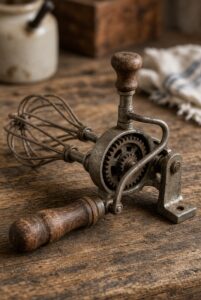
As technology evolved, so too did kitchen appliances. The arrival of electric mixers in the late twentieth century dramatically increased efficiency, making it possible to whip, knead, and blend at the press of a button. Yet the rotary egg beater has never fully disappeared. Rather, its presence as a vintage item in farmhouse kitchens, culinary museums, and collectors’ homes highlights its enduring appeal and cultural significance.
For many, seeing a well-used rotary egg beater conjures memories of family, celebration, and the rhythm of everyday life. Its well-worn handles, chipping paint, and smooth-moving gears reflect countless hours spent preparing meals, both ordinary and special. The hand-cranked mechanism is more than a tool; it is a symbol of simpler times, when the kitchen was a gathering place at the heart of the home.
In recent years, there has been a resurgence of interest in traditional cooking methods. Modern replicas of rotary egg beaters are available for those who appreciate a slower pace or prefer manual control. Enthusiasts of “slow living” and sustainable lifestyles often praise the egg beater’s lack of dependence on electricity, as well as its straightforward design that can be repaired or maintained without specialized parts.
Historical Context: Transforming Home Baking
The rotary egg beater marked a pivotal moment in the history of home baking. Prior to its invention, mixing and aerating ingredients for cakes, soufflés, and omelets required either arduous hand-whisking or makeshift tools that were less effective. The rotary mechanism efficiently incorporated air into eggs or cream, aiding in the creation of lighter, fluffier baked goods and desserts.
Historically, this tool democratized home cooking by making challenging recipes more accessible to everyday cooks. It empowered families to experiment with new recipes, offer hospitality, and participate in the culinary innovations of the early twentieth century. As a result, dishes that had previously been reserved for special occasions became household staples.
Manufacturers also utilized advances in material science to refine the egg beater’s construction. The introduction of stainless steel and durable plastics allowed for easier cleaning, corrosion resistance, and improved safety. Advertisements from the period frequently highlighted the rotary egg beater as a necessary gift for new brides or as part of a complete kitchen set.
Comparing Rotary Egg Beaters with Modern Appliances
While electric stand mixers and hand-held beaters offer speed and convenience, the rotary egg beater retains certain advantages. It produces consistent results without reliance on power sources, making it ideal for settings where electricity is unavailable or unreliable. The gentle motion helps prevent overbeating, especially when working with delicate ingredients. Additionally, the compact size and straightforward design make it easy to store, clean, and maintain.
Some pastry chefs and culinary historians argue that manual appliances foster greater awareness of ingredient texture and progress. With a rotary egg beater, cooks must feel and observe the changes in their mixture, engaging with the process and gaining a deeper understanding of the science of cooking. For educational settings, rotary beaters are valuable for teaching the principles of emulsification and aeration without digital distractions.
Environmental advocates also appreciate the egg beater’s efficiency—requiring only human effort, it avoids the carbon footprint associated with electric appliances.
Expert Perspectives on Culinary Heritage and Design
Culinary historians and museum curators underscore the rotary egg beater’s status as both a technological innovation and a cultural artifact. According to experts from the Smithsonian Institution and the National Museum of American History, kitchen implements such as the rotary egg beater provide insight into the domestic practices, gender roles, and social values of their eras. The refinement of the design over time illustrates the broader trend toward greater convenience, hygiene, and functionality in home life.
Design analysts point out that the rotary egg beater embodies the concept of “form follows function.” Its geared mechanism and ergonomic handle minimize effort while maximizing results—a balance that remains instructive for modern industrial design. Collectors and vintage kitchenware specialists note the rarity and value of certain antique models, especially those with unique features or patent numbers indicating early inventiveness.
Chefs and food writers often recommend rotary beaters for artisanal baking and cooking, recognizing the unique satisfaction that comes from manually preparing ingredients. Food educator and author Shirley Corriher, among others, has suggested that using a hand-cranked beater offers greater control, helping prevent common problems like over-mixing and ensuring optimal textures in baked goods.
International and Societal Reactions
The rotary egg beater’s influence extends across cultures and continents. Internationally, the tool became a fixture in kitchens from France to Australia, contributing to diverse culinary traditions. In countries where electricity remains less accessible, the rotary beater is still relied upon as a practical solution for preparing eggs, creams, and batters.
Societal attitudes toward cooking have evolved, but the appreciation for hands-on methods persists. Television programs, cookbooks, and community workshops frequently highlight traditional tools and recipes, encouraging new generations to learn skills that connect them with their heritage. Vintage kitchen equipment is increasingly incorporated into interior design, symbolizing authenticity and a return to simpler, slower ways of living.
Environmental concerns also motivate contemporary interest in manual appliances, as individuals seek durable, sustainable alternatives to disposable gadgets.
The Legacy of Rotary Egg Beaters in the Modern Kitchen
Despite advances in kitchen technology, the rotary egg beater continues to enjoy a lasting legacy. Its simple, reliable design and capacity to produce impressive culinary results make it a favorite among enthusiasts, collectors, and practical cooks alike. Beyond its functionality, the beater embodies values of ingenuity, frugality, and patience. It serves as a reminder that good food often arises not from the fastest or most expensive equipment, but from care, teamwork, and tradition.
As the rhythm of the crank connects the present with the past, the rotary egg beater remains a symbol of the enduring role of the kitchen in family and community life. Whether displayed in a museum or used in a working kitchen, its familiar silhouette and sound evoke the hands-on experiences that shaped generations of home cooks.
Ultimately, the rotary egg beater reminds us that not all culinary tasks require the latest technology. Sometimes, the simple tools and patient methods of the past offer both satisfaction and superior results, keeping alive the essence of home-cooked food.
Sources
Disclaimer: This content is intended for entertainment purposes only and is not based on real events.