Sometimes, an unexpected discovery at home can trigger a surprising rush of emotions. A few unfamiliar pieces scattered across the floor, an unusual texture, or a strange-looking substance can quickly turn an ordinary afternoon into a moment of uncertainty.
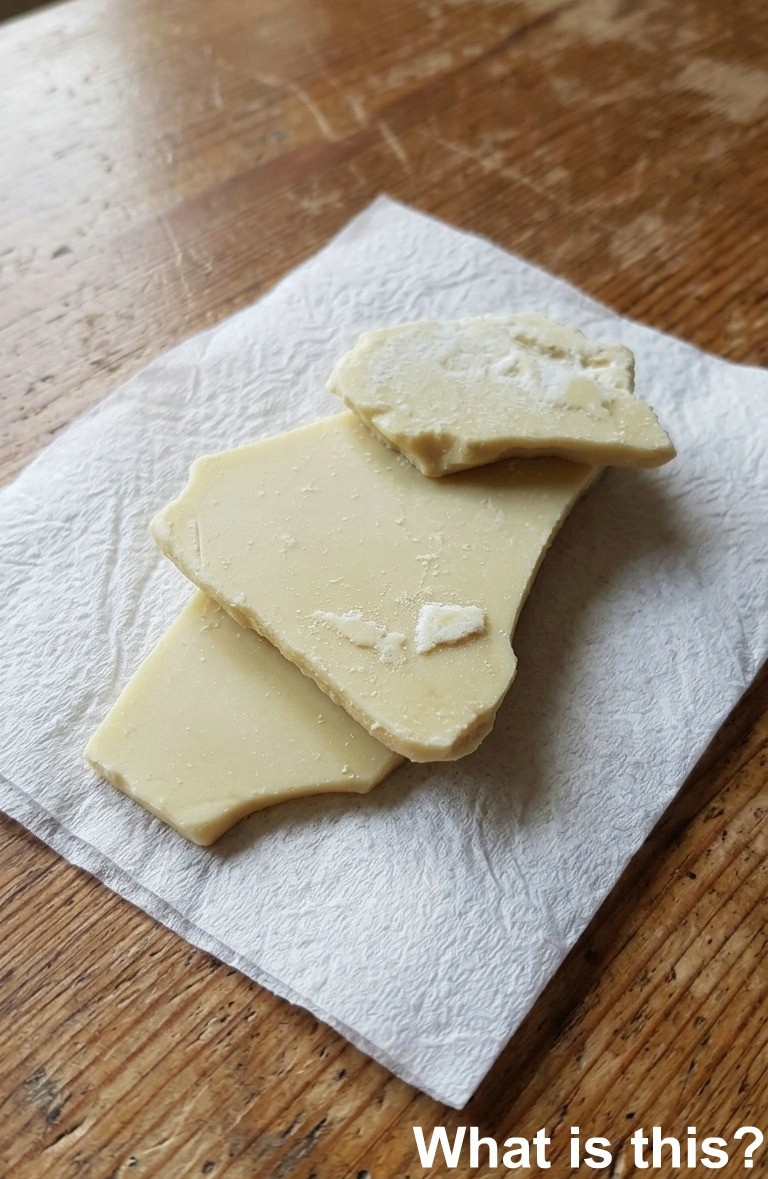
That was what happened when a parent discovered several pale fragments in a child’s room. At first glance, the pieces looked unusual enough to raise questions. Their broken edges, powdery coating, and unfamiliar appearance made it difficult to identify them immediately.
Naturally, concern followed. Parents want their homes to be safe, and anything unfamiliar found where children spend their time deserves careful attention. Before the object could be identified, however, imagination began filling in the gaps.
Then came a familiar clue: a faint, sweet smell.
The mysterious fragments turned out to be forgotten white chocolate. What had initially appeared unusual was actually a common food product that had changed in appearance during storage.
This small discovery offers an interesting lesson about perception, food science, and the way ordinary household situations can sometimes seem more complicated than they really are.
H2: What Was the Mysterious White Substance?
The answer was much simpler than the initial suspicions suggested. The pale fragments were pieces of white chocolate that had broken apart and developed a whitish coating over time.
Chocolate can change its appearance when exposed to temperature fluctuations, humidity, or unsuitable storage conditions. A surface that once looked smooth and glossy may become pale, dull, or powdery.
This phenomenon is commonly known as chocolate bloom.
Although the appearance can be surprising, a white coating does not automatically mean that chocolate has become unsafe. Understanding what causes the change can help people distinguish ordinary quality changes from signs that food should be discarded.
However, appearance alone cannot reliably establish whether an unidentified substance is chocolate. If the identity of a substance is uncertain, it is important not to taste it or allow children or pets to handle it until it has been identified.
H2: Understanding Chocolate Bloom
Chocolate bloom is a familiar issue in food storage. It generally occurs in two main forms: fat bloom and sugar bloom.
H3: Fat Bloom
Fat bloom develops when cocoa butter or other fats in chocolate move toward the surface and form visible crystals.
This can happen when chocolate experiences temperature changes or when its fat crystals become unstable.
The result is often a pale, cloudy coating that makes the chocolate look old or discolored.
Fat bloom is usually a quality issue rather than an indication that the chocolate is automatically unsafe. It can affect the appearance and texture, making the surface look less attractive and sometimes giving it a slightly different mouthfeel.
H3: Sugar Bloom
Sugar bloom occurs when moisture reaches the chocolate’s surface.
The moisture dissolves some of the sugar. When the water evaporates, sugar crystals remain behind, creating a rough or powdery white layer.
This can happen when chocolate is stored in humid conditions or exposed to condensation after being moved between different temperatures.
Unlike fat bloom, sugar bloom often makes the surface feel grainy.
Both types can make chocolate look unusual, but their causes are different.
H2: Why White Chocolate Can Change Over Time
White chocolate has a different composition from dark or milk chocolate.
It is typically made using cocoa butter, sugar, milk solids, and flavorings such as vanilla. Unlike dark chocolate, it does not contain the same amount of cocoa solids that give darker varieties their characteristic color.
Its pale appearance means that changes in the surface can be especially noticeable.
Temperature is one important factor. When white chocolate becomes warm and then cools, its fat crystals can change structure. If moisture is introduced, sugar bloom may also occur.
Storage conditions influence how quickly these changes develop.
Keeping chocolate in a cool, dry place away from direct sunlight can help preserve its texture and appearance. Chocolate should also be protected from moisture and strong odors.
If refrigeration is necessary, airtight packaging can help reduce moisture exposure when the chocolate is moved between cold and warm environments.
Even with careful storage, chocolate may eventually lose some of its original quality. A change in appearance does not always mean that it has spoiled, but it is still important to consider its storage history and any other signs of deterioration.
H2: Why the Human Brain Sometimes Imagines the Worst
The experience described in this story also highlights an interesting feature of human psychology.
When people encounter something unfamiliar, they naturally try to identify it. The brain uses previous experiences, contextual clues, and expectations to develop possible explanations.
Usually, this process happens quickly and helps people navigate everyday life.
However, uncertainty can encourage the mind to consider possibilities that are more dramatic than the available evidence supports.
For a parent, finding an unidentified substance in a child’s room may immediately raise concerns about safety. That reaction reflects a natural desire to protect family members.
The problem arises when an initial suspicion becomes a firm conclusion before enough information is available.
Psychologists study related patterns through concepts such as threat perception and cognitive bias. When a situation feels potentially dangerous, people may focus more strongly on threatening explanations while overlooking ordinary alternatives.
Recognizing this tendency does not mean ignoring genuine risks. Instead, it encourages a balanced response: take reasonable precautions, gather information, and avoid making conclusions prematurely.
H2: A Parent’s Instinct to Keep Children Safe
Parents often pay close attention to unfamiliar objects in their homes, especially when young children may encounter them.
This caution is understandable. Household products, medicines, cleaning materials, and unidentified substances should be stored securely and kept out of children’s reach.
At the same time, not every unusual discovery represents a serious problem.
In this case, the explanation was an ordinary food item that had changed appearance. The experience illustrates how quickly concern can grow when an object cannot be identified immediately.
A practical approach is to assess the situation calmly.
Avoid touching or tasting an unknown substance unnecessarily. Keep children and pets away while identifying it. Look for packaging, labels, or other reliable clues, and consult an appropriate professional or poison information service if there is a credible concern about exposure to a potentially harmful substance.
These steps provide a sensible balance between caution and clear thinking.
H2: How to Store White Chocolate Properly
Proper storage can help white chocolate maintain its flavor, texture, and appearance.
Choose a cool, dry location. Excessive heat can destabilize the fat in chocolate, while humidity can contribute to sugar bloom.
Keep chocolate away from direct sunlight. Sunlight can raise temperatures and accelerate quality changes.
Use airtight packaging. A sealed container can help protect chocolate from moisture and odors from nearby foods.
Avoid repeated temperature changes. Moving chocolate between cold and warm environments can encourage condensation and affect its surface.
Check the product before eating. Consider the expiration or best-before date, storage conditions, packaging integrity, and any unusual odor or signs of spoilage.
If chocolate has simply developed fat bloom or sugar bloom and has otherwise been stored appropriately, the change may primarily affect its quality. However, a white coating alone cannot establish whether a particular product is safe to eat.
When the storage history is unknown or there are additional signs of deterioration, discarding the chocolate is the more cautious choice.
H2: Is Chocolate With a White Coating Safe to Eat?
This is one of the most common questions people ask when discovering pale or powdery chocolate.
In many cases, the white coating is caused by fat bloom or sugar bloom rather than microbial growth. These changes can affect the chocolate’s appearance and texture without necessarily making it unsafe.
However, it is important not to assume that every white coating has the same explanation.
Chocolate that has been exposed to moisture, contaminated, improperly stored, or kept beyond appropriate storage conditions may present other concerns. Unusual odors, visible mold, damaged packaging, or uncertainty about the product’s history should be taken seriously.
White chocolate is also a food that can contain milk ingredients, so appropriate storage matters.
The safest conclusion is that chocolate bloom is common and often harmless as a quality change, but identifying the cause and considering the product’s storage history are essential before deciding whether to eat it.
H2: Turning a Small Mystery Into a Useful Lesson
The story began with a few unfamiliar fragments on the floor and ended with a simple explanation.
That contrast is what makes the experience relatable. People frequently encounter everyday objects or materials whose appearance has changed enough to make them difficult to recognize.
Sometimes, the answer involves food science. Other times, it requires a closer look at an object’s design or purpose.
The important thing is to allow evidence to guide the conclusion.
A moment of uncertainty can become an opportunity to learn something new about household products, food storage, or human perception.
It can also remind us that a first impression is only the beginning of an investigation, not necessarily its conclusion.
Conclusion: Sometimes, the Simplest Explanation Brings the Greatest Relief
The mysterious white fragments turned out to be forgotten white chocolate that had developed a pale surface coating over time.
What initially appeared unusual was explained by a familiar food-science phenomenon: chocolate bloom.
Beyond the discovery itself, the story highlights the importance of approaching uncertainty with both curiosity and caution. Concern for family safety is entirely reasonable, but gathering reliable information can help distinguish genuine risks from harmless changes in everyday objects.
Understanding how chocolate reacts to temperature and moisture also offers a practical reminder that food does not always look the same throughout its storage life.
Ultimately, the experience reflects something universal about human curiosity. We notice what seems unusual, search for an explanation, and often discover that the truth is more ordinary than we expected.
Sometimes, a little patience and a better understanding of the world are all it takes to turn a worrying mystery into a reassuring lesson.
Sources
-
U.S. Food and Drug Administration (FDA) — Food safety information and guidance. https://www.fda.gov/food
-
U.S. Department of Agriculture (USDA) — Food storage and food safety resources. https://www.fsis.usda.gov/food-safety
-
Harvard T.H. Chan School of Public Health — The Nutrition Source, including information on chocolate and cocoa. https://nutritionsource.hsph.harvard.edu/
-
Institute of Food Technologists (IFT) — Food science and research resources. https://www.ift.org/
Disclaimer: This article is for general educational purposes. An unidentified substance should not be considered safe based on appearance or smell alone.