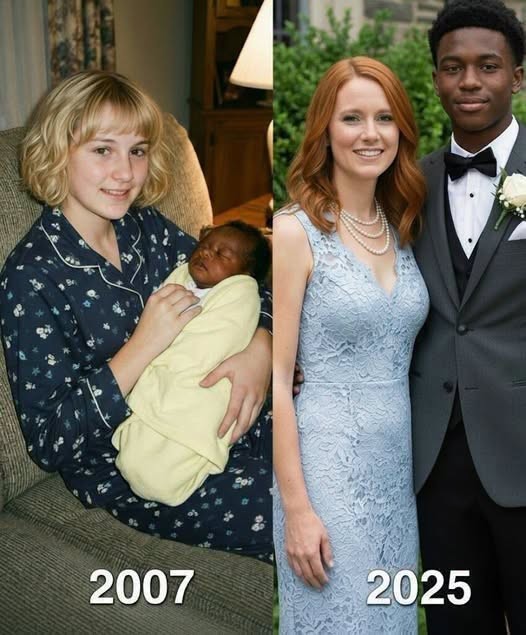
A Night to Remember: Bringing My Mother to Prom as a Tribute to Her Sacrifice
Introduction: Celebrating Unseen Sacrifices
The journey from childhood to adulthood is often marked by rites of passage that hold great significance in a young person’s life. For many, prom night symbolizes one of those milestones—a celebration of youth, friendship, and the conclusion of years of study. But what happens when this occasion reflects not only personal achievement, but also a tribute to the often unseen sacrifices of our parents? This is my story: a decision to bring my mother—a single mom who began her parenting journey under extraordinary circumstances—as my prom date, as an expression of gratitude and recognition for all she had endured and accomplished for my sake.
A Teenage Mother’s Hardship and Resilience
My mother’s journey into motherhood began in high school. After discovering she was pregnant, she faced an uncertain future alone, as the man she trusted disappeared the moment she shared the news. The months that followed were not filled with the typical joys and anxieties of high school life. Instead, my mother traded her teenage dreams and excitement—her own chance to attend prom, wrap herself in a sparkly dress, and celebrate with friends—for the immediate realities of diapers, sleepless nights, and the sobering responsibilities of raising a child as a single parent.
Against the daunting odds and social stigma often faced by teen mothers, she persevered. She missed her own prom night and countless other adolescent milestones, replacing them with long hours at minimum wage jobs, studying for her GED by the light of the bedside lamp while I slept, and turning down opportunities that might have made her own path easier. Her focus and drive were entirely geared toward one goal: giving me a chance at a better life.
Growing Up Under Her Care: A Child’s Perspective on Parental Sacrifice
As a child, I was sheltered from the full weight of my mother’s sacrifices, too young to comprehend their scale. I was aware that she worked late-night shifts to provide for us. I knew about the nights she fell asleep over textbooks as she pursued her education after a long day. Yet, it wasn’t until I reached high school myself—when the prospect of my own prom drew near—that I began to realize the depth of what she had given up for me. While my friends obsessed over dress colors and limousines, I thought often about what that missed rite of passage must have meant to her, and the price she had paid for my future’s sake.
The narratives of single mothers like mine often go unacknowledged in society, though their efforts shape the lives and communities around them. According to the Pew Research Center, about one in four children in the United States lives in a single-parent household, and single mothers represent 80% of these homes. Many, like my mother, juggle work, parenting, and education alone, often enduring economic hardship and social stigma in silence. Their resilience, determination, and love are the silent engines that keep families moving forward.
The Decision to Honor My Mother: An Act of Gratitude
As prom approached, I realized a simple, profound way I could honor my mother’s sacrifices—one that would allow her to experience a joyful milestone she had forfeited. I invited her to be my prom date, not as an act of charity, but as a genuine gesture of gratitude. It was my chance to celebrate her not only as a parent but as a person who had given up her own dreams for the sake of mine.
When I shared my idea with her, her reaction was one I’ll never forget. She laughed in disbelief, then tears filled her eyes. Her emotions reflected not only surprise but deep gratitude and validation of the hardships she had lived through. For her, the invitation was more than about attending a dance; it was tangible recognition of her efforts, seen and understood by the child she had raised.
Family Dynamics and the Challenge of Social Norms
Support from my stepfather, Mike, was immediate and enthusiastic. He saw the invitation as a well-deserved celebration for my mother, whose strength had been a foundation for our family. However, not everyone received the idea with the same positivity. My stepsister, Brianna, reacted with skepticism and even mockery. She questioned the propriety of bringing my mother to prom, dismissing it as “pathetic” and openly teasing both of us. Her comments reflected broader social expectations around high school milestones, where tradition and conformity often stifle individual and meaningful gestures.
Family tensions surfaced, revealing the complexities that blended families and diverse backgrounds often bring. Nonetheless, the decision to bring my mother was never about other people’s opinions, but about honoring someone for whom a night of celebration was long overdue.
Arriving at Prom: A Moment of Mixed Emotions
The day of prom arrived. My mother wore a beautiful, soft blue gown that reflected elegance and hope. Her hair was carefully styled in vintage curls, bringing an air of timeless grace. As she stood by the door, however, nerves crept in. She confided, “What if people stare at me? What if I ruin your night?” In that moment, I remembered every sacrifice she had made and every challenge she had overcome. I reached for her hand and reminded her, “Mom, you built my life. You can’t ruin anything.”
We made our way to the school courtyard, prepared for a night that we would both remember. However, moments of joy were tested once more by social scrutiny. Brianna, dressed in sequins, voiced her disapproval in front of her friends, inciting laughter and diminishing my mother’s bright smile. My mother’s vulnerability was painfully visible, an all-too-common experience for those who defy convention or face derision for their departure from tradition.
Standing Up Against Stigma and Social Judgement
Brianna’s public comments exposed persistent societal attitudes toward non-traditional family choices and celebrations. Judgment and ridicule often become barriers for individuals who challenge norms in the pursuit of meaning or justice.
In a crucial moment, my stepfather, Mike, intervened with quiet authority. With just a few words, he diffused the tension, making it clear that respect and dignity would be upheld. It was a reminder that true family, whether bound by blood or by love, stands up for one another in the face of adversity. Most importantly, the moment marked a turning point—emphasizing that acts of love, gratitude, and recognition should never be sources of shame.
Societal Context: Single Mothers, Stigma, and Milestones
The story of inviting my mother to prom is part of a wider conversation about the treatment and representation of single mothers in society. Across cultures, single mothers often face social stigma and economic challenges. Despite progress in public attitudes, negative stereotypes persist, discouraging candid conversations about the realities of single-parent households. Milestone events like prom can surface feelings of exclusion or loss—not just for parents, but for their children—but they can also be powerful opportunities to rewrite traditions and acknowledge unconventional journeys.
Experts in social psychology note that emotional validation—acknowledging the efforts and sacrifices of parents—plays a vital role in strengthening family bonds and self-esteem for both parents and children. By making space for such acknowledgment, especially in public or ceremonial occasions, families can challenge outdated norms and promote inclusivity.
Expert Perspectives on Gratitude and Recognition
According to the American Psychological Association (APA), expressing gratitude and honoring parental sacrifice fosters resilience and emotional well-being. Publicly appreciating family members can counteract the psychological impacts of social stigma, contributing to healthier interpersonal relationships and a more supportive environment.
Dr. Robert Emmons, a leading researcher in gratitude psychology, emphasizes that “gratitude is more than a feel-good emotion; it’s a social glue that binds people together and reinforces the fabric of family and community.” By using meaningful occasions to honor parents, children reinforce this social bond and help reframe narratives around who deserves to be celebrated at critical life events.
International Reactions and Cultural Trends
Stories of young people inviting family members, including mothers or even grandmothers, to prom have occasionally made headlines and garnered positive attention internationally. These gestures are sometimes met with surprise or initial skepticism, but they often inspire broader conversations about the value of non-traditional choices and the importance of family. In cultures that hold filial piety and parental respect as core values, such acts are lauded as exemplary.
Social media platforms increasingly serve as spaces for sharing these stories. Posts featuring prom dates with family members frequently go viral, garnering messages of support and admiration. This trend reflects a growing acceptance of redefining traditions to accommodate meaningful personal choices, and an appetite for stories that emphasize empathy, respect, and the power of gratitude.
Conclusion: Redefining What It Means to Celebrate
While prom night is often cast as a social highlight featuring dance, fashion, and romance, its meaning is ultimately shaped by those who participate. My decision to bring my mother as my prom date was an act of gratitude—a recognition of her profound sacrifices and a public tribute to the strength that built my foundation. In the face of skepticism and judgment, our celebration became a testament to the power of love, family, and acknowledgment.
This story stands as an invitation to reconsider how we celebrate milestones and who we choose to honor at life’s turning points. Acts of gratitude—no matter how unconventional—have the ability to redefine tradition, strengthen families, and inspire broader social acceptance. In celebrating my mother, I was not simply paying back a debt of love—I was making visible the quiet heroism of all those who build futures through sacrifice and unwavering dedication.
Sources
Disclaimer: This content is intended for entertainment purposes only and is not based on real events.