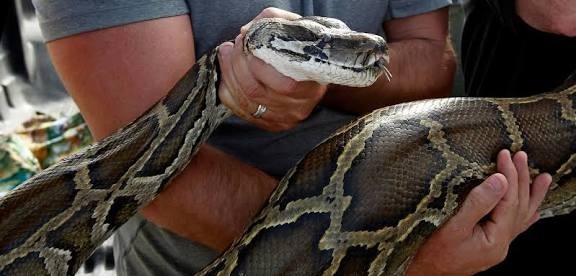
Imagine walking along a quiet forest trail when you notice a large snake resting beneath fallen leaves. Its patterned body blends almost perfectly with the surrounding vegetation. For a moment, you may not even realize how close you are to one of nature’s most remarkable reptiles.
Pythons are powerful snakes found in various habitats across Africa, Asia, and parts of Australia. Although they can grow to impressive sizes, they generally do not seek out humans as prey. Most encounters happen because people and snakes share the same environment, or because a snake is searching for food, shelter, or a suitable place to rest.
However, a close encounter can become dangerous if a python feels threatened, is accidentally approached, or mistakes a person’s movement for a potential threat or prey. Understanding why these encounters happen can help people appreciate wildlife while taking sensible precautions.
Where Do Pythons Live in the Wild?
Pythons inhabit a wide range of environments, including tropical forests, grasslands, wetlands, rocky areas, and landscapes near rivers. Some species also live close to farms and residential communities where food and shelter are readily available.
The reticulated python, found in parts of Southeast Asia, is known for its considerable length. The Burmese python inhabits parts of South and Southeast Asia, while African rock pythons occur across much of sub-Saharan Africa.
Different species have different habitat preferences. Some spend considerable time on the ground, while others can climb trees or move through water with ease.
As human settlements expand into natural habitats, encounters between people and pythons can become more common in certain areas. Gardens, poultry enclosures, storage buildings, and farms may attract rodents or other animals that snakes hunt.
A python entering one of these places is not necessarily looking for a confrontation. It may simply be following a food source or searching for a quiet hiding place.
Why Would a Python Approach a Human?
Pythons are ambush predators that rely on patience, camouflage, and an ability to detect nearby animals. Their behavior is influenced by their surroundings, body temperature, hunger, and whether they perceive a potential threat.
There are several reasons a python might come close to a person.
Searching for Food
Pythons feed on a variety of animals, depending on their species and size. Their prey may include rodents, birds, and mammals.
When these animals live near farms or houses, a python may follow them into human-inhabited areas. This can create the impression that the snake deliberately approached a person when it was actually following a potential food source.
Humans are not the normal target of most python encounters. Nevertheless, exceptionally large pythons are capable of attacking people, and rare serious incidents have been documented.
Feeling Threatened
A python may react defensively when someone approaches too closely, attempts to touch it, or blocks its escape route.
A snake that feels cornered may coil, hiss, strike, or attempt to bite. These behaviors are warnings that the animal needs space.
The safest response is to move away slowly and leave the snake undisturbed. Trying to capture it, provoke it, or handle it without professional training can increase the risk of injury.
Looking for Shelter
Pythons may seek shaded, quiet places to rest, especially when environmental conditions change. Dense vegetation, hollow spaces, abandoned structures, and areas beneath buildings can provide suitable shelter.
A snake found near a home may have entered accidentally or discovered a place that offers favorable conditions. Its presence does not automatically indicate aggressive behavior.
What Happens During a Python Encounter?
An encounter between a python and a human can develop in several ways. In many cases, the snake remains still, attempts to hide, or moves away when it detects a person.
A more concerning situation occurs when someone approaches the snake closely or attempts to handle it. The python may respond defensively, and its size can make even an apparently brief interaction dangerous.
Large pythons use their teeth to seize prey and their muscular bodies to restrain animals. This is a natural hunting behavior, but it is not something people should attempt to test or demonstrate in close proximity.
A person who encounters a large python should prioritize distance rather than trying to determine whether the snake is aggressive. Even experienced wildlife observers cannot guarantee how an individual animal will respond in every situation.
If a python is blocking a path, entering a building, or resting near a frequently used area, people should keep others and pets away and contact local wildlife authorities or trained snake handlers.
Can a Python Mistake a Human for Prey?
Pythons locate potential prey through a combination of sensory information, including movement, scent, and, in some species, specialized heat-sensitive organs.
Their normal diet consists of animals suited to their species and body size. People are not a typical food source for most encounters, and it would be misleading to suggest that pythons routinely hunt humans.
However, very large individuals can pose a serious risk. In rare cases, attacks on humans have resulted in severe injuries or fatalities.
It is often difficult to determine the exact circumstances behind an individual encounter. A snake may have been disturbed, encountered unexpectedly, or responded to a situation in a way that cannot be reconstructed with certainty.
For this reason, wildlife experts recommend treating every large wild python with caution, regardless of whether it appears calm.
What Makes Large Pythons So Powerful?
Pythons have several adaptations that make them effective predators in their natural environments.
Muscular Bodies
Their long, muscular bodies allow them to restrain prey and move through a variety of landscapes. Large pythons can also use their strength to climb, swim, and navigate dense vegetation.
Flexible Jaws
A python’s lower jaw is connected by flexible tissues and ligaments, allowing it to consume prey considerably wider than its own head. The snake does not dislocate its jaw in the simplistic way often described in popular accounts.
This adaptation helps pythons swallow prey whole, after which digestion may take considerable time depending on the size of the meal and environmental conditions.
Camouflage and Patience
Many pythons have patterns that help them blend into leaves, soil, branches, and other natural surroundings. Remaining still can make them difficult to notice.
This camouflage is useful for both avoiding potential threats and waiting for suitable prey. It also explains why people walking through thick vegetation may occasionally encounter a snake without seeing it in advance.
How to Stay Safe if You See a Python in the Wild
Seeing a large snake can be surprising, but a calm response can reduce the risk of an incident.
-
Keep your distance. Do not approach the snake to take a photograph or inspect its size.
-
Never attempt to handle it. Even snakes that appear inactive can react suddenly when disturbed.
-
Give it an escape route. Do not corner the animal, throw objects at it, or try to force it to move.
-
Keep children and pets away. Move them to a safe location without approaching the snake.
-
Contact trained professionals. If the python is near a home, school, farm, or public path, seek assistance from the appropriate local wildlife service.
-
Be cautious in dense vegetation. Wear suitable footwear, watch where you step, and avoid reaching into places you cannot see clearly.
If a snake bites someone, seek urgent medical assistance. Do not attempt to catch the animal or handle it for identification. If a large python is physically restraining someone, call emergency services immediately and follow the emergency operator’s instructions.
These precautions are useful not because every python is dangerous, but because maintaining a safe distance prevents an ordinary wildlife encounter from becoming an emergency.
What Should You Do if a Python Enters Your Home?
Pythons sometimes enter buildings while following rodents or searching for shelter. Discovering one indoors can be frightening, particularly if the snake is large.
The safest approach is to keep a clear distance and avoid blocking the snake’s movement. If possible, move people and pets into another room or outside without passing close to the animal.
Do not try to grab the snake by its tail, pin its head, or pull it out of a hiding place. Such attempts can lead to bites or other injuries, even when the person believes the animal is manageable.
Contact a trained snake handler or local wildlife authority. Professionals have the experience and equipment needed to assess the situation and relocate the animal when appropriate.
After the snake has been removed, inspect potential entry points and consider measures to reduce rodents around the property. Secure food waste, maintain storage areas, and close gaps that may allow wildlife to enter buildings.
These steps can help reduce the likelihood of future encounters without harming native wildlife.
Why Python Encounters Matter for Wildlife Conservation
Pythons are important members of their ecosystems. By feeding on rodents and other animals, they contribute to natural food webs and influence the populations of their prey.
Despite their ecological role, snakes are sometimes killed because people fear them or misunderstand their behavior. Habitat loss, road traffic, illegal wildlife trade, and conflict with humans can also threaten certain populations.
Learning to recognize a python’s behavior helps replace unnecessary fear with informed caution. Respecting a snake’s space does not mean ignoring the potential risks. It means understanding those risks and responding in a way that protects both people and wildlife.
In areas where pythons naturally occur, community education and access to trained wildlife responders can make encounters safer. People can learn which local species are present, whom to contact when a snake appears, and how to reduce conditions that attract wildlife close to homes.
Conclusion: Understanding the Risks of Meeting a Python in the Wild
A python encounter can be an unforgettable experience, especially when the snake is much larger than expected. Although these reptiles are powerful predators, they do not routinely seek out people, and many encounters end without an attack.
The greatest risks often arise when a snake is approached, cornered, handled, or encountered at very close range. Large pythons should always be treated with caution because their strength and natural hunting abilities can cause serious harm under certain circumstances.
The best response is simple: observe from a safe distance, avoid disturbing the animal, and contact trained professionals when necessary.
Understanding how pythons live and behave allows us to appreciate these remarkable reptiles without sensationalizing their presence. In the natural world, knowledge, caution, and respect for wildlife are often the most effective ways to keep both humans and animals safe.