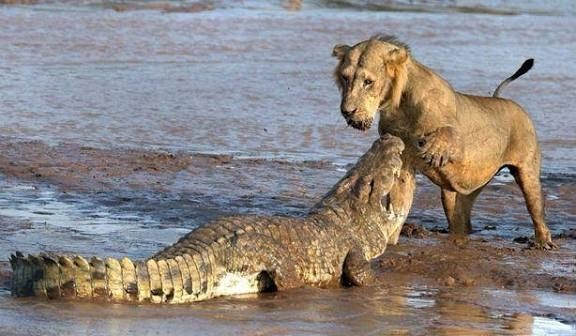
In the African wilderness, survival often depends on a single decision. A lion may dominate the open savanna, while a crocodile rules the rivers and muddy banks. Both are powerful predators, but their strengths are very different. When a lion and a crocodile meet near the water, the encounter can quickly become a tense contest between two of nature’s most formidable hunters.
A lion approaching a river must consider more than thirst. Hidden beneath the surface, a crocodile may be watching silently, waiting for an opportunity to defend its territory or capture an unsuspecting animal. Meanwhile, the lion relies on its strength, speed, sharp claws, and experience to remain in control.
So, what happens when a lion fights a crocodile in the wild? The answer depends on several factors, including the location of the encounter, the size of each animal, and which predator gains the advantage first.
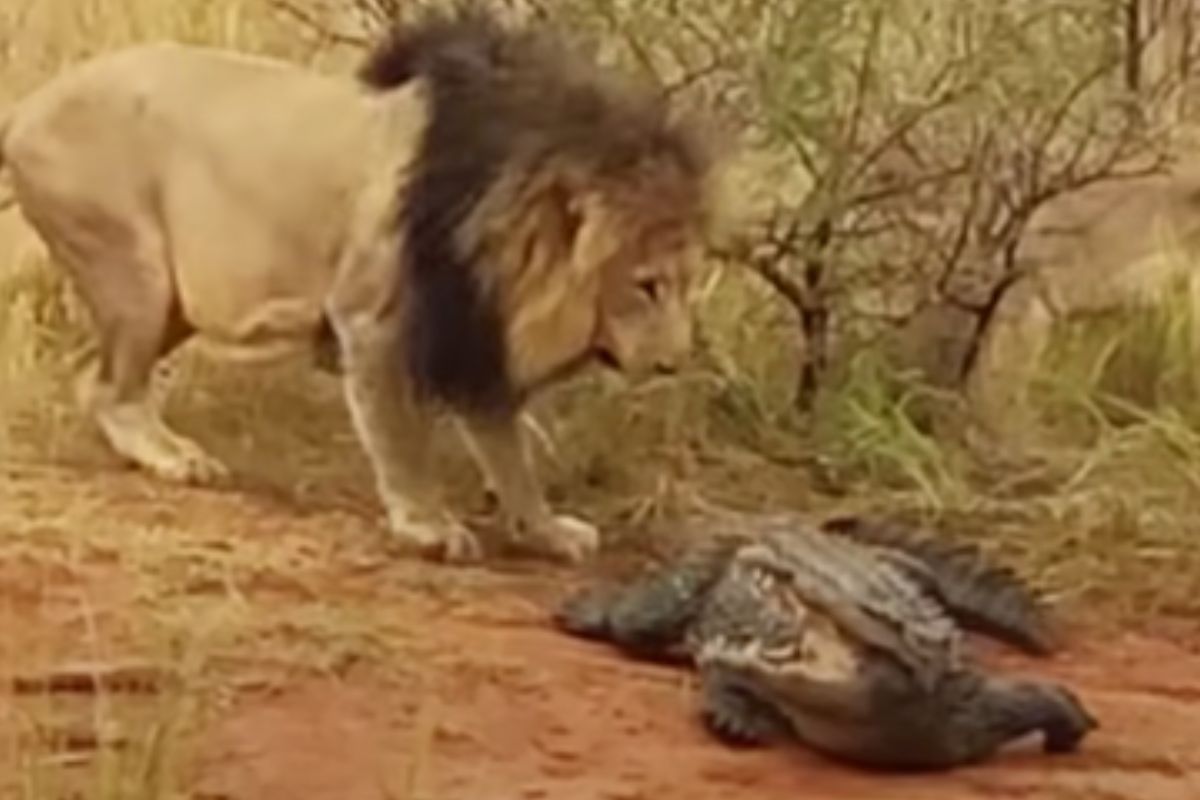
Why Lions and Crocodiles Sometimes Fight
Lions and crocodiles generally avoid unnecessary confrontations. Both animals face risks when fighting, and even a powerful predator can suffer serious injuries during a struggle.
However, their territories sometimes overlap around rivers, lakes, and watering holes. These places attract zebras, antelopes, buffaloes, and other animals that both predators may hunt.
A lion may approach the water to drink, cool down, or search for prey. A crocodile may already be resting near the riverbank or moving through shallow water. If one animal comes too close to the other, a confrontation can occur.
Competition over food is another possible reason. If a crocodile captures prey near the riverbank, lions may attempt to take advantage of the opportunity. Likewise, a crocodile may approach a lion that has entered the water.
Such encounters are not always full fights. Sometimes, one animal simply displays aggression, and the other retreats before the situation escalates.
The Lion: A Powerful Hunter of the African Savanna
The African lion is one of the most recognizable large predators in the world. Living in social groups called prides, lions cooperate when hunting and defending their territories.
Adult lions possess strong shoulders, muscular legs, powerful jaws, and sharp claws. These physical features help them overpower prey and compete with other large animals.
On land, a lion has several important advantages over a crocodile. It can move quickly over short distances, change direction rapidly, and use its limbs to maintain balance while confronting an opponent.
A lion also benefits from being on familiar ground. When standing on dry land, it can use its mobility to approach or retreat more easily than a crocodile moving away from the water.
Nevertheless, a lion is not invulnerable. A large crocodile can inflict severe injuries with its powerful jaws, especially if it manages to seize a limb or pull the lion into deeper water.
The Crocodile: A Master of Ambush
The Nile crocodile is one of Africa’s largest reptiles and an exceptionally effective aquatic predator. Its body is adapted for life in and around water, where camouflage and patience often matter more than speed across open ground.
A crocodile can remain almost completely submerged, leaving only its eyes and nostrils visible above the surface. This allows it to observe its surroundings while remaining difficult to detect.
Its jaws can deliver an extremely powerful bite, and its muscular tail helps propel it through the water. When a crocodile captures prey, it may use rapid body movements to destabilize the animal and pull it into the water.
These adaptations give crocodiles a major advantage near the river. An animal that steps too close to the edge may have little time to react if a crocodile launches a sudden ambush.
However, the crocodile’s advantages become less pronounced on dry ground. Although it can move over land, its body is especially well suited to aquatic hunting rather than prolonged pursuit across the savanna.
What Happens When a Lion Attacks a Crocodile?
Imagine a lion approaching a riverbank on a warm afternoon. The water appears calm, but a crocodile is resting just below the surface.
The lion steps closer, perhaps attempting to drink or investigate movement near the shore. Suddenly, the crocodile raises its head or lunges toward the animal.
The lion may jump backward, turn toward the threat, or attempt to strike with its forepaws. If the crocodile remains close, both animals may display aggressive behavior as they assess the danger.
A lion could potentially injure a crocodile with its claws or bite, particularly if the reptile is smaller or caught in an unfavorable position. Yet attacking a large crocodile is risky because its armored body and powerful jaws make it a dangerous opponent.
In many situations, the lion’s most practical response may be to retreat rather than continue fighting. A confrontation offers little benefit if the lion can simply move away and find another place to drink.
It is important to remember that wildlife encounters do not follow a fixed script. The sequence of events can differ significantly depending on the animals involved and the circumstances.
What If a Crocodile Attacks a Lion Near the Water?
The situation changes dramatically when the lion enters the crocodile’s preferred environment.
A crocodile concealed beneath the surface may launch a sudden attack when a lion approaches the edge. If it secures a strong grip, the lion could struggle to escape, particularly if pulled into deeper water.
Lions are capable swimmers, but swimming ability alone does not remove the danger posed by a large crocodile. Water can restrict the lion’s movement and make it more difficult to use its usual defensive strategies.
A lion caught near the edge may attempt to regain its footing, pull away, or reach dry ground. Whether it succeeds depends on the crocodile’s size, the strength of its grip, the depth of the water, and the lion’s position.
This is why river crossings and watering holes can be dangerous places for many land mammals. A seemingly peaceful stretch of water may conceal a predator that relies on surprise.
Who Would Win in a Fight Between a Lion and a Crocodile?
There is no universal answer to the question of whether a lion or a crocodile would win. The environment often matters as much as the animals’ physical strength.
On dry land, a lion may have the advantage in mobility and maneuverability. Its claws and agility could help it defend itself or escape, particularly when facing a smaller crocodile.
In deep water, the balance shifts toward the crocodile. Its streamlined body, aquatic movement, and ability to seize prey with its jaws make it particularly dangerous to a lion that enters the water.
Size is another critical factor. A large Nile crocodile may be considerably more dangerous than a small individual, while a healthy adult lion has physical capabilities that a young or smaller crocodile may struggle to match.
The condition of each animal also matters. An injured predator may be less capable of defending itself, while an animal protecting a meal or responding to a close threat may behave more aggressively.
Rather than imagining the encounter as a simple contest with one guaranteed winner, it is more accurate to view it as a high-risk interaction shaped by location, timing, and individual circumstances.
How Lions and Crocodiles Share the African Wilderness
Despite their reputations as fierce predators, lions and crocodiles do not spend every day fighting one another. Both play important roles in their ecosystems, and their interactions are only a small part of their lives.
Lions help regulate populations of large herbivores through predation. Crocodiles also influence aquatic and riverside food webs by hunting fish, birds, and mammals.
Their overlapping habitats create opportunities for competition, but they also encourage avoidance. Predators benefit from choosing situations in which they can obtain food without risking unnecessary injury.
For a lion, a river may provide drinking water and access to prey. For a crocodile, the same river may offer shelter, hunting opportunities, and protection from some terrestrial threats.
Each animal has evolved strategies suited to its environment. The lion’s strength and agility serve it well on land, while the crocodile’s camouflage, patience, and aquatic adaptations make it an exceptional hunter in the water.
Conclusion: A Dramatic Encounter Shaped by Nature
A fight between a lion and a crocodile is a powerful reminder of how different predators survive in the wild. The lion represents strength, agility, and the ability to navigate the open savanna. The crocodile demonstrates the advantages of patience, camouflage, and a body adapted to life in water.
When these two animals meet, neither has an automatic guarantee of victory. A lion may have the advantage on dry ground, while a crocodile can become especially dangerous near or beneath the water’s surface.
Ultimately, the outcome depends on the circumstances rather than reputation alone. In the African wilderness, survival is not simply about being the strongest animal. It is about understanding the environment, recognizing danger, and making the right decision at the right moment.
These encounters reveal why nature remains so fascinating: even the most powerful predators must respect the strengths of other animals sharing their world.