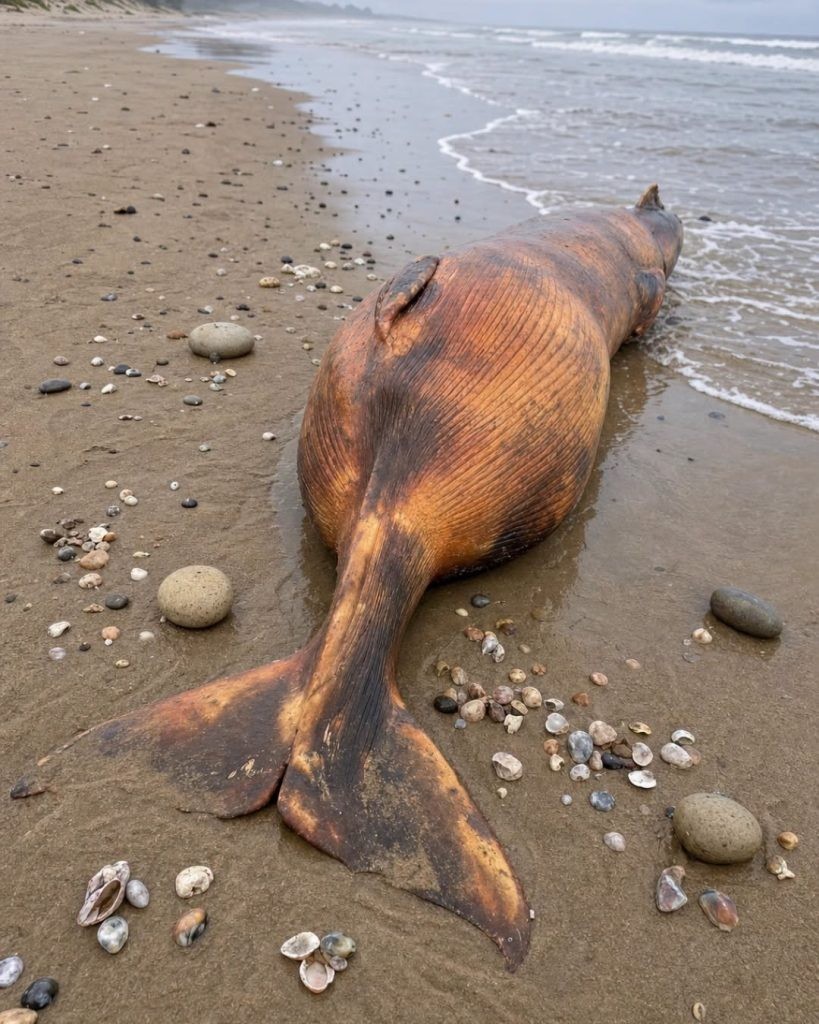
I took one step closer, then another.
Introduction: Witnessing the Unknown at the Shore
Beaches have long served as natural boundaries between land and sea, offering both tranquility and mystery. Throughout centuries, shorelines have been the setting of countless unexplained phenomena, often blending scientific curiosity with human intrigue. The encounter recounted here is not merely a personal experience, but a reflection of our ongoing fascination with the unknown—especially those mysteries the ocean still holds. This article takes an analytical, science-backed look at the story, situating it within the broader context of marine biology, oceanography, and cultural attitudes toward unexplained phenomena.
Environmental Context: The Ocean’s Dynamic Edge
Shorelines are complex environments where tides, waves, and local ecology interact daily. The observation of unusually wet sand suggests not just the retreat of water, but possibly a deviation from normal tidal behavior. Such anomalies can result from a variety of natural causes, including atmospheric pressure changes, seismic activity, or even rare meteorological events like tsunami warnings or storm surges. However, deliberate patterns—such as water appearing to avoid contact with a certain area—are extremely uncommon and warrant scientific scrutiny. In coastal zones, these occurrences are sometimes linked to biological factors, for example, the movement of large marine animals or the presence of substances altering water flow.
The Encounter: Observing an Unexplained Creature
The narrative brings readers face-to-face with an entity that defies immediate classification. Notably, the creature’s breathing pattern stands out: slow, deep expansions suggest calm and perhaps adaptation, similar to certain marine mammals when resting ashore after strenuous activity. Marine biology documents numerous cases of stranded animals such as dolphins and whales, but their breathing under stress is often rapid and shallow. The slow, rhythmic breathing here may point to a lifeform well-adapted to both aquatic and terrestrial environments, or perhaps an organism unknown to science.
With skin described as layered, glassy, and semi-translucent, this being diverges sharply from typical marine or amphibious animals. Some deep sea creatures, such as jellyfish or salps, have translucent bodies, and certain bioluminescent fish exhibit visible internal structures, creating flowing effects much like the described dark currents beneath the skin. These visual cues invite comparison to known species, but also highlight gaps in marine research—especially at depths rarely surveyed.
The creature’s tail movement, transforming sand into something resembling ash, hints at unknown chemical or biological interactions. Some marine organisms, like stingrays or eels, disrupt sediment during movement, occasionally secreting substances that alter its appearance. The phenomenon of sand turning to ash-like material is, however, not documented in current scientific literature, prompting questions about new forms of marine life or environmental contamination.
Emotional Response and Human Behavior: Interpreting the Unknown
Human reactions to unknown entities are shaped by cultural context, personal experience, and instinct. The urge to run versus the choice to crouch and observe encapsulates a fundamental tension between fear and curiosity. Historically, mysterious marine findings—from giant squids to anomalous carcasses—have inspired both artistic interpretation and scientific investigation. While fear often dominates initial reactions, curiosity drives the collection of data and evidence essential to expanding scientific understanding.
Anthropologists and psychologists have studied responses to unexplained phenomena, noting that proximity and ambiguity intensify emotional response. The act of crouching to examine the creature denotes a willingness to confront the unknown, a mindset that has often led to breakthroughs in natural science. Such encounters, if shared publicly, also shape society’s collective perception of oceanic mysteries and our willingness to explore them.
Scientific Investigation: Categorizing Unexplained Marine Phenomena
The world’s oceans, covering more than 70% of the Earth’s surface, remain less explored than many terrestrial environments. Discoveries of new species occur regularly in deep and coastal waters. Marine biologists employ a variety of investigative tools: direct observation, photographic evidence, sampling, and environmental DNA analysis. In situations where unexpected creatures appear on shore, immediate scientific steps typically include documentation, sample collection, and environmental testing.
Distinct breathing patterns, unique anatomical structures, and unexplained environmental effects all serve as indicators for further study. In recent years, advances in molecular biology have enabled the identification of organisms from trace DNA, offering faster insights into mysterious sightings. However, the reporting and study of such phenomena must be meticulously documented and verified, following protocols established by organizations such as the International Union for Conservation of Nature (IUCN) and national scientific agencies.
Unexplained marine encounters also influence conservation policy. Rare sightings raise questions about biodiversity, ecological impacts, and the potential for undiscovered species. Marine protected areas are sometimes established in response to anomalous findings, supporting broader ecosystem health and preserving environments that may harbor unfamiliar lifeforms.
Acoustic and Environmental Clues: Sound and Water Behavior
The description of a low, dragging sound emanating from the water aligns with reports of “singing” or rumbling noises produced by large marine animals. Whales, for instance, communicate over vast distances using subsonic frequencies that can rattle shorelines and puzzles listeners. However, the hesitancy of waves at the shore suggests a physical disruption, as if another force beneath the water is influencing surface behavior.
Oceanographers attribute similar effects to internal waves and currents, which may temporarily disturb normal tidal patterns. Additionally, underwater geological activity—such as seismic shifts or volcanic eruptions—can lead to subtle, unnatural movements of water. The observation of non-rising waves, seemingly waiting for permission, metaphorically describes these scientific processes, but also highlights the limits of human interpretation when confronted with unfamiliar phenomena.
Directional Behavior: Indicators of Communication and Intelligence
Biologists recognize directional behavior—such as a creature pointing—among certain species, often as a form of communication. Dolphins use fin gestures to direct attention, cephalopods signal danger or opportunity with arm movements, and some fish display synchronized motion while schooling. If the creature in question pointed directly toward the observer, this could suggest higher cognitive function or intent.
The study of animal intelligence is ongoing, particularly among marine species. Research from institutions like the Woods Hole Oceanographic Institution and the Monterey Bay Aquarium Research Institute has documented complex behaviors—problem-solving, communication, and even interspecies interactions. While pointing is rare among fish or crustaceans, it has been observed in mammals, mainly as part of collaborative hunting or social signaling.
Directionality may also indicate territoriality or an invitation for closer inspection. Marine animals sometimes lead humans away from nests, or draw attention to wounds or objects in the environment. In mysterious situations, directionality is a crucial interpretive clue that can prompt further scientific observation.
Cultural Significance: Myths, Folklore, and Modern Perspectives
Unexplained sightings at the water’s edge have inspired myths and folklore across cultures. Tales of sea monsters, mermaids, and other enigmatic beings reflect ancient attempts to explain the unknown. Today, encounters with unidentifiable marine life are still reported, often blending anecdotal evidence with scientific inquiry.
Modern attitudes toward unexplained marine events emphasize careful documentation and skepticism, but also respect for the possibility of new discovery. Museums, aquariums, and research institutes often engage the public in reporting and understanding beach findings. Media coverage can heighten awareness and encourage conservation, but must avoid sensationalism to support credible scientific investigation.
Globally, societies react differently to mysterious encounters. In some regions, unexplained findings are attributed to spiritual or supernatural causes; elsewhere, they become the subject of rigorous scientific study. Balancing these perspectives fosters a healthy dialogue between tradition and evidence-based research.
Global Scientific Collaboration: Challenges and Opportunities
International cooperation is essential for investigating unexplained marine phenomena. Organizations such as the World Health Organization and Centers for Disease Control and Prevention support the study of environmental health and marine biology, while major universities and research institutes share data across borders.
Challenges persist, including the need for high-quality evidence, rapid response to strandings, and ethical considerations regarding wildlife. The exploration of deep sea environments, supported by remotely operated vehicles and new imaging technologies, offers unprecedented opportunities to uncover hidden ecosystems and unfamiliar species.
Global frameworks for biodiversity, such as the Convention on Biological Diversity, provide guidelines for protecting marine spaces and reporting discoveries. When members of the public encounter unexplained phenomena, prompt notification of local authorities and scientific organizations is vital for ensuring responsible investigation.
Looking Ahead: The Frontier of Marine Discovery
Encounters with mysterious marine entities at the shoreline remind us of the vastness and complexity of the world’s oceans. As scientific methods evolve, so too does our ability to interpret and understand the unknown. Rather than simply fearing or avoiding these experiences, society can foster curiosity, environmental responsibility, and a commitment to expanding our knowledge of marine life.
The described experience serves as a compelling invitation to further scientific exploration, blending firsthand observation with the rigor of biological research. Whether future discoveries stem from accidental encounters on the beach or intentional deep sea expeditions, the pursuit of understanding continues to unite scientists, communities, and cultures around the globe.
Sources
- BBC Science & Environment
- Reuters Environment
- National Geographic Oceans
- The Guardian Oceans
- World Health Organization (WHO)
- Centers for Disease Control and Prevention (CDC)
- Mayo Clinic
Disclaimer: This content is intended for entertainment purposes only and is not based on real events.