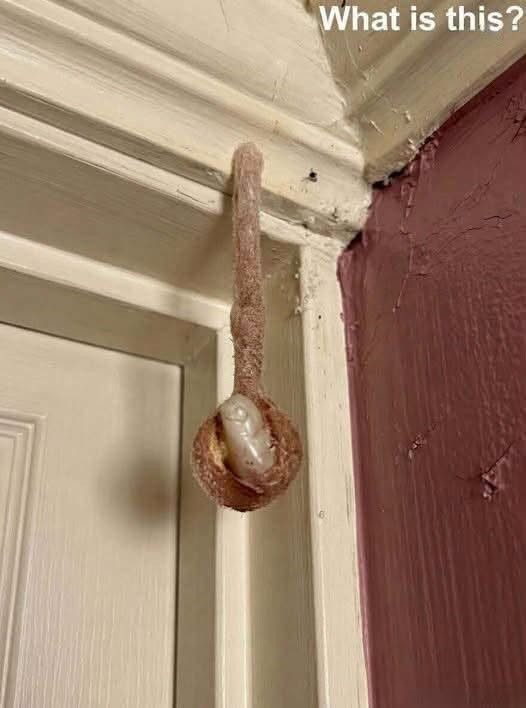
Discovering a Mud Dauber Nest: An Unexpected Encounter with Nature’s Architect
Introduction: Nature’s Presence in Unexpected Places
Travel often leads to unexpected discoveries, and sometimes even a bustling hotel can offer a glimpse of the natural world. One such moment occurred with the sighting of a mud dauber nest, a surprisingly intricate creation nestled quietly in a corner. While most people pass by such natural artifacts without notice, closer inspection reveals a marvel of architecture and biological purpose. This article explores both the ecological importance and the fascination surrounding mud dauber nests, providing context, background information, and expert perspectives to foster a greater appreciation for these remarkable insects.
Understanding Mud Daubers: Who They Are
Mud daubers are solitary wasps belonging to several genera within the family Sphecidae, including Sceliphron, Chalybion, and Trypoxylon. These insects are known for their distinctive nesting habits and gentle disposition. Unlike their social wasp relatives, mud daubers live and work alone, crafting nests of mud to house their offspring. Their widespread presence across continents—North America, Europe, Asia, and Australia—underscores their adaptability and evolutionary success.
The Architecture of Mud Dauber Nests
From a distance, a mud dauber nest might appear as an ordinary lump of dried mud. However, a closer look reveals a carefully designed structure with tubes or cells. The process begins as the female mud dauber gathers small bits of mud. She transports these fragments, often flying considerable distances, and painstakingly fashions them into a series of cylindrical chambers against walls, eaves, or sheltered corners. Each chamber will contain a single egg, alongside an efficient storage of paralyzed prey—typically spiders or insects—carefully placed to serve as food for the developing larvae.
Mud daubers are natural engineers, demonstrating remarkable skill and precision in their construction. Their nests are both protective and functional, designed to shield their young from predators, weather, and environmental hazards. The complexity of their architecture provides fascinating parallels to human structures, reflecting a deep-rooted instinct for design and survival.
Observing Mud Dauber Behavior: Insights from Experts
Entomologists describe mud daubers as one of the most peaceful wasp species. Dr. Jennifer Taylor, a researcher specializing in Hymenoptera at the University of California, notes, “Mud daubers rarely exhibit defensive behavior toward humans, and their stingers are typically reserved for prey rather than for self-defense.” Scientific studies highlight their cryptic lifestyle; mud daubers invest most of their energy in nest building and hunting, largely ignoring human activity unless disturbed.
Their dietary habits make mud daubers an important part of ecological balance. By preying on spiders and other arthropods, they help regulate populations, thus contributing to biodiversity and pest control. Experts encourage safe observation, emphasizing that mud daubers are not aggressive and will not sting unless seriously provoked.
Ecological Benefits: More Than Meets the Eye
Mud daubers serve essential ecological functions. Their predation on spiders and insects not only supports population control but also links them to broader food webs. The larvae consume the prey stored by their mothers, sustaining themselves until adulthood. As adults, mud daubers serve as pollinators, visiting flowers for nectar, thereby indirectly supporting plant reproduction.
The nests may occasionally seem unsightly to humans, especially when found indoors or in urban environments. However, experts argue that removing mud dauber nests should only be considered if there is a direct threat to human safety or property. Otherwise, these nests offer valuable lessons in cohabitating with nature.
Global Context: Mud Daubers Around the World
Mud daubers are not limited to hotels or urban landscapes; their nests can be found on houses, barns, bridges, and even natural settings like cliffs or tree trunks. Their distribution is vast, and each species adapts uniquely to its environment. For example, the organ pipe mud dauber (Trypoxylon politum) is notable for its elongated, pipe-like nests, while the black and yellow mud dauber (Sceliphron caementarium) tends to build single-cell mud tubes.
Internationally, mud daubers have sparked interest among naturalists, architects, and artists. Their methods of construction have inspired biomimicry, a field where scientists and engineers study animal behaviors for design ideas. Smithsonian Magazine and National Geographic have featured mud daubers, highlighting their ecological significance and aesthetic appeal.
Human Reactions and Societal Perceptions
Public attitudes toward mud dauber nests range from curiosity and admiration to concern and discomfort. In many cultures, witnessing such nests is considered a sign of good luck or ecological health. Others may view them as nuisances, especially when nests appear indoors.
Hotels and businesses often face the decision of whether to remove nests or leave them undisturbed. Proper handling involves assessing safety, guest experience, and environmental factors. Leading pest control agencies recommend non-destructive removal methods such as gently scraping off the nest and relocating it outdoors, or simply waiting until the wasps have left before cleaning the area.
Responding to a Mud Dauber Nest: Best Practices
If you find a mud dauber nest in a public or private space, the best approach is calm observation. There is usually no reason to panic, as mud daubers are not generally aggressive. Avoid direct contact, do not disturb the nest, and keep a safe distance.
Documentation can also be a rewarding option. Scientists and citizen observers encourage photographing nests, recording their location, and sharing data with local naturalist groups. Such observations contribute to broader understanding and conservation efforts.
If the nest’s location is inconvenient or potentially unsafe, consult with local pest control or management staff. Most actions should prioritize safety and maintenance while respecting the ecological role of the insects.
Learning from Observation: The Value of Small Discoveries
Encounters with mud dauber nests are reminders of nature’s subtle presence amid human environments. Observing such phenomena encourages curiosity, learning, and appreciation. Scientific inquiry often begins with simple observation, and mud daubers provide a case study in discovery, patience, and the interconnectedness of living systems.
Many travelers recount serendipitous moments—finding a mud dauber nest and pausing to appreciate its beauty. These stories highlight the importance of awareness and thoughtful engagement with the world around us. Small discoveries, whether photographed or recorded in memory, often become lasting highlights of a journey.
Educating Others: Turning Encounters into Opportunities
Learning about mud daubers and sharing that knowledge can transform a simple find into a meaningful educational experience. Schools, nature centers, and environmental organizations use mud dauber nests to teach about insect life cycles, architecture in nature, and biodiversity.
Experts recommend using safe moments of discovery, such as finding a nest, to foster curiosity in children and adults alike. Understanding mud daubers’ role in the ecosystem reinforces principles of conservation and coexistence. These lessons help build a culture of respect for urban and natural wildlife.
Conclusion: Appreciating Nature Wherever You Find It
Discovering a mud dauber nest is more than a chance encounter—it is a gateway to understanding the complexity and beauty of nature in places we least expect. Whether observed in a hotel corner or outdoors, these nests symbolize the persistent ingenuity of living creatures and the delicate balance of ecosystems. By observing, learning, and sharing, each discovery contributes to a wider respect for nature, encouraging mindfulness and the pursuit of knowledge.
Next time you come across a mud dauber nest, pause to appreciate its construction, ecological role, and the reminder it offers of nature’s quiet resilience. Small moments of wonder can enrich our travels, daily routines, and connections with the natural world.
Sources
Disclaimer: This content is intended for entertainment purposes only and is not based on real events.