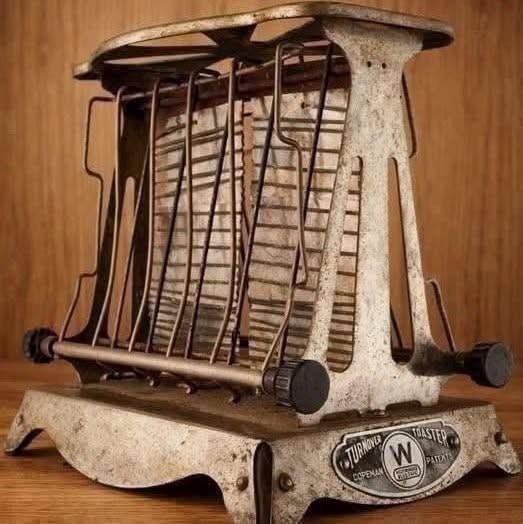
The Turnover Toaster: A Historical Perspective on Early Kitchen Technology
Introduction to the Turnover Toaster
The turnover toaster is a remarkable artifact in the evolution of household technology. While it may appear primitive next to modern, highly automated appliances, its invention marked a significant turning point for domestic life. Understanding the turnover toaster and its place in history invites us to appreciate both the technological advances and the societal changes it helped usher in as homes transitioned increasingly to electrical appliances.
Early Toasters: Design and Functionality
The turnover toaster was ingeniously simple in design, often comprising a metal frame and exposed electric heating elements. Bread slices were placed either between or near these elements, and the toaster was activated with a switch. The resistance wires embedded in the elements would then become hot, radiating heat to toast the surface of the bread.
This design lacked any mechanism for automatically flipping the bread. Users needed to hover nearby, watching closely until one side of the bread reached the desired golden-brown shade. At this point, the bread had to be manually turned to toast the other side, making the process interactive and hands-on. Failing to monitor the bread could result in underdone or burnt toast, placing the responsibility for the outcome squarely on the user.
The Daily Routine of Toasting Bread
The process was a small yet precise ritual woven into morning routines. It required consideration: determining the optimal moment to turn the bread could be seen as an art form, combining observation, timing, and manual dexterity. There was no standardization; the result varied with the user’s attention and experience. Children often learned from their elders how to judge the toast, and family preferences for toast color and crispness became part of the household tradition.
This method, though labor-intensive by today’s standards, gave households control and contributed to a sense of craftsmanship in everyday meals. Toast preparation was, in many ways, a social kitchen activity before automation streamlined the process.
The Role of Electricity in the Home
The turnover toaster arrived at a pivotal moment in domestic electrification. The late nineteenth and early twentieth centuries saw an increasing number of homes wired for electricity, allowing manufacturers to experiment with new, electrically powered appliances. The turnover toaster was one of the earliest to make practical use of this energy source. It signaled a transition from cooking exclusively over fire or on stoves to leveraging electricity for everyday kitchen tasks.
Early electric toasters used nickel-chromium alloys for their heating elements, providing durability and efficient heat transfer. These materials, along with the design innovations, laid the foundation for other electric appliances. The turnover toaster’s basic technology later inspired more advanced devices, showing how incremental improvements in the household could transform lifestyles.
The Path Toward Kitchen Automation
Automated kitchen appliances were rare in the early twentieth century. After the turnover toaster, inventors and manufacturers sought to improve convenience. The next generation of toasters included automatic mechanisms to flip or eject the bread, reducing the need for oversight and enhancing safety by minimizing contact with hot surfaces.
One milestone came with the introduction of the automatic pop-up toaster. Multiple patents in the 1920s and 1930s reflected advances in mechanical timers and spring-loaded platforms. These innovations meant toast was ready with minimal effort. The turnover toaster, while no longer a mainstay, paved the way for this leap in kitchen automation. The increasing sophistication of toasters paralleled their growing ubiquity in households, and by mid-century, they were considered essential kitchen devices.
Impact on Society and Culture
The turnover toaster signified a broader shift in society. With electricity powering new devices, home life grew more streamlined. Kitchen work, which had long required considerable manual labor, became progressively easier. Tasks that previously demanded time, attention, and skill—such as toasting bread—could be completed rapidly.
This acceleration contributed to changing expectations about domestic roles, meal preparation, and efficiency. Women, traditionally responsible for much of the household work, benefited from labor-saving appliances. The turnover toaster thus played a subtle role in the larger social transformation brought about by electrification.
Furthermore, this appliance shaped consumer culture. As more homes were electrified, demand for new gadgets grew. Manufacturers responded with advertising campaigns that emphasized convenience, safety, and modernity. The turnover toaster, featured in early catalogs and electrical exhibitions, often symbolized the promise of a new technological era.
Technological Evolution and Legacy
Despite its simple design, the turnover toaster contributed meaningfully to technology. Its use of exposed heating elements predated many electrical safety standards, leading engineers to develop protective measures and innovative housings in later models. The learning curve associated with the turnover toaster fostered greater awareness of electrical safety among early users and manufacturers.
Advances in materials science and electrical engineering soon improved the efficiency and safety of kitchen devices. Improvements in insulation, timed mechanisms, and materials furthered reliability and minimized hazards. The turnover toaster’s legacy is evident today in the compact, automatic toasters found in kitchens worldwide.
Expert Views on Appliance History
Historians of technology regard the turnover toaster as both an artifact of early electrification and a precursor to automated domestic devices. According to the Smithsonian National Museum of American History, early kitchen appliances like the turnover toaster played a vital role in changing how families prepared meals, while also influencing the layout of kitchens and household routines. Experts note that the turnover toaster helped demonstrate the benefits and possibilities of electrical power, encouraging widespread adoption and adaptation.
Contemporary appliance designers see the turnover toaster as an inspiration for user interface and safety design. Its need for attentive use helped shape the development of automation, ergonomic controls, and thermal sensors. The gradual transition toward “hands-free” toasting became a model for many other automated kitchen systems.
The Turnover Toaster in International Context
While the turnover toaster was most common in North America and Europe, its influence reached beyond these regions as electrification spread globally. The simple principle of radiant heat for toasting bread remains universal, and the turnover toaster’s design inspired adaptations based on local needs and resources. Early electrical appliances in Asia and Latin America often mirrored the basic form of the turnover toaster, underscoring its value as a global stepping stone toward modern convenience.
International acceptance of electrical appliances also contributed to new dietary habits and food cultures. The ease of preparing toasted bread influenced breakfast patterns and food preferences. In many modern societies, toast is now a staple, with the turnover toaster representing a formative link between tradition and contemporary practice.
Modern Perspectives: Reflection and Appreciation
Looking back, the turnover toaster serves as a reminder of how swiftly technology can alter everyday life. What was once a careful, manual process has become effortless due to ongoing innovation. Yet, in its simplicity, the turnover toaster embodies a sense of craftsmanship and the promise of progress. It invites us to reflect on earlier generations’ ingenuity and adaptability, as well as our own reliance on convenience.
Appreciating the turnover toaster in historical context encourages mindful consumption and awareness of technological advances. Devices that require attention and skill continue to foster connection and appreciation for the tasks they accomplish. Modern kitchens may seem far removed from the turnover toaster, but its legacy remains in the pursuit of efficiency, safety, and enjoyment in daily life.
Conclusion
The turnover toaster occupies a unique place in the history of kitchen appliances. It highlights a transformational period when homes began to harness electricity for everyday tasks, setting the stage for the automated conveniences we now take for granted. Remembering the turnover toaster allows us to recognize the incremental advances that shape our world and the cultural significance of technology in even the simplest routine—making toast.
Sources
- BBC Science & Environment
- Smithsonian Magazine
- Reuters
- The Guardian Science
- History Channel – History of the Toaster
Disclaimer: This content is intended for entertainment purposes only and is not based on real events.